Best Pots and Pans for Glass-Top Ranges, Tested Side-by-Side
About Misen
We make kitchen tools that work better, last longer, and cost less than you’d expect: everyday innovations with a radical focus on our customers’ actual need.
Table of Contents
Summary
To keep a glass-top range scratch-free and cooking evenly, this article shows that flat, smooth-bottomed cookware is non-negotiable: warped or textured bases create hot spots, waste energy, and can permanently scar the cooktop. Drawing on side-by-side lab and kitchen tests, it recommends stainless-steel sets with bonded aluminum or fully clad tri-ply construction--such as the Made In 5-ply or All-Clad D5--for their warp resistance and uniform browning, while ceramic nonstick pans like the GreenPan Valencia Pro and Caraway line deliver effortless food release and glass-safe, scratch-free exteriors. Readers learn practical tricks--steam with tight lids, lift (never slide) pans, and spritz vinegar to dissolve mineral streaks--and maintenance rules that double cookware life: hand-wash ceramic and stainless pieces, avoid soap on carbon steel, and stack pans with protectors to prevent coating damage. The piece also flags materials to avoid--raw cast iron, glass, stoneware--and highlights budget standouts like the Cuisinart MultiClad Pro that eliminate hot spots even when pans sit slightly off-center. Ultimately, the guide equips home cooks to choose durable, affordable pots and pans that safeguard both cooktop and wallet while delivering reliable, even heat from steaming broccoli to searing steak.
How the Best Pots and Pans for Glass Top Stove Protect Your Cooktop
Before you buy another pan, flip it over--if it rocks on the counter, its warped, rough, or untreated-cast-iron base will scratch your glass stove, waste energy, and leave scorched stripes instead of dinner.
Why Base Flatness Matters
Why base flatness mattersA glass-top range transfers heat through direct surface contact, so when a pan's base isn't perfectly flat, only part of it touches the burner. That partial contact creates hot spots--areas of the pan that reach higher temperatures than the surrounding surface, leading to uneven cooking and scorching. [1] Warped pans are the most common cause: once a base bows or curves, it can no longer make full contact with the heating element, which also forces the burner to work harder and wastes energy.
[2] Rounded or curved bottoms carry the added risk of cookware wobbling or tipping during cooking. [2] Rough or textured bases create a different problem--they scratch and abrade the glass surface itself, which can compromise the cooktop's structural integrity over time. [2] Before buying any pan for a glass-top range, place it on a flat surface and check for rocking.
Even slight movement means reduced contact and worse performance at the stove.
Choosing the Right Material for Longevity
Material choice determines both how long your cookware lasts and how much damage it can do to your cooktop over time. Stainless steel with a bonded aluminum or disc base is one of the most durable options--the thick base sits flat against the glass surface, distributes heat evenly, and resists warping. [3] Hard-anodized aluminum pans with stainless steel bases offer a similar advantage: the base makes consistent contact with the cooktop, which prevents hot spots and uneven browning.
[4] Ceramic nonstick pans--typically an aluminum core with a mineral-based coating--add another layer of practicality since the smooth, flat exterior won't abrade the glass. [3] Untreated cast iron is the one material to avoid outright. Its rough, unrefined surface can scratch and weaken the cooktop over time; if you prefer cast iron, stick to enameled versions where the exterior finish is smooth.
[4] Glass and stoneware should also stay off glass-top ranges entirely--they scratch the surface and can't heat evenly enough to cook reliably.
Misen's Top Picks Tested for Best Pots and Pans for Glass Top Stove
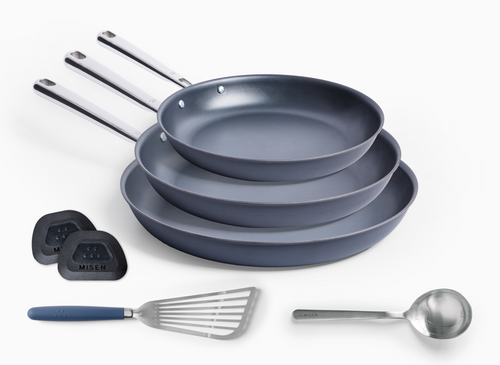
Misen's glass-stove testing crowns GreenPan Valencia Pro, Caraway and OXO ceramic non-stick pans--flat, scratch-free bases that out-cook PTFE, survive 600 degreesF broiler finishes and wipe clean with nothing but a hand-wash.
Nonstick Ceramic Options
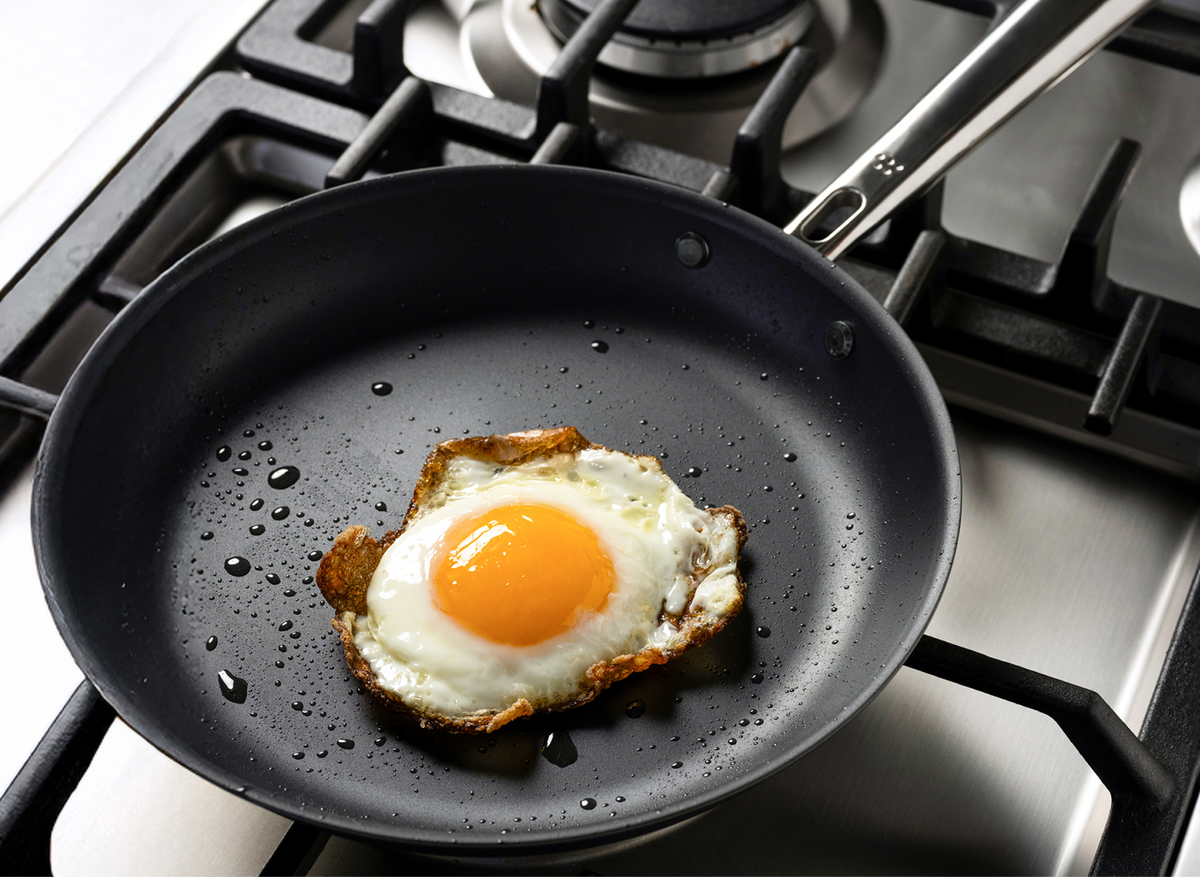
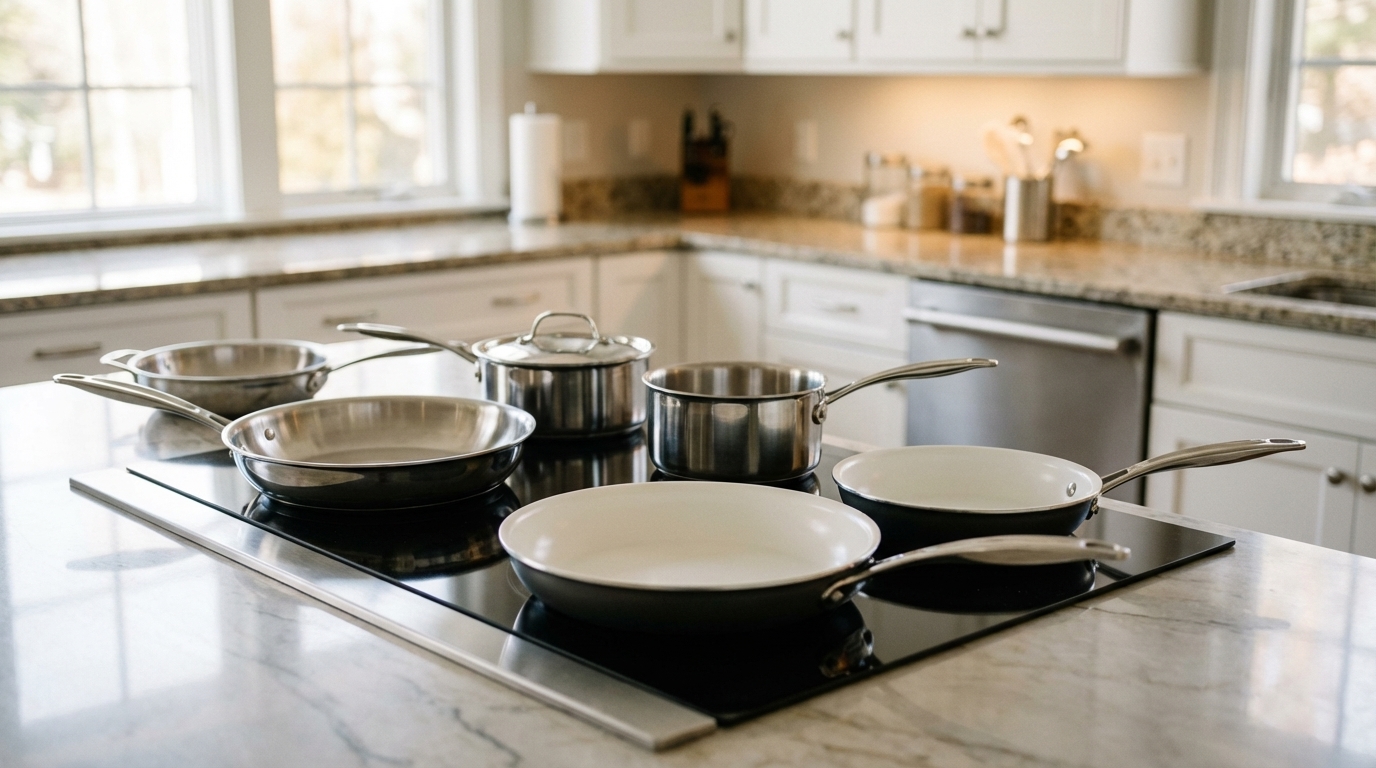
Nonstick ceramic optionsCeramic nonstick pans have a practical edge on glass-top ranges: their smooth, flat exteriors won't abrade the cooktop surface, and their aluminum cores heat evenly without creating hot spots. The coating itself is mineral-based--typically derived from sand--which means it tolerates higher temperatures than traditional PTFE-based nonstick and holds up to metal utensils without degrading as quickly. [4] In Consumer Reports' lab tests, ceramic nonstick pans actually outperformed traditional nonstick options, taking the top three spots for food release, cooking evenness, and coating durability.
[5] The GreenPan Valencia Pro earned particular attention for its hard-anodized aluminum build, a base that sits flat against glass ceramic cooktops, and an oven-safe rating of 600 degreesF--useful when you need to finish a dish under the broiler without switching pans. [4] Caraway's ceramic set, with its mineral-based coating free of PTFE, PFOA, lead, and cadmium, distributed heat consistently across low-to-medium settings in testing, with eggs and sauces releasing cleanly. [3] The OXO Ceramic Professional similarly impressed testers--caramelized onions, fried eggs, and rice pilaf all came away with minimal sticking, and the stainless steel base ensured steady contact with the cooktop surface.
[3] One maintenance note applies across all three: hand-washing preserves the ceramic finish significantly longer than the dishwasher, even when a manufacturer labels the pan dishwasher-safe.
Stainless Steel Essentials
Stainless steel suits glass-top ranges best when it uses a thick disc base or fully clad tri-ply construction--aluminum sandwiched between stainless steel layers extending to the rim--both of which keep the cooking surface flat against the glass and distribute heat without creating hot spots. [3] The Made In 10-Piece Stainless Set uses 5-ply construction and stood out for high-heat tasks: scallops and steak browned evenly across the pan surface, handles stayed cool during stovetop use, and an 800 degreesF oven-safe rating gives it the most range of any set tested.
[3] The All-Clad D5 5-Ply Bonded Set delivered the same even heating across three rounds of testing, with pans cleaning up nearly spotless after heavy use--the brushed finish also resists fingerprints and water spots, which is a practical advantage for a material prone to showing every mark. [3] For a lower-cost entry, the Calphalon Classic's stainless steel with bonded aluminum base heats quickly and holds heat well through searing, with built-in pour spouts and straining lids that add everyday utility; the trade-off is durability--the surface discolored permanently after six months of regular use in a test kitchen.
[3] The Cuisinart MultiClad Pro addressed one of the more frustrating glass-top cooking problems directly: it produced no discernible hot spots even when the pan sat slightly off-center on the burner, a meaningful advantage given how easy it is to misalign cookware on a smooth surface. [3] Whichever stainless construction you choose, hand-washing protects the aluminum layer inside bonded and tri-ply pans--dishwasher detergents attack that layer over time and gradually undermine the even-heating properties that make stainless worth choosing.
Real-World Cooking Tests: From Steaming Broccoli to Searing Steak
A spritz of white vinegar after steaming and a perfectly flat stainless or carbon-steel pan for searing are the glass-top range's simplest tricks to dodge mineral streaks and gray-patch steaks.
Steaming Vegetables Without Streaks
Steaming vegetables without streaksSteaming vegetables on a glass-top range comes with a unique challenge: escaping steam leaves behind white mineral streaks on your cooktop. While these marks might look harmless, they actually insulate the burner element and lead to uneven heating over time. [7] The good news?
A simple spray of white vinegar after cooking dissolves these deposits without scratching your glass surface. [7] Your choice of cookware makes a difference too--pots with tight-fitting lids keep more steam contained, which means less cleanup later. And here's a practical tip: always lift your pot straight up instead of sliding it.
This prevents the wet base from dragging any mineral residue across your cooktop.
Searing Meat with Even Heat
Getting a perfect sear on a glass-top range comes down to choosing the right pan.
You need sustained high heat and full contact with the burner--even slight warping creates gray patches instead of that golden-brown crust you're after.
Stainless steel and carbon steel excel here for different reasons.
Care and Maintenance to Extend the Life of Your Cookware
Clean each pan the right way--stainless with baking soda, ceramic nonstick by hand, cast iron with salt-and-oil--and stack them protected, because gentle care after every use doubles cookware life and keeps your glass cooktop flawless.
Cleaning Tips for Glass-Top Friendly Pans
Cleaning tips for glass-top friendly pansProper cleaning extends the life of your cookware and keeps it performing like new on your glass-top range. For stainless steel, tackle discoloration and fond immediately after cooking--bar keeper's friend or a paste of baking soda and water removes stubborn stains without abrading the cooking surface. Let the pan cool slightly before cleaning to avoid warping from thermal shock.
[6] Ceramic nonstick requires gentler care: a soft sponge with warm, soapy water preserves the coating's food-release properties. Skip the dishwasher even when manufacturers say it's safe--hand-washing doubles the lifespan of the nonstick surface. [3] For carbon steel and cast iron, avoid soap entirely and instead scrub with coarse salt and oil to maintain the seasoning layer that prevents sticking.
The key across all materials: clean thoroughly after each use to prevent buildup that can transfer to your glass cooktop during the next cooking session.
Storage Practices to Prevent Scratches
Storage practices to prevent scratchesYour storage method directly impacts how long your cookware stays in peak condition.
Stacking pans without protection creates the same scratches and scuffs you work to avoid on your glass cooktop.
For nonstick surfaces especially, direct contact means shortened lifespan--once that coating scratches, food starts sticking and the pan never recovers.
Putting It All Together: Choose Durable, Affordable Cookware
Choose cookware that balances durability with affordability, and you'll equip your kitchen for years of reliable cooking without overspending.
Key Takeaways
- Flat-bottomed pans prevent hot spots and energy waste on glass-top ranges.
- Stainless steel with bonded aluminum base resists warping and heats evenly.
- Ceramic nonstick pans outperform PTFE coatings for food release and durability.
- Avoid untreated cast iron and glass/stone cookware to prevent scratching.
- Hand-wash all recommended pans to preserve nonstick and clad layers.
- Lift pots straight up to stop mineral streaks from insulating burners.
- Store pans with protectors to prevent coating and cooktop scratches.
References
- https://www.debuyer-usa.com/blogs/guides/say-goodbye-to-hot-spots-best-pots-and-pans-for-electric-stoves?srsltid=AfmBOoqKQ2baDNeAMPj30H2UzU-qKn9MbEvBBcAGhoilPmWI-JDgHdFb
- https://karinearappliances.com/blogs/karinearstory/on-an-electric-cooktop-what-should-not-be-used?srsltid=AfmBOopCFsCG_WntstLp-QfByRIavkV-m8MuxWbI_7QbyioKPNnxXVxQ
- https://www.thespruceeats.com/best-cookware-for-glass-stoves-4690491
- https://www.foodnetwork.com/how-to/packages/shopping/product-reviews/best-pans-for-glass-cooktop
- https://www.consumerreports.org/home-garden/cookware/best-nonstick-frying-pans-from-consumer-reports-tests-a1041724599/
- https://www.nytimes.com/wirecutter/reviews/best-cookware-set/
- https://www.cullenshomecenter.com/blog/how-to-clean-glass-cooktops?srsltid=AfmBOopibfT_cbhrosy1S-unNAApD5Z_AbgkLwwDE_8Mi5czYGrwbNTl
- https://www.seriouseats.com/best-cookware-glass-stovetops-7506080
- https://www.nytimes.com/wirecutter/reviews/how-to-clean-a-glass-cooktop/
- https://www.debuyer-usa.com/blogs/how-to/how-to-organize-pots-and-pans-expert-tips-for-longevity-and-easy-access?srsltid=AfmBOoo4MuCgXa0kJXCZAoDo6QAf3jA3tqrZXgX9kMLjn58adNnheIeP
- https://www.eastcoastappliance.com/blog/glass-cooktop