

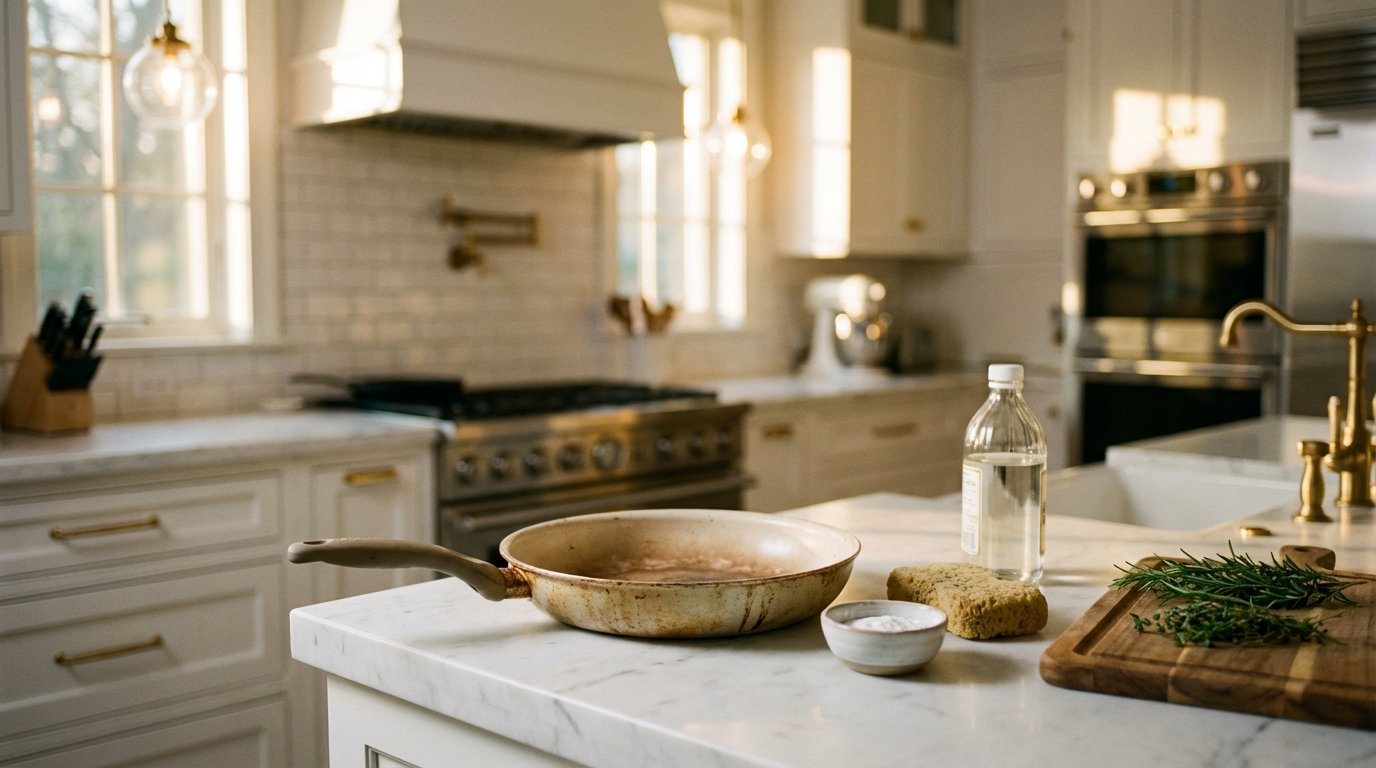
If your once-slick ceramic pan now grips food like glue, this article shows you exactly how to bring back the gloss--and when to let go--so you can cook with confidence instead of frustration. You'll learn why PFAS-free ceramic coatings lose their non-stick magic (microscopic silica wear plus stubborn burnt-on films), then walk through fast, kitchen-chemistry fixes: a baking-soda paste, vinegar fizz, simmer-and-salt scrubs, even a hydrogen-peroxide brightener that lift residue without scratching. Beyond rescue missions, you'll pick up a low-stress daily routine--low-to-medium pre-heats, silicone tools, cooling before washing, and a monthly "spa day" of baking-soda masks and grapeseed-oil seasoning that can stretch a pan's life from months to years. The guide also spells out the non-negotiable retirement signs--chips, warps, chronic sticking--so you know when replacement is safer and smarter than another restoration attempt. By the end, you'll understand how gentle care trumps aggressive scrubbing, why high-smoke-point oils beat olive oil for upkeep, and how choosing durable stainless steel next time can break the replace-and-repeat cycle--knowledge that saves money, cuts waste, and keeps every egg sliding cleanly onto your plate.
Understanding PFAS-Free Ceramic Wear
Ceramic pans lose their non-stick magic because their silica-based coating erodes with every swipe of a metal spatula and every hotspot of burned oil--but going PFAS-free means you can crank the heat without toxic fumes, as long as you accept you'll be replacing the pan sooner.
Why Ceramic Goes Dull and Stuck
Ceramic pans lose their non-stick properties through two primary mechanisms. Despite the name, "ceramic" coatings aren't traditional ceramic but rather special silica-based polymers that create the initial slick cooking surface [1].
These coatings naturally wear down with each use as tiny amounts of the protective layer come off, gradually reducing the non-stick properties [1]. Simultaneously, nearly invisible films of burned food residue accumulate over time, providing sticky spots for new food to adhere to [1].
Common cooking habits speed up this process: metal utensils scratch the coating, high heat breaks down the surface structure, cooking sprays leave stubborn residues, and olive oil burns onto the pan [1]. Together, these factors explain why your once-perfect ceramic pan starts sticking after just a few months of regular use--even when you add extra oil.
How PFAS-Free Coatings Differ from Traditional Non‑Stick
PFAS-free ceramic coatings differ fundamentally from traditional non-stick surfaces in composition, performance, and longevity. Ceramic coatings derive from natural silica (silicon-based materials), while conventional non-stick uses polytetrafluoroethylene (PTFE), a synthetic fluoropolymer [2]. These differences matter in your kitchen: PTFE coatings last longer and release food more reliably, but can emit fumes if overheated above 260 degreesC [2].
Ceramic handles high heat safely without any off-gassing, though the non-stick surface wears out faster [2]. For everyday cooking, this means PTFE pans require careful temperature control, while ceramic offers peace of mind for health-conscious cooks--even if you'll need to replace them more often [2]. Whichever you choose, gentle care is essential: stick to silicone or wooden utensils, mild cleaners, and moderate heat [2].
(If you're looking for truly long-lasting cookware, consider a quality stainless steel collection that can handle high heat and metal utensils for decades.)
Quick Fixes to Restore PFAS-Free Ceramic Pan
Revive your sticking PFAS-free ceramic pan in minutes: soak, scrub with a baking-soda paste, rinse, then heat a whisper of grapeseed oil to reseal its surface--no harsh chemicals, no pricey replacements.
Immediate Cleaning Hacks for Stuck Food
When food sticks to your ceramic pan, don't panic--there's a simple fix. Fill the cooled pan with warm water and dish soap, then let it soak for 30-60 minutes [4]. Never clean a hot ceramic pan, as the temperature shock can damage the coating. For stubborn stuck-on food, make a paste with baking soda and hot water. Gently scrub in circular motions with a soft sponge--the baking soda provides just enough grit without scratching [4].
Want extra cleaning power? Add white vinegar to create a bubbling reaction that lifts food particles [4]. For severely burnt or polymerized oil, try the simmer method. Fill your pan with water and dish soap, simmer on medium heat for an hour (topping up water as needed), then scrub with salt and baking soda [4]. The salt adds crucial grit that transforms your cleaning effectiveness.
If your pan looks discolored, hydrogen peroxide can help. Pour enough 3% solution to cover the bottom and let it sit for 30 minutes--the mild bleaching action will brighten your finish [4]. Whatever method you choose, stick to soft cleaning tools and avoid anything abrasive that could permanently damage the coating [4].
Safe Re‑Seasoning Techniques Without Harmful Chemicals
When your ceramic pan starts sticking, you can temporarily restore its performance without harsh chemicals. Start with a thorough cleaning using the baking soda paste method above to remove any residue causing the sticking. Once clean and dry, apply a thin layer of high-heat cooking oil--grapeseed or avocado work best. Skip the olive oil and cooking sprays, which leave harmful residues [5].
Heat the pan on medium-low for 2-3 minutes until the oil shimmers, then remove from heat and let it cool completely. Wipe away excess oil with a paper towel, leaving only a microscopic protective layer. This process fills tiny pores in the ceramic coating, temporarily improving non-stick properties. Keep in mind that ceramic cookware typically needs replacement every 1-2 years with regular use [5].
If you notice visible scratches or chips, it's time for a new pan--damaged coatings can release particles into food [6]. For longer-lasting performance, consider exploring stainless steel cookware that develops natural non-stick properties with proper technique and lasts for decades. Remember, re-seasoning is a temporary fix. As covered in our maintenance sections below, proper daily care and monthly deep cleaning will help maximize your ceramic pan's lifespan.
Long‑Term Care Routine for Lasting Gloss
Treat your ceramic pan to a monthly spa day--baking-soda paste, vinegar soak, and a quick grapeseed-oil heat cure--and it will keep sliding eggs like glass long after others have gone dull.
Daily Maintenance Steps That Extend Life
Building the right habits can help your ceramic pans stay slick and glossy far longer than you'd expect. Since we've already covered what damages ceramic coatings (see "Why Ceramic Goes Dull and Stuck"), let's focus on the daily practices that actually work. Start with temperature control--keep things at low to medium heat, and always add your oil or butter before the pan heats up [8]. This prevents the coating from overheating when empty.
Choose your tools wisely: silicone spatulas and wooden spoons are your pan's best friends [8]. After cooking, patience pays off--let your pan cool down naturally before washing. That sudden sizzle under cold water? It's actually the sound of your pan warping [9].
For cleaning, warm water and a soft sponge do the job perfectly [8]. When it's time to store your cookware, treat it like the investment it is. A simple pan protector or even a paper towel between stacked pans prevents those tiny scratches that add up over time [8]. Ceramic excels with delicate foods that need gentle handling--think perfectly sliding eggs, flaky fish fillets, or notoriously sticky halloumi cheese [8].
Monthly Deep‑Clean and Re‑Coat Checklist
Think of your monthly deep clean as a spa day for your ceramic cookware--it's what keeps that showroom shine between the daily hustle of cooking. Even with careful daily maintenance, invisible films of oil and food particles slowly build up and need special attention. Here's your monthly game plan: Create a gentle yet effective paste with baking soda and warm water (remember the technique from our cleaning hacks section?), spread it across the entire cooking surface, and give it 15-20 minutes to work its magic [10]. For stubborn stains that won't budge, a 30-minute soak in equal parts water and white vinegar dissolves mineral deposits and breaks down baked-on residue [10].
The real secret comes after cleaning--while your pan is completely dry, add a thin layer of high-smoke-point oil like grapeseed or avocado [10]. Heat it gently on medium-low until you see that telltale shimmer (about 2-3 minutes), then let it cool [10]. Wipe away the excess, leaving behind an invisible shield that fills in the ceramic's microscopic pores [10]. This monthly refresh temporarily revives your pan's non-stick mojo by creating a protective barrier between food and ceramic [10].
Skip the dishwasher for this deep clean--your hands are gentler than any machine cycle [10]. If this treatment doesn't restore the slickness, your pan might be telling you it's time for retirement (more on recognizing those signs in the next section) [10].
When to Replace vs. Restore Your Pan
When scratches, chips, warping, stubborn sticking, or wobbly handles team up, retire your ceramic pan--no scrub or seasoning can resurrect a coating that's already reached its 1.5-3 year expiration date.
Signs Your Pan Needs Professional Repair
Sometimes you have to accept that your ceramic pan has reached the end of its journey. Here's how to recognize when it's time to stop trying to restore and start shopping for a replacement. Look for visible scratches, chips, or flaking--these aren't just cosmetic issues [11]. Physical damage to the coating can't be fixed with any amount of scrubbing or seasoning, and worse, it might release particles into your food. Check if your pan sits flat on the cooktop.
A warped base creates hot spots and cool zones, making it impossible to cook evenly [11]. It's also a safety hazard when the pan wobbles while you're stirring. If food sticks persistently even when you use oil and keep the heat moderate, the coating has degraded beyond repair [11]. Similarly, when cleaning becomes a battle despite your best soaking and scrubbing efforts, the surface has fundamentally broken down [11]. Don't ignore loose or wobbly handles--they're accidents waiting to happen [11].
Fading colors and dull patches, especially paired with uneven browning, tell you the coating is done [11]. Remember, even well-maintained ceramic pans typically last just 1.5-3 years [11]. If you're seeing several of these warning signs, it's time to let go.
Cost‑Effective Choices to Keep Cooking Sustainable
When it's time to replace your ceramic pan, think beyond just the sticker price.
Let's talk about making a choice that's good for your wallet and the planet.
- Ceramic coatings are silica-based polymers, not true ceramic, and wear down naturally with each use.
- Baking soda paste or vinegar soaks safely remove stuck-on food without scratching the coating.
- High heat, metal utensils, cooking sprays, and olive oil accelerate ceramic coating degradation.
- Monthly oil-seasoning with grapeseed/avocado oil temporarily restores non-stick performance.
- Replace pans with visible chips, warping, or persistent sticking; typical lifespan is 1.5-3 years.
- https://economistwritingeveryday.com/2023/06/06/how-ceramic-pans-work-and-how-to-restore-their-non-stick-coating/
- https://peflon.com/ptfe-or-ceramic-coating-which-is-better/
- https://www.thespruce.com/how-to-clean-ceramic-pan-4775268
- https://www.reddit.com/r/CleaningTips/comments/1hra88r/i_did_it_how_to_clean_bruntpolymerized_oil_off/
- https://lexiscleankitchen.com/safest-cookware/
- https://www.consumerreports.org/home-garden/cookware/best-frying-pans-if-you-want-to-avoid-pfas-chemicals-a1006253549/
- https://www.everythingkitchens.com/blog/pfas-free-cooking-guide--how-to-cook-non-stick-with-stainless-steel-cast-iron-and-ceramic-nonstick-cookware.html?srsltid=AfmBOopfsIwpoIakRhJ45ucb-xDTJHOhdfMPAuXiVN-0FwyDRgld4fp7
- https://www.bbcgoodfood.com/howto/guide/how-to-care-for-non-stick-cookware
- https://www.fiskars.com/en/cooking/info/maintaining-ceramic-coated-cookware
- https://www.abt.com/learn/how-to-clean-ceramic-cookware
- https://chopchopusa.com/blogs/news/when-to-replace-ceramic-fry-pans
- https://www.theguardian.com/lifeandstyle/2025/jun/09/ceramic-nontoxic-cookware
- https://www.floridamuseum.ufl.edu/earth-systems/blog/action-of-the-week-sustainable-cookware/