

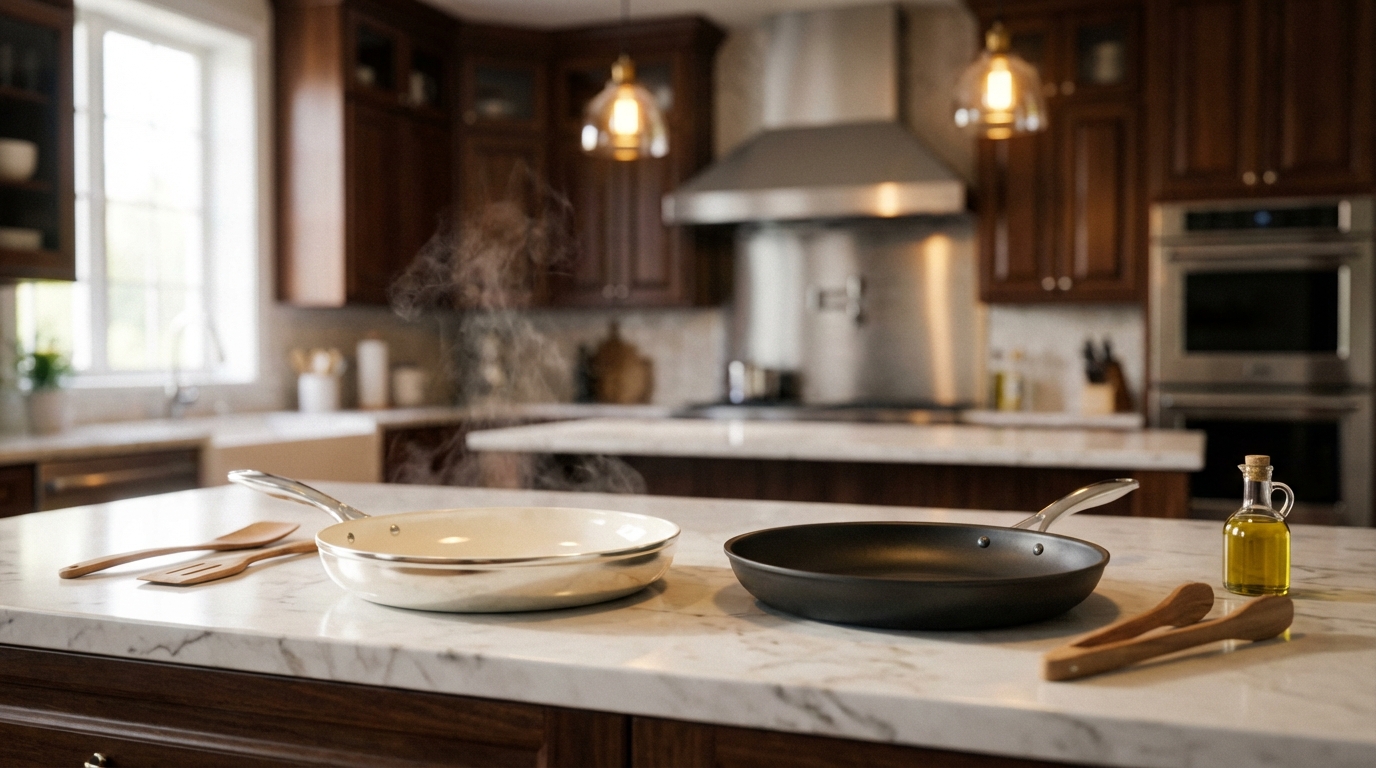
Choosing between ceramic and PTFE non-stick cookware isn't just about easy eggs--it's a decision that affects your health, wallet, and cooking style, and this article arms you with everything you need to pick the lesser evil. You'll learn that "ceramic" pans are actually sol-gel coatings that stay PFAS-free and safe to 800 degreesF, while PTFE delivers unbeatable slick release up to 500 degreesF but still belongs to the PFAS chemical family linked to cancer and hormone disruption even in "PFOA-free" pans. The guide walks you through real-world durability (PTFE usually lasts 3-5 years, ceramic 1-3), state bans starting in 2025, and practical care rules--no metal utensils, empty preheating, or aerosol sprays--that stretch either pan's short disposable life. It matches cookware to cooking habits: PTFE for delicate omelets and low-fat dishes, ceramic for high-heat sears and peace-of-mind homes with kids or pets, while urging you to skip costly matching sets and instead mix a replaceable ceramic non-stick with lifelong stainless, cast-iron, or carbon-steel workhorses. By the end you'll know exactly what to buy, how to use it safely, and when to toss it--so you can keep food from sticking without letting harmful chemicals stick to you.
Understanding the Basics: Ceramic and PTFE Coatings
Choose PFAS-free quasi-ceramic for 800 degreesF, oven-safe non-stick power, or stay below 500 degreesF with classic PTFE for effortless food release--just verify labels for heavy-metal-free formulas.
What makes a coating PFAS-free ceramic?
Real PFAS-free ceramic cookware gets its non-stick properties from silicon dioxide--basically sand--mixed with other inorganic materials [1]. Manufacturers apply this coating through what's called "sol-gel technology," essentially spraying or dipping the pan base in the mixture and curing it at 400-800 degreesF [2]. Since this is much cooler than traditional ceramic firing (which exceeds 2,000 degreesF), these coatings are more accurately called "quasi-ceramic" [1].
What makes ceramic different? The coating creates its slick surface without any PFAS chemicals, and it can handle temperatures up to 800 degreesF safely--significantly higher than PTFE's limits (we'll cover those next) [2]. But here's what to watch for: not all ceramic is created equal.
Look for cookware that explicitly states it's free from PFAS compounds and heavy metals like lead and cadmium [1]. Some manufacturers might use titanium dioxide nanoparticles or other proprietary materials, so transparency matters when choosing your cookware [1].
How PTFE non‑stick works and its trade‑offs
PTFE works by creating an incredibly slick surface thanks to its molecular structure of carbon and fluorine atoms--so slick that food simply can't stick to it [5]. This coating forms a barrier between your food and the metal pan underneath, which is why you need so little oil when cooking and cleanup is a breeze. If you're looking for effortless egg slides and easy cleanup, quality non-stick pans deliver that performance for everyday cooking. The good news about PTFE?
It won't react with acidic foods like tomatoes, handles normal cooking temperatures (up to 500 degreesF), and creates that coveted non-stick release we all want [4]. It's been the go-to choice for non-stick cookware for decades, and there's a reason for that. But let's talk about the trade-offs. The big one is temperature--go above 500 degreesF and PTFE starts breaking down, potentially releasing fumes that can cause flu-like symptoms (we'll dive deeper into health concerns in the next section) [5].
It's also not the most durable option: metal utensils will scratch it, and even with careful use, the non-stick properties fade over time [4][5]. Your PTFE pan safety checklist: - Never preheat empty - Stick to low and medium heat - Use wooden or silicone utensils only - Replace when you see scratches or flaking [5] While manufacturers stopped using PFOA in 2013, PTFE itself is still a type of PFAS--something to consider as you weigh your options [5].

Health & Safety Considerations
Scrutinize every "non-stick" label--only cookware explicitly certified PFAS- and PTFE-free, like solid ceramic or stainless steel, shields you from the cancer-linked chemicals that 143 million Americans already carry in their tap water.
PFAS‑free ceramic vs PTFE non stick - what the science says
Let's talk about what the research actually says about cookware safety. When PTFE-coated pans heat up, they release gases that range from mildly irritating to potentially toxic [6]. Here's what you need to know. PFAS--short for per- and polyfluoroalkyl substances--are the real concern. This family includes over 14,000 synthetic compounds linked to serious health issues like cancer, reproductive problems, and hormone disruption [7]. PTFE itself belongs to this PFAS family, which means even pans marketed as "PFOA-free" still contain these concerning chemicals [7].
The risks aren't abstract. A 2024 study found that 143 million Americans have detectable PFAS levels in their tap water. Another recent study from UNC Chapel Hill discovered higher PFAS blood levels in people who regularly eat ultra-processed foods [7]. While manufacturers swapped out PFOA for alternatives like GenX, research suggests these replacements carry similar risks [6]. So what's a safer choice? Look for cookware that's explicitly labeled as both PFAS-free and PTFE-free.
Even products labeled "ceramic" need verification--some still contain PTFE or other PFAS compounds [7]. For peace of mind, consider truly PFAS-free options like ceramic-coated pans or stainless steel, which offer excellent cooking performance without the chemical concerns. Keep in mind that scratched or damaged non-stick surfaces increase chemical leaching during cooking [7]. States are taking notice too--Minnesota banned PFAS-containing cookware starting January 2025, with Vermont, Connecticut, Rhode Island, and Colorado following suit between 2026 and 2028 [7].
Performance, Durability & Everyday Use
No non-stick pan lasts forever--PTFE beats ceramic for lifespan, ceramic wins on heat, but gentle hand-washing and banning metal utensils are what really stretch your disposable pan's brief one-to-five-year life.
Scratch resistance and lifespan comparison
When comparing the durability of non-stick cookware, PTFE coatings typically outlast ceramic options despite both having relatively short lifespans. PTFE-coated pans generally last between one to five years with proper care [9], while ceramic coatings tend to survive only one to three years before significantly losing their non-stick properties [10]. In durability testing, ceramic surfaces showed varying levels of scratch resistance, with higher-priced models withstanding metal utensil scraping without visible damage [8].
Less expensive ceramic options scratched immediately, with some developing long streaks showing the path of the metal spatula [8]. Despite manufacturer claims that some premium coatings can withstand metal tools, all non-stick surfaces degrade faster when exposed to abrasive utensils [8][10]. Even the most durable ceramic coating will eventually deteriorate through normal use, becoming less effective than a well-seasoned cast-iron or carbon-steel pan [10].
The primary advantage ceramic holds over PTFE is heat tolerance--ceramic withstands temperatures up to 800 degreesF without degrading, while PTFE begins breaking down at 500 degreesF (260 degreesC) [9]. Both coating types require similar care for maximum longevity: gentle cleaning with soft sponges, avoiding metal utensils, and proper storage to prevent surface damage [9]. Regardless of marketing promises, no non-stick pan is truly permanent; as one expert states, these pans are "disposable by design" [10].
Cleaning, maintenance, and cookware care tips
Proper care dramatically extends the life of both ceramic and PTFE coatings. Here's how to protect your investment and ensure safe cooking: Daily Cleaning: Use only soft sponges with soap and water--never abrasive pads that scratch the surface [11]. Despite some pans being labeled "dishwasher-safe," hand washing preserves coatings significantly longer [11].
Let pans cool completely before washing to prevent warping, and avoid thermal shock by never submerging hot pans in cold water [11][12]. Smart Cooking Practices: Choose wooden or silicone utensils over metal, which damages even pans marketed as "metal-utensil safe" [11][13]. Never preheat empty non-stick pans--this causes dangerous overheating with PTFE and damages ceramic coatings [11][13]. Instead, add a small amount of oil before heating [13].
Skip aerosol cooking sprays, which leave sticky residue at lower temperatures than butter or oil; some manufacturers note this can void warranties [11]. Maintenance Tips: For stubborn residue buildup, apply a baking soda and water paste, let sit up to 24 hours, then wash normally to restore non-stick properties [11]. When storing, protect surfaces by separating stacked pans with soft cloth or paper towels [11][13]. Know When to Replace: Discard pans with visible chips, scratches or flaking--damaged coatings can release particles into food [11]. Some cooks adopt a practical three-pan system: an inexpensive non-stick pan replaced yearly, a mid-tier hard-anodized pan for daily cooking, and


Choosing the Right Pan for Your Kitchen and Wallet
Build a strategic mix--PTFE for low-fat eggs and crepes, ceramic for high-heat sears, and skip the bargain set so you're not forced to trash PFAS pans when laws change.
Matching cooking style to coating strengths
Let's match your cooking habits to the right non-stick surface. If you're primarily making eggs, fish, or delicate crepes, PTFE excels at these low-to-medium temperature tasks where food release matters most [14]. The ultra-slick surface means you can cook with minimal oil--perfect if you're watching your fat intake [14]. But here's where it gets interesting: if you love getting a good sear on steaks or tossing stir-fries over high heat, ceramic becomes your better friend.
Unlike PTFE's strict temperature ceiling, ceramic handles heat up to 800 degreesF without any safety concerns [15]. You can preheat it empty, crank up the burner, and never worry about harmful fumes [15]. For acidic dishes like shakshuka or tomato-based sauces, PTFE's completely nonreactive surface has a slight edge--no metallic notes sneaking into your marinara [14]. Want to skip the coating debate entirely?
Consider carbon steel, which develops its own natural non-stick surface through seasoning. Once properly seasoned, a
Cost‑effectiveness and long‑term value of PFAS‑free ceramic vs PTFE
Here's the real talk about cookware economics: that bargain PTFE pan might not be such a bargain after all. Yes, PTFE typically costs less upfront and lasts slightly longer (3-5 years versus ceramic's 1-3 years), giving it a minor edge in pure cost-per-year calculations [17]. But this math gets complicated fast. Ceramic's higher price tag reflects its PFAS-free peace of mind--no worrying about overheating accidents that would instantly ruin a PTFE pan [17]. Plus, as discussed in our health section, several states are phasing out PFAS cookware entirely.
If you're buying PTFE today, you might need to replace it for legal reasons, not just wear [16]. The smartest approach? Skip the matching set mentality entirely. Instead of dropping hundreds on cookware that degrades at different rates, build your collection strategically [18]. Start with one quality ceramic non-stick for your morning eggs, then invest in workhorse materials that actually improve with age--stainless steel for browning, cast iron for heat retention, or carbon steel for versatility [17].
This targeted approach means you're only replacing the $30-60 non-stick pan every few years while your other cookware becomes family heirlooms [18]. For households with kids or pets, that ceramic premium buys something priceless: zero anxiety about accidental overheating during those chaotic dinner rushes [17]. Sometimes the "expensive" option saves money--and stress--in the long run.
- PTFE pans degrade above 500 degreesF, releasing fumes; ceramic tolerates 800 degreesF safely.
- All PTFE is PFAS, linked to cancer and hormone disruption; true ceramic is PFAS-free.
- PTFE lasts 3-5 yrs, ceramic 1-3 yrs; both are disposable by design.
- States banning PFAS cookware 2025-28; PTFE purchases may need early replacement.
- Never preheat empty PTFE; use wood/silicone tools to extend coating life.
- Hand-wash only, avoid aerosol sprays, discard when scratched to limit exposure.
- Match pan to task: PTFE for eggs/fish, ceramic for high-heat searing.
- https://ceramics.org/ceramic-tech-today/ceramic-coated-cookware-safety/
- https://www.solamexhome.com/is-ceramic-cookware-safe-a-science-backed-guide-for-home-cooks.html
- https://www.healthline.com/nutrition/nonstick-cookware-safety
- https://holscot.com/pros-cons-ptfe-coating-meaning/
- https://www.dekmake.com/what-is-teflon-coating/
- https://pubmed.ncbi.nlm.nih.gov/28913736/
- https://www.northcarolinahealthnews.org/2025/10/27/unc-study-food-processing-cookware-packaging-to-pfas-exposure/
- https://www.seriouseats.com/best-ceramic-cookware-8723380
- https://en.pfluon.com/evaluating-the-lifespan-and-durability-of-non-stick-coatings/
- https://www.epicurious.com/expert-advice/best-nonstick-pan-to-buy-reviews-article
- https://www.consumerreports.org/home-garden/cookware/make-your-nonstick-frying-pan-last-a1106078664/
- https://www.reddit.com/r/GoodValue/comments/59g4gd/ceramic_vs_teflon_nonstick_pans/
- https://cooking.stackexchange.com/questions/2564/how-to-look-after-non-stick-cookware-so-it-lasts
- https://www.seriouseats.com/nonstick-vs-ceramic-skillets-7110252
- https://www.americastestkitchen.com/articles/2299-which-type-of-nonstick-skillet-is-right-for-you
- https://www.consumerreports.org/home-garden/cookware/best-frying-pans-if-you-want-to-avoid-pfas-chemicals-a1006253549/
- https://thegoodlifedesigns.com/ceramic-vs-teflon/
- https://www.zendaguide.com/post/best-frying-pans-non-toxic-durable