

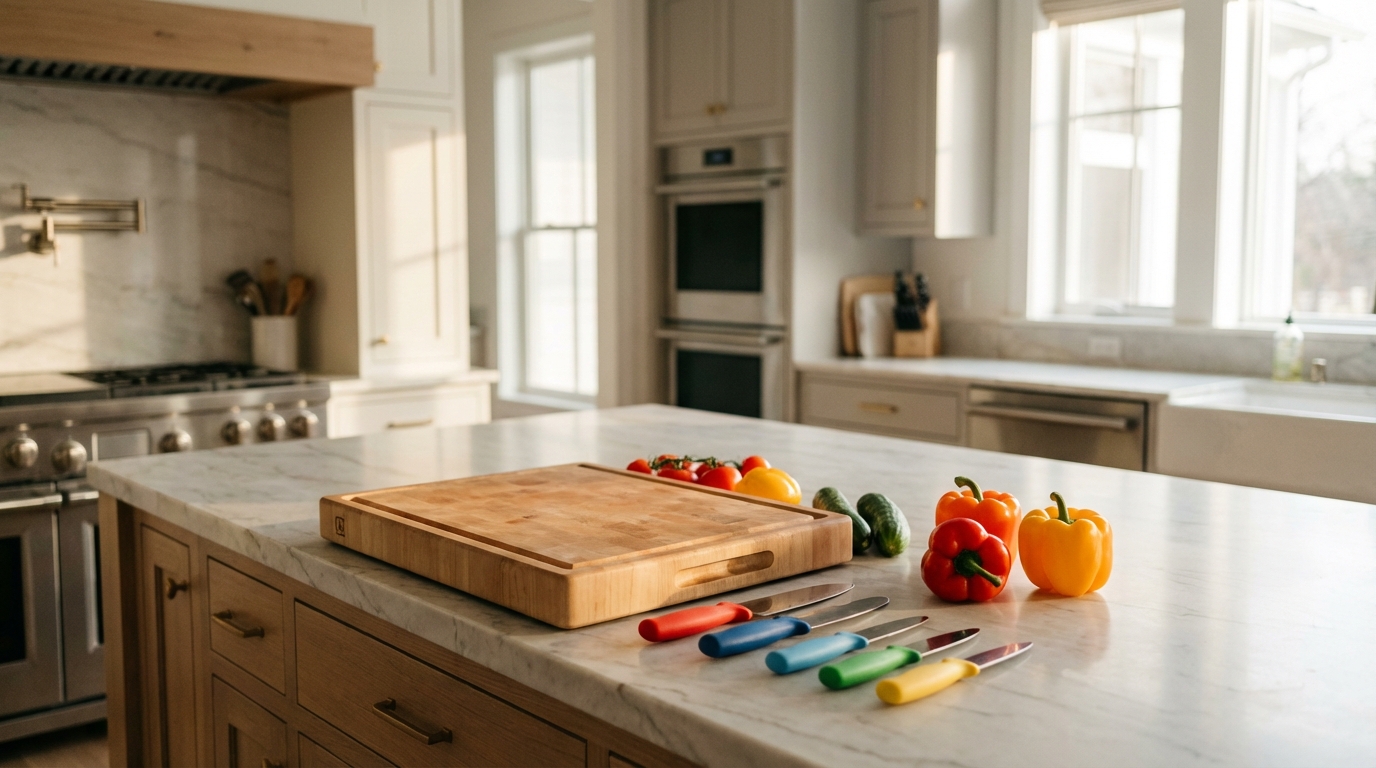
Teaching kids to use knives safely transforms the kitchen from a danger zone into a classroom for life skills, and this article equips parents with every tool they need to make that shift. Readers will learn why supervised knife practice reduces overall injury risk while boosting children's confidence and willingness to eat the healthy foods they chop themselves, then discover how to choose an age-appropriate blade--whether a nylon toddler knife, a 4.5-inch stainless starter, or a balanced small chef's knife with a rounded tip and grippy handle. Step-by-step photo-ready instruction follows on the "bear-claw" grip, bridge and rock-chop techniques, and the safest sequence for progressing from soft strawberries to crunchy carrots, all while maintaining a clutter-free, well-lit workspace at the right height. The guide also covers coaching-style supervision that calms anxious cutters and reins in daredevils, plus easy habits that extend safety beyond the cutting board: drying knives immediately, storing them in designated blocks or magnetic strips, and keeping blades sharp so kids never fight a dull edge. By the end, parents understand that consistent rules, patience, and the right kid-sized tool turn knife skills into a springboard for independence, healthy eating, and proud family meals.
Why Knife Safety for Kids Matters
Teaching kids to handle knives safely transforms them from accident-prone kitchen hazards into confident, vegetable-curious junior chefs who understand their capabilities and actually want to eat the healthy foods they've chopped themselves.
Understanding kitchen hazards that affect kids
The kitchen can be a risky place for kids, especially when it comes to knives. Nearly half of all hand injuries treated in emergency rooms come from food prep and knife use [1]. Think about all the ways knives create hazards for curious little hands -- left in soapy water where they're hidden, stored loose in drawers, or forgotten on counters within reach [1].
These everyday scenarios lead to preventable accidents. The good news? When you understand these specific risks, you can create a safer cooking environment.
Take time to talk through kitchen safety rules before any cooking project. Point out where knives are stored, explain why they stay in certain places, and help kids recognize potential dangers. This upfront conversation builds the foundation for confident, supervised kitchen participation [1].
Building confidence with guided knife safety for kids
Teaching kids to use knives safely does more than just help in the kitchen -- it builds real-world confidence. When children learn to handle knives properly, they develop skills that extend into every part of their lives [4]. With the right supervision and age-appropriate tasks, kids learn to assess risks accurately. Research shows this actually makes them safer overall, because they understand their own capabilities better [4]. It's a powerful shift from protecting kids from everything to teaching them how to handle challenges responsibly.
Here's something amazing that happens when kids help with meal prep -- they actually want to eat what they've made. Children who use knives to prepare fruits and vegetables become curious about ingredients instead of resistant to trying them [4]. It completely changes the dinnertime dynamic. As one cooking instructor noticed, when kids chop their own veggies, they engage with healthy foods in a fun, pressure-free way that sticks with them for life [4]. Ready to get started?
Set clear ground rules from day one. Make sure kids understand that knives are tools, not toys, and always demonstrate techniques before letting them try [4]. Create the right environment for learning -- clear your workspace and make sure everyone's had a snack first (as mentioned in our workspace setup tips, hungry kids have trouble focusing) [4]. Start simple with tools like vegetable peelers or enclosed food choppers before moving to child-appropriate knives available from various retailers [4]. Every successful cutting experience builds confidence -- yours and theirs -- creating momentum toward true kitchen independence [4].

Choosing a Durable, Kid‑Friendly Knife
Pick a 4-5-inch stainless-steel or nylon kids' knife with a rounded tip, rubbery grip, and toddler-sized handle so your child gains real cutting control without puncture danger.
Blade size, material, and ergonomic handles for small hands
Selecting the right knife for a child requires careful consideration of blade characteristics that balance safety with functionality. Children benefit most from knives with rounded or blunt tips that minimize puncture risk while still providing cutting ability [7]. This design eliminates the most dangerous type of kitchen injury--accidental puncture wounds--while still allowing children to develop proper technique. Blade size matters significantly; smaller blades (4-5 inches) provide better control for small hands and reduce fatigue during use [6].
For material, stainless steel options like 5Cr14MoV offer an ideal balance of corrosion resistance and ease of sharpening--important qualities when children may forget to dry knives properly after washing [7]. Alternatively, wooden knives provide a gentle introduction for toddlers, offering enough cutting ability for soft foods without significant injury risk [5]. Ergonomic handles specifically designed for children's grip strength and hand size make a critical difference in both comfort and safety. Look for non-slip materials like rubberized grips or textured synthetics that maintain traction even when wet or greasy [7].
The Victorinox Swiss Classic 4.5 Inch Tomato and Table Knife exemplifies good beginner design with its lightweight construction and comfortable grip [6]. For younger children, options like the nylon knife set from Curious Chef feature specialized grips that prevent little hands from losing control [5]. Weight distribution matters too--a well-balanced knife prevents awkward movements that could lead to slips or improper technique [7]. Rather than focusing solely on removing all sharp edges, prioritize finding appropriately sized tools that teach children to respect the functionality of real kitchen implements [5].
Affordable quality that supports long‑term knife safety for kids
Quality kitchen knives for children don't need to break the bank. The Zyliss Lettuce Knife offers an inexpensive entry point that cuts effectively while being inherently safer due to its non-metal design [8]. For slightly more investment, the Victorinox Swiss Classic 4.5 Inch Tomato and Table Knife balances affordability with durability - an important consideration since flimsy knives increase accident risk [6].
When comparing options, focus on features that extend usability as children develop their skills. Knives with grippy, ergonomic handles prevent slipping and accommodate growing hands, while blades made from quality materials like the stainless steel in the Victorinox Swiss Classic 5-Inch Chef's Knife maintain their edge with proper care, eliminating the safety hazards of dull blades [6]. For families with multiple young chefs, consider sets like the Curious Chef 3-Piece Knife Set that includes different sizes for various tasks, providing better long-term value than single, task-specific tools [8].
The right investment pays dividends in both safety and skill development, with quality knives encouraging proper technique while lasting through years of kitchen adventures [6].
Fundamental Rules and Cutting Techniques for Kids
Master the "claw," "bridge," and gentle rock-chop with soft strawberries first, and your child will safely graduate from bananas to crunchy carrots with confidence and kitchen joy.
Proper grip, stance, and the claw safety method
Let's start with the basics that every young chef needs to master. Have your child hold the knife in their strongest hand, wrapping fingers firmly around the handle for secure control [9]. Their feet should be shoulder-width apart, standing directly in front of the cutting board--good balance prevents accidents.
The "claw" grip (or "bear claw" as kids love to call it) is your child's best friend in the kitchen. Show them how to curl their fingertips under, keeping them safely away from the blade while holding food steady [9][10]. This technique becomes second nature with practice, so be patient and offer gentle reminders.
For round foods that like to roll away, teach the "bridge" technique: fingers on one side, thumb on the other, creating a secure hold while slicing through the middle [9]. When working with herbs, the "cross chop" keeps things safe--one hand on the knife handle, the other resting flat on top of the blade, rocking back and forth [9]. These positions might feel awkward at first, but with your guidance, they'll soon become automatic.
Easy rock‑chop and slice‑and‑dice methods that reinforce safety
Now that your child has mastered the basic grips, let's explore techniques that make cooking both safe and fun. The rock-chop method is perfect for herbs and garlic--one hand grips the handle while the other rests flat on top of the blade, away from the tip [11]. Show them how to rock the knife in a steady rhythm, pivoting without lifting it completely off the board [10]. Kids love this technique because it feels like they're really cooking! Start your young chef with soft ingredients that forgive mistakes--bananas and strawberries are perfect first foods. As their confidence grows, move to firmer items like zucchini, then eventually tackle crunchy carrots [11].
This gradual progression keeps things positive and builds real skills. For tricky vegetables like bell peppers, teach them to think before they cut. First, slice off the top and bottom to create stable surfaces. Then, make a cut down one side to flatten it out. Now they can easily slice it into strips and dice from there [10]. This step-by-step approach teaches patience and planning--essential kitchen skills that go beyond just cutting.
Remember, every child learns at their own pace. Some will master these techniques quickly, while others need more practice. The key is keeping it enjoyable while maintaining those safety fundamentals. When they're ready for their own knife, consider starting with a

Supervision, Care, and Sustainable Knife Use
Create a calm, clutter-free, well-lit workspace at the right height, stay close as a relaxed coach, and match your supervision style to your child's temperament so every young chef can master safe, sustainable knife skills at their own pace.
Setting up a kid‑safe workspace and effective supervision
A safe workspace sets the foundation for successful knife skills. Start by clearing clutter and wiping down your cutting surface--a clean workspace helps everyone focus better [12]. Set up at a height where your child can work comfortably without stretching or tiptoeing, which prevents awkward movements that could lead to accidents. Pro tip: feed your young chef first. Hungry kids struggle to concentrate, making them more accident-prone [12].
Your workspace needs good lighting (no shadows on the cutting board!) and a stable, non-slip surface. When it comes to supervision, think of yourself as a calm coach rather than an anxious guard. Stay close enough to guide but relaxed enough to build confidence--kids pick up on nervous energy, which can actually increase mishap risk [2]. Set clear ground rules before you begin: knives never leave the cutting board, hands stay visible, and work pauses if attention wanders [12]. Every child brings their own temperament to the kitchen.
Some naturally approach tasks cautiously while others dive in headfirst. Match your supervision style to their personality--more structure for the enthusiastic ones, extra encouragement for the hesitant [2]. This personalized approach helps each child develop skills at their own pace while staying safe.
Cleaning, sharpening, and storage to extend knife life and safety
Teaching proper knife care makes safety habits stick.
Smart storage keeps everyone safe--whether that's a
- Nearly half of ER hand injuries stem from food-prep knife use, mostly from hidden or reachable blades.
- Kids who chop their own veggies become curious about healthy foods and eat more of them.
- Start with 4-5-inch stainless or nylon knives that have rounded tips and grippy child-size handles.
- Teach the claw grip, bridge hold for round foods, and rock-chop for herbs to keep fingertips safe.
- Always clear, well-lit, non-slip workspace; feed kids first so hunger doesn't erode focus.
- Match supervision to temperament: calm coaching for eager kids, extra encouragement for cautious ones.
- Store knives safely and involve kids in drying and putting away to reinforce respect for the tool.
- https://www.consumernotice.org/products/home-safety/kitchen/
- https://happykidskitchen.com/teaching-knife-skills-to-toddlers-and-kids-safety-and-basics/
- https://www.canr.msu.edu/news/building_confidence_in_your_junior_chef_kitchen_knife_skills
- https://wellnessmama.com/motherhood/kids-use-knives/
- https://reachformontessori.com/montessori-knife/
- https://www.nytimes.com/wirecutter/reviews/best-tools-for-cooking-with-kids/
- https://bpsknives.com/how-to-choose-a-child-s-first-knife-5-key-criteria/?srsltid=AfmBOop_5wAl4zRrSl0cudaSLt0rGza0AmRgf4I_1tCcBGCofNFKpi3r
- https://nourishingjoy.com/safe-kid-friendly-knives-that-actually-cut/
- https://www.bbcgoodfood.com/howto/guide/chopping-and-basic-knife-skills-kids-kitchen
- https://www.americastestkitchen.com/articles/6359-how-to-teach-kids-to-chop-slice-and-mince-anything
- https://baketivity.com/blogs/news/basic-knife-skills-for-kids-safe-tips-for-parents?srsltid=AfmBOoqqUa1T3inhZ_nNle5KAAsheLM6rRQRbFOy1eYUt2ipSDhJLvht
- https://theknifeconnection.com/blog/5-mustknow-knife-safety-rules-and-tips-for-kids/
- https://www.knifesharpening.sg/blog/knife-safety-tips-for-families-with-kids