

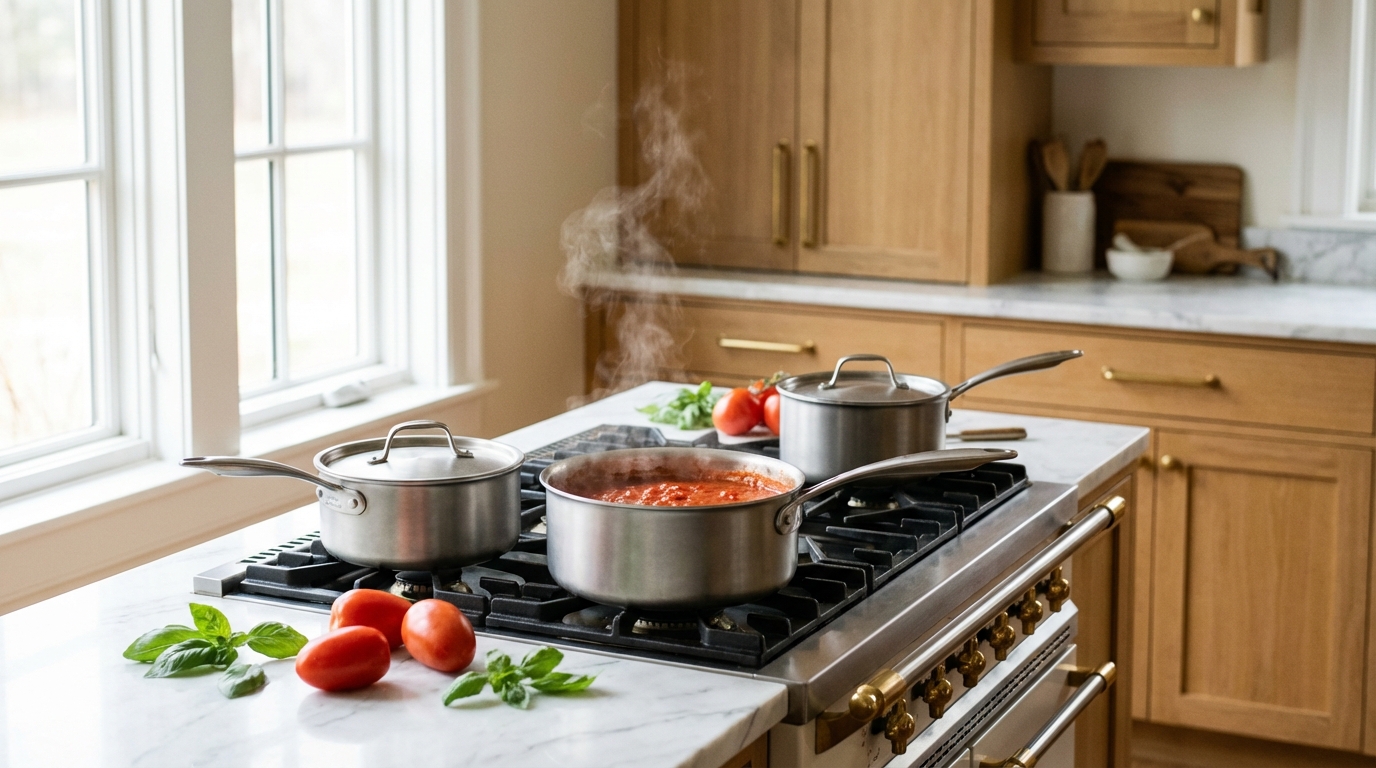
Nickel-free cookware offers a practical solution for the 10% of people--especially women--who suffer from nickel allergies by eliminating the metal that can leach from conventional stainless steel pots and pans, particularly when cooking acidic foods like tomato sauce. The article explains how standard stainless steel grades like 304 contain 8-12% nickel that transfers into food during cooking, with studies showing nickel levels can increase up to 26-fold after six hours, potentially triggering allergic reactions even at low doses. Readers learn to identify truly nickel-free options by looking for 18/0 stainless steel markings, understanding that while these pots lack the mirror shine of nickel-containing cookware, they provide superior flavor preservation, nutritional integrity, and induction compatibility at a lower cost. The comprehensive guide covers everything from selecting quality multi-layered construction and proper weight to decoding manufacturing certifications, while also providing detailed care instructions to prevent corrosion and extend longevity. Most importantly, the article demonstrates how nickel-free cookware excels in real-world cooking scenarios, from preserving the bright flavors of lemon-based sauces to enabling safe preparation of budget-friendly one-pot meals, making it an essential investment for health-conscious cooks who refuse to compromise on taste or safety.
Why Nickel‑Free Matters for Health and Flavor
Switching to nickel-free cookware shields the 1 in 10 people prone to nickel allergy from the 483 µg of the metal that can migrate into a single serving of tomato sauce--while also keeping metallic flavors from hijacking your food.
Understanding nickel allergies and cookware risks
Nickel allergy affects approximately 10% of the population, particularly women, triggering an immune system reaction when the skin contacts this metal [1]. The reaction typically manifests as an itchy rash with redness, skin changes, or blisters at the point of contact [1]. While jewelry and metal objects are well-known triggers, many people remain unaware that their cookware serves as a significant source of nickel exposure.Stainless steel pots and pans contain 8-12% nickel in grade 304 and 10-14% in grade 316, which can leach into food during cooking [2].
This leaching process accelerates dramatically with acidic foods like tomato sauce, where studies show nickel concentrations can increase up to 26-fold after just six hours of cooking [2]. The longer food cooks, the more nickel transfers--reaching a 34-fold increase after 20 hours [2]. Even after multiple uses, stainless steel continues releasing nickel; the tenth cooking cycle still contributed 88 μg of nickel per serving of tomato sauce [2].These levels matter because toxicological studies demonstrate that oral doses as low as 67 μg of nickel can trigger cutaneous reactions in nickel-sensitive individuals [2].
For context, a single serving of tomato sauce cooked in a new stainless steel saucepan contains approximately 483 μg of nickel--nearly half the tolerable upper intake level for an entire day [2]. This exposure becomes especially problematic since nickel has no essential biological role in humans, making any additional intake potentially problematic for sensitive individuals [3].
How nickel‑free stainless steel preserves taste and nutrition
Here's the real benefit of cooking with nickel-free stainless steel--your food tastes exactly as it should. When you're simmering tomato sauce or squeezing fresh lemon over fish, traditional stainless steel can leave behind subtle metallic notes that muddy your carefully crafted flavors [4]. Nickel-free cookware eliminates this issue, giving you a neutral cooking surface that lets ingredients shine. Think about it: you spend time selecting quality ingredients and perfecting recipes. Why let your cookware interfere?
This becomes especially important with delicate dishes--a light lemon butter sauce or fresh herb-infused oil--where any metallic taste would throw off the balance you're trying to achieve. Beyond taste, nickel-free cookware helps preserve the nutritional integrity of your meals. Standard stainless steel leaches nickel into food during cooking, particularly when you're working with acidic ingredients like tomatoes, vinegar, or citrus [4]. While nickel-free options may require a bit more care to prevent corrosion, they eliminate this metal transfer entirely [4]. You get a cleaner cooking surface that keeps nutrients where they belong--in your food, not leached into it [5].
Yes, there's a trade-off. Nickel-free stainless steel won't have that mirror-like shine you see in traditional cookware--nickel is what creates that lustrous finish [4]. But here's where smart construction comes in. Quality nickel-free cookware often features multi-layered designs, like
Choosing the Best Non Toxic Stainless Steel Pots for Your Kitchen
Grab 18/0 stainless steel--zero nickel, induction-ready, budget-friendly, and clearly labeled--to dodge nickel reactions without sacrificing everyday cooking performance.
Key material grades, certifications, and nickel‑free guarantees
When shopping for nickel-free cookware, you'll need to decode those numbers on the packaging. The cookware industry keeps it simple with a two-number system (like 18/8) where the first number tells you the chromium percentage and the second reveals the nickel content [6]. Here's what matters: look for 18/0 stainless steel, which contains about 18% chromium but absolutely zero nickel [6]. Common grades like 18/8 and 18/10? They contain 8% and 10% nickel respectively, so they're off the table if you're dealing with nickel sensitivities [8].
That popular 304-grade stainless steel you see everywhere? It packs 8-10.5% nickel, so skip it too [7]. Now, let's be real about what you're trading for that nickel-free benefit. Your 18/0 stainless steel won't have that mirror-like shine you might expect from traditional cookware, and it's more susceptible to discoloration over time [6]. But here's what you gain: these pots work beautifully on induction cooktops thanks to their magnetic properties, they're typically easier on your wallet, and they'll still handle your everyday cooking needs with confidence [6].
A word of caution: don't fall for vague "non-toxic" labels without specific details about the materials [8]. What you want are products that clearly state their 18/0 composition or explicitly say "nickel-free stainless steel." Look for manufacturing certifications from countries known for strict standards--think USA or Italy [8]. These certifications give you confidence that your cookware truly delivers on its nickel-free promise.
Practical checklist for durability, price, and everyday use
Ready to shop? Here's your practical checklist for choosing nickel-free cookware that'll serve you well for years. First up, weight matters more than you might think. Heavier pans distribute heat more evenly and tend to outlast their lightweight cousins--but don't go so heavy that you struggle to lift them when they're full [11]. The sweet spot?
Look for multi-layered (clad) construction with aluminum or copper cores sandwiched between stainless steel layers [10]. This design gives you superior heat conductivity without the nickel concerns. Quality stainless steel cookware often features this smart construction approach. Before you buy, run these quick checks: * Handles should feel secure and balanced--wobbly handles mean trouble down the road * The base must sit perfectly flat on your cooktop (warped bases are a deal-breaker) [11] * Look for that 18/0 marking we discussed earlier [9] * Check the weight--it should feel substantial but manageable Here's something that might surprise you: with proper care, quality nickel-free stainless steel can last just as long as traditional options--we're talking decades of reliable cooking [11]. Yes, you'll notice some discoloration over time (remember, no shiny nickel coating), but that's just character, not damage [9].
One final tip: stick with reputable manufacturers who clearly disclose their materials. As mentioned earlier, certifications from countries with strict standards offer extra peace of mind [9]. Your health is worth the extra homework.
Caring for Your Nickel‑Free Pots to Maximize Longevity
Treat your nickel-free stainless steel pots to gentle, thorough drying, baking-soda pastes, vinegar rinses, and soft barriers between stacked pieces, and they'll stay gleaming and warp-free for years.
Simple cleaning routines that protect non‑toxic surfaces
Caring for nickel-free stainless steel doesn't have to be complicated--you just need the right approach. First, let your pots cool completely before cleaning. This prevents warping that can happen when cold water meets hot metal [12]. For everyday cleaning, warm soapy water and a soft dishcloth work perfectly. Skip the steel wool and harsh scrubbers that could scratch the protective surface [13].
Since nickel-free cookware lacks that extra corrosion resistance, take an extra moment to dry your pots thoroughly with a soft towel--this simple step prevents water spots and mineral buildup [12].When food sticks, don't worry--make a simple paste with baking soda and water. Let it sit on problem spots for 15 minutes, then gently scrub with a soft sponge [12]. Another trick? Add water to the pan, bring it to a boil, then turn off the heat and use a wooden spoon to easily lift away stubborn bits [12]. Those rainbow-colored stains that sometimes appear on nickel-free surfaces?
They're harmless but easily removed with a vinegar solution (one part vinegar to three parts water). Just bring it to a boil, let it cool, and wash normally [12]. For hard water deposits--those chalky white spots--tackle them right away with the same vinegar method to keep your cookware in top shape [13]. Here's a pro tip: always wait until water boils before adding salt. This prevents pitting, which is especially important since nickel-free stainless steel relies entirely on chromium for protection [12].
Storage and wear‑prevention tips for lasting performance
Smart storage keeps your nickel-free cookware performing beautifully for years. Since these pots lack nickel's extra protection, they need a bit more care when stacking. Try hanging them on sturdy hooks when possible--it's better for the cookware and often saves cabinet space too. If you need to nest your pots, place a soft barrier like paper towels or pan protectors between each piece to prevent scratches [12]. Never store leftovers in these pots, especially acidic foods like tomato sauce or anything salty--transfer them to containers instead [12].
Before storing, make sure your cookware is completely dry. Even a tiny bit of moisture can cause issues over time [15]. Choose your cooking utensils wisely--wooden, bamboo, or silicone tools protect that important chromium layer better than metal ones [12]. Keep heat at low to medium settings whenever you can. Not only does this prevent sticking, but it also avoids those rainbow marks that tell you the metal structure is changing [12].
Regular care and maintenance checks help your cookware last longer. Look for warping, deep scratches, or pitting--these signs mean it's time to replace the pot [15]. Despite trading shine for health benefits, quality nickel-free stainless steel cookware can serve you well for decades when properly cared for [15].
Everyday Cooking with Nickel‑Free Pots: Real‑World Recipes
From bright marinara to dairy-free avocado pasta and budget-savvy taco skillets, nickel-free cookware lets you cook acidic, allergy-friendly meals that taste purely of their ingredients while slashing both metal exposure and grocery costs.
Quick allergy‑safe dishes that showcase the cookware's strengths
Nickel-free cookware shows its value through dishes that highlight its ability to safely cook acidic foods without metal leaching. For those with nickel allergies, a low-nickel diet requires avoiding whole grains, canned foods, beans, and certain vegetables [16]. Tomato-based recipes particularly showcase nickel-free pots' advantages, as tomatoes' acidity would normally cause significant nickel transfer in standard cookware.
Try a quick marinara sauce with fresh tomatoes, garlic, and basil--the pure, non-metallic taste demonstrates how nickel-free cookware preserves authentic flavors. For a complete meal, prepare dairy-free creamy avocado pasta by blending ripe avocados with lemon juice, garlic, and olive oil [18]. The lemon's acidity would typically accelerate metal leaching in conventional pots, but nickel-free options maintain the sauce's bright flavor profile.
Allergy-friendly baked chicken tenders offer another excellent option, using wheat-free breadcrumbs and cooking evenly due to nickel-free pots' typically balanced heat distribution [18]. For those concerned that cookware might contribute to allergy symptoms beyond skin reactions, these recipes provide a practical way to test whether eliminating nickel exposure improves overall health [17]. When preparing these dishes, you'll notice nickel-free cookware maintains consistent temperatures without hot spots, preventing burning while ensuring thorough cooking--particularly valuable for delicate sauces and proteins that require precise heat control.
Budget‑friendly meal planning using durable, long‑lasting pots
Nickel-free cookware becomes a budget asset when used for one-pot meals that minimize both cooking effort and ingredient costs. One-pot cooking naturally reduces food waste by combining ingredients in a single vessel, allowing flavors to meld while limiting the number of ingredients needed [19]. Ground beef skillet meals provide exceptional value--dishes like Crunchy Beef Taco Skillet combine affordable proteins with pantry staples like rice, beans, and tortilla chips to create satisfying meals that often yield leftovers [19].
For those avoiding beef, chicken-based one-pot options like Spanish Chicken and Rice deliver complete nutrition with minimal ingredients, ready in just 30 minutes [19]. The sturdy construction of nickel-free pots makes them ideal for frequent cooking cycles needed in budget meal planning--cook once, eat twice becomes a practical strategy that reduces both energy costs and cooking time [19]. When planning weekly meals, focus on versatile base ingredients that work across multiple recipes; lentils and beans offer affordable protein alternatives while working beautifully in nickel-free pots that distribute heat evenly [21].
For working professionals, consider dedicating one weekend hour to batch cooking staples in your nickel-free pot--Singaporean noodle dishes, quinoa-based meals, and vegetable-rich pasta skillet recipes all store well for days while maximizing the pot's corrosion-resistant properties [20]. The magnetism of nickel-free stainless steel makes these pots induction compatible, potentially saving 5-10% on energy costs compared to conventional electric cooking--another budget advantage over typical cookware [20].
- 10% of people, mostly women, react to nickel leached from 18/8 stainless cookware.
- Acidic tomato sauce cooked 6 h in stainless steel absorbs 26x more nickel than raw.
- Choose 18/0 stainless steel: 18 % chromium, 0 % nickel, induction-ready, budget-friendly.
- Cool pans before washing, dry thoroughly, skip steel wool to stop rust on nickel-free steel.
- Boil vinegar-water to erase rainbow stains and hard-water spots on 18/0 pots.
- Cook marinara or lemon sauces in nickel-free pots to keep flavors pure and metal-free.
- Batch one-pot meals like Spanish chicken and rice save money and avoid nickel exposure.
- https://www.mayoclinic.org/diseases-conditions/nickel-allergy/symptoms-causes/syc-20351529
- https://pmc.ncbi.nlm.nih.gov/articles/PMC4284091/
- https://www.ncbi.nlm.nih.gov/books/NBK592400/
- https://www.leafscore.com/eco-friendly-kitchen-products/stainless-steel-cookware-pros-cons/
- https://www.healthierhomes.com/post/what-is-the-healthiest-material-for-cookware?srsltid=AfmBOorYF67MbqxfOH0lLUa_DM4VJDjHbFhQmuOTrnzAFf8EgEUGKqra
- https://www.xometry.com/resources/materials/18-8-vs-18-10-vs-18-0-stainless-steel/
- https://us.ciarraappliances.com/blogs/news/304-stainless-steel?srsltid=AfmBOooJuPwlRi5N5aRtrrIoBA2jfP6tTMvrPoz8PmWTyE_UYbfigvck
- https://www.prettyorganicgirl.com/stainless-steel-cookware
- https://bestsellingview.com/nickel-free-stainless-steel-cookware/
- https://www.cupindy.com/blogs/info/stainless-steel-grades-cookware?srsltid=AfmBOoqQ91VKNmX5aDuXBlBbmHJsrHbpgaq1rEW89Ao8Y1_nmJIp17yk
- https://nephcure.org/safe-kitchen-choices-a-comprehensive-guide-to-non-toxic-cookware/
- https://traditionalcookingschool.com/food-preparation/the-scoop-on-stainless-steel-cookware/
- https://barkeepersfriend.com/dos-donts-cleaning-stainless-steel/
- https://stahlkitchens.com/blogs/news/the-role-of-nickel-in-stainless-steel-cookware?srsltid=AfmBOopgNkErJCk6kWtAaAslgiuvkz2YYX-q-aGU22OZQKADS1Wd12OC
- https://www.debuyer-usa.com/blogs/news/the-secret-to-longevity-how-long-do-pots-and-pans-last?srsltid=AfmBOooJJvON5DvJZjLQVF08cLmCAExqEaCzjkRevbRP0i005Is-wrxc
- https://theroguecookie.com/quick-easy-low-nickel-recipe-ideas/
- https://www.reddit.com/r/StainlessSteelCooking/comments/1ia7svg/stainless_steel_cookware_nickel_allergy/
- https://www.austinallergist.com/the-ultimate-guide-to-allergy-friendly-cooking-delicious-recipes-useful-tips/
- https://www.thriftyfrugalmom.com/cheap-one-skillet-meals-easy-dinner-recipes/
- https://www.allrecipes.com/gallery/easy-one-pot-dinners/
- https://workweeklunch.com/one-pan-dinner-ideas/