Glass-Top Stoves Love These Pans (and Hate Those)
About Misen
We make kitchen tools that work better, last longer, and cost less than you’d expect: everyday innovations with a radical focus on our customers’ actual need.
Table of Contents
Summary
Glass-top stoves demand cookware that stays perfectly flat, and this article shows you exactly which pans deliver even, scorch-free heat and which ones warp, scratch, or leave permanent hot-spots on the delicate surface. You'll learn why clad stainless and cast-aluminum nonstick pans glide and brown beautifully while rough cast iron and stoneware act like sandpaper, and why induction-friendly magnetic bases and smooth enamel matter. It pairs those material insights with real-world picks--five-ply stainless skippers such as Made In, flat-disc Tramontina Prima, and PTFE or ceramic nonsticks without encapsulated bottoms--so you can sear, scramble, or flip without warping or coating burn-out. Beyond cookware, it teaches low-abrasive cleaning habits (razor blade at 45 degrees, specialty paste, lemon/baking-soda soak) and daily maintenance moves (lift, never slide; wipe while warm; avoid sugary spills) that keep the cooktop mirror-smooth. You'll finish with sizing and budget tips (balanced weight, angled handles, tri-ply over disc-only) that let you choose versatile sets or streamlined essentials without overspending. In short, you walk away knowing which pans protect and maximize the performance of your glass-top range and how to keep the whole setup looking showroom-new for years.
What Makes a Pan Glass-Top Friendly
A flat-bottomed, warp-free pan made of smooth, magnetic-compatible stainless steel is the only way to stop hot spots and permanent scratches on your glass stovetop.
Flat Bottoms and Even Heat Distribution
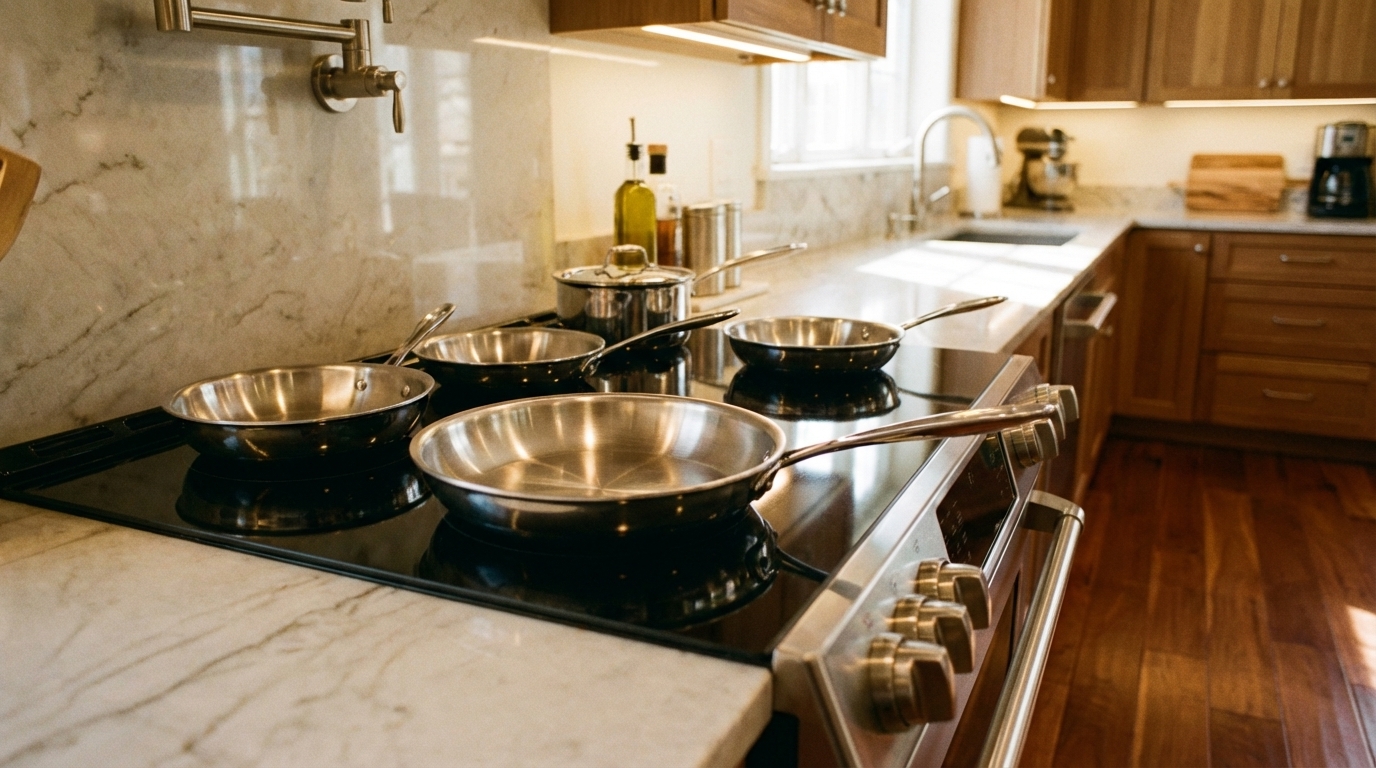
The glass surface of your stovetop transfers heat only where it makes contact with your pan, which means a flat bottom isn't optional--it's the whole game. Warped pans sit unevenly, creating partial contact that forces the burner to apply heat unevenly across the cooking surface. This produces hot spots: concentrated areas of intense heat that burn food in one spot while leaving another underdone.
[1] Glass and ceramic tops are already slower to respond to temperature changes than gas burners, so a warped pan compounds the problem--you're working against the stove's limitations instead of with them. [1] Checking flatness before you buy (or before you cook) is simple: set the pan on any flat surface and nudge it side to side. If it rocks, it will heat unevenly on your stovetop.
[2] Weight also plays a role here--a pan needs to be substantial enough to maintain stable contact with the glass, but light enough that dropping or bumping it won't crack the surface. Clad stainless steel hits this balance particularly well. Its bonded aluminum or copper core conducts heat quickly while the steel exterior stays flat without warping over time.
Material Choices That Protect Glass
The material a pan is made from determines both how evenly it cooks and whether it will damage the surface beneath it. Stainless steel, hard-anodized aluminum, and ceramic-coated aluminum all naturally form smooth, flat bases that sit safely on glass without scratching.
[3] Raw cast iron is the primary exception--its rough, porous texture can drag across the glass and leave permanent marks. [4] Enameled cast iron works better, but only if the enamel on the base is completely smooth and chip-free.
[4] Glass and stoneware cookware should be avoided entirely: they scratch the surface and heat too unevenly to be practical on a smooth cooktop. [3] For induction glass tops, the rules narrow further--the pan's base must be magnetic.
Top Pan Types That Shine on Glass Stovetops
Choose stainless skillets with five-ply or thick disc bases to deliver flawless sears and keep glass stovetops scratch-free, and skip encapsulated-bottom nonstick pans that burn out their coating.
Stainless Steel Skillets That Glide
Stainless steel skillets that glideStainless steel works especially well on glass tops because it stays flat under high heat--a property that matters more than most people realize when you're trying to get even contact across the cooking surface. The construction that makes the biggest difference is multi-ply clad or a thick disc base. Five-ply stainless steel pans, like those in the Made In 10-Piece Set, heat evenly and deliver consistent browning without creating the hot spots that can scorch food on one side of the pan [4].
Pans with a thick aluminum disc bonded to the base--like the Tramontina Prima--actually tend to sit flatter than full-clad designs and make slightly better contact with the glass surface, which translates directly to more even cooking [3]. Either construction gives you the searing capability that stainless steel is known for: these pans produce proper crusts on scallops and steaks because the steel exterior tolerates high heat without degrading the way nonstick coatings do [4]. One practical note: stainless requires slightly more technique than nonstick--preheat the pan properly and let food release naturally before flipping, or you'll fight sticking.
Riveted handles on quality sets stay cooler than the pan itself during stovetop cooking, which matters when you're maneuvering a heavy skillet across glass you'd rather not crack [3].
Nonstick Pans That Won't Scratch
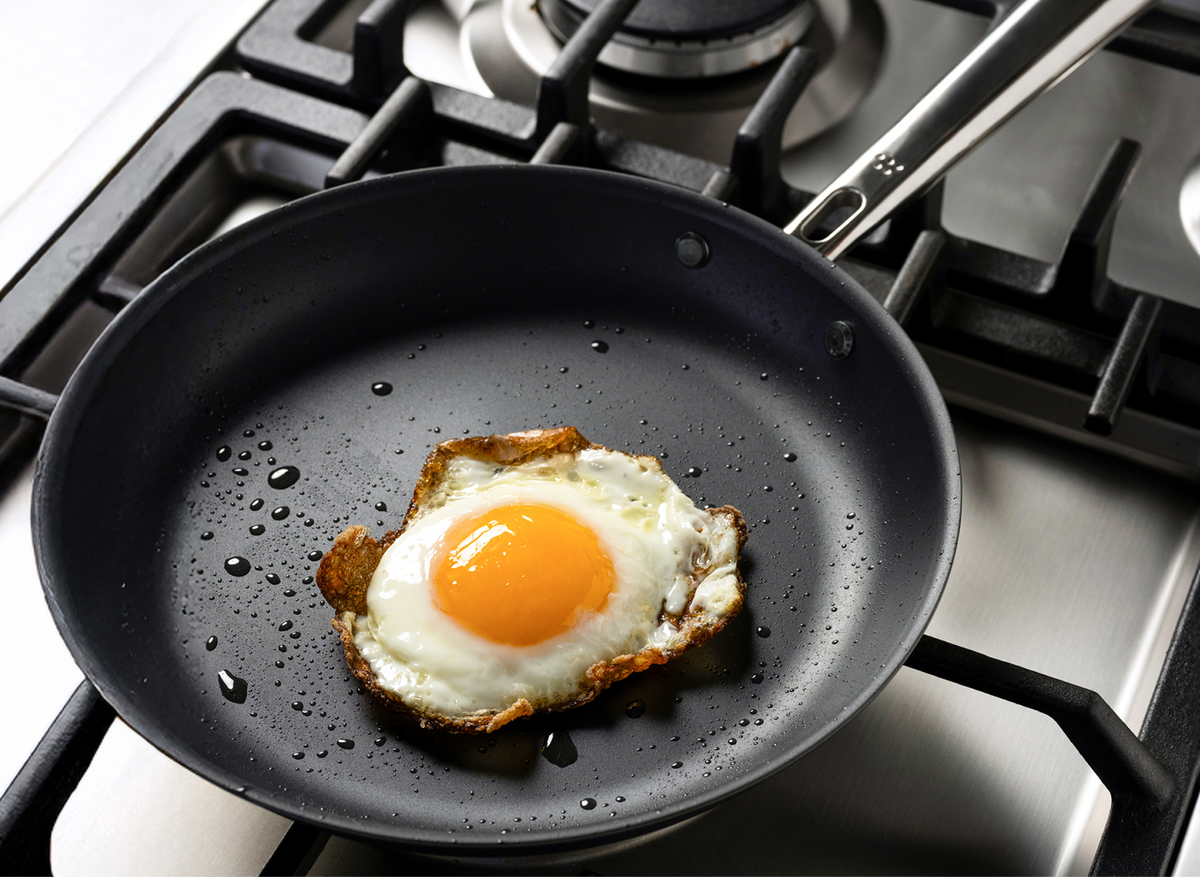
Nonstick pans that won't scratchNonstick on glass tops has one specific gotcha worth knowing before you buy: pans with encapsulated bottoms--a thick steel-and-aluminum disc welded to the base--work well on induction but create problems on radiant-heat glass surfaces. The encapsulated design causes the pan's sides to overheat, generating hot spots that degrade the nonstick coating faster than normal use would. [5] For glass radiant tops, cast or hard-anodized aluminum pans without that encapsulated base heat more evenly and protect the coating longer.
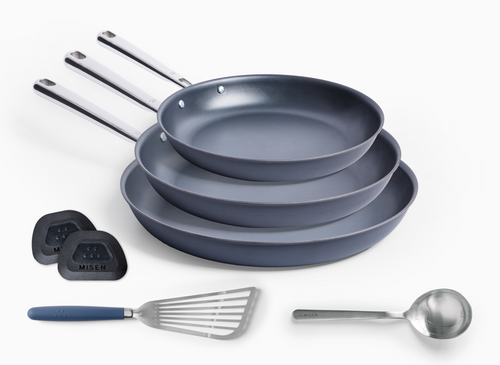
The Tramontina Professional is a consistent performer here--its cast aluminum body distributes heat across the cooking surface without concentrating it, which both extends the coating's life and prevents food from scorching on one side of the pan. [5] Flared sides let you flip eggs and pancakes without fighting the pan's geometry, and a bent lip keeps grease from dripping down the exterior when you pour. [5] Whatever pan you use, keep heat at medium or below.
PTFE coatings begin breaking down above 400 degreesF, and since glass tops already respond to temperature changes more slowly than gas, high heat isn't necessary to cook effectively anyway. [5] If PTFE concerns you, ceramic-coated pans are available and have tested well for cooking evenness and food release--but their nonstick surface typically degrades within a year of regular use, compared to three to five years for PTFE.
Everyday Care to Keep Your Glass Top Pristine
Lift, never slide, your pans and follow up with a 45-degree razor blade and dried-on ceramic paste to keep your glass cooktop looking showroom-new.
Cleaning Tips That Avoid Scratches
Cleaning tips that avoid scratchesYour best cleaning tool? A single-edge razor blade held at a 45-degree angle. It lifts baked-on food and those metal marks that look like scratches but aren't. Just keep that angle shallow--go steeper than 45 degrees and you'll create actual scratches. [9] Once you've scraped the surface clean, spread a thin layer of ceramic-glass cooktop paste and here's the trick: let it dry completely before buffing.
Most instructions tell you to wipe it while wet, but letting it dry pulls up stubborn stains much better. [9] When you're out of specialty cleaners, these three kitchen staples work great: Bar Keepers Friend Multipurpose Cooktop Cleaner tackles crusty buildup fastest. For natural cleaning power, try lemon juice with baking soda--scrub with the lemon, sprinkle baking soda, cover with a warm damp towel for 30 minutes, then wipe clean. Or mix equal parts white vinegar and water with a few drops of dish soap for an everyday cleaner that lives under your sink. [7] Here's the golden rule: sugary spills are your enemy.
Syrup, jelly, candy--clean them up immediately while they're still warm. Let them cool and harden, and they'll bond to the glass permanently. [8] For regular spills, a quick wipe while the surface is still slightly warm (not hot) does the job without any cleaner at all.
Maintenance Habits for Longevity
Maintenance habits for longevityThe biggest threats to your glass top happen between cooking tasks, not during them. That quick slide of a pan to make room? It's the fastest way to scratch your surface. Always lift cookware by the handles, even lightweight pieces. [10] And never rest a hot lid face-down on the glass--at best you'll get circular marks, at worst you'll hear that expensive crack. Keep a trivet or towel handy instead. [11] Skip the Windex too.
Sure, it's glass cleaner, but ammonia-based products leave permanent streaks and release toxic fumes when the burner heats up later. Stick to cleaners made for cooktops. [11] Most important: patience. Let your cooktop cool completely before cleaning--hot glass plus cold cleaner equals damage, no matter what product you use. [11] Your cleaning routine doesn't need to be complicated. A quick daily wipe with a microfiber cloth and cooktop spray (or that vinegar mix) takes two minutes and prevents buildup from becoming a problem. Save the deep clean--razor blade and paste--for once a month if you're a moderate cook, or every two weeks if you're at the stove daily.
[10] Remember: patience beats scrubbing power every time. That steel wool pad might remove the stain, but it'll scratch your surface worse than any burnt food ever could. Stick to soft sponges and microfiber cloths. [11] The smooth, flat bases on quality stainless steel cookware make maintenance easier too--less chance of leaving marks that need aggressive cleaning in the first place.
Choosing the Right Set for Your Kitchen Budget
Pick a tri-ply set whose heaviest pan you can lift one-handed--its full-clad construction will keep your glass top spot-free and your budget intact.
Assessing Size and Weight for Stable Cooking
Assessing size and weight for stable cookingFinding the right balance between weight and maneuverability makes all the difference on glass tops. You need pans heavy enough to maintain steady contact with the surface--no wobbling or sliding during cooking--but not so heavy they become hazardous when you're moving them around. As we covered in the materials section, raw cast iron poses particular challenges here.
[12] The sweet spot? Look for cookware with substantial bases that still feel comfortable to lift and move. A well-designed handle changes everything: an upward angle lets you tilt and adjust without fully lifting the pan, protecting both your glass surface and your wrist.
[12] If you're considering bare metal handles for their durability and oven-safe properties, keep a handle cover handy--they get hot during stovetop cooking.
Balancing Cost and Performance Without Compromise
Balancing cost and performance without compromiseWhen comparing cookware sets, construction beats brand recognition every time. Fully clad tri-ply construction--where aluminum core extends all the way to the rim between stainless steel layers--delivers the even heating glass tops need.
Sets with only disc-bottom construction can't match this performance since heat doesn't travel up the sides, creating the hot spots we talked about earlier. [13] Here's what actually matters when choosing: start with how much you cook.
Daily cooks benefit from comprehensive sets with multiple pan sizes, while occasional cooks can invest in quality basics and build from there. Storage space plays a role too--an 8-piece set might include everything you need without overwhelming your cabinets.
Conclusion
Key Takeaways
- Flat-bottomed pans are mandatory; warped pans create hot spots and uneven cooking on glass tops.
- Stainless steel, hard-anodized aluminum, and ceramic-coated pans protect glass and heat evenly.
- Raw cast iron and glass/stone cookware scratch glass tops; enameled cast iron needs a flawless base.
- Use a razor blade at 45 degrees and let ceramic-glass paste dry before buffing to remove stubborn stains.
- Always lift, never slide pans; avoid hot lids face-down and ammonia cleaners to prevent damage.
References
- https://www.debuyer-usa.com/blogs/guides/say-goodbye-to-hot-spots-best-pots-and-pans-for-electric-stoves?srsltid=AfmBOopPGDF_Sejkhl4ca39NopljTINiMr6JDSjgDffDEgktLBiVCcjc
- https://www.foodrepublic.com/2011802/ideal-pan-use-glass-cooktops/
- https://www.foodnetwork.com/how-to/packages/shopping/product-reviews/best-pans-for-glass-cooktop
- https://www.thespruceeats.com/best-cookware-for-glass-stoves-4690491
- https://www.nytimes.com/wirecutter/reviews/best-nonstick-pan/
- https://www.consumerreports.org/home-garden/cookware/best-nonstick-frying-pans-from-consumer-reports-tests-a1041724599/
- https://www.thekitchn.com/how-to-clean-glass-top-stove-23661653
- https://www.whirlpool.com/blog/kitchen/how-to-clean-a-glass-electric-stovetop.html
- https://www.nytimes.com/wirecutter/reviews/how-to-clean-a-glass-cooktop/
- https://www.completehomewarranty.com/maintaining-your-glass-or-ceramic-cooktop/
- https://www.townappliance.com/blogs/town-appliance-official/how-you-can-avoid-ruining-your-glass-cooktop?srsltid=AfmBOoqxbfdSeeXPVV0bjyxcbP2I4CurQ3IWvj36jYoqsIiQhkO7YYZu
- https://www.debuyer-usa.com/blogs/news/best-carbon-steel-pans-for-glass-cooktop?srsltid=AfmBOop81UpgitKayuEKRU8HkzDH7Rrb1YbZgRZVrGT7nZJ6RBrYcXNG
- https://www.nytimes.com/wirecutter/reviews/best-cookware-set/
- https://www.consumerreports.org/home-garden/cookware/best-cookware-sets-of-the-year-a2221791769/