

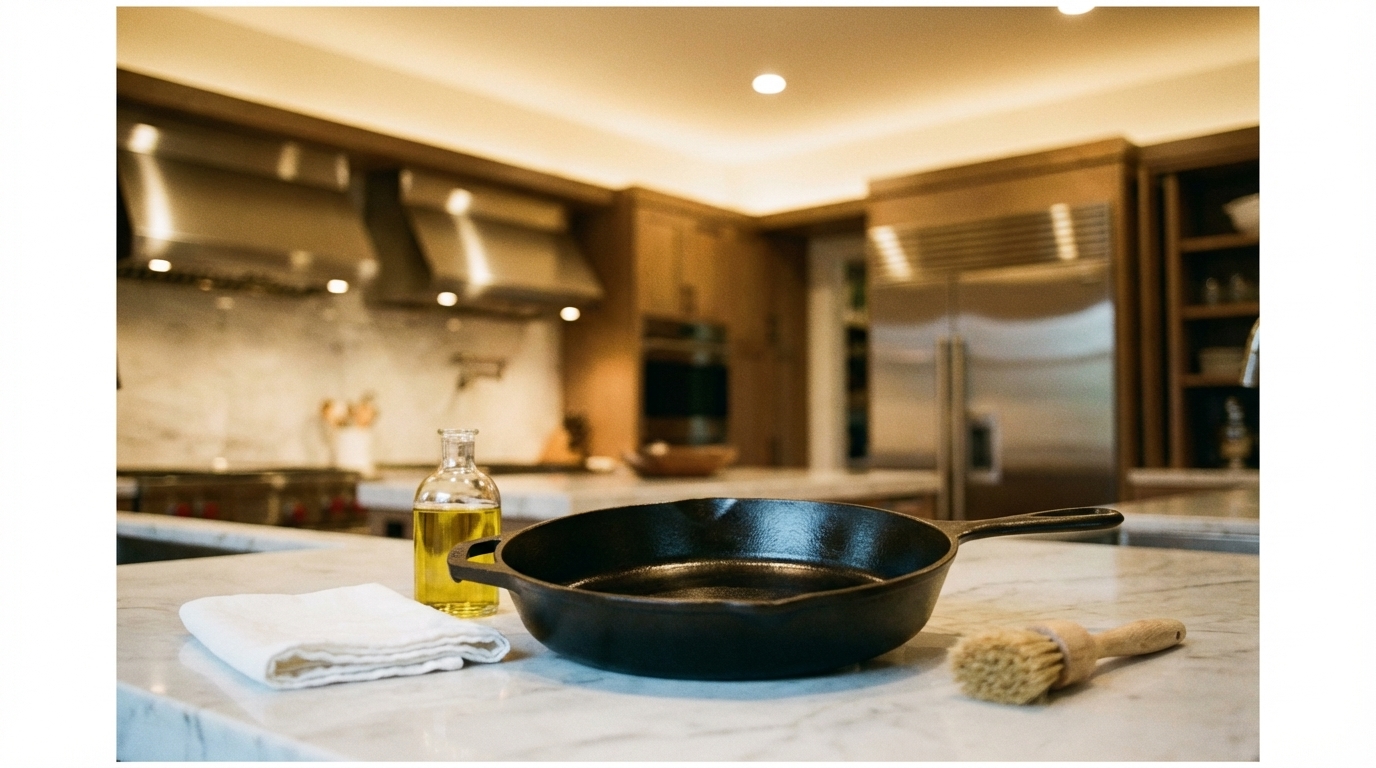
Maintaining a pan's seasoning is less a chore than a quick ritual that keeps carbon steel naturally nonstick, rust-free and forever improving: by washing with mild soap while the metal is warm, drying thoroughly, then wiping on the thinnest film of high-smoke-point oil and heating until it barely smokes, you add a micro-layer of polymerized protection every time you cook. Readers learn to spot when a pan truly needs re-seasoning--flaking black bits, rust freckles, sudden sticking--and how to avoid the five biggest restoration mistakes (soaking, skimpy heat, heavy-handed oil, infrequent touch-ups, storing while damp). The article explains why unsaturated oils like grapeseed or avocado bond best, why gradual preheating and sub-500 degreesF cooking preserve the coating, and why cooking fatty foods or giving the pan a quarterly oven "oil bake" deepens the slick, glossy patina that only gets better with age. With simple after-use, weekly, and monthly checklists plus smart storage and utensil choices, home cooks can transform their carbon steel into a lifelong, high-heat workhorse that outperforms--and outlasts--any synthetic nonstick surface.
Fundamentals of Pan Seasoning Maintenance
Heat your pan with oil past its smoke point and the oil molecules bond into a rock-solid, soap-proof nonstick shield that keeps food sliding and rust at bay for years.
Why seasoning matters for nonstick performance
Seasoning transforms your pan's surface by converting cooking oils into a hard, protective coating through heat [1]. This process creates a naturally nonstick surface that repels water while attracting cooking fats [2]. When you cook, this barrier keeps food from sticking to the bare metal underneath [2].
The transformed oil molecules bond together, forming a smooth surface that releases food easily [1]. Beyond making cooking easier, seasoning also protects your pan from rust and helps distribute heat more evenly [2]. Without this protective layer, food sticks directly to the metal, making both cooking and cleanup a challenge [2].
This is especially important for carbon steel cookware like the carbon steel pan, which develops better nonstick properties with each use.
How seasoning creates a protective polymer layer
When you heat oil in your pan past its smoke point, something remarkable happens--the oil transforms into a tough, protective coating [4]. The heat breaks down oil molecules, causing them to bond together into larger, stronger chains [1]. This process happens when the combination of metal, heat, and oxygen triggers a reaction in the oil [1].
These transformed molecules fill in the tiny pores and grooves of your pan's surface, creating a smooth barrier [4]. The result? A naturally nonstick surface that repels water and prevents food from sticking [4].
Oils with more unsaturated fats (like grapeseed or flaxseed) work best because they bond more readily during heating [4]. The seasoning builds in two stages: first, the oil transforms into the base coating, then additional heating creates the characteristic dark finish [4]. Once properly formed, this coating bonds so strongly to the pan that even soap won't remove it--explaining why well-seasoned pans stay nonstick for years [4].

Everyday Care Routine to Preserve Seasoning
Gently wash while it's still warm with hot water and a soft sponge, dry thoroughly, then wipe on a whisper-thin layer of high-smoke-point neutral oil and heat until it just smokes to add a fresh micro-seasoning that polymerized surface every time you clean.
Cleaning without stripping: wash, dry, and oil
Here's the good news: cleaning your seasoned pan is simpler than you might think. Start by washing it while it's still warm (not hot) using hot water and a soft sponge. And yes, you can use mild dish soap - it won't damage properly polymerized seasoning since it can't penetrate that tough polymer layer. Just skip the abrasive cleaners and steel wool that can scratch away your hard-earned seasoning.
Got stubborn bits stuck on? Add water to the warm pan and let it simmer briefly - much gentler than aggressive scrubbing. After cleaning, dry your pan immediately and thoroughly to prevent rust. Then comes the key step: apply an ultra-thin layer of neutral oil (grapeseed, canola, or flaxseed all work great) and heat until it just starts to smoke.
You're essentially adding a fresh micro-layer of seasoning with each cleaning. This simple routine - wash gently, dry completely, and give it a quick oil treatment - keeps your pan performing beautifully for years.
Choosing the right oil for light touch‑ups
When it comes to choosing oils for those quick touch-ups after cooking, you'll want something with a high smoke point and plenty of unsaturated fats - these polymerize best. Refined avocado oil is your premium choice, with its impressive 500-520 degreesF smoke point and excellent bonding properties that won't add any funky flavors [5]. On a budget? Crisco solid shortening (490 degreesF smoke point) works wonderfully and creates tough, lasting seasoning [5].
Canola or vegetable oil (400-450 degreesF) do the job just fine too. Here's what to avoid: olive oil, coconut oil, and butter. They either smoke too early or have too much saturated fat to polymerize properly [5]. Whatever oil you choose, apply it super thin - your pan should look barely glossy, not wet.
Too much oil creates that sticky, gummy buildup nobody wants. Once you've wiped on that thin layer, heat the pan until it just starts to smoke. This quick process bonds new seasoning to your existing layer, keeping your
Heat management during cooking to protect the coating
Managing heat is crucial for keeping your seasoning in great shape. While your pan can handle serious heat, the seasoning itself starts breaking down above 500 degreesF - essentially burning away like coal [6]. For most cooking, stick to around 350 degreesF. You'll still get beautiful browning without sacrificing that protective layer [6]. Always preheat gradually instead of cranking the heat immediately.
Quick temperature changes create hot spots that can literally burn away patches of seasoning. Here's something fascinating: regular cooking actually improves your seasoning. Right at the interface where hot oil meets hot iron, temperatures get high enough to transform cooking oil into new seasoning layers [6]. That's why well-used pans develop that gorgeous, deep patina over time. When you need serious heat for searing steaks, go for it - just know that some seasoning wear is normal, especially if you see heavy smoking.
Afterward, check your pan's surface. If it looks dull or food starts sticking, it's time for a quick touch-up with oil (as covered in Section 4's maintenance tips). This balanced approach keeps your cookware performing beautifully while building seasoning through regular use.
Correct Methods for Re‑Seasoning When Needed
When seasoning shows flaking, rust, or a sticky cooking performance, re-season your pan correctly by heating to 400 degreesF without soaking, wiping until nearly oil-free, and storing bone-dry
When to know the pan needs a re‑season
Your pan needs re-seasoning when you observe specific visual or performance changes. Look for flaking seasoning, which appears as black specks coming off the surface. These flakes are just carbonized bits of oil and aren't harmful, but indicate breakdown in your seasoning layer [9].
Rust spots, even small ones, signal immediate re-seasoning need - they develop when moisture contacts bare iron, often from incomplete drying or prolonged exposure to humidity [8]. Performance issues provide equally clear signs: food suddenly sticking to previously non-stick areas, or a cooking surface that feels sticky or gummy from excess oil buildup [9]. Discoloration alone isn't necessarily problematic - new pans naturally develop patchy coloration as seasoning builds and wears during normal use [8].
However, if your pan has developed large areas of stripped seasoning (appearing lighter in color than surrounding areas) from cooking acidic foods or liquidy braises, it needs re-seasoning [8]. A properly seasoned pan should have a semi-glossy, dark surface without stickiness - any significant deviation from this indicates re-seasoning time [7].
Step‑by‑step re‑seasoning process
Step‑by‑step re‑seasoning processStart by stripping your pan's old, damaged seasoning. The easiest method is placing it upside-down on the bottom rack of your oven during a self-cleaning cycle (usually 3 hours) [10]. Once cool, scrub thoroughly with hot water and soap. For pans without a self-cleaning oven option, oven cleaner or a vinegar soak can remove stubborn seasoning. Dry the pan completely by heating it on a stovetop burner to prevent flash rusting [11].
Now preheat the pan in a 200 degreesF oven to open the metal's pores [1]. For the oil application, choose either flaxseed oil (creates the hardest finish but is expensive) or more affordable options like canola, grapeseed, or vegetable oil [1][11]. Apply oil using a clean cloth, then - this is crucial - buff it away completely until the pan appears dry [1]. The surface should look almost oil-free; visible oil creates sticky spots and uneven seasoning [1]. Place the pan upside-down in a cold oven, then set to your oven's highest temperature (ideally 450-500 degreesF) [1].
Once preheated, bake for one hour, then turn off the heat and leave the pan inside for two hours to cool gradually [1]. This complete cycle polymerizes one micro-thin layer of oil into durable seasoning. For optimal results, repeat this entire process at least six times [10][1]. The pan will darken progressively with each cycle, eventually developing a semi-gloss black finish that signals proper seasoning [1].
Avoiding common re‑seasoning mistakes
Avoid five common re-seasoning pitfalls to maintain your pan's nonstick performance. First, never soak your skillet when preparing for re-seasoning--this invites rust formation that complicates the process [12]. Second, don't settle for insufficient heat during the seasoning process; preheat your skillet in the oven to at least 400 degreesF to ensure even heating and proper polymerization [12].
Third, using too much oil creates a sticky, uneven coating--apply oil then thoroughly wipe it down until the pan appears nearly dry [12]. Fourth, many cooks make the error of not seasoning frequently enough; even modern pre-seasoned skillets benefit from regular maintenance after each use [12]. Finally, never store your newly seasoned pan while still damp--this undoes your hard work by promoting rust development [12].
For proper post-seasoning maintenance, place your pan on medium-high heat with a tablespoon of neutral oil (like vegetable or canola), distribute it evenly with a paper towel, wait until it just begins smoking, then wipe again before storing [12].


Long‑Term Strategies for Lasting Nonstick
Heat your seasoned cast-iron pan until it just smokes, wipe it with a thin coat of oil while it's still warm, and store it bone-dry with paper-towel spacers to lock in a rust-free, scratch-proof, micro-layer that keeps your seasoning immortal.
Storing your seasoned pan properly
Storage starts right after cleaning. While your pan's still warm, heat it on the stove until it just begins smoking, then wipe the entire interior with a paper towel dipped in oil [13]. This creates a protective barrier against moisture and air. Let the pan cool completely before putting it away [13].
Choose a dry storage spot--humidity is your seasoning's enemy and can cause rust, especially on newer pans [13]. Store pans individually when possible to avoid scratches. If you need to stack them, slip paper towels between each piece to protect the seasoning [14]. Never store with lids sealed tight--that traps moisture.
Keep lids slightly off or store them separately [14]. For pans you won't use for a while, apply a slightly thicker oil coat on the cooking surface and handle.
Using the right utensils and cooking techniques
Your utensil choice matters for seasoning longevity. While metal tools work fine, wooden, silicone, or nylon utensils are gentler on your seasoning. When food sticks, resist the urge to scrape aggressively--that strips away your hard-earned seasoning [15]. Start every cooking session by preheating your pan gradually [15].
This lets the metal expand evenly and activates the nonstick properties of your seasoned surface. Even with a well-seasoned pan, use 1-2 tablespoons of oil for cooking [16]. Let food release naturally instead of forcing it with your spatula [15]. Proteins need patience--wait for that golden crust to form before flipping, and they'll release when ready [15].
Here's a bonus tip: cooking fatty foods like bacon, fried chicken, or steaks actually improves your seasoning with every use [17]. You're adding micro-layers of protection each time. Keep your heat at medium for most cooking--too hot or too cold makes food stick. This sweet spot lets food release naturally while building your pan's coating [16].
Periodic high‑heat oil bake to refresh the layer
Even well-cared-for pans need a seasoning boost now and then. This maintenance refreshes your protective coating without the hassle of complete re-seasoning. Start by warming your pan in a 200 degreesF oven for 20 minutes--this opens the metal's pores [17]. Take it out and apply a thin layer of oil (vegetable oil or Crisco work great) across the entire surface [17][18]. Here's the crucial part: buff that oil until the pan looks almost dry.
Any visible grease will turn sticky [17]. Put the pan back in the oven at 300-350 degreesF for 15 minutes, then remove and wipe once more to catch any oil that's surfaced [18]. Finally, place the pan upside down at 400-450 degreesF for 1-2 hours [17][18]. This temperature is perfect--hot enough to polymerize the oil into a durable coating but not so hot it burns away [18]. Let it cool in the turned-off oven.
This simple process adds a fresh protective layer that strengthens your existing seasoning. Do this every three months or whenever food starts sticking more than usual. Your


Putting It All Together
A five-minute post-cook routine--wash, dry, oil, heat--turns your carbon steel pan into a forever-young, nonstick workhorse that improves every time you use it.
Quick checklist for pan seasoning maintenance
Think of seasoning maintenance like caring for leather shoes - a little attention goes a long way. Here's your go-to checklist organized by how often you cook: After each use: Give your pan a quick wash with hot water while it's still warm (yes, mild soap is fine as we covered earlier). Dry it completely on the stovetop, then apply the thinnest possible layer of high smoke-point oil - avocado, grapeseed, or canola work beautifully.
Heat until it just begins to smoke, and you've added another micro-layer to your seasoning. Weekly habits: Take a moment to inspect your pan's surface for any dull spots or areas where food's starting to stick. Cook something fatty - bacon, seared chicken thighs, or even grilled cheese - to naturally boost that seasoning. When storing multiple pans, slip paper towels between them to protect all your hard work. Monthly check-ins: Look for uneven coloration or any decline in nonstick performance.
This is when that periodic high-heat oil bake we discussed in the long-term strategies section really pays off. Keep using wooden or silicone utensils to preserve your seasoning investment. Red flags to watch for: If you spot black flakes coming off, rust spots (even tiny ones), food suddenly sticking where it didn't before, or a sticky/tacky feeling to the surface - it's time for action using the re-seasoning steps from earlier. Remember, five minutes of regular care beats hours of restoration work every time.
Benefits of consistent care for your Misen cookware
Here's where all this maintenance really pays off - your carbon steel pan actually gets better with age, not worse. Unlike traditional nonstick pans that slowly deteriorate, well-maintained carbon steel develops an increasingly effective nonstick surface that becomes more versatile with every use [19]. You'll find yourself reaching for the same pan whether you're gently scrambling eggs or searing a steak at blazing temperatures. The nitrogen-infused surface on carbon steel cookware creates natural rust resistance, solving one of the biggest headaches with traditional carbon steel [19].
This built-in durability means you can use metal utensils and more aggressive cleaning when needed - try that with a PTFE-coated pan! The heat tolerance blows away both ceramic and traditional nonstick options, opening up cooking techniques that would destroy lesser pans [19]. For Carbon Nonstick cookware specifically, your consistent care helps the protective properties develop fully across the entire cooking surface. Even the rivets benefit from regular seasoning, preventing rust once their initial silica protective layer naturally wears away [20].
Think of it this way: every time you follow these maintenance steps, you're not just preserving your cookware - you're actively improving it. That's an investment that pays dividends with every meal you cook.
- Wash warm with mild soap, dry, wipe ultra-thin high-smoke-point oil, heat till it smokes to add a micro-seasoning layer.
- Keep heat around 350 degreesF; above 500 degreesF burns seasoning away; preheat gradually to prevent hot-spot stripping.
- Re-season when you see flaking black bits, rust spots, food sticking, or a sticky surface--not for mere color change.
- Store pans bone-dry, oiled, lid off, stacked with paper towels to block moisture and scratches that ruin seasoning.
- Every 3 months warm pan at 200 degreesF, buff on near-invisible oil, bake 1-2 h upside-down at 400-450 degreesF to refresh the coating.
- Cook fatty foods like bacon; the hot oil transforms into new seasoning, naturally deepening the nonstick patina.
- Use wood/silicone tools, let food self-release, and add 1-2 Tbsp oil to avoid scraping off the seasoning layer.
- https://sherylcanter.com/wordpress/2010/01/a-science-based-technique-for-seasoning-cast-iron/
- https://en.wikipedia.org/wiki/Seasoning_(cookware
- https://www.scienceofcooking.com/science-of-cast-iron-skillet-cooking.html
- https://news.vt.edu/articles/2024/08/cast-iron-myths.html
- https://theflattopking.com/best-oil-for-seasoning-cast-iron/
- https://genuineideas.com/ArticlesIndex/castironseasoning.html
- https://www.foodandwine.com/common-cast-iron-problems-and-how-to-fix-them-6406961
- https://fieldcompany.com/pages/a-visual-guide-to-caring-for-cast-iron?srsltid=AfmBOooVO5iyq-_A_TTCBGbPQEUmVCx3fuYicPgWZadG-GSpu5yssK0U
- https://www.lodgecastiron.com/pages/cleaning-and-care-cast-iron-troubleshooting?srsltid=AfmBOorLIrzle37MQ20OTL_x3lpSQb4a892tN4ZrYfkpwakxDi7d6wqs
- https://www.thekitchn.com/i-seasoned-my-cast-iron-pan-with-flaxseed-oil-and-heres-what-happened-224612
- https://www.seriouseats.com/how-to-season-carbon-steel-pans
- https://www.allrecipes.com/cast-iron-skillet-mistakes-11732150
- https://www.seriouseats.com/how-to-buy-season-clean-maintain-cast-iron-pans
- https://www.masterclass.com/articles/how-to-store-cast-iron-pans
- https://skeppshult1906.com/learn/tips-to-ensure-non-stick-cooking-with-cast-iron/?srsltid=AfmBOooTnt9m_OgfQDGKp09pZkOVnn9I0khdmvqdLlxruqNk7TXgkUx0
- https://atraditionallife.com/make-cast-iron-non-stick/
- https://www.seriouseats.com/how-to-season-cast-iron-pans-skillets-cookware
- https://www.theculinaryfanatic.com/jeff-rogers-cast-iron-seasoning-method
- https://www.bonappetit.com/story/misen-carbon-nonstick-pan-review?srsltid=AfmBOoqsxNGlqzYJ5QU5Y4sXXcHv1LEjRuyLwpMPyRe3sscsF6ZuTf38
- https://www.reddit.com/r/cookware/comments/1o1foc9/misen_finally_admits_theres_a_coating_seemingly/