

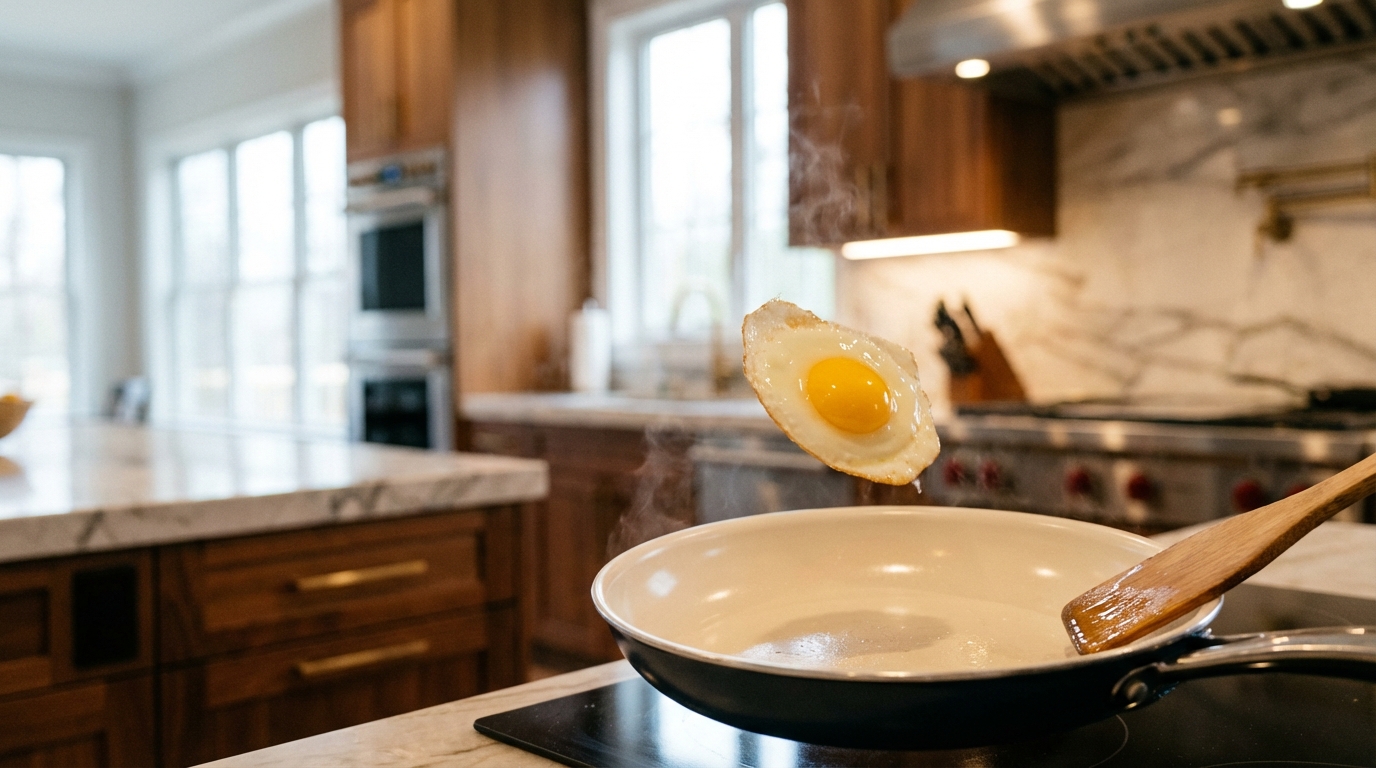
This article equips health-minded cooks with everything they need to know about swapping traditional PFAS-coated non-stick for safer, PFAS-free pans by proving--egg after egg--that ceramic and carbon-steel alternatives can flip, release and clean up just as reliably. Readers learn why "PFOA-free" labels can still hide forever-chemical cousins, how to run a simple 10-egg home test to judge true non-stick staying power, and which design details--weight, slope, even heating--make or break that Instagram-worthy flip. It unpacks the science linking PFAS to cancer, immune suppression and high cholesterol, then shows how ceramic pans give 3-5 years of slick performance while carbon steel and cast iron deliver decades of naturally improving seasoning without a single synthetic coating. Care rules are spelled out: skip cooking sprays, avoid thermal shock, wash gently and watch for chips so the pan stays out of landfills and out of your food. By balancing up-front cost against realistic lifespan, the piece steers shoppers toward mid-range ceramic or long-haul carbon steel, turning the everyday egg test into an affordable, non-toxic upgrade that protects both family health and the planet.
Why the PFAS-Free Non-Stick Egg Test Matters
Because "PFOA-free" cookware can still harbor carcinogenic PFAS that linger in your blood for decades, switching to ceramic or carbon-steel pans is the only reliable way to cook eggs without dosing yourself with "forever chemicals."
Understanding PFAS and health concerns
If you've been cooking with non-stick pans, you've likely encountered PFAS--manufactured chemicals that have been around since the 1940s [1]. They're in everything from cookware to stain-resistant fabrics, earning the nickname "forever chemicals" because they stick around in our bodies and environment for years, sometimes decades [2]. Here's what makes this personal: blood tests show PFAS in virtually everyone, with higher levels in people near contaminated water supplies or certain workplaces [1][3]. That's concerning when you consider what research is revealing about these chemicals. The International Agency for Research on Cancer recently classified PFOA--one of the most common PFAS--as "carcinogenic to humans" [3].
Studies link it to increased risks of testicular and kidney cancer, with potential connections to several other cancer types [3]. But it's not just cancer we're talking about. PFAS exposure can affect your immune system, raise cholesterol levels, impact liver function, and even affect pregnancy outcomes [1][3]. Now here's where it gets tricky. While manufacturers have phased out PFOA and PFOS in the US, they've often just swapped them for newer PFAS chemicals that haven't been studied as much [2].
That "PFOA-free" label on your pan? It might still contain other PFAS compounds--Consumer Reports actually found PFOA in some pans marketed as PFOA-free [2]. So what's a home cook to do? Look for ceramic-coated options labeled "PTFE-free" (not just "PFOA-free"), or embrace traditional alternatives like carbon steel pans that develop natural non-stick properties without any chemical coatings [2].
Setting Up the Perfect Egg Flip Test
Test any PFAS-free pan's true non-stick staying power by sliding 10-15 ungreased fried eggs across its dry surface at steady medium heat and noting when they stop lifting cleanly.
Choosing the right PFAS‑free pan for everyday use
When choosing PFAS-free cookware for egg testing (and everyday cooking), you'll encounter three main materials that deliver reliable non-stick performance. Ceramic-coated pans provide the most familiar non-stick experience. Just make sure to look for "PTFE-free" labels rather than just "PFOA-free"--the latter may still contain other PFAS compounds [4].
Quality ceramic options release food easily with minimal oil while heating evenly across their cooking surfaces [6]. For better durability and high-heat cooking, carbon steel offers impressive versatility. These pans combine fast, even heating with a surface that naturally develops non-stick properties through use--no coating to chip or wear away.
Unlike ceramic pans that require careful temperature control,
Step‑by‑step PFAS‑free non stick egg test procedure
Testing your PFAS-free pan's non-stick performance doesn't require fancy equipment--just eggs, patience, and a consistent approach. Here's how to run a reliable test: Start with temperature consistency. Heat your pan to medium heat (a surface thermometer helps, but isn't essential). Crack your egg into a small bowl first, then slide it carefully into the center of the dry, ungreased pan [7]. Set a timer for your preferred doneness--this keeps each test consistent. When time's up, slide your spatula under the egg.
Does it lift cleanly, or do parts stick to the surface? That immediate release tells you everything about the pan's current performance [7]. For a thorough evaluation, repeat this basic test multiple times. Professional reviewers cook up to 50 eggs in a row to spot performance changes [7]. You don't need to go that far--even 10-15 eggs will reveal patterns. Between egg tests, try cooking other sticky foods like stir-fries, scrambled eggs, or delicate fish.
Then return to the basic fried egg test [7]. This simple methodology exposes real differences between pans. Some start sticking after 40+ uses, while quality options maintain their release properties much longer [7]. The key is consistency--same heat, same timing, same technique every time.
Evaluating Performance: Flip, Release, and Clean‑up
Master the egg-flip test--pick a ceramic pan that heats evenly in 90 seconds, balances perfectly in your hand, and releases the egg in one clean motion with zero scraping.
How the pan handles the flip without sticking
Egg flipping reveals the true capabilities of a PFAS-free nonstick pan. During rigorous testing, superior ceramic-coated pans demonstrate a key advantage: eggs release from the surface with minimal nudging. The defining moment comes when the spatula slides underneath cleanly without the egg grabbing onto the surface, allowing for a single fluid motion rather than multiple scraping attempts. The most reliable performers heat evenly across their cooking surfaces, eliminating troublesome hot spots that cause partial sticking during the flip [9].
Pan shape also significantly impacts flip success--pans with bowl-like construction and gentle slopes facilitate seamless turning without eggs catching on abrupt angles. Weight distribution matters too; pans that balance properly in hand enable confident flipping technique without awkward tilting or jerky movements [8]. The best-performing pans feature perfect weight and balance that contribute directly to confident flipping performance. Temperature management proves critical--overheating damages coatings while insufficient preheating causes sticking.
The best pans reach optimal cooking temperature within 90 seconds and maintain it consistently, enabling the clean release necessary for successful flips [9]. During comprehensive testing with over 100 eggs as outlined in the previous section, ceramic-coated options maintained their flip performance longer than expected, though all nonstick surfaces eventually show degradation in release properties. For those seeking exceptional durability without coating concerns, carbon steel pans offer naturally developing nonstick properties that improve with use rather than degrade.
Cleaning and longevity after repeated egg tests
Cleaning PFAS-free non-stick pans properly directly impacts their performance longevity. After repeated egg tests, quality pans should clean with minimal effort--simply wipe with a soft sponge using mild dish soap and water [10]. The key is avoiding common cleaning mistakes that compromise performance: never submerge a hot pan in cold water (causes warping) or use abrasive cleaners that damage the surface [11]. For stubborn egg residue, a simple baking soda paste works wonders--let it sit overnight then wash normally [11].
For comprehensive care instructions that will maximize your pan's lifespan, see our detailed guide in the final section. After 40-50 egg tests, most PFAS-free pans begin showing subtle signs of wear--eggs may require slightly more nudging to release cleanly. Watch for early warning signs that indicate coating failure: visible chips, scratches, or flaking particles in food [12]. These indicate it's time for replacement regardless of age, as damaged coatings may release particles into food [11].
Remember that egg test performance provides valuable insight into long-term durability--if eggs start sticking during initial tests, the pan won't improve with time. Look for consistent release properties across multiple cooking sessions to ensure you're investing in cookware that delivers lasting value.
Making a Smart, Affordable Choice
Spend $60-100 on a PFAS-free ceramic pan, treat it gently--low heat, no sprays, silicone tools--and you'll pocket years of slick cooking before its five-year farewell, beating premium prices and PFAS risks in one smart move.
Cost‑effective quality: getting lasting value
Finding lasting value in PFAS-free nonstick cookware means balancing initial cost against expected lifespan. Ceramic-coated pans deliver immediate food release with minimal oil while offering 3-5 years of service before their nonstick properties diminish [13]. Mid-range sets ($60-100) provide comparable performance at significantly lower prices than premium alternatives [5].
For longer-term investments, consider carbon steel pans that combine aluminum cores with nitrided surfaces performing like nonstick without coatings to degrade [13]. Higher-priced honeycomb-patterned hybrid constructions justify their cost through exceptional durability and performance across multiple years of testing [5]. Traditional alternatives offer even greater longevity--properly maintained cast iron pans can last generations while eventually developing nonstick-like properties [4].
When evaluating cost-effectiveness, consider that pans with flush rivets prevent food buildup in hard-to-clean areas, extending practical lifespan [13]. Regardless of price point, remember that even premium nonstick surfaces require replacement every five years with optimal care, making mid-range options ($60-100) the sweet spot for most homes balancing performance and value [13].
Caring for PFAS‑free cookware to extend its life
Properly caring for PFAS-free pans significantly extends their useful life beyond the typical 3-5 year span. As detailed in our cleaning section, the basics matter: hand wash with mild soap, avoid temperature shocks, and watch for signs of wear [11]. Beyond cleaning, focus on prevention--always use wooden, silicone, or nylon utensils to protect the cooking surface [11].
Keep heat settings at low to medium, as high temperatures accelerate coating breakdown and can create potentially harmful fumes [11][14]. Avoid cooking sprays, which leave sticky residue that's difficult to remove; instead, use small amounts of high-smoke-point oils like grapeseed or avocado [10][14]. When storing, place cloth or paper towel protectors between stacked pans to prevent surface damage [11][10].
For stubborn residue that regular cleaning won't remove, the baking soda paste method described earlier works effectively [11]. Remember: visible chips, scratches, or flaking particles in food mean immediate replacement regardless of the pan's age [11].
- PFAS exposure is linked to cancer, immune suppression, high cholesterol, liver damage, and poor pregnancy outcomes.
- Ceramic pans labeled PTFE-free avoid PFAS, while PFOA-free labels may still contain other forever chemicals.
- Test non-stick performance by sliding an ungreased egg onto a pre-heated pan and timing its release.
- Carbon steel develops natural, durable non-stick properties without chemical coatings and improves with use.
- Hand-wash with mild soap, avoid high heat and cooking sprays, and replace pans showing chips or flaking.
- Mid-range ceramic pans ($60-100) balance cost and performance, lasting 3-5 years with proper care.
- https://www.epa.gov/pfas/our-current-understanding-human-health-and-environmental-risks-pfas
- https://www.consumerreports.org/toxic-chemicals-substances/you-cant-always-trust-claims-on-non-toxic-cookware-a4849321487/
- https://www.cancer.org/cancer/risk-prevention/chemicals/teflon-and-perfluorooctanoic-acid-pfoa.html
- https://www.consumerreports.org/home-garden/cookware/best-frying-pans-if-you-want-to-avoid-pfas-chemicals-a1006253549/
- https://www.cnn.com/cnn-underscored/reviews/best-nonstick-pan
- https://www.bonappetit.com/story/best-nonstick-pans?srsltid=AfmBOord7f3D3r0-qmui7JnRlKtzCN-_jReZ0wmg__5SWj7iD7_mAzKb
- https://www.americastestkitchen.com/articles/7559-why-we-cook-50-eggs-in-nonstick-skillets
- https://www.foodandwine.com/lifestyle/kitchen/best-nonstick-pans
- https://www.epicurious.com/expert-advice/best-nonstick-pan-to-buy-reviews-article
- https://food52.com/story/25458-how-to-care-for-nonstick-pans
- https://www.consumerreports.org/home-garden/cookware/make-your-nonstick-frying-pan-last-a1106078664/
- https://www.wpbf.com/article/florida-nonstick-pan-safe-consumer-reports-pfas/70043014
- https://www.bonappetit.com/story/best-nonstick-pans?srsltid=AfmBOopZow06QqLjNCMg4Gs3U_Uh0EkOTFXsdN87SWn9zAXdNrV-vF2o
- https://gourmetkitchenworks.com/blogs/recipes/essential-guide-proper-use-and-storage-of-non-stick-pans-for-longevity