

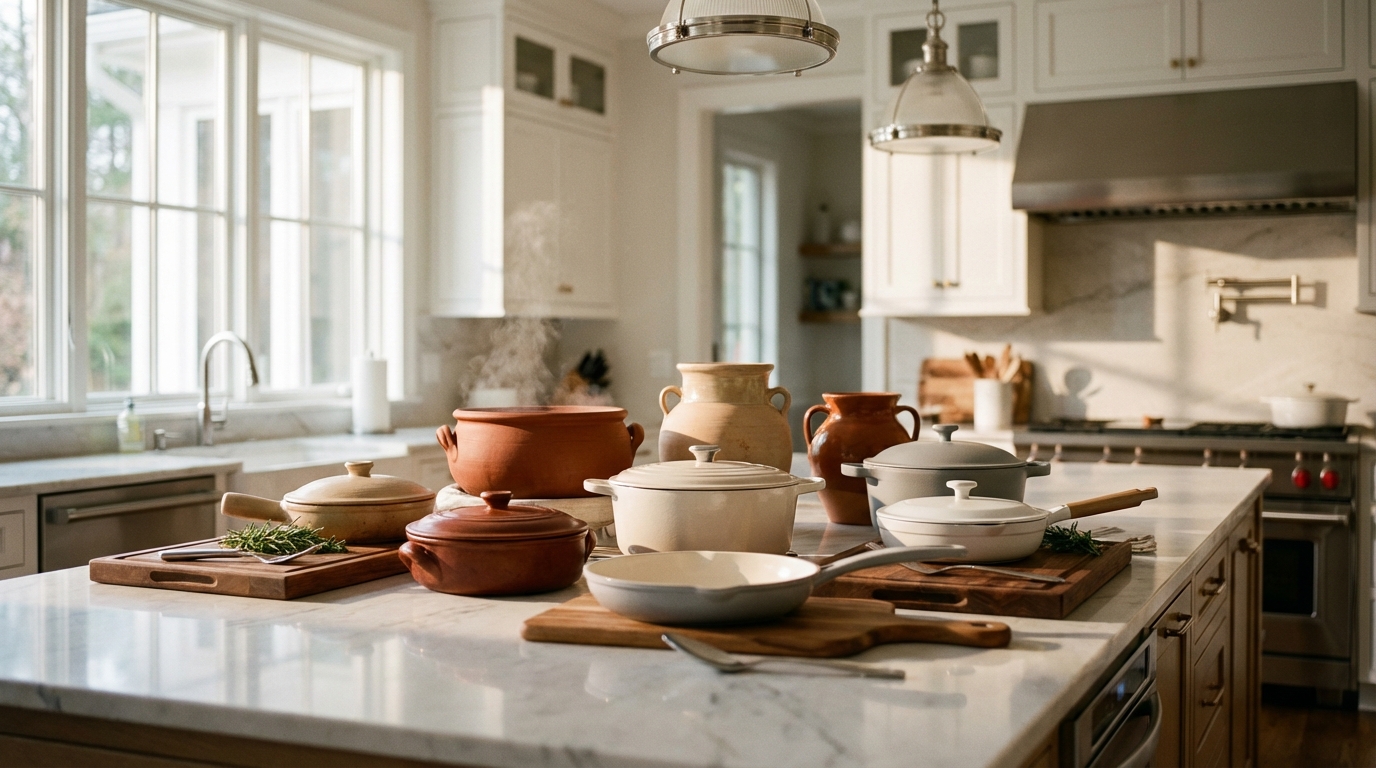
The article demystifies "non-toxic ceramic cookware" by revealing that most store-bought "ceramic" pans are simply aluminum discs sprayed with a sol-gel coating whose proprietary, temperature-sensitive formula can degrade above 500 degreesF and may harbor undisclosed nanoparticles or heavy metals, whereas true safety lies in 100 % ceramic vessels fired from clay and silica at 2,000 degreesF or in transparent, third-party-certified alternatives such as stainless steel, cast iron, carbon steel, or glass. Readers learn how to decode labels ("100 % ceramic" vs. "ceramic-coated"), spot meaningful certifications (NSF, Prop 65 compliance), balance price against build quality, and adopt low-to-medium-heat cooking, silicone or wood utensils, hand-washing, and damage-based replacement to extend a pan's short non-stick life. By exposing testing gaps behind "PFOA-free" claims and clarifying maintenance myths (no seasoning, no dishwasher, no thermal shock), the piece equips home cooks to choose durable, genuinely non-toxic tools that align with their budget, cooking style, and family-health priorities without falling for marketing confusion.
Understanding Non Toxic Ceramic Cookware
To guarantee a truly non-toxic pan, skip the marketing buzzwords and buy cookware labeled "100% ceramic" fired above 2,000 degreesF--or opt for proven stainless steel--because ceramic-coated aluminum can degrade above 500 degreesF and its proprietary sol-gel makeup is never fully disclosed.
What Makes Ceramic Truly Non‑Toxic?
Let's clear up a common confusion: not all "ceramic" cookware is created equal. True ceramic cookware--the kind that's been used for over 15,000 years--is made entirely from clay, silica, and minerals fired at temperatures exceeding 2,000 degreesF [2]. This creates a solid, naturally non-toxic piece with no synthetic coatings that could leach into your food. Most modern "ceramic" pans you'll find in stores are something different. They're typically aluminum pans with a thin coating applied through what's called a sol-gel process [1].
While these coatings are marketed as non-toxic because they don't contain PFOA or PTFE (the chemicals in traditional nonstick cookware), the reality is more complex. The proprietary nature of these formulas means we don't always know exactly what's in them [1]. Here's what matters for your kitchen: these ceramic-coated pans can start to break down at temperatures above 500 degreesF, which is concerning since many recipes call for higher heat [1][2]. Without clear industry standards for what "non-toxic" or "ceramic" actually mean in cookware, it's up to you to make informed choices. The good news?
You have excellent alternatives. In Consumer Reports testing, several cookware types performed well as genuinely safe options [3]. If you're looking for peace of mind, traditional 100% ceramic or well-tested alternatives like high-quality stainless steel pans provide reliable, non-toxic cooking surfaces without the uncertainty of mysterious coatings.
Key Materials and Coatings to Look For
When shopping for truly safe cookware, knowing what to look for makes all the difference. Pure ceramic cookware--made entirely from clay, silica, and minerals fired at over 2,000 degreesF--offers a naturally non-toxic surface because it's one solid piece, not a coating [1]. Here's how to spot the real deal: look for cookware labeled as "100% ceramic" rather than "ceramic-coated." Terms like "ceramic non-stick" without additional details often signal coatings that may contain undisclosed ingredients [2]. The difference matters--some testing has revealed unexpected substances in certain ceramic-coated products [2].
Certifications provide valuable guidance. Look for NSF certification, which verifies cookware is free from PFOA and other concerning chemicals [4]. Trustworthy manufacturers openly share testing reports showing their products meet California's Proposition 65 standards for heavy metals [4]. If you're exploring alternatives, you have excellent options beyond ceramic.
Cast iron adds beneficial iron to your food, carbon steel develops a natural nonstick surface over time, and properly tested enameled cast iron combines durability with easy cleaning [4]. Glass cookware offers the most chemically inert cooking surface available--perfect if you want absolute peace of mind [4]. Remember, the best cookware for your kitchen depends on your cooking style and priorities. Whether you choose pure ceramic or explore other non-toxic options, focusing on transparency and third-party testing helps ensure you're making a safe choice for your family.

Common Myths and Misconceptions
Many "ceramic" pans are merely metal with a mystery polymer coating that can break down above 500 degreesF, so check whether you're buying true ceramic or a marketed imposter before trusting the "non-toxic" label.
Ceramic‑Coated vs Pure Ceramic Explained
Understanding the difference between ceramic-coated and pure ceramic cookware can help you make smarter choices for your kitchen. As we covered earlier, ceramic-coated cookware is essentially metal with a thin coating, while pure ceramic is solid clay fired at extreme temperatures. This distinction is crucial when evaluating safety claims.
The practical differences matter in your kitchen. Pure ceramic cookware provides excellent heat retention and can handle high temperatures without releasing chemicals, though it requires careful handling due to its weight and fragility [5]. Ceramic-coated pans offer convenience but come with limitations--their coatings can degrade when overheated, and the proprietary nature of these formulas means we often don't know exactly what's in them [1].
For cooks seeking transparency and safety, traditional materials like stainless steel offer a proven alternative. These time-tested options provide durability and clear material composition without mysterious coatings. When shopping, look beyond marketing claims and consider whether you're buying true ceramic or just another coated pan.
Why Some "Ceramic" Pans May Still Leach Toxins
The "non-toxic" label on ceramic cookware doesn't always tell the full story. Independent testing reveals a more complex picture that every home cook should understand. When Consumer Reports tested nonstick pans, they found concerning results--even products labeled "PFOA-free" sometimes contained these chemicals, and while ceramic-coated pans tested negative for 96 PFAS chemicals, thousands more exist that weren't tested [6]. The heart of the issue? Many "ceramic" pans aren't ceramic at all.
Some manufacturers have admitted their products contain "organic polymers" and never reach a true ceramic state--they're essentially ceramic precursors with unclear compositions [2]. This matters because these coatings behave differently than you'd expect. Above 500 degreesF (260 degreesC), they can start breaking down, potentially releasing substances into your food [2]. Testing has uncovered various concerning substances in ceramic-coated cookware, including titanium dioxide nanoparticles (banned in European food products), as well as lead, mercury, and antimony [2]. The FDA has warned about imported cookware leaching dangerous levels of lead--particularly concerning for families with young children [7].
Without standardized definitions for "non-toxic" or clear regulations requiring full ingredient disclosure, you're left to navigate marketing claims on your own. The best approach? Choose cookware with transparent manufacturing processes and proven safety records. Traditional options like cast iron, carbon steel, and quality stainless steel provide peace of mind through their simple, time-tested compositions.
Choosing the Right Ceramic Pan for Everyday Cooking
Before you drop $600 on a ceramic pan, lift it, magnet-test the base, and accept you'll need a dab of butter--because even the best coating will scratch and dull if the construction is flimsy.
Evaluating Durability and Performance
When choosing ceramic cookware, you'll need to adjust your cooking expectations. Testing shows ceramic-coated pans match PTFE pans for heat distribution and food release [6], but here's the key difference: you'll need a bit of oil or butter for best results, unlike traditional non-stick surfaces that work with little to no lubrication [8]. Knowing this upfront helps set realistic expectations for everyday cooking. Durability testing reveals significant variation between ceramic options.
While some pans withstand mechanical scrubbing as well as PTFE alternatives [6], many coatings lose their polish with regular use, gradually reducing non-stick performance [8]. The lowest-quality options develop hairline scratches that compromise the cooking surface [8]. When evaluating pans, focus on these practical checkpoints: First, assess the base thickness--heavier bases distribute heat more evenly and resist warping, though they require more wrist strength [8]. For induction cooktops, verify full magnetization across the base.
Test handle comfort and balance with a lifting motion, imagining the pan full of food [8]. Finally, match pan diameter to your burner sizes for optimal heat transfer [8]. These simple checks during selection help ensure years of reliable performance--we'll cover the specific care techniques that maximize longevity in the next section.
Balancing Price, Quality, and Longevity
Ceramic cookware spans a wide price range, from budget sets around $120 to premium collections exceeding $600 [9]. Understanding what drives these price differences helps you invest wisely. Higher-priced options typically feature multi-layer construction for superior heat distribution, while budget alternatives may still perform well for basic cooking needs [9][11]. The main differentiators include base thickness, coating durability, and useful accessories versus filler items [10]. Here's what matters most: construction quality trumps piece count.
Some manufacturers pad their sets with unnecessary items like pan protectors to appear more valuable [11]. Instead, evaluate the actual cookware pieces and their build quality. Thicker, multi-layer bases cost more but deliver even heating and resist warping--though they do require more arm strength to maneuver [10]. An important consideration from industry expert Fran Attilio: ceramic's nonstick properties come from "an oil that is a component of the coating" that gradually wears down, unlike permanent polymer coatings [10]. This degradation happens regardless of price, making proper care (detailed in our next section) more important than premium pricing.
For smart shopping, look for these value indicators: warranties of 10 years or more signal manufacturer confidence [11], while professional features like flush-mounted rivets and broiler-safe construction often appear in mid-range options [11]. Consider whether premium extras--like specialty storage systems or hybrid cooking surfaces--align with your actual cooking habits before paying the premium [9][10]. Quality


Care, Maintenance, and Longevity Tips
Treat your ceramic pans like fragile glass--stick to low-medium heat, hand-wash only, and the moment you spot a scratch or chip, retire the pan before toxins sneak into your food.
Safe Cooking Practices to Preserve Non‑Toxicity
Keep your ceramic cookware safe with these essential practices. As we discussed earlier, ceramic coatings can break down at high temperatures--so stick to low and medium heat settings. Never preheat empty pans [12]. Start cooking on low heat, then gradually increase as needed. This simple step prevents thermal shock that can damage the surface [13].
Choose wooden or silicone utensils to protect the coating from scratches [13]. Here's the critical rule: if your pan shows any scratches or damage, it's time to replace it. Even small imperfections can compromise safety [1]. After cooking, let pans cool completely before washing. Sudden temperature changes--like hot pan to cold water--can crack the ceramic [13].
The same goes for setting hot pans on cold countertops. Always use a trivet or hot pad [13]. While some ceramic pans claim to be dishwasher-safe, hand washing extends their life significantly [13]. For those seeking the most durable non-toxic option, consider alternatives like carbon steel cookware that develops a natural nonstick surface over time.
Cleaning and Storage Strategies for Lasting Use
Clean ceramic cookware the right way to maximize its lifespan. Skip the dishwasher--even if the label says it's safe.
Hand washing protects the coating from harsh detergents and high heat [14]. Daily cleaning routine: - Cool pans completely first - Use mild dish soap with a soft sponge - Skip the steel wool and abrasive cleaners [14] For tough stains: - Make a baking soda paste, let it sit 15-20 minutes, then wipe clean [14] - Remove mineral deposits with equal parts vinegar and water [14] Smart storage tips: - Place paper towels between stacked pans to prevent scratches [15] - Hang pans when possible - Store lids separately to avoid chipping [15] Important: Unlike cast iron, don't try to season ceramic pans with oil when they lose their nonstick properties. This creates a sticky mess [15].
Instead, regularly inspect your cookware. Any chips or cracks mean it's time for a replacement--your safety depends on an intact coating [15].
Conclusion
- True ceramic is 100% clay fired at 2,000 degreesF, not aluminum with a thin coating.
- Ceramic-coated pans can degrade above 500 degreesF and may contain undisclosed chemicals.
- Look for '100% ceramic' labels and NSF or Prop 65 certifications for safety.
- Hand-wash only, avoid high heat, and replace at first scratch to stay safe.
- Cast iron, carbon steel, glass, and stainless steel are proven non-toxic alternatives.
- https://ceramics.org/ceramic-tech-today/ceramic-coated-cookware-safety/
- https://www.theguardian.com/lifeandstyle/2025/jun/09/ceramic-nontoxic-cookware
- https://www.consumerreports.org/home-garden/cookware/best-frying-pans-if-you-want-to-avoid-pfas-chemicals-a1006253549/
- https://gimmethegoodstuff.org/blogs/guides-and-product-reviews/2024-safe-non-toxic-cookware-guide?srsltid=AfmBOor-6DVV3bXwqEG4OUIgtGhrhCDVvKsJkjSL4-GjfLTYwPxfVXnV
- https://www.purecook.com/what-cookware-is-100-non-toxic/
- https://www.consumerreports.org/toxic-chemicals-substances/you-cant-always-trust-claims-on-non-toxic-cookware-a4849321487/
- https://www.nbcnews.com/select/shopping/fda-warning-nonstick-cookware-leaching-lead-rcna231938
- https://www.choice.com.au/home-and-living/kitchen/cookware/buying-guides/ceramic-cookware
- https://www.foodandwine.com/best-ceramic-cookware-sets-7483280
- https://www.forbes.com/sites/forbes-personal-shopper/article/best-ceramic-pan/
- https://www.foodnetwork.com/how-to/packages/shopping/product-reviews/best-ceramic-cookware
- https://www.fiskars.com/en/cooking/info/maintaining-ceramic-coated-cookware
- https://healthyhouseontheblock.com/ceramic-cookware/
- https://www.heysunday.com/blogs/learn/how-to-clean-ceramic-pots-pans
- https://www.leafscore.com/eco-friendly-kitchen-products/cookware/most-non-stick-pans-dont-last-very-long-heres-what-to-do-about-it/