

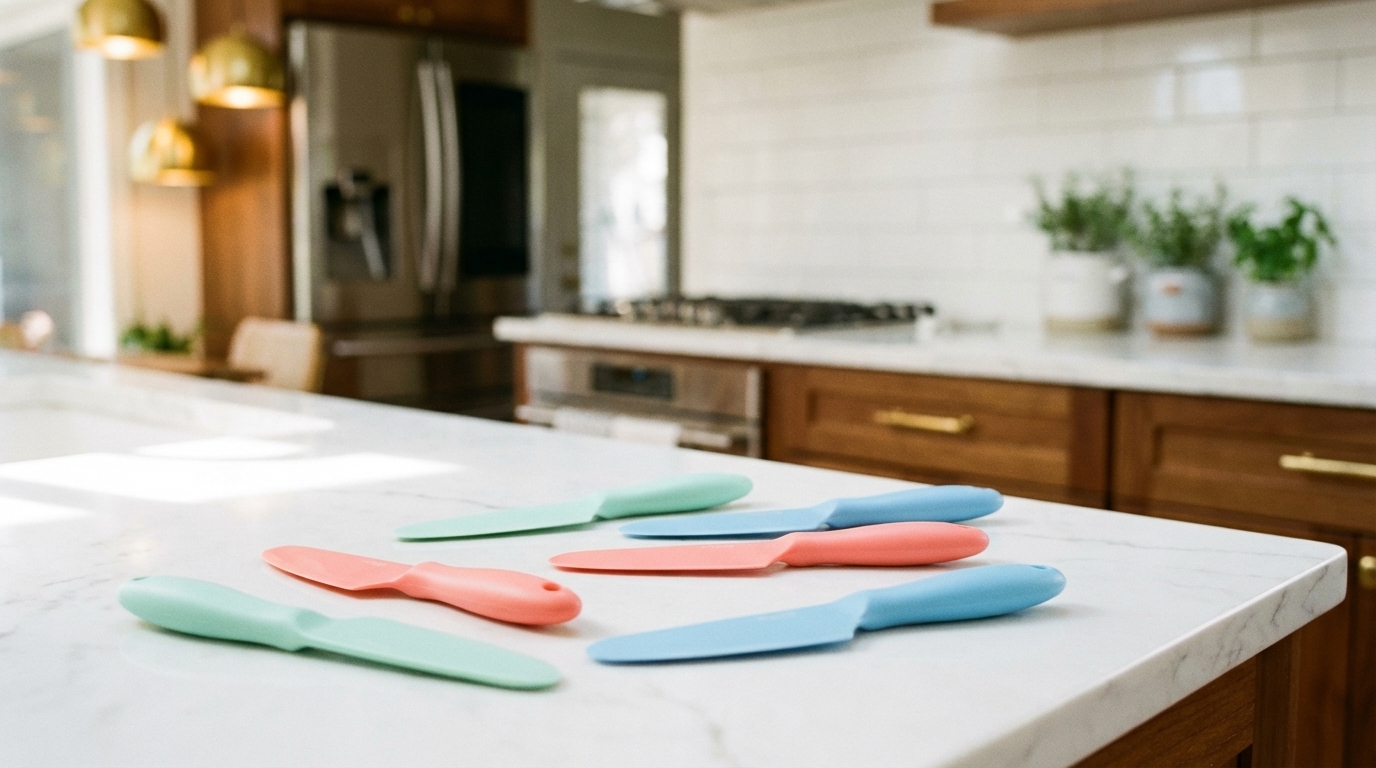
Plastic kids' knives are the safest, smartest first step toward real cooking skills, giving children BPA-free, skin-safe blades that slice soft foods while building confidence and proper technique without constant adult hovering. The article shows parents how to evaluate key safety features--rounded tips, finger guards, non-slip handles, and reliable locking mechanisms--then match blade length and grip size to a child's hand so the tool feels secure, balanced, and fatigue-free. It explains why starting with inexpensive, colorful plastic knives encourages longer, happier practice sessions, prevents costly accidents, and creates positive food-prep habits that carry over when kids graduate to metal knives. Readers learn hand-wash-only care routines that extend knife life, signs that indicate replacement time, and eco-smart disposal options, all while teaching children respect for kitchen tools. By pairing the right plastic knife with a child-level cutting board and clear storage system, families transform cooking from a risky chore into an independent, creativity-boosting activity that pays lifelong dividends in health, self-reliance, and family bonding.
Why a Plastic Kids Knife Is the Smart Choice for Young Cooks
Plastic kids knives let children practice cutting soft foods independently while building confidence and proper technique before graduating to metal tools.
Long‑lasting safety and sustainability of a plastic kids knife
When introducing young children to kitchen skills, plastic knives offer unique advantages that make them an excellent starting point. Quality plastic kids knives are specifically engineered with rounded edges and flexible blades that bend rather than cut skin, providing essential protection during those early learning stages. Modern food-grade plastics eliminate concerns about harmful chemicals--look for BPA-free options that meet safety standards.
While it's true that plastic knives may need replacement as children grow and develop more advanced skills, this progression actually supports their learning journey. Starting with a safer plastic option allows children to build confidence and proper technique before transitioning to more permanent tools. The lightweight design reduces hand fatigue, letting kids practice longer without strain.
Many families find that having dedicated plastic knives for their youngest cooks prevents accidents while older siblings use regular utensils. Consider pairing plastic knives with quality cutting boards designed for safety--the combination creates an ideal learning environment.
Everyday usability that reduces waste and saves money
Smart families recognize that plastic kids knives serve a specific purpose in their child's culinary journey. The affordability of plastic options means you can have multiple knives available--one for each child, extras for playdates, or backups when one goes missing. This accessibility encourages more frequent cooking participation without worry about expensive tools being damaged.
Unlike sharp metal knives that require constant supervision, plastic alternatives let children practice independently with soft foods like bananas, strawberries, or cooked vegetables. The colorful designs and child-friendly shapes make cooking feel like play rather than a chore, building positive associations with food preparation. Many parents find that starting with plastic knives actually saves money long-term by preventing accidents that could discourage kitchen participation altogether.
When children outgrow their plastic knives, these tools can be repurposed for craft projects, playdough activities, or passed to younger siblings. Proper care--handwashing and storing in designated spots--teaches responsibility while extending usability. This graduated approach to kitchen tools mirrors how children learn other skills, starting with training wheels before riding freely.

Safety Features Built Into Modern Plastic Kids Knives
Modern plastic kids knives protect young chefs with rounded tips, finger guards, child-proof locks, non-slip ergonomic handles, and BPA-free materials, so they can cut safely while mastering proper kitchen technique.
Rounded tips, blade guards, and child‑proof locks
Modern plastic kids knives come with essential safety features that protect young hands during food prep. Rounded tips prevent accidental punctures while still cutting effectively [6]. This design appears across many children's knife styles, from wooden-handled versions to fully plastic options, making kitchen skills more accessible for kids [8]. Blade guards and protective sheaths add another layer of safety during storage and transport, keeping curious fingers away from edges when knives aren't in use [7].
Look for models with finger guards built right into the handle--these physically prevent small hands from sliding onto the cutting edge [7]. Child-proof locking mechanisms offer crucial protection, especially in folding designs. Quality locking ring systems prevent the blade from accidentally closing during use, eliminating a common source of kitchen injuries [8]. These locks work both ways--keeping the blade securely open while cutting and safely closed when stored [8].
The best children's knives combine multiple safety features without sacrificing cutting ability. This balance helps kids develop proper technique while minimizing risk [7].
Non‑slip, ergonomic handles made from BPA‑free materials
Smart handle design makes all the difference in kids' knife safety and comfort. Non-slip textures and ergonomic curves give children better control, reducing accidents during food prep [9]. Contoured handles with soft-touch grips fit naturally in smaller hands, preventing fatigue and helping kids maintain proper cutting technique [10]. These specially designed handles weigh less than adult versions, making them easier to control and encouraging kitchen independence [9].
Material safety is just as important as design. Quality kids' knives use BPA-free plastics and food-grade polymers to eliminate chemical exposure during cooking [9]. This matters because children's developing systems are more sensitive to toxins than adults' [10]. When shopping for kids' knives, check for three must-have features: textured grips that work even with wet hands, age-appropriate sizing, and lightweight construction that won't tire small hands quickly [10].
Together, these features turn cooking from a struggle into an enjoyable skill-building experience. Proper knife storage with dedicated holders or
Picking the Perfect Size and Design for Your Child
Skip the tiny "kid" knives--hand your child a medium blade that fills their palm, balances weight like a feather, and sports a slim, guard-equipped handle so they can grip with both hands and chop confidently without slips or fatigue.
Age‑appropriate blade length and handle dimensions
Choosing the right blade length and handle size makes all the difference in your child's kitchen confidence and safety. Here's something surprising: those tiny knives marketed for small hands actually require more skill to control safely [11]. Instead, look for a medium-sized knife that fills your child's hand--one they'll naturally grip with both hands for better control and fewer accidents [11]. When evaluating handles, find one that matches your child's grip comfortably.
The best designs offer a secure hold without being too bulky--slim enough for small fingers to wrap around, yet substantial enough to prevent hand fatigue [13]. Weight balance is crucial too. A knife that's too heavy will tire little hands quickly (and tired hands are unsafe hands), while one that's too light might get treated like a toy [12]. Many quality children's knives now feature thoughtfully designed handles with built-in finger guards to prevent hands from slipping onto the blade [13].
The key is finding that sweet spot where the knife feels secure and comfortable for extended use without causing strain [12]. Before making your final choice, have your child hold the knife (with supervision, of course) to check that it feels right in their hands. Their comfort and control are your best indicators of a good fit.

Caring for Your Plastic Kids Knife to Maximize Value
Hand-wash your child's plastic knife in cool, soapy water, dry it thoroughly, and store it in a shaded, child-height sheath to triple its lifespan, slash waste, and turn daily care into a lifelong respect-for-tools lesson.
Simple cleaning and storage routines for durability
Proper care extends any knife's lifespan, though plastic requires special attention. Hand wash immediately after use with mild soap and lukewarm water--hot water warps plastic and compromises safety features. Skip the dishwasher completely, as heat and harsh detergents degrade plastic components and non-slip grips.
Dry knives thoroughly before storage to prevent moisture damage and bacterial growth. Use protective sheaths or dedicated holders rather than tossing them loose in drawers where edges dull from contact with other utensils. Create a designated storage spot at child height, away from heat sources and direct sunlight that cause warping.
Simple drawer dividers or magnetic strips work well for organizing multiple knives. Following these routines does more than preserve functionality--it teaches children valuable habits for maintaining all their kitchen tools. When children understand proper care, they develop respect for their equipment and learn skills that extend beyond the kitchen.
When to replace and how longevity supports a greener kitchen
Watch for replacement signs in plastic knives--dulling edges, warping handles, or visible wear mean it's time for a change. Plastic knives typically need replacing every few months to a year with regular use [14], creating unnecessary waste and expense.
As discussed in the sustainability section above, this frequent replacement contributes to significant environmental impact. When it's time to replace, consider investing in durable alternatives.
Quality
- Plastic kids knives have rounded, flexible blades that bend on skin for safety
- Medium-sized knives give better control than tiny ones marketed for small hands
- Hand-wash only; dishwashers degrade plastic and warp safety features
- Plastic knives need replacement every few months to a year with regular use
- Look for BPA-free, food-grade plastics to avoid chemical exposure
- Built-in finger guards and non-slip handles prevent hands from sliding onto blades
- Start kids on soft foods like bananas and strawberries to build confidence
- https://justenbois.com/9-reasons-why-this-safe-knife-for-kids-is-awesome/?srsltid=AfmBOopuyzdWefbEa8EI9-MoDuC1aF2mJJtYvB7MlQ28O06jv9DVvdOb
- https://beaubaby.shop/blogs/news/should-toddlers-use-metal-cutlery-navigating-the-choices-in-early-childhood?srsltid=AfmBOoozeSjNE6vbljE6tFSurF1gKqAx-Jtpr0VP96loJXFv7EtcOitC
- https://www.nationalgeographic.com/environment/article/carrying-your-own-fork-spoon-help-plastic-crisis
- https://ecolipak.com/blogs/usage-guide/pros-cons-non-disposable-plastic-cutlery-daily-life-guide?srsltid=AfmBOorLLZwX8KdOBE_FFVb6RCTg0uZCK5H0ix_zKO0Mc2ZndNfvai5-
- https://ahimsahome.com/blogs/childrens-health-blog/the-surprising-impact-of-plastic-utensils-on-our-planet?srsltid=AfmBOoo7Pey51_tToFk2xK06-4oLuWsT_NNTgnK9yCf_vzlAbocQD2xn
- https://www.amazon.com/kid-safe-knife/s?k=kid+safe+knife
- https://www.alibaba.com/showroom/kids-safe-knife.html
- https://kidswhoplay.com/2022/01/19/pocket-knives-for-kids-the-ultimate-guide/
- https://www.qing-zhan.com/news/why-plastic-handle-cutlery-is-ideal-for-kids.html
- https://chefpassport.com/stories/childrens-kitchen-knife-best-cutting-safety-set-review/
- https://agrussell.com/knife-articles/buying-your-childs-first-knife
- https://bpsknives.com/how-to-choose-a-child-s-first-knife-5-key-criteria/?srsltid=AfmBOorLpOkPl_Wic6TvKQQZ1-lAD12vWxs0VBPGXfkSzmCOJo2zMFc3
- https://www.knivesandtools.com/en/ct/buying-guide-childrens-knives.htm
- https://agarolifestyle.com/blogs/kitchen-appliances/plastic-kitchen-knife-set-debate-are-they-safe
- https://www.quora.com/How-long-should-a-good-kitchen-knife-be-expected-to-last-before-needing-to-be-completely-replaced