

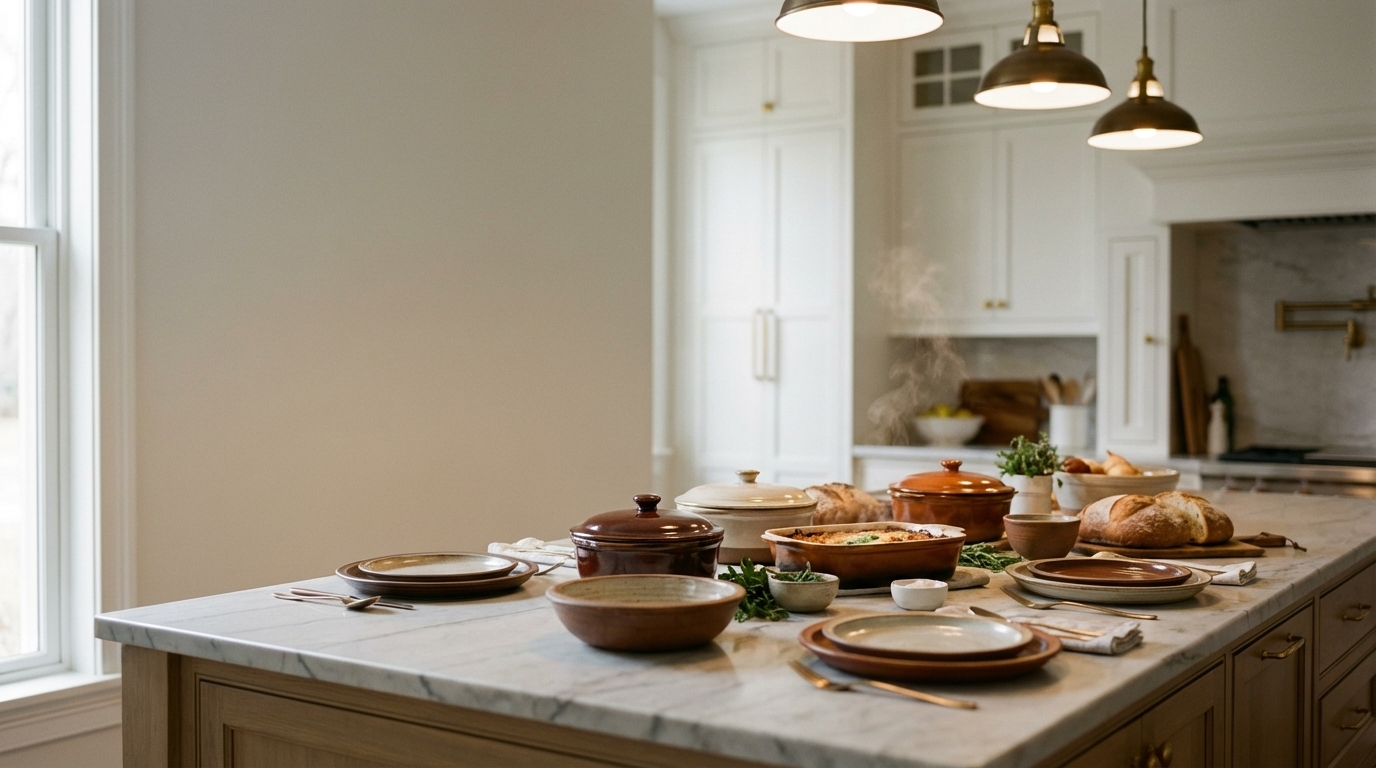
Stoneware, a high-fired ceramic of clay, quartz and feldspar, delivers stone-like durability and superior heat retention that keeps stews warm from oven to table, yet choosing and using it wisely--checking weight, handle comfort, oven-safe ratings and avoiding thermal shock--matters as much as appreciating its 6,000-year history now powered by energy-efficient kilns and recycled content. The guide walks readers through evaluating quality without overspending, matching pieces to cooking habits, and safely transitioning them among oven, microwave, freezer and dishwasher, while hand-washing with mild soap and inspecting for crazing or cracks to extend lifespan. By understanding firing temperatures, sustainability advances and practical care--like drying thoroughly, cushioning stacked dishes and moderating temperature swings--home cooks gain long-lasting, FDA-approved, non-toxic dinnerware that outperforms fragile ceramics and plastic alternatives, slashes waste and elevates everyday meals and entertaining alike.
Understanding Stoneware: What It Is and Why It Matters
Stoneware's 2,150-2,400 degreesF firing fuses clay, quartz, and feldspar into a water-resistant, stone-strong ceramic that has carried kitchens from ancient Mesopotamia to today's mugs and roasting pans.
Definition, composition, and key characteristics of stoneware
Let's start with the basics: stoneware is a remarkably durable ceramic made from quartz, clay, and feldspar that becomes partially glass-like when fired at high temperatures [1]. What makes it special? Unlike regular earthenware, stoneware forms under intense heat and pressure deep in the Earth, giving it a higher concentration of minerals that create its signature stone-like strength [2].
The key to stoneware's durability lies in its firing temperature--between 2,150 degreesF to 2,400 degreesF (1,177 degreesC to 1,316 degreesC). This extreme heat transforms the clay into a much less porous material that stays water-resistant even without any glaze [1][2]. For potters and manufacturers, stoneware offers excellent workability thanks to its ball-clay foundation, which provides the flexibility and fine texture needed to create everything from your favorite coffee mug to a roasting pan that can handle Sunday dinner [1].
You'll find stoneware in colors ranging from creamy off-white to rich brown, often with natural speckling that adds character before any glaze is applied [1]. Whether fired in oxygen-rich or oxygen-reduced environments, each method creates unique visual effects [1]. This winning combination of strength and versatility explains why stoneware has become the go-to choice for kitchenware that needs to handle daily use, temperature swings, and still look great on your table [2].
Historical evolution and modern manufacturing techniques
The story of stoneware stretches back thousands of years. While the earliest pottery dates to around 24,000 BCE in Japan, stoneware emerged later as people needed stronger, more water-resistant containers for daily life [5]. The game-changer came between 6,000-4,000 BCE when Mesopotamian potters invented the potter's wheel, opening up endless possibilities for shapes and styles [5]. China mastered stoneware production in ancient times, while Europe didn't catch up until after the Renaissance (14th-17th centuries) [4].
Early makers relied on simple hand-building methods--coiling clay ropes, pinching forms, and joining flat slabs--before wheels and kilns revolutionized the craft [5]. The Industrial Revolution brought another leap forward, introducing the first mechanical potter's wheel in the 19th century [4]. Today's stoneware production blends old-world craftsmanship with modern efficiency. Manufacturers use several techniques: slip casting (pouring liquid clay into molds for precise shapes), pressing (compressing clay against mold plates for consistent thickness), and extrusion for creating continuous forms like tiles [5].
Electric kilns with programmable controls have replaced the guesswork of traditional firing, ensuring every piece meets exact specifications [4]. The industry continues to evolve with innovations like 3D printing for custom designs and rigorous quality control at every stage [5]. Many manufacturers now prioritize sustainability, using energy-efficient kilns and incorporating recycled materials--proving that this ancient craft can adapt to modern values while maintaining the quality that's made stoneware a kitchen staple for generations [5].
Stoneware Benefits for Everyday Cooking
Stoneware's superior heat retention, even cooking, and oven-to-table durability keep hearty meals warm and safe while eliminating extra dishes and frequent replacements.
Heat retention, even cooking, and versatility across stovetop, oven, and microwave
Stoneware's exceptional heat retention makes it practical for family-style dining and social gatherings. Once heated, it maintains temperature longer than standard ceramics, keeping meals warm throughout extended dining periods [6]. This thermal stability helps food retain proper serving temperature--particularly beneficial for hearty dishes like stews, casseroles, and slow-cooked meals [7]. Beyond retention, stoneware distributes heat uniformly throughout its structure, eliminating hot spots that cause inconsistent cooking results [6].
This even heat distribution creates more reliable outcomes when preparing temperature-sensitive dishes. Modern stoneware transitions seamlessly between cooking environments--most quality pieces work in ovens, microwaves, dishwashers, and freezers [7]. This adaptability simplifies meal preparation from cooking to serving to storage without transferring between multiple containers [7]. Despite this versatility, stoneware requires some handling precautions.
Avoid exposing it to thermal shock by never transferring it directly from freezer to hot oven or from high heat to cold surfaces, as sudden temperature changes can cause cracking [8]. While heavier than porcelain, stoneware's substantial weight contributes to its stability during cooking and serving [8].
Durability, eco‑friendly aspects, and health‑safe food contact
Stoneware offers impressive durability that translates to long-term value for households. Unlike more fragile options, quality stoneware withstands regular use with minimal chipping [9]. This longevity contributes to its eco-friendly profile--fewer replacements mean less waste and resource consumption.
Health-conscious consumers will appreciate that stoneware ranks among the safest materials available for dinnerware [9]. It provides a non-toxic alternative to plastic and melamine, which may pose various health risks [9]. For those prioritizing safety, stoneware typically meets FDA approval standards for food contact [9].
When selecting dinnerware, this combination of durability, sustainability, and safety makes stoneware particularly appealing for daily use and special occasions alike.
Choosing and Using Stoneware Wisely
Buy only the stoneware pieces your cooking style actually needs--test each one for secure handles, balanced weight, and oven-safe specs, then let open-stock shopping, not pricey brands, build your perfect oven-to-table collection.
How to select quality stoneware that fits your budget and kitchen style
Start your stoneware selection by taking inventory of what you already own. Identify which pieces you actually use and what's missing from your kitchen arsenal [10]. You'll save money buying individual pieces (open stock) rather than full sets--this lets you choose exactly what serves your cooking style [10]. Think about how you cook and serve meals. If you're regularly feeding a crowd or love hosting dinner parties, invest in larger serving pieces that hold heat well. Here's how to evaluate stoneware quality in person: Pick up each piece and test its weight and balance. Remember, it'll be even heavier when full of food, so make sure you can comfortably handle it [10].
Check that handles feel secure and comfortable in your grip--this matters more with stoneware since it's naturally heavier than other materials [10]. Well-made stoneware should feel substantial without being unwieldy. Before buying, verify the temperature limits. Quality stoneware typically handles oven temperatures of 400 degreesF or higher--check the manufacturer's specifications to be sure [10]. While most stoneware is dishwasher-safe, as we'll discuss in the care section, hand-washing helps preserve glazed finishes longer [10]. Also consider your cooktop: if you have induction, you'll need compatible materials [10]. For your kitchen's aesthetic, stoneware offers incredible variety.
From earthy, rustic finishes to bright glazes, you can find pieces that work beautifully from oven to table [10]. If you're building a collection for both cooking and serving, consider versatile pieces like a roasting pan that transitions seamlessly from preparation to presentation. Don't assume expensive means better. Testing consistently shows budget-friendly options performing just as well as pricey alternatives [10]. Instead of focusing on brand names, look for quality indicators: even glazing, balanced weight distribution, and securely attached handles [10].
Caring for Your Stoneware to Last a Lifetime
Treat your stoneware like a heirloom: hand-wash gently, guard it from thermal shock and dishwasher abuse, and inspect it regularly so the pieces you love stay crack-free and food-safe for decades.
Cleaning best practices, stain removal, and dishwasher safety
While stoneware can go in the dishwasher, hand washing helps it last longer. Grab a soft sponge and mild dish soap--skip the harsh chemicals and bleach, which can damage the glaze and cause discoloration [11]. For everyday cleaning, warm water and gentle scrubbing will handle most messes without harming the surface. Got stubborn stains? Mix up a paste with baking soda and vinegar, give it a gentle scrub, then rinse with warm water.
This natural method lifts residue without scratching your stoneware. You might need to repeat for really tough spots [11]. Remember: sudden temperature changes are stoneware's enemy. Let hot dishes cool down before washing, and bring cold dishes to room temperature before heating them up [11]. This prevents thermal shock and cracking.
Watch out for certain foods--acidic ingredients can affect the glaze, while oily foods might seep into tiny cracks in older pieces [11]. If you do use the dishwasher, don't overcrowd it. Pieces banging together can cause chips, and those high temps and harsh detergents will gradually wear down glazes over time [11]. After washing, make sure everything's completely dry to avoid water spots and mold. Every few months, give your stoneware a quick inspection for hairline cracks or worn spots that might get worse with use [11].
Storage, handling, and troubleshooting common issues
Smart storage keeps your stoneware in great shape for years. Find a spot with stable temperatures--no hot attics or cold basements where temperature swings can cause cracks [12]. When stacking, match similar sizes and slip some This prevents "dunting"--those structural cracks that happen when different parts of your stoneware cool at different speeds (especially around 1063 degreesF and 439 degreesF) [12]. Keep an eye out for "crazing"--that spiderweb pattern of tiny cracks in the glaze. You might even hear little pinging sounds as it develops [13]. While some folks think it looks cool, crazing actually weakens your piece and makes it less safe for food [13].
Even more serious is "shivering," when actual chips of glaze flake off edges and handles. That's definitely time to retire the piece [13]. Playing detective with cracks? Look for where they're widest--that's usually where they started [12]. Cracks around the rim often happened during drying, while base cracks typically form during firing [12]. Check the glaze edges: sharp edges mean the crack happened during cooling, while smooth edges suggest it cracked early and the glaze flowed over it [12].
Those S-shaped cracks on the bottom? They're usually from pottery-making techniques--makers prevent them by keeping bases drier and compressing the clay well [12]. Tiny pinholes in the glaze mean the piece was underfired--gases escaped but didn't have time to smooth over. Potters fix this with a 30-minute hold at peak temperature [13]. Blisters are the opposite problem (overfiring) and need grinding and refiring to fix [13].
- Stoneware is fired at 2,150-2,400 degreesF, becoming water-resistant without glaze.
- Its even heat retention keeps food warm and prevents hot spots during cooking.
- Avoid thermal shock: never move stoneware directly from freezer to hot oven.
- Hand-washing with mild soap extends stoneware life better than dishwasher cycles.
- Check for crazing or shivering glaze; these weaken the piece and can make it unsafe.
- Buy open-stock pieces to match your cooking style rather than expensive full sets.
- Quality stoneware feels balanced and substantial, with secure handles and even glazing.
- https://ceramic.school/understanding-clay-bodies-part-2-stoneware/
- https://www.potterydayz.com/post/understanding-the-differences-between-earthenware-and-stoneware-clays
- https://www.sifouniospottery.com/post/the-evolution-of-pottery-from-ancient-times-to-modern-day
- https://deneenpottery.com/pottery/
- https://hosen28.com/manufacturing-of-ceramics-evolution/
- https://kalonceramics.com/blogs/news/5-awesome-benefits-of-cooking-in-stoneware
- https://carthage.co/stoneware-vs-ceramic-vs-porcelain-why-stoneware-reigns-supreme/?srsltid=AfmBOopBqtRYZx5za38L7rCbkLk0H2pVBHEKF4S4U2msYB4u1ItCaU3c
- https://www.vancassotableware.com/blogs/news/stoneware-dinnerware-pros-and-cons?srsltid=AfmBOop8Xtms9B6iKvp_b1GkNN8jJ8BYyNqYMIZGLbC5hfRkbanaPVkj
- https://shop.mikastable.com/the-safest-material-for-dinnerware
- https://www.consumerreports.org/home-garden/cookware/buying-guide/
- https://www.vancassotableware.com/blogs/news/tips-for-cleaning-and-caring-for-stoneware-tableware?srsltid=AfmBOoqpBbNJO_0zsia8URLuDWsepgh4TY0TZIFi4eFDdAw4Lw2rYmw8
- https://lakesidepottery.com/HTML%20Text/Tips/Cracking,%20Shivering,%20Crazing%20and%20Dunting.htm
- https://ceramicartsnetwork.org/daily/article/common-glaze-faults-and-how-to-correct-them