

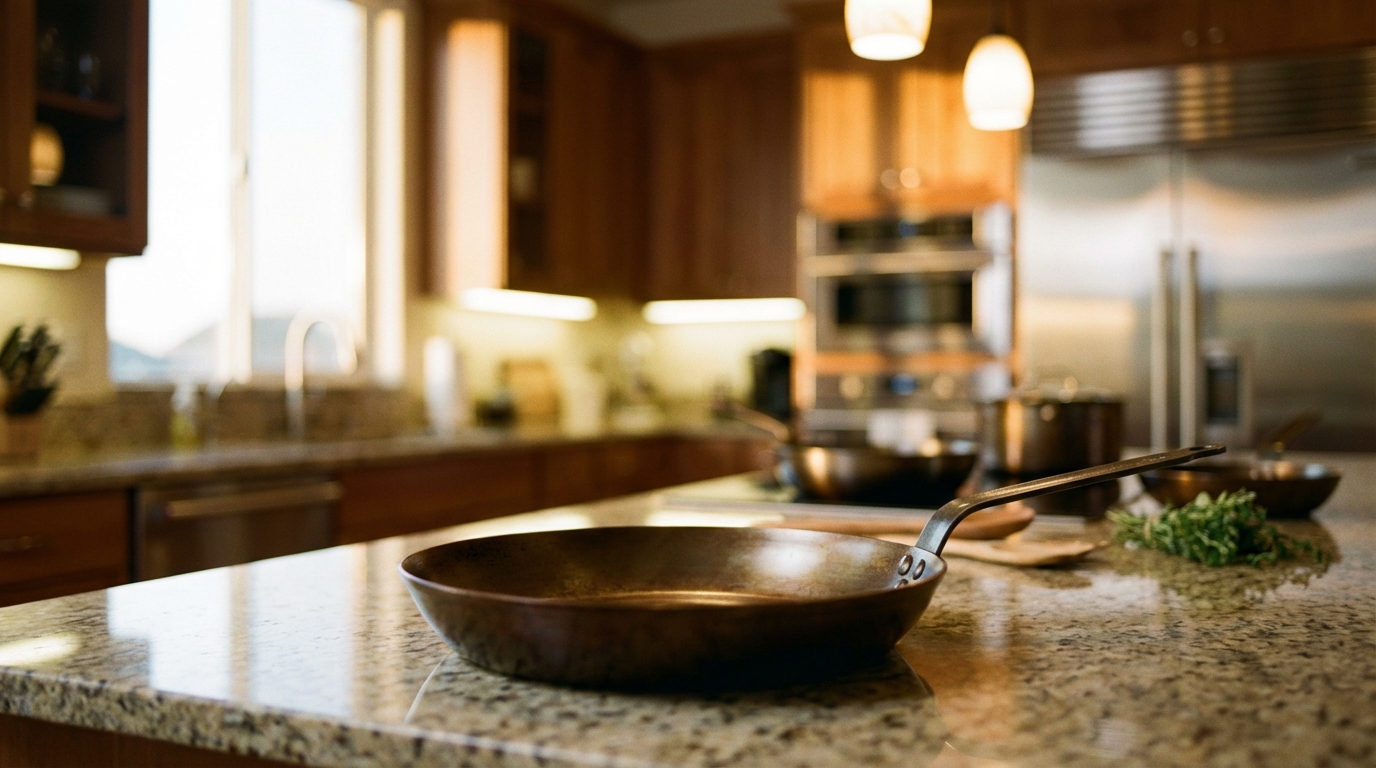
Carbon steel pans emerge as the ultimate kitchen workhorse, offering a natural, chemical-free alternative to traditional non-stick cookware that only gets better with age. This comprehensive guide reveals how these versatile pans develop their own non-stick surface through seasoning, withstand extreme temperatures up to 1200 degreesF, and can last generations with proper care--making them both a healthier choice and a smarter investment than replacing Teflon pans every few years. Readers will discover exactly what to look for when buying, from optimal weight ranges and handle designs to the differences between pre-seasoned and unseasoned options, plus detailed reviews of top picks across every budget from $40 workhorses to $300 heirloom pieces. The article covers specialized uses too, identifying which pans excel at delicate eggs versus high-heat searing, and even explores unique shapes like woks and crepe pans. Most importantly, it demystifies the care process with straightforward guidance on seasoning, cleaning without soap, preventing rust, and maintaining that coveted black patina that makes food glide across the surface. Whether you're a health-conscious cook looking to avoid "forever chemicals" or simply want restaurant-quality searing at home, this guide equips you with everything needed to choose, use, and maintain the perfect carbon steel pan for your cooking style.
Understanding Carbon Steel Cookware
Season a single carbon-steel pan once and you'll wield a 1200 degreesF-safe, forever-chemical-free non-stick workhorse that can outlive its PTFE-coated counterparts by decades.
What Makes Carbon Steel Special: Composition and Properties
Carbon Steel vs. Non-Stick: A Natural Alternative Without Chemicals Carbon steel offers a natural alternative to chemically-coated non-stick pans. While non-stick cookware uses artificial coatings like PTFE (Teflon) or ceramic materials, carbon steel develops its non-stick properties through seasoning--a process that creates a polymerized oil layer on the metal surface [7]. This difference is significant for health-conscious cooks, as traditional non-stick pans often contain PFAS (per- and polyfluoroalkyl substances), commonly called "forever chemicals," which persist in both the environment and human body [7].
These substances have been linked to increased cholesterol levels, liver enzyme changes, and other health concerns [7]. Carbon steel pans withstand temperatures up to 650 degreesC (1200 degreesF) without releasing toxic fumes, unlike PTFE coatings which can degrade and emit harmful substances when overheated beyond 250-260 degreesC [9]. The durability contrast is striking--a properly maintained carbon steel pan lasts decades or even generations, while non-stick pans typically require replacement every few years as their coatings inevitably degrade [9].
Both types serve different cooking purposes: non-stick excels with delicate foods like eggs at lower temperatures, while carbon steel delivers superior results for high-heat techniques like searing and creating crispy textures [9]. The tradeoff comes in maintenance--carbon steel requires regular seasoning to maintain its natural non-stick surface and prevent rust, whereas non-stick pans offer immediate convenience but with shorter lifespans and potential health concerns [8].

What to Look for When Buying Carbon Steel Pans
Choose a 2.6-3.3 lb carbon-steel skillet with a 7-9 inch rounded handle to gain the one-handed agility of the Vollrath and OXO Obsidian while still holding enough heat for even searing.
Thickness and Weight: Finding the Right Balance
The weight and thickness of carbon steel pans significantly impact cooking performance and handling. Most quality carbon steel pans weigh between 2.6 and 3.3 pounds for a 10-inch size, striking a balance between durability and maneuverability [10]. Pans under three pounds and three ounces prove easiest to handle, especially when full of food or when using techniques like sautéing or tossing vegetables [10].
Thickness directly affects heat behavior--thinner pans heat faster and respond more quickly to temperature changes, while thicker models retain heat better for consistent searing. When testing carbon steel pans, Serious Eats found the lightweight Vollrath (2.6 pounds) and OXO Obsidian (2.6 pounds) allowed for easy one-handed manipulation, while heavier options like the Smithey (5.2 pounds) required two hands to lift [10]. This weight difference becomes crucial during techniques requiring pan movement; lighter pans enable the wrist-flicking motion needed to toss foods without spatulas [10].
However, excessively thin pans may develop hot spots that cook food unevenly. The Wirecutter testing team discovered that even moderately thin pans heated quickly but still maintained even cooking for most tasks [11]. A well-balanced pan with proper weight distribution between handle and body also contributes significantly to handling comfort, with some heavier models like the Mauviel compensating through excellent balance [11].
Handle Design and Ergonomics
The handle design of a carbon steel pan significantly impacts both comfort and functionality. A well-designed handle facilitates easy maneuvering while cooking and provides proper balance when lifting a pan filled with food. Handles with rounded edges offer superior grip comfort compared to those with sharp right angles, especially during techniques requiring continuous motion like sautéing [10]. Handle length matters too--ideally between seven and nine inches, as shorter handles place your hand too close to heat while longer ones become unwieldy and take up excessive storage space [10]. Material choices affect both comfort and functionality, with silicone sleeves providing notable advantages.
The OXO Obsidian pan, for example, features a removable silicone sleeve that functions as both a built-in hot mitt and provides a secure, comfortable grip [11]. Without such protection, metal handles can become uncomfortably hot during extended cooking sessions, as experienced with the Vollrath and Merten & Storck pans [10]. Some manufacturers address heat issues with specialized coatings, like the BK Cookware's cast iron handle coating or de Buyer's epoxy-coated handle--though the latter restricts oven use to just 20 minutes at 400 degreesF [10]. Weight balance between handle and pan body significantly influences usability, particularly when cooking techniques require one-handed manipulation. A poorly balanced pan like the Made In model, with its dramatically curved handle that sits high, can feel awkward to hold, especially for shorter cooks [11].
In contrast, well-balanced designs like the OXO and Misen pans allow for comfortable one-handed maneuvering despite their weight [10][10]. Handle attachment methods also matter--welded handles like those on the Matfer Bourgeat eliminate hiding places for food particles that typically form around rivets, making cleaning easier [10]. When selecting a carbon steel pan, consider these ergonomic factors alongside cooking performance to ensure you choose a pan that remains comfortable through years of use.
Pre-Seasoned vs. Unseasoned Options
When shopping for carbon steel pans, you'll encounter both pre-seasoned and unseasoned options. Unseasoned pans arrive with a protective factory coating--typically beeswax or mineral oil--that prevents rust during shipping and storage. This coating must be completely removed before seasoning the pan at home using oil and heat [13]. Most manufacturers apply this protective layer that requires scrubbing with steel wool and hot water before first use. Pre-seasoned pans, while seemingly convenient, often come with irregular factory seasoning that needs enhancement or redoing at home anyway [13]. Many experienced cooks prefer starting with unseasoned pans to build their own seasoning from scratch.The choice between pre-seasoned and unseasoned affects your initial cooking experience.
Unseasoned pans require immediate attention--food will stick to the surface if you cook before properly seasoning [14]. The seasoning process creates the non-stick qualities carbon steel is known for and protects against rust. Unlike conventional non-stick cookware, carbon steel develops its slick surface through oil polymerization, creating a natural, chemical-free cooking surface. The preparation step involves coating the clean pan with oil and heating it until the oil bonds to the metal. While this requires extra effort upfront, it allows you to establish a strong foundation for your pan's performance.Both options eventually require the same maintenance regardless of how they begin. The most effective seasoning method for unseasoned pans involves the potato skin technique--using potato skins, oil, and salt to create a base seasoning layer [14].
This approach helps build an effective non-stick surface as the starches from potatoes assist in developing the initial patina. Seasoning isn't a one-time process but continues to develop with regular use. Carbon steel pans become darker and increasingly non-stick over time as the seasoning builds up through cooking. With proper care--hand washing without soap, thorough drying to prevent rust, and occasional re-seasoning--both pre-seasoned and unseasoned pans ultimately converge in performance quality.
Size and Shape Considerations for Different Cooking Needs
The shape of a carbon steel pan significantly impacts its cooking capabilities. Carbon steel pans typically feature sloped sides, unlike cast iron's vertical walls, making them ideal for sautéing and tossing ingredients [15][16]. This sloped design creates a natural ramp that helps launch food skyward when tossing, rather than crashing ingredients into a wall [16]. However, this shape reduces actual cooking surface--some 10-inch skillets with higher sloped sides provide only seven inches of cooking space [15].
This measurement matters when choosing a pan for different tasks; more surface area prevents overcrowding and improves searing quality [15]. For size selection, consider both cooking needs and handling comfort. Standard carbon steel pans come in diameters ranging from 8 to 14 inches, with 10-inch and 12-inch being the most versatile for home kitchens [15]. Larger pans often include helper handles to assist with lifting when full of food [15].
Weight varies by size--a typical 12-inch carbon steel skillet weighs about 5 pounds 10 ounces, making it noticeably lighter than cast iron equivalents at 7 pounds 4 ounces for the same diameter [16]. This weight difference becomes crucial during active cooking techniques; while carbon steel is generally lighter than cast iron, it's not lightweight--professional chefs have developed repetitive strain injuries from constant use [16]. When choosing between sizes, smaller pans offer better maneuverability for quick sautéing and dishes requiring frequent pan movement, while larger models provide more cooking area for family-sized meals and foods that shouldn't overlap.
Best Carbon Steel Pans for Different Budgets
From $60 OXO's ready-to-cook nonstick surface to $300 Smithey's char-forging heft, there's a carbon steel pan engineered for every budget that will sear, fry, and bake like a pro once it's in your hands.
Premium Picks: High-End Carbon Steel Pans Worth the Investment
Premium carbon steel pans offer superior craftsmanship and performance that justify their higher price tags. The Mauviel M'Steel Black Carbon pan ($120) stands out for its exceptional cooking surface and balanced design. Once properly seasoned, it handles delicate foods like eggs and crepes without sticking while maintaining enough heft (3.3 pounds) for excellent heat retention [10]. Its wide cooking area (8.5 inches) accommodates family-sized portions, and its handle stays relatively cool compared to similar models [10].
The Matfer Bourgeat Black Carbon Steel Fry Pan ($100-$114) combines French craftsmanship with professional-grade performance. Chefs prize it for exceptional heat conduction and even distribution that aced tests from eggs to cookies [17]. For those seeking heirloom-quality pieces, the Smithey Carbon Steel Farmhouse Skillet ($295-$300) offers artisanal construction with its textured cooking surface that excels at developing char [17][18]. While heavier at 5.2 pounds, this weight provides unmatched heat retention for perfect searing [10].
The Made In Carbon Steel Frying Pan delivers professional-level searing capabilities thanks to its textured surface that grips proteins precisely during browning before naturally releasing them at the perfect moment [18]. Its stainless steel handle withstands temperatures up to 1200 degreesF, making it ideal for transferring from stovetop to oven [18]. These premium pans typically feature thicker materials for better heat retention, superior balance, and designs refined through decades or centuries of tradition.
Mid-Range Options with Excellent Value
Mid-range carbon steel pans deliver professional performance without premium prices. The OXO Obsidian Carbon Steel Frypan ($60) earns consistent praise for its exceptional nonstick properties straight out of the box. At just 2.6 pounds, it's remarkably lightweight while featuring a removable silicone sleeve that functions as both built-in hot mitt and comfortable grip [10]. During testing, eggs glided effortlessly around its surface, making it arguably more nonstick than many chemical-coated pans [11]. The Merten & Storck Carbon Steel Frypan ($41-$50) offers similar performance at an even lower price point.
Though its factory pre-seasoning isn't quite as slick initially as the OXO, it quickly develops excellent nonstick properties with use [11]. Its balanced weight distribution makes one-handed maneuvering easy despite lacking a silicone handle cover [11]. The Vollrath French Style Carbon Steel Fry Pan ($56) represents exceptional value for those willing to season a pan themselves. This restaurant-quality option weighs just 2.6 pounds and heats quickly with high, sloped sides perfect for tossing ingredients [10]. While its metal handle tends to get warm during cooking, its lightweight design makes it ideal for techniques requiring continuous motion [10].
The De Buyer Mineral B Carbon Steel Frypan ($105) sits at the higher end of mid-range options but delivers French craftsmanship with sturdy construction and a generous 9¼-inch cooking surface [19]. Though slightly heavier than competitors, it browns evenly and develops excellent food release after proper seasoning [19]. For those seeking pre-seasoned convenience at a reasonable price, Lodge's 12-inch Carbon Steel Skillet ($44.90) offers American-made reliability, though some testers noted its factory seasoning required reinforcement to maintain optimal nonstick properties [19].
Budget-Friendly Carbon Steel Pans That Perform
Quality carbon steel pans don't have to break the bank. The OXO Obsidian Carbon Steel Frypan ($60) leads the budget category with exceptional nonstick properties straight from the box. Weighing just 2.6 pounds, it features a removable silicone sleeve that functions as a built-in hot mitt while providing a comfortable grip [11]. Its eggs glide effortlessly around the surface--more slick than many chemical-coated alternatives--while still delivering perfect sears on proteins [11].
The Merten & Storck Carbon Steel Frypan ($41-$50) offers similar performance at an even lower price point. While its factory seasoning isn't initially as slick as the OXO, it quickly develops excellent nonstick properties with use and features balanced weight distribution for easy one-handed maneuvering [11]. For true budget shoppers, BK Cookware's Black Carbon Steel Skillet stands out for its amazingly nonstick surface right from arrival. During testing, it excelled in every challenge from cooking eggs to baking biscuits in a hot oven [12].
The pan's well-balanced design allows for flipping food while cooking, though its cast-iron handle is slightly heavier than alternatives [12]. Lodge's Seasoned Carbon Steel Skillet ($47) brings American-made reliability to the budget segment with pre-seasoned convenience. It heats quickly and evenly during testing, maintaining responsiveness as heat is adjusted [12]. The pan works on all cooktop types including induction and is available in three popular sizes (8, 10, and 12 inches), though users should note its handle heats significantly during extended cooking sessions [12].
Best Overall: Our Top Recommendation for Most Home Cooks
The Mauviel M'Steel Black Carbon pan consistently tops expert tests, earning our recommendation as the best overall carbon steel pan for most home cooks. This 12.6-inch French-made pan combines exceptional heat distribution with a spacious 8.5-inch cooking surface that accommodates family-sized portions [10]. At 3.3 pounds, it strikes an ideal balance between substantial heat retention and manageable weight for most cooking techniques [10]. The pan's nicely flaring sides and rounded handle enhance comfort during extended cooking sessions [19].
While it arrives unseasoned with a protective beeswax coating that requires initial scrubbing, this pan develops an exceptional nonstick surface quickly once properly seasoned [19]. In performance tests, the Mauviel excelled across all cooking challenges--from perfectly releasing eggs to searing chicken thighs with consistent browning [10]. Its ability to transition seamlessly from stovetop to oven up to 680 degreesF makes it remarkably versatile for everything from steaks to desserts [10][19]. The pan's 2.5mm thickness provides ideal heat response: quick to warm up yet retaining heat evenly across the cooking surface [19].
Though slightly heavier than budget options, its durability compensates by promising decades of use with proper care [10]. For cooks seeking a single high-performance pan that handles everything from delicate eggs to high-heat searing, the Mauviel delivers professional-level results with home kitchen practicality.
Best Carbon Steel Pans for Specific Cooking Styles
Carbon steel pans unlock pro-level searing--up to 650 degreesC--turning steaks, chops, even delicate eggs flawlessly golden with pans like the 3.3-lb Mauviel M'Steel or the preseasoned OXO Obsidian that outperforms chemical nonsticks.
Best for High-Heat Searing and Meat Preparation
Carbon steel pans excel at high-heat searing thanks to their ability to withstand temperatures up to 650 degreesC (1200 degreesF) without damage [10]. This heat tolerance makes them ideal for achieving the perfect Maillard reaction on steaks, chops, and other proteins. The Mauviel M'Steel consistently outperforms competitors for meat preparation, delivering exceptional browning during tests with chicken thighs and providing perfectly even caramelization across the cooking surface [10].
Its 3.3-pound weight and 2.5mm thickness create the ideal balance between heat retention and responsiveness--heavy enough to maintain steady cooking temperatures yet responsive when you need to adjust heat [19]. For more serious meat enthusiasts, the Smithey Carbon Steel Farmhouse Skillet offers superior thermal mass that excels at developing deep char on proteins [10]. Though heavier at 5.2 pounds, this weight provides unmatched heat retention for perfect searing [10].
The de Buyer Mineral B excels with its 9¼-inch cooking surface that accommodates larger cuts while still maintaining excellent temperature control [10]. Unlike traditional nonstick pans that release toxic fumes when overheated, carbon steel pans remain safe and effective even at temperatures that would destroy conventional cookware [10]. For professional-level results, the Made In Carbon Steel pan features a textured surface specifically designed to grip proteins during the initial searing stage before naturally releasing them once properly browned [10].
Best for Delicate Foods and Egg Dishes
Carbon steel pans with well-developed seasoning excel at cooking delicate foods that typically stick to other surfaces. The OXO Obsidian Carbon Steel Frypan consistently outperforms competitors for egg dishes, with eggs gliding effortlessly across its surface straight out of the box--no additional seasoning required [11]. This impressive non-stick performance rivals chemical-coated alternatives while providing better searing capabilities. Its lightweight design (just under 2.75 pounds) and removable silicone sleeve make controlled movements easier when handling delicate foods like fish or creating perfect omelets [11].
The Merten & Storck Carbon Steel Frypan offers similar performance at a lower price point, though it requires a brief break-in period before reaching optimal non-stick properties [11]. For those willing to invest, the Smithey Carbon Steel Farmhouse Skillet arrives with excellent seasoning that handles eggs without sticking from first use [15]. Its broad cooking surface and low, sloping sides create ideal conditions for delicate foods that need careful handling [15]. The best carbon steel pans develop increasingly non-stick surfaces with use, eventually outperforming conventional non-stick cookware for delicate preparations [15].
Unlike traditional non-stick pans, carbon steel requires using at least a tablespoon of fat when cooking eggs, especially while still building up seasoning layers [11]. This slight accommodation delivers superior results for egg dishes that benefit from crispy edges and tender centers. With proper seasoning, carbon steel's smooth surface excels at cooking foods like fish fillets, omelets, and frittatas that would typically adhere to other cookware surfaces [15].
Best for Wok Cooking and Stir-Frying
Carbon steel woks excel at high-heat stir-frying due to their ability to heat rapidly and distribute heat efficiently up the curved sides. The Yosukata Carbon Steel Wok consistently performs at the highest level for stir-frying, with its pre-seasoned surface providing immediate non-stick properties ideal for quick-tossing ingredients [21]. Its flat bottom offers stability while maintaining the traditional curved sides necessary for proper stir-frying technique [21]. The Sur La Table Professional Carbon Steel Wok delivers exceptional performance through its perfectly sloped sides that allow ingredients to be tossed and flipped easily while maintaining even cooking temperatures [22].
This critical design feature enables the classic stir-frying technique of pushing ingredients up the sides while adding new items to the center [22]. When stir-frying, carbon steel's rapid heating response allows for precise temperature control--essential when cooking vegetables and proteins that require different cooking times [21]. The weight balance also matters significantly; at 3.6 pounds, the Yosukata model provides enough heft for stability without becoming too heavy for the repeated lifting and tossing motions required in wok cooking [21]. For home cooks with gas ranges, woks with higher, more gradually sloped sides perform best as they create different heat zones--intensely hot at the bottom and progressively cooler up the sides [23].
This temperature gradient is crucial for proper stir-frying technique, allowing ingredients to be moved between zones depending on their cooking needs [22]. When testing with fried rice, woks with well-designed curves produce superior results with crispy rice grains and evenly cooked vegetables, demonstrating the importance of proper wok geometry for authentic stir-fry results [21].
Best for Specialized Tasks: Crepes, Paella, and More
Carbon steel's versatility extends to specialized cooking tasks where specific pan shapes deliver optimal results. The De Buyer Mineral B Crepe & Tortilla Pan excels at creating paper-thin crepes thanks to its low sides that provide easy access for flipping. During testing, this pan heated very quickly--almost too efficiently--requiring lower flame settings than anticipated [12]. The shallow profile makes it perfect not just for crepes but also for omelets, pancakes, and tortillas.
Available in three diameters (9.5, 10.25, and 12 inches), you can select the size that best matches your preferred crepe dimensions [12]. For paella, carbon steel delivers the authentic socarrat (crispy bottom layer) that defines traditional Spanish rice dishes. The thin material heats quickly and distributes heat evenly across the wide cooking surface, creating the perfect environment for developing that caramelized crust without burning. Paella experts prefer carbon steel's ability to respond rapidly to temperature changes, allowing precise control during the critical final cooking stage.
Beyond these specialties, carbon steel woks with flat bottoms provide stability for stir-frying while maintaining the traditional curved sides necessary for proper technique [12]. The material's quick heating response allows for the precise temperature control essential when cooking vegetables and proteins requiring different cooking times [12]. For cooks who prepare diverse cuisines, specialized carbon steel shapes transform cooking results without requiring an entirely different cookware material. The best specialized carbon steel pans combine task-optimized design with the material's inherent qualities: excellent heat conductivity, natural nonstick properties when seasoned, and durability that improves with use.


In-Depth Reviews of Our Top Picks
Professional-grade carbon steel pans like the Matfer Bourgeat and de Buyer Mineral B deliver cast-iron searing power at a lighter weight, with welded or beeswax-coated designs that create natural non-stick surfaces once seasoned properly.
Matfer Bourgeat Black Steel Pan: The Professional's Choice
The Matfer Bourgeat has earned its reputation in professional kitchens through decades of reliable performance. With 2.7-2.8mm thick carbon steel construction, this French-made pan delivers the heat retention you need for perfect sears while staying lighter than cast iron [19][24]. What sets it apart? The welded handle design. Unlike riveted handles that trap food particles and create cleaning headaches, this seamless construction stays hygienic even with heavy use [25].
The sloped sides make flipping and tossing second nature, though you'll sacrifice some flat cooking surface [24]. Once seasoned properly, it handles everything beautifully--from delicate fish that releases cleanly (testing showed 98% clean release with cod fillets) to perfectly caramelized vegetables [24][25]. A note about safety: While French authorities recalled unseasoned pans in 2024 after extreme testing (boiling acidic solutions for 2 hours), the pan meets all North American safety standards for normal cooking [19][24]. Just don't simmer tomato sauce for hours when you first get it. Initial setup requires removing the protective beeswax coating and seasoning.
Try the traditional potato peel method--it really works [24]. You'll create a natural non-stick surface without any chemical coatings [25]. Available from 8½" to 17¾", it works on all cooktops including induction [25].
de Buyer Mineral B: French Craftsmanship with Superior Performance
The de Buyer Mineral B brings nearly 200 years of French manufacturing expertise to your kitchen. Since 1830, de Buyer has perfected their carbon steel formula--99% iron with a protective beeswax finish that makes initial seasoning easier [29][31]. The "lyonnaise" shape works beautifully for home cooks. Those gradually sloped sides give you a generous 9-inch cooking surface while making it easy to flip and toss ingredients [29][30].
Just note that the French-style handle limits oven time to 20 minutes at 400 degreesF. If you need longer oven sessions, consider the Mineral B Pro with its stainless steel handle [30][31]. In testing, this pan delivers exactly what you'd expect from French cookware--exceptional searing, perfect browning, and a surface that gets better with every use [29]. No chemical coatings here, just honest carbon steel that develops its own natural non-stick patina [29][31].
Getting started is straightforward: remove the beeswax with gentle heat, then season with oil [31]. At $110 for the 12.25-inch size, you're investing in something that will outlast dozens of cheaper pans [29]. Works on all cooktops including induction, making it as versatile as it is durable [31]. For those comparing options, another alternative is the pre-seasoned carbon steel pan from Misen, which comes ready to cook right out of the box.
Lodge Carbon Steel: American-Made Reliability at a Great Price
Lodge brings over a century of American cast iron expertise to their carbon steel line. Made in Tennessee, these pans arrive pre-seasoned with soybean oil--ready to cook from day one [32]. At just $39.90 for the 8-inch and $44.90 for the 10-inch, they're the most budget-friendly option that doesn't compromise on quality [33]. What impressed us most? The heating efficiency.
This pan reaches cooking temperature faster than cast iron while delivering the same excellent searing [33]. At 4.06 pounds for the 12-inch (half the weight of equivalent cast iron), it's manageable enough for one-handed cooking [34]. The long handle design stays surprisingly cool--no need for handle covers during regular stovetop cooking [33]. The factory seasoning provides a good foundation, but like all carbon steel, it really shines after a few weeks of use. You'll watch it transform into a slick, dark cooking surface that rivals any non-stick pan [33].
It handles every heat source--gas, electric, induction, oven, grill, even campfire--at temperatures that would destroy chemical coatings [32][33]. Fair warning: some users experience warping with extended high-heat use, likely due to the thinner 2.39mm construction [34]. For most home cooks, though, this represents incredible value--American-made reliability at a price that lets you try carbon steel without a major investment.


Mastering Your Carbon Steel Pan
Strip the shipping wax, wipe on a whisper-thin layer of high-smoke-point oil, heat until the steel turns glossy black, and repeat--because every shimmer of smoke is forging a natural, ever-improving non-stick armor on your carbon steel pan.
First-Time Seasoning: Getting Started with Your New Pan
Getting your carbon steel pan ready for cooking doesn't have to be intimidating. Your pan arrives with a protective coating (usually beeswax, mineral oil, or coconut oil) that shields it during shipping [35]. First things first--wash this coating off with hot water and dry the pan completely. Remember, moisture and carbon steel don't mix well [36]. Now for the fun part: seasoning. Think of it as creating a natural non-stick shield that protects your pan and improves with every use [36]. Here's how to do it on your stovetop: Start with a high-smoke-point oil (avocado or grapeseed work great).
Apply just a teaspoon to the entire pan--yes, including the sides and handle [35]. Here's the key: wipe it down until the pan looks almost dry. Too much oil leads to sticky, uneven seasoning [35]. Heat your pan until the oil starts smoking--and yes, it will smoke a lot, so open those windows [35]. Move the pan on and off the heat to control the temperature. You'll see the metal transform from blue to deep black as the oil bonds with the surface [35]. Build up 2-3 layers this way for a solid foundation [35].
Got a larger pan or one with wooden handles? Try the oven method instead. Crank your oven to its highest setting, apply that super-thin oil layer, then bake for an hour. Let it cool completely inside the oven--no peeking [35]. Troubleshooting tip: Sticky spots mean too much oil. Just scrub with steel wool and start over with less. If the color isn't changing, make sure you're hitting the oil's smoke point and holding it there [35].
Building and Maintaining the Perfect Non-Stick Surface
Here's something many people don't realize: that dark coating on your carbon steel pan isn't leftover food--it's a protective polymer layer that makes your pan naturally non-stick [37]. The best part? Every time you cook with fat, you're automatically strengthening this coating. Keep these tips in mind for maintaining that perfect seasoning: Cook with confidence. Use a tablespoon of oil or butter, especially while your pan is still young. Don't worry about using "too much" fat--it helps build seasoning while preventing sticking [38]. Don't stress about imperfections. Seeing flaky spots or uneven coloring?
That's totally normal. Just scrub the flaky bits and re-season that area [37]. Your pan will develop a beautiful, even black patina over time--we're talking dozens of cooking sessions, so be patient [37]. Handle acidic foods wisely. Quick tomato sauces are fine, but avoid long-simmered acidic dishes that can eat away at your seasoning [38]. Clean smart, not hard. Skip the soap and reach for kosher salt instead. Sprinkle it on stubborn spots and scrub with a paper towel--it's like a gentle exfoliant for your pan [39]. Keep cooking! The more you use your pan, the better it gets. If food sticks initially, just use a bit more oil and keep going.
Your pan's non-stick properties will improve dramatically over the first few months [38]. Pro tip: When seasoning on the stovetop, move your pan around to ensure even heating across the entire surface [37]. With regular use and simple care, your carbon steel pan will develop a seasoning that outperforms any chemical coating--naturally [39].
Cleaning Without Compromising Seasoning
Cleaning your carbon steel pan is easier than you might think--and no, you don't need to baby it. Here's the straightforward approach that keeps your seasoning intact: The golden rule: Clean while warm, never soak. A quick rinse with hot water and a gentle scrub with a soft brush removes most food residue [40]. Why avoid soap? Those clever soap molecules can't tell the difference between leftover food oils and your precious seasoning layer [40]. For stuck-on food, try these methods: The salt scrub: Sprinkle coarse salt into your warm pan with a drop of oil.
Use a paper towel to scrub in circles--it's surprisingly effective and won't damage your seasoning [41]. The hot water trick: Add water to your pan and heat it on the stove. Use a wooden spatula to gently loosen stubborn bits as the water simmers [40]. Chainmail scrubbers: These work great for really tough spots without being too aggressive [41]. The drying routine is crucial: First, wipe with a dedicated towel (yes, it might get a bit dark--that's normal). Then heat the pan on your stovetop until bone dry.
This step prevents rust and keeps your pan in top shape [41]. Final touch: While the pan's still warm, wipe on a thin layer of oil. Think of it as moisturizer for your pan--it maintains the seasoning and prevents rust [40]. Here's a secret: Once your pan is well-seasoned, a tiny bit of mild soap won't hurt if you really need it. Just don't make it a habit [40][41].
Troubleshooting Common Issues: Rust, Sticking, and Discoloration
Let's talk about the elephant in the room: rust. With 99% iron content, your carbon steel pan can develop rust spots if moisture becomes its unwanted friend [42][43]. But don't worry--it's totally fixable and preventable. Common rust culprits to avoid: - Leaving your pan soaking in the sink - Running it through the dishwasher (please don't!) - Storing it while damp - Long contact with acidic foods - Humid storage conditions [42][43] Fixing rust based on severity: *Light surface rust:* Mix coarse salt with a bit of oil and scrub gently.
This removes rust while preserving most of your seasoning [43]. *Medium rust spots:* Time for steel wool or a stiff brush. Yes, you'll remove some seasoning, but that's okay--you can rebuild it [42][43]. *Severe rust:* The nuclear option is a vinegar bath. This strips everything down to bare metal, so you'll need to re-season from scratch [43]. Post-rust recovery: After removing rust, dry your pan completely--first with a towel, then on the stovetop until it's bone dry.
Now re-season using a high-smoke-point oil (grapeseed, avocado, or peanut work great). Heat until the oil bonds to create that protective barrier again [42][43]. Prevention is key: - Always dry thoroughly after washing - Apply a thin oil layer after each use - Store in a dry place - If you live in a humid climate, consider oiling the exterior too - Keep acidic marinades and long-simmered tomato sauces in other cookware [42][43] Remember, a little surface rust isn't the end of the world--it's just your pan asking for some TLC.
- Carbon steel pans withstand 650 degreesC without toxic fumes, unlike PTFE coatings that degrade above 250 degreesC.
- A 10-inch carbon steel pan weighing 2.6-3.3 pounds offers the best balance of durability and maneuverability.
- Remove factory beeswax or oil coating before seasoning; pre-seasoned pans often need re-seasoning anyway.
- For eggs and delicate foods, the OXO Obsidian at 2.6 pounds outperforms many chemical non-stick pans.
- Thicker pans (2.5mm+) retain heat for better searing, while thinner ones heat faster and respond quickly.
- Clean with hot water and salt scrub; avoid soap and never soak to preserve the natural non-stick seasoning.
- Light rust can be scrubbed with salt and oil; severe rust requires vinegar bath and full re-seasoning.
- https://hcookware.com/blogs/news/carbon-steel-most-common-questions-answered
- https://gastrotools.com/blogs/guides/carbon-steel-guide-questions-and-answers-faq
- https://www.debuyer-usa.com/blogs/guides/what-is-carbon-steel-cookware-a-guide-for-discerning-cooks?srsltid=AfmBOopdfEbEXu1L4qkBcFls3swSAMrA7PDKym3UPN0N6pCgw0iZn2nx
- https://www.debuyer-usa.com/blogs/guides/carbon-steel?srsltid=AfmBOopJWm3L2bcJayB-HgDsBxB9p72azdyujonXdUonF6B3Q4W8B-bR
- https://fieldcompany.com/pages/carbon-steel-vs-cast-iron-similarities-and-differences?srsltid=AfmBOor72JNWlixwEtzgwFUF49Xf0dPcTTtnzRHjKReJQ7zCrGf9Oexc
- https://www.marquettecastings.com/blogs/blog-2/carbon-steel-vs-stainless-steel-pan
- https://nest-wellness.com/blog/healthy-cookware-and-food-storage/
- https://www.cupindy.com/blogs/info/cooking-pans-materials-guide?srsltid=AfmBOopXmoxidp3Q7nOEeERZA1i2HiYW5LY_G-Ti6TLtHvWNvJvZIf9x
- https://gastrotools.com/blogs/guides/carbon-steel-vs-non-stick-pans-8-differences
- https://www.seriouseats.com/best-carbon-steel-pans-7093873
- https://www.nytimes.com/wirecutter/reviews/best-carbon-steel-pan/
- https://www.thespruceeats.com/best-carbon-steel-pans-4768636
- https://www.leafscore.com/eco-friendly-kitchen-products/pros-and-cons-of-carbon-steel-cookware/
- https://www.cooksdirect.com/what-to-know-before-buying-a-carbon-steel-pan?srsltid=AfmBOoon9t6XP4GQeELmXHL53-fJelrNa3oMYu9thFZlnIaE1-C8Hxfk
- https://www.epicurious.com/shopping/best-carbon-steel-skillets-article-article
- https://www.seriouseats.com/what-makes-carbon-steel-pans-great-cast-iron-cookware
- https://www.foodandwine.com/lifestyle/kitchen/best-carbon-steel-pans
- https://nymag.com/strategist/article/best-carbon-steel-pans.html
- https://www.americastestkitchen.com/equipment_reviews/2705-the-best-carbon-steel-skillets
- https://www.bonappetit.com/story/best-carbon-steel-pans?srsltid=AfmBOopE-0N6lbg0mJW938yIxBZlSeXhp0PWDRGgc1hFQEvxkdq1oYTN
- https://www.foodandwine.com/best-woks-7973555
- https://www.nytimes.com/wirecutter/reviews/best-woks/
- https://yosukata.com/carbon-steel-woks/?
- https://www.reddit.com/r/KnowBeforeBuy/comments/1olfxtf/matfer_bourgeat_black_carbon_steel_frying_pan/
- https://matferbourgeatusa.com/product/black-steel-round-frying-pan-10/
- https://www.amazon.com/Buyer-MINERAL-Carbon-Steel-Fry/dp/B00462QP1G
- https://chefequipment.com/products/de-buyer-mineral-b-element-fry-pan-carbon-steel?srsltid=AfmBOooJ9Z1TUcQmotEqw_kgzgvVLJhbPRt1SPVYeTOCyRB-RZ5nNaU6
- https://www.debuyer-usa.com/blogs/news/de-buyer-mineral-b-vs-mineral-b-pro?srsltid=AfmBOoq0YbdGRs_E3-AXOO1sj9S4bx6Tq-vdLaZvZWT1aPpK9vkGXBKc
- https://www.amazon.com/Lodge-Pre-Seasoned-Carbon-Steel-Skillet/dp/B01NCP4KLX
- https://www.thekitchn.com/bon-appetit-carbon-steel-pan-review-22966357
- https://www.centurylife.org/in-depth-product-review-of-lodge-carbon-steel-12-inch-skillet-crs12/
- https://blanccreatives.com/pages/seasoning?srsltid=AfmBOorC0jDun8-m-c0AlaUc-Zzi2cmjnMAx_sV5n_WIgIoPDI1V6g8-
- https://barebonesliving.com/blogs/products-notes/how-to-care-for-carbon-steel-pans?srsltid=AfmBOooLWUrhzb6rEudBP9PLcghOImFbK-psndmbP5ifVK0IwtII4H81
- https://www.seriouseats.com/how-to-season-carbon-steel-pans
- https://santabarbaraforge.com/blogs/the-blacksmiths-journal/how-to-season-care-for-a-carbon-steel-pan?srsltid=AfmBOorVH2fNHch2IYqHBSVh0gEPniJp8f8FzoXsz1Ym60OftGuDcpWn
- https://gastrotools.com/blogs/guides/carbon-steel-guide-how-to-build-natural-nonstick-seasoning
- https://www.debuyer-usa.com/blogs/how-to/how-to-properly-wash-your-carbon-steel-pan?srsltid=AfmBOoqW_Zx9SD2gplkYr9ypKgYTwHO73xBbgPICjbGndIQlv-60-EfK
- https://foodal.com/kitchen/pots-pots-skillets-guides-reviews/cast-and-carbon/cleaning-and-caring-for-your-iron-and-steel/
- https://yosukata.com/articles/how-to-restore-carbon-steel-cast-iron-pans/
- https://gastrotools.com/blogs/guides/how-to-remove-rust-from-your-carbon-steel-frying-pan