

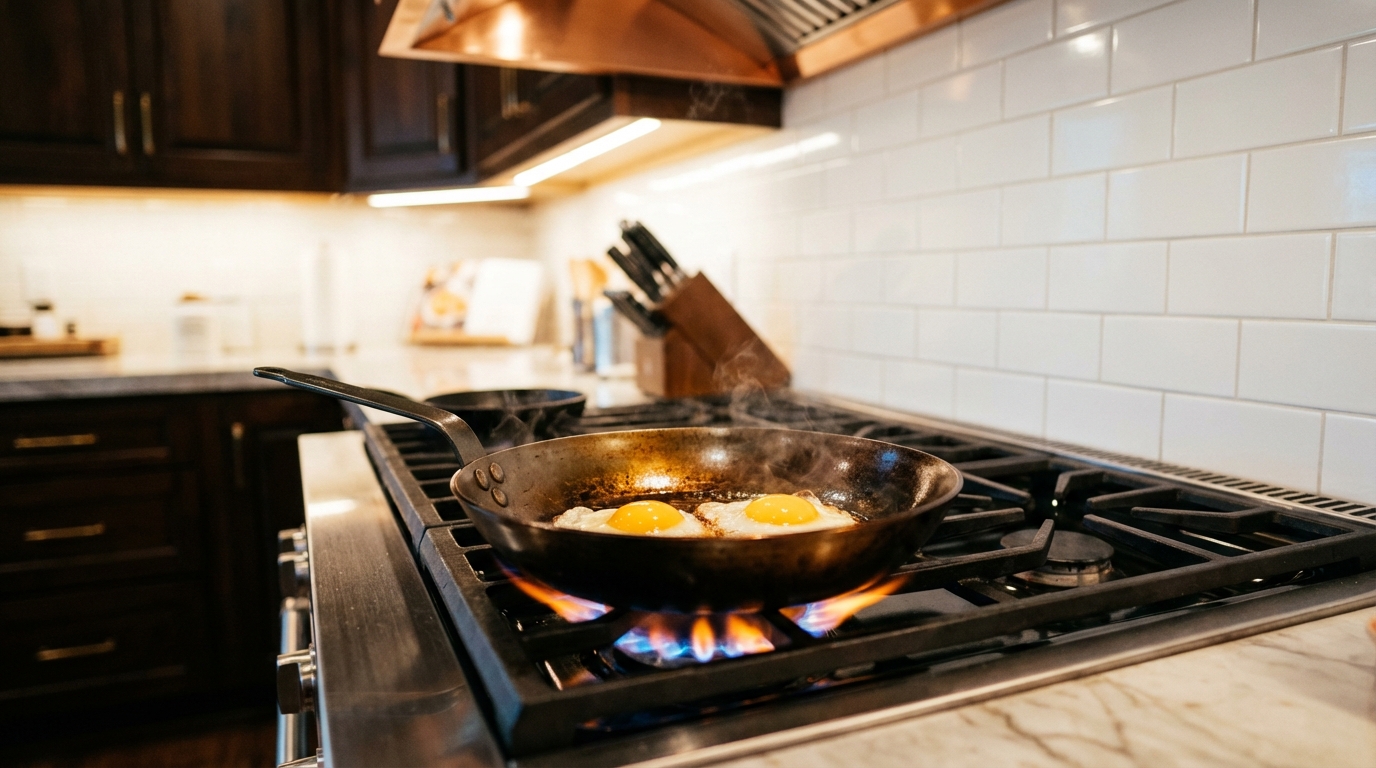
Carbon steel pans--especially nitrided or pre-seasoned versions--solve the core frustrations of cooking on a gas stove by taming flame hot spots, enduring 650-680 degreesC heat without releasing toxins, and growing naturally non-stick through seasoning rather than short-lived synthetic coatings. The article walks you through why this centuries-old material outperforms aluminum, copper, and Teflon on gas flames, how to choose the right thickness and weight for responsive yet even heating, and which affordable models (from an 8-inch carbon-nonstick skillet to a 12-inch wok) give maximum versatility for searing, stir-frying, or flipping delicate eggs. You'll learn practical selection criteria--0.1 % carbon content, 2-3 mm walls, comfortable handles--plus step-by-step guidance on initial blueing, oven or stovetop seasoning with high-smoke-point oils, and dead-simple post-cook cleaning that lets the pan's patina improve daily instead of deteriorating. Mastering these techniques means buying one pan that lasts decades, cooks safely at any temperature your gas burner can reach, and eliminates the waste and expense of replacing failed non-stick cookware every few years.
Understanding Gas Stove Cooking Needs
On a gas stove, nitrided carbon-steel pans with an aluminum core tame flame hot spots, stay naturally non-stick without PFAS coatings, and cook more steadily than copper, aluminum, cast iron, or synthetic non-stick ever could.
How gas flames affect heat distribution
If you've ever wondered why your eggs stick in one spot while burning in another, you're experiencing the unique challenge of gas cooking. Those blue flames create intense hot spots where they touch your pan, making even heating tricky. Different materials handle this challenge in their own ways.
While copper and aluminum spread heat most evenly, they come with their own drawbacks--copper requires special maintenance, and aluminum can react with acidic foods [1]. Cast iron and carbon steel, though they develop hot spots initially, offer something special: once properly preheated, they hold heat remarkably well [1]. This means when you add cold ingredients, the temperature stays steady instead of dropping dramatically.
Here's what's really interesting--if your stove has uneven flames (and most do), materials like cast iron and carbon steel can actually cook more consistently than thinner pans, despite not conducting heat as quickly [1]. They act like a heat buffer, smoothing out those temperature variations.
Why material choice matters for non‑stick performance
Your choice of cookware material makes all the difference on a gas stove. Those traditional non-stick pans with synthetic coatings? They struggle with gas flames' intense, direct heat--breaking down faster than you'd like and potentially releasing unwanted chemicals.
That's where carbon steel shines as a smarter alternative. Through a process called nitriding (essentially super-heating the metal in nitrogen), carbon steel develops its own naturally non-stick surface--no coatings required [2]. Even better, when this nitrided carbon steel includes an aluminum core, you get the best of both worlds: even heat distribution that tames those pesky gas flame hot spots, plus a surface that actually gets better with use [2].
This means you're cooking on a surface that's completely free of PFAS, PTFE, and PFOA--those chemicals you've been hearing about [2]. And unlike traditional carbon steel that needs careful seasoning before first use, nitrided carbon steel arrives ready to cook, resisting rust and requiring minimal maintenance [2].

Why Carbon Non‑Stick Beats Traditional Coatings
Carbon steel's self-renewing, 650 degreesC-safe seasoned surface outlasts and outperforms synthetic coatings, growing slicker with every high-heat sear while Teflon pans degrade and head for landfill.
Natural seasoning creates a durable non‑stick surface
Unlike traditional non-stick pans with synthetic coatings, carbon steel develops a natural, slick surface through a process called seasoning. This protective layer forms when you cook with oil, which bonds to the metal surface through polymerization when heated [5]. The natural non-stick surface improves with use, becoming more effective over time rather than deteriorating like Teflon coatings that eventually require replacement [4].Carbon steel's seasoned surface excels on gas stoves because it can withstand the intense, direct heat from flames without releasing harmful chemicals.
The pan can safely handle temperatures up to 650 degreesC--far beyond the 260 degreesC limit of synthetic non-stick coatings [4]. This heat tolerance makes carbon steel ideal for high-temperature cooking techniques like searing meat and stir-frying that create flavor through proper browning [5].The durability of this natural non-stick layer addresses a significant limitation of conventional non-stick cookware. While Teflon pans typically last only one to three years before losing their non-stick properties, properly maintained carbon steel pans improve with age, developing the rich, dark patina prized by professional chefs [5].
This seasoned surface also provides versatility--working effectively for delicate foods like eggs and fish while still excelling at high-heat cooking methods that would damage synthetic coatings [4].
Heat responsiveness and longevity of carbon steel
Carbon steel offers a rare combination of heat responsiveness and durability that makes it ideal for gas cooking. Unlike cast iron, carbon steel pans are thinner and lighter while maintaining excellent heat conductivity, allowing them to respond quickly to temperature changes [6]. This responsiveness proves valuable on gas stoves where flame adjustments immediately affect cooking temperature.
Professional kitchens prefer carbon steel partly because it can withstand extreme temperatures up to 680 degreesF without warping or degrading [6], easily handling the direct, intense heat from gas flames. The material strikes an ideal balance between responsiveness and retention--once thoroughly preheated, carbon steel maintains stable temperatures when food is added, creating less dramatic temperature drops than thinner pans [6]. Properly maintained carbon steel pans gain durability with age, developing a seasoned surface that improves rather than deteriorates over time [7].
Unlike synthetic non-stick coatings that typically last only one to three years, carbon steel pans with proper care become family heirlooms, making them a sustainable investment for serious cooks [6].
Choosing the Best Non‑Stick Cookware for Your Gas Stove
Pick a 2-3 mm carbon-steel pan--lightweight for quick flame response, naturally non-stick, and tough enough to out-cook and out-last anything else on your gas burner.
Key features to look for in the best non stick cookware
Start with material composition. Carbon steel with approximately 0.1% carbon content delivers the heat conductivity you need while staying lighter than cast iron [10]. This responsiveness matters when adjusting gas flames for precise cooking. Consider weight and handling. The best carbon steel pans balance substance with maneuverability--heavy enough for even heating, light enough for comfortable everyday use [8]. You'll appreciate this when tossing vegetables or sliding omelets onto plates.
Check the thickness. Quality pans typically measure 2-3mm thick, which evenly distributes heat across your gas burner's flame pattern [9]. Too thin? You'll get hot spots. Too thick? The pan won't respond quickly to temperature changes.
Prioritize long-term durability. As discussed in earlier sections, carbon steel handles extreme temperatures and develops better non-stick properties over time [8]. Look for pans that will grow with your cooking skills rather than need replacing every few years. For carbon non-stick options, evaluate the surface quality. Whether pre-seasoned or nitrided, the cooking surface should feel smooth and release food easily [10]. The carbon steel pan you choose becomes a long-term kitchen companion that improves with every meal.
Top Misen carbon‑non‑stick options for every budget
Start with the Carbon Nonstick Pan ($109 for 8-inch)--a game-changer for gas cooking. Its aluminum core solves the hot spot problem common with gas flames, while the nitrided surface creates natural non-stick performance without chemicals [11]. No seasoning needed, and it actually gets better with use. For budget-conscious cooks, the Pre-Seasoned Carbon Steel Pan ($89-92 for 10-inch) delivers exceptional value [12]. At just 3.2 pounds with a comfortable silicone handle, it releases eggs and delicate foods immediately while handling high-heat searing beautifully [6].
The 10.8-inch cooking surface gives you extra room despite the 10-inch rim diameter. Need maximum versatility? Standard Carbon Steel Pans start at $89 for the 8-inch size [11]. While they require traditional seasoning (covered in our next section), they develop outstanding non-stick properties that rival pricier options. For specialized cooking, consider the Carbon Steel Wok ($144 for 12-inch)--perfect for authentic stir-frying over powerful gas burners [11].
Its curved sides and high heat capacity create the "wok hei" flavor professional chefs prize. All options work safely in the oven--Carbon Nonstick to 500 degreesF and Pre-Seasoned Carbon Steel to an incredible 1100 degreesF [12][6]. This versatility lets you start dishes on the stovetop and finish under the broiler for perfectly crusted results.


Care, Maintenance, and Getting the Most Life Out of Your Pan
Treat your carbon steel pan to a gentle heat-and-oil ritual--blue it, wipe on whisper-thin layers of high-smoke-point oil, bake four times, and it will reward you with a warp-free, naturally non-stick surface that cleans up with nothing more than hot water and a quick scrub.
Proper seasoning and heating techniques
Getting your carbon steel pan ready for cooking starts with removing any factory coating. A gentle abrasive cleaner works well for this--just scrub until all the protective wax is gone [13]. For gas stoves specifically, consider blueing your pan. Start on medium-low heat and gradually increase to high, watching as the surface transforms through beautiful color changes--from blue to purple and back to silver [13]. This heat treatment creates a protective layer that helps your seasoning stick better. When it's time to season, reach for neutral oils with high smoke points--canola, vegetable, peanut, or avocado all work great [13].
Here's the secret: less is more. Apply just a tiny amount of oil, then wipe it down until the surface looks almost dry [13]. Heat the oiled pan on medium-high until it smokes for about a minute, then let it cool completely before repeating [13]. Want even better results? Try the oven method: preheat to 475-500 degreesF (just above your oil's smoke point), apply the thinnest possible oil layer, place your pan upside down over a foil-lined baking sheet, and let it bake for an hour [14]. For easier maintenance, consider using Building multiple thin layers (we recommend at least four) creates a more durable, naturally non-stick surface [13].
Don't worry if you see sticky spots--that usually means too much oil or not enough heat. Just give those areas a good scrub and reseason [14]. Remember to heat your carbon steel pan gradually rather than cranking it to high heat immediately. This gentle approach prevents warping and helps you achieve that perfect, even cooking surface every time [13].
Everyday upkeep and troubleshooting tips
Here's some good news: cleaning your carbon steel pan is easier than you might think. The best approach? Clean it right after cooking--transfer your food to a plate, let the pan cool just a bit, then deglaze with hot water while scraping with a spatula [15]. For everyday cleaning, hot water and a natural fiber brush handle most jobs beautifully [15]. And here's a myth-buster: dish soap is totally fine for properly seasoned carbon steel.
Feel free to soap up both inside and out [15]. Seeing black residue on your towel? That's a sign your pan got a bit too hot during cooking, which carbonized some of the seasoning [15]. An infrared thermometer helps you find that sweet spot temperature-wise [15]. Got stubborn stuck-on food?
No problem--deglaze while the pan's still hot and use a metal spatula to scrape it off. Your carbon steel's seasoning is tougher than you think [15]. After washing, dry your pan thoroughly with a towel, let it air dry for another 3-5 minutes, then apply an extremely thin layer of oil before storing [15]. Pro tip: if you feel any bumps or rough patches when running your hand across the surface, give those spots extra attention next time you clean [15].
- Nitrided carbon steel arrives ready to cook, needs no seasoning, and is PFAS/PTFE/PFOA-free.
- Carbon steel withstands 650 degreesC, far above synthetic coatings' 260 degreesC limit, ideal for high-heat searing.
- 2-3 mm thick carbon steel evens out gas-flame hot spots while staying responsive to flame changes.
- Seasoned carbon steel improves with use, lasting decades, unlike Teflon pans that fail in 1-3 years.
- Gradual preheating prevents warping; blueing the pan on gas strengthens seasoning adhesion.
- Clean with hot water and a brush; dish soap is safe on well-seasoned carbon steel--dry and oil lightly.
- https://www.reddit.com/r/Cooking/comments/onnl2n/question_what_type_of_pan_is_best_for_even_heat/
- https://www.amazon.com/Misen-Carbon-NonstickTM-Frying-Ultra-Durable/dp/B0FLF87GXM
- https://blanccreatives.com/blogs/news/benefits-of-using-carbon-steel?srsltid=AfmBOoohZzem7nU7BsKurOgkqwkdsVhsLPOzxUQcdgboNtGlD7YbkYkU
- https://gastrotools.com/blogs/guides/carbon-steel-vs-non-stick-pans-8-differences
- https://howtomakedinner.com/blog/cooking-with-carbon-steel-pans/
- https://www.seriouseats.com/best-carbon-steel-pans-7093873
- https://hcookware.com/blogs/news/carbon-steel-most-common-questions-answered
- https://www.webstaurantstore.com/blog/5090/carbon-steel-vs-cast-iron.html?srsltid=AfmBOorvJxL9pc4tUGTzEfPZEmEdIY2oDYNqSiPz3ZJHWFBq54YFKPO7
- https://hexclad.eu/blogs/posts/the-best-cookware-for-gas-stoves-what-to-look-for?srsltid=AfmBOoqTk1WOj_bHVlKz8E5zvhUuzPoP1GGmCbB6fZg_JjD3Bg021Cwn
- https://blanccreatives.com/pages/carbon-steel-guide?srsltid=AfmBOoqAvVPmzB76q0nEKImOOSyxLQcq7oBTQ1VrwVYb1GRyWcTF5pmh
- https://www.foodandwine.com/misen-carbon-nonstick-non-toxic-skillet-review-11834239
- https://www.bonappetit.com/story/best-nonstick-pans?srsltid=AfmBOoqRINK5SHR3kRz0e3--gj5PZ9dU8yCpyZtdR_u2W1-J3VY4OwDt
- https://www.reddit.com/r/carbonsteel/comments/1fvkhmm/seasoning_guide_for_gas_stovetops/
- https://www.notanothercookingshow.tv/post/how-to-season-carbon-steel-pans
- https://www.reddit.com/r/carbonsteel/comments/1othwfe/carbon_steel_pan_cleaning_is_very_difficult_and/