

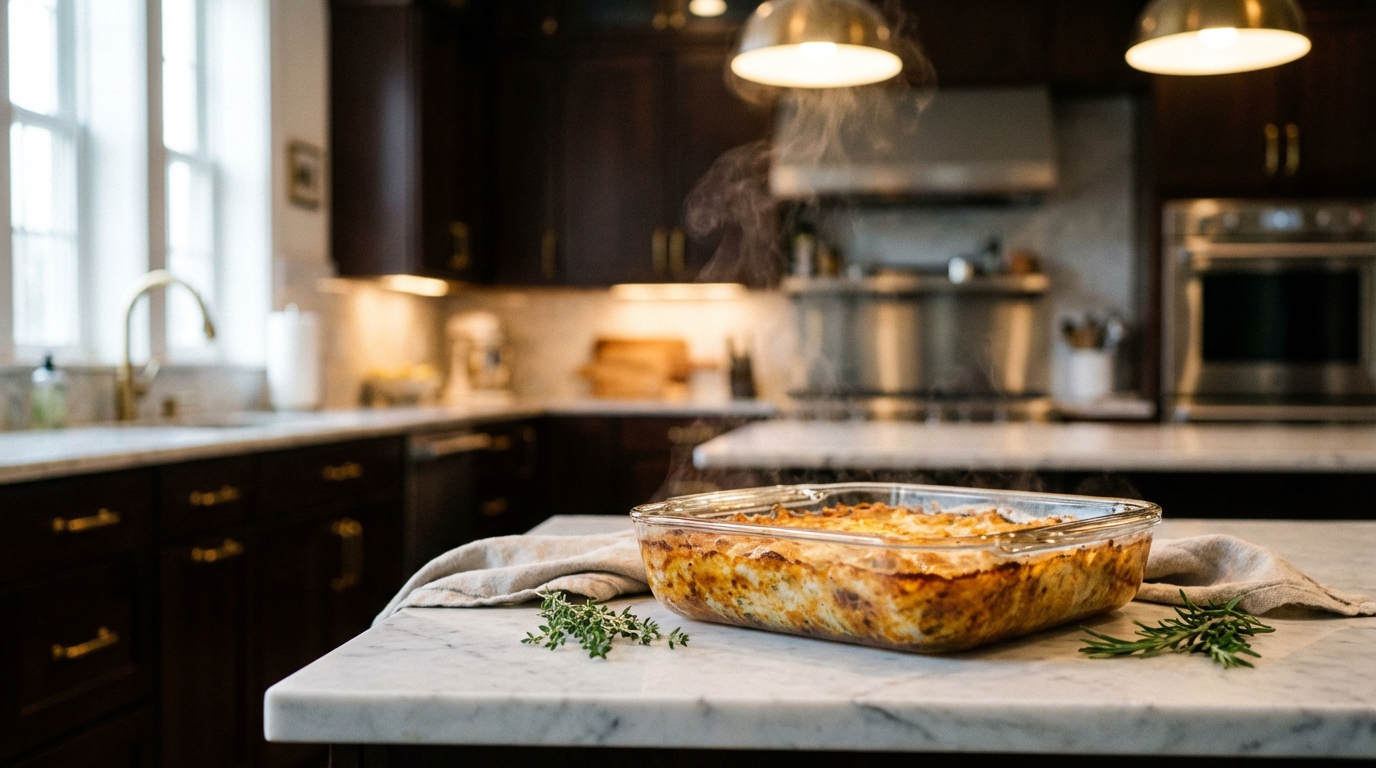
Borosilicate glass pans deliver a rare mix of thermal-shock resilience, food-safe inertness, and long-term economy: thanks to a silica-and-boron recipe that expands only one-third as much as ordinary glass, they can survive a 330 degreesF temperature swing--think freezer-to-oven transfers that would shatter soda-lime bakeware--while remaining lightweight, non-reactive with acidic foods, and certified FDA/USP Type I safe, so you'll never taste last night's curry or worry about BPA, lead, or metallic leaching. Although they're not drop-proof and heat more slowly than metal, the article shows how to exploit their even, transparent heating for casseroles and desserts, adjust cook times, and pair them with stainless or cast-iron pieces for a complete non-toxic set. Readers will learn exactly what to look for when shopping (lead-free, cadmium-free labels, European standards, $15-$40 sweet spot), how to maintain the glass with gentle soap, baking-soda scrubs, and space-smart storage that prevents chips, and why this decades-long lifespan makes borosilicate a smarter, greener investment than warping plastics or fragile ceramics. Master these insights and you'll gain shatter-resistant, flavor-neutral cookware that keeps your family safe, your food pristine, and your kitchen budget intact for years to come.
Understanding Borosilicate Glass: Composition and Benefits
Borosilicate glass pans let you move a dish straight from freezer to 330 degreesF oven without cracking, thanks to a silica-and-boron recipe that expands one-third less than ordinary glass.
What Makes Borosilicate Glass Different?
Borosilicate glass gets its remarkable properties from a specific blend of ingredients. Unlike regular glass you might find in windows or bottles, borosilicate contains about 80% silica and 13% boron oxide [1]. This unique recipe creates glass with an incredibly low coefficient of thermal expansion--about 3.3 x 10⁻⁶/ degreesC--which is roughly one-third that of ordinary glass [2].
What does this mean for your kitchen? Borosilicate glass can handle temperature swings of about 330 degreesF without cracking [1]. That's why you can move these pans from freezer to oven without worry.
The boron content provides other practical benefits too: it makes the glass lighter (density of about 2.23 g/cm³), more resistant to acidic foods, and safer if it breaks--creating larger, duller pieces instead of dangerous shards [3]. While its high melting point of 1,650 degreesC makes it more complex to manufacture, this results in cookware that performs exceptionally well in demanding kitchen environments [1].
How Borosilicate Handles Temperature Extremes
Think of borosilicate glass as the temperature champion of your kitchen. While regular glass bakeware can only handle temperature changes of about 100 degreesF before cracking, borosilicate withstands differentials up to 330 degreesF [1]. This remarkable resilience means you can confidently move dishes from freezer to oven, or pour cold ingredients into a hot pan without fear of shattering. This thermal shock resistance isn't magic--it's science.
When most materials heat up, they expand significantly. But borosilicate's minimal expansion and contraction prevents the internal stress that causes cracking [1]. You'll see this benefit in everyday cooking: transferring a casserole from fridge to preheated oven, adding cold liquid to a hot pan, or placing a hot dish on a cold granite countertop [4]. The material's stability extends beyond just temperature changes.
Borosilicate can handle direct stovetop flames and broiler heat that would destroy conventional glassware. And if it does eventually fail? It typically cracks into larger pieces rather than exploding into dangerous shards--a safety feature that matters when you're cooking with family around [1]. For cooks who value versatility in their cookware, this combination of thermal performance and safety makes borosilicate glass an excellent choice alongside options like premium stainless steel and carbon steel pans.
Safety Profile: Non‑Toxic Claims and Real‑World Testing
Borosilicate glass earns top-tier FDA and USP safety ratings by staying chemically inert--never leaching toxins, absorbing odors, or staining--though it can still shatter if dropped.
Chemical Inertness and Food Safety
Borosilicate glass has become a gold standard for food safety due to its remarkable chemical inertness. Unlike some plastics that release BPA, phthalates, and other endocrine-disrupting chemicals, borosilicate glass remains chemically stable even when exposed to acidic foods or high temperatures [5]. This stability means it doesn't leach harmful substances into your food or beverages, preserving both safety and flavor integrity.
The FDA recognizes borosilicate glass as food-safe, and it carries a Type I classification from the United States Pharmacopeia--the highest rating for materials in contact with food and pharmaceuticals [7].This chemical stability extends beyond just safety--it affects practical everyday use as well. Borosilicate glass doesn't absorb food odors or flavors, preventing yesterday's curry from affecting today's dessert [7]. It also resists staining from tomato sauce, turmeric, and other intensely colored foods that typically discolor plastic containers [6].
When boron trioxide (which can be harmful in its raw form) fuses with silica during manufacturing, it transforms into a completely inert material that won't react with your food regardless of acidity or fat content [6]. For health-conscious consumers, this represents a significant advantage over both standard glass and plastic alternatives, which may compromise food purity through chemical interactions or absorption [7].
Myth‑Busting: Shatterproof vs. Breakable
Despite marketing claims of "unbreakable" or "shatterproof" borosilicate glass cookware, the reality is more nuanced. Borosilicate glass is significantly more durable than regular soda-lime glass but remains breakable under certain conditions [8]. While it can withstand temperature differentials of about 330 degreesF without fracturing (compared to soda-lime's mere 100 degreesF tolerance), it's not impervious to physical impact [10].
Drop a borosilicate glass pan on tile at the wrong angle, and it will still shatter [8]. Its superior thermal shock resistance doesn't translate to impact immunity--when subjected to extreme force, borosilicate cookware will break, though it typically fractures into larger, duller pieces rather than dangerous shards [8]. Manufacturers of soda-lime alternatives argue their products offer better mechanical strength against drops and impacts, sometimes using heat strengthening or thermal tempering to increase resistance [10].
However, these claims often overstate the products' actual safety margins [10]. The distinction matters in practical kitchen use: borosilicate glass can safely transition from freezer to oven but isn't immune to physical damage from countertop accidents [9]. Understanding these limitations helps set realistic expectations--borosilicate glass represents a significant improvement in durability without achieving true indestructibility.
Performance in the Kitchen: Heat Transfer, Durability, and Compatibility
Treat your borosilicate glass cookware to gentle hand-washing, baking-soda scrubbing, and chip-preventing storage, and it will reward you with decades of crystal-clear, money-saving kitchen service.
Heat Distribution Compared to Traditional Materials
Care, Cleaning, and Longevity TipsTaking care of your borosilicate glass cookware isn't complicated--just a few smart habits will keep it in great shape for years. While it handles temperature changes like a champ, it still needs some TLC. You can toss it in the dishwasher, but hand washing gives you more control and reduces the chance of accidental bumps [13]. Stick to warm water and gentle dish soap--skip the abrasive cleaners that can scratch the surface [13]. A quick dry with a lint-free towel keeps water spots at bay and your glass crystal clear [13].
Got stubborn baked-on food? Make a simple paste with baking soda and water. It works like magic without harming your glass [13]. When storing, give each piece its own space or use pan protectors between them--chips happen when glass clinks against glass [13]. Here's the key thing to remember: while borosilicate can handle those impressive temperature swings we talked about earlier, it's not invincible to drops and bumps [14].
Think of it like this--it loves heat changes but hates hard knocks. Check your pieces regularly for chips or cracks that could cause problems down the road [13]. Treat your borosilicate well, and it'll be your kitchen companion for decades--making it a smart investment that actually saves money over time.
Choosing the Right Set: What to Look for in a non toxic non stick cookware set
Skip the marketing hype and zero in on cookware that's verifiably PTFE-, PFOA-, PFAS-, lead- and cadmium-free--like 100 % ceramic, enamel or stainless steel--so every meal you cook protects your health and your budget.
Key Features to Evaluate in a non toxic non stick cookware set
When shopping for non-toxic cookware, you'll want to look beyond marketing claims and focus on materials that truly protect your health. While borosilicate glass excels for baking and storage, your stovetop needs require different solutions. Safe options include 100% ceramic, ceramic-coated surfaces, seasoned cast iron, enamel-coated cast iron, and high-quality stainless steel--all offering cooking surfaces free from harmful chemical coatings [15].
Here's what to watch for: Skip anything with PTFE (Teflon) coatings, which can emit toxic fumes when overheated [15]. Instead, check labels for clear statements about being free of PFOA, PFAS, lead, and cadmium [15]. Think about how you'll actually use each piece--ceramic coatings need gentle handling to avoid scratches, while cast iron gets better with age if you maintain it properly [15].
For everyday cooking, consider how different materials perform. Ceramic heats evenly but takes its time, while stainless steel offers excellent durability and versatile cooking performance.
Budget‑Friendly Options Without Compromising Safety
Good news for budget-conscious cooks: borosilicate glass cookware won't break the bank. You'll typically spend $15-$40 per set, depending on size and brand [7]--and that investment pays off over time. Think about it: quality borosilicate glass lasts years longer than plastic containers that warp, stain, or need constant replacing [7]. Smart shopping starts with checking certifications, not just price tags.
Look for products specifically labeled as lead-free and BPA-free, since not all "safe" claims hold up under scrutiny [4]. European-designed pieces often meet stricter safety standards, though plenty of quality options exist at various price points [4]. If you're building your collection gradually, start with versatile basics--a rectangular baking dish or a set with multiple sizes gives you the most bang for your buck [4]. Read reviews that specifically mention long-term durability, as some budget options cut corners on impact resistance while keeping the thermal benefits [7].
The real savings come from longevity. With proper care (which we covered earlier), borosilicate glass outlasts cheaper alternatives by years. You're not just buying cookware--you're investing in pieces that won't need replacing every season. That's the kind of kitchen math that makes sense for any budget.
Conclusion
Bottom Line for Home Cooks
So, are borosilicate glass pans worth adding to your kitchen? For home cooks who value food safety and versatility, they absolutely deliver. You can move them from freezer to oven without worry, and their transparent design lets you monitor your lasagna or bread pudding as it bakes to perfection [16]. Plus, you'll never deal with metallic tastes or chemical concerns--just pure, clean cooking every time [16].
But let's be realistic about what they can and can't do. As we covered earlier, glass heats differently than metal, so you'll want to adjust your cooking approach accordingly [16]. And while they handle temperature changes like champions, they won't survive a drop onto your kitchen floor [17]. Think of them as specialized tools for specific jobs--perfect for casseroles, baking dishes, and anything you want to keep warm at the table [16].
The investment makes sense when you consider their longevity. With proper care (as detailed in our maintenance section), quality borosilicate pieces can last decades--far outlasting cheaper alternatives that stain, warp, or lose their integrity [16]. Just remember they won't work on induction cooktops, so plan your cookware collection accordingly [16]. For maximum kitchen versatility, consider pairing borosilicate baking dishes with other essential pieces like a quality roasting pan for your complete cooking arsenal.
- Borosilicate glass survives 330 degreesF temperature swings, triple that of regular glass.
- It leaches zero chemicals, even under high heat or with acidic foods.
- Drops can still break it, but it fractures into safer, larger dull pieces.
- Hand-wash with mild soap; baking-soda paste removes baked-on residue.
- $15-$40 per piece and can last decades with proper care.
- https://en.wikipedia.org/wiki/Borosilicate_glass
- https://www.sciencedirect.com/topics/chemistry/borosilicate-glass
- https://opticalglass.net/borosilicate-glass-vs-glass-whats-the-real-difference/
- https://eatbeautiful.net/borosilicate-glass-cookware-the-best-pot-youre-not-using-yet/
- https://www.glasafe.com/blogs/glasafe-blogs/what-is-borosilicate-glass-answering-16-common-faqs?srsltid=AfmBOooEcIIyu8JDtBABn-Znm3ByzTOgeFF0Yux-1C4629pera91lKzW
- https://houszy.co.uk/blogs/kitchenware-blogs/know-about-borosilicate-glass?srsltid=AfmBOookuqmK96hfAPObEuOBrg21WAoPaE3WHv2fNmRyK3BH06YYWXqg
- https://wellness.alibaba.com/nutrition/borosilicate-glass-food-safety-guide
- https://gosciencecrazy.com/blogs/blog-science-crazy/breaking-myths-is-borosilicate-glassware-really-unbreakable?srsltid=AfmBOorr1wzCAUTvZd00fR_GP8a5EJa2h4wh7T9rhprT6mlJM_jtLtY1
- https://www.glasafe.com/blogs/glasafe-blogs/what-is-borosilicate-glass-answering-16-common-faqs?srsltid=AfmBOor0TI0LesxwGyfDwhxronsO7DQF_CSwswrIsGrZhn1Z7F49pMJi
- https://ceramics.org/ceramic-tech-today/hells-kitchen-thermal-stress-and-glass-cookware-that-shatters/
- https://www.seriouseats.com/baking-in-glass-versus-metal-7101091
- https://www.allrecipes.com/article/glass-vs-metal-baking-pans/
- https://www.glasswareonly.com.au/blog/expert-tips-on-glassware-maintenance-a-comprehensive-guide.htm
- https://elhousewares.com/what-is-borosilicate-glass/
- https://foodrevolution.org/blog/healthy-cookware/
- https://www.leafscore.com/eco-friendly-kitchen-products/pros-and-cons-of-glass-cookware/
- https://www.mannleecw.com/borosilicate-vs-tempered-glass/
- Summary
- Understanding Borosilicate Glass: Composition and Benefits
- Safety Profile: Non‑Toxic Claims and Real‑World Testing
- Performance in the Kitchen: Heat Transfer, Durability, and Compatibility
- Choosing the Right Set: What to Look for in a non toxic non stick cookware set
- Conclusion
- Key Takeaways
- References