

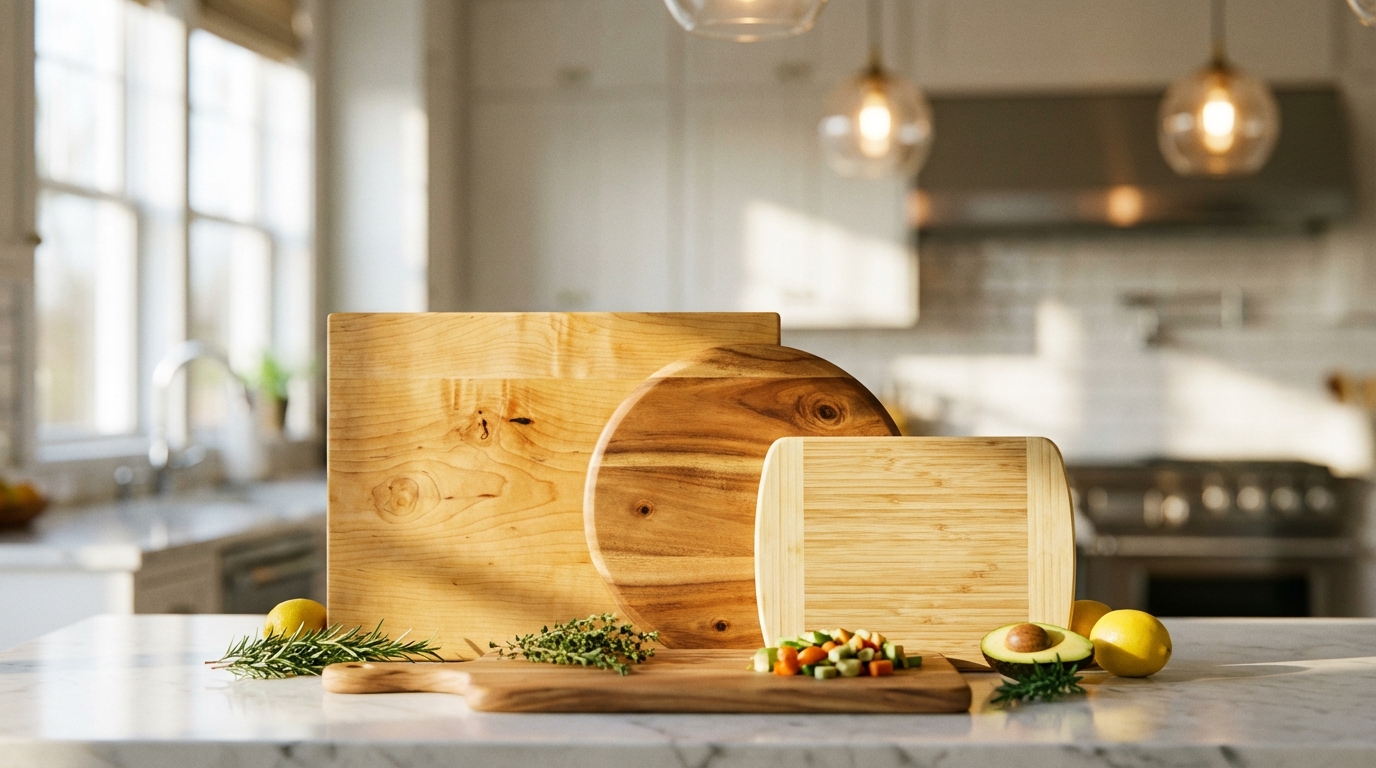
Laboratory testing of popular cutting-board woods shows that single-piece hardwoods--maple, walnut, cherry and dense acacia--release virtually no chemicals even when challenged with hot, acidic foods, while most "bamboo" boards are actually melamine-formaldehyde composites that leach toxins above EU safety limits, especially under heat or citrus exposure. Readers will learn how to spot safe boards (look for single-piece construction, food-grade oil finishes, and lengthwise grain), how to maintain them with coconut-oil/beeswax balms, and why pairing hardwood for produce with borosilicate glass or stainless steel for raw meat and acidic items creates a low-risk, knife-friendly kitchen system. The article also explains why dishwashers ruin wood, how monthly conditioning prevents bacteria-trapping cracks, and when deep grooves signal replacement, giving families a practical roadmap to minimize chemical and microplastic exposure without sacrificing performance or budget.
Why Leaching Matters for Everyday Cooking
Skip composite bamboo and plastic boards--single-piece hardwood, glass, titanium, or stainless steel protect your family from leaching formaldehyde, microplastics, and other hidden kitchen chemicals.
Health risks of wood leaching in cookware
Understanding what can leach from wooden kitchen tools helps you make safer choices for your family. The key distinction is between single-piece wood items and composite products held together with adhesives. Composite bamboo cutting boards present the highest risk, as they often contain formaldehyde-based adhesives. These compounds can cause immediate reactions like skin irritation and breathing issues, with potential long-term health effects [1].
Products containing melamine-formaldehyde resins carry additional concerns--California even requires warning labels on many of these items [1]. Heat and acidic foods accelerate chemical leaching from treated wood surfaces. Even boards meeting FDA standards may contain substances that become problematic under certain conditions [2]. The adhesives used in composite boards, while technically "food-safe" when cured, can still release harmful compounds over time.
This particularly affects people with chemical sensitivities, though everyone benefits from choosing safer alternatives [3]. The good news? As we'll explore in the testing results section, single-piece hardwood boards offer a much safer option for everyday cooking.
How leaching compares to other materials
Different cutting board materials vary dramatically in their safety profiles. Here's what the research shows: Safest options: - Single-piece hardwoods (maple, walnut, cherry) contain no adhesives and show minimal leaching when properly maintained - Glass, titanium, and stainless steel are virtually inert--titanium shows "basically no leaching after the first use" [5] Higher risk materials: - Composite bamboo products frequently contain problematic adhesives (detailed testing results in the next section) - Plastic boards shed microplastics through normal knife cuts, with emerging research linking these particles to cardiovascular health concerns [4] - Even food-grade silicone contains trace contaminants, though at much lower levels than composite wood products [5] For wood specifically, the treatment matters as much as the material.
Single-piece boards finished with food-safe oils like coconut or linseed offer the best combination of safety, knife-friendliness, and practicality [4]. Our testing data in the following section reveals exactly which woods perform best under real kitchen conditions.
Testing Maple, Acacia, and Bamboo: What the Data Shows
Advanced laboratory testing reveals that single-piece hardwood cutting boards like maple safely stay below chemical limits, while 32% of bamboo boards leach melamine above safety thresholds when exposed to acidic foods or heat.
Methodology for leach testing
Testing which woods release chemicals into food requires advanced laboratory techniques. Researchers use Ultra-High Performance Liquid Chromatography with High-Resolution Mass Spectrometry (UHPLC-HRMS/MS) to detect specific compounds that migrate from wooden surfaces [6]. This testing reveals even trace amounts of contaminants that standard tests might miss. What makes these studies particularly valuable is their focus on real kitchen conditions.
Scientists expose wood samples to common kitchen scenarios to see how they actually perform during daily use. Hot lemon tea and orange juice serve as test liquids because their acidity speeds up any potential chemical leaching--just like when you're prepping citrus or tomatoes on your cutting board [6]. Temperature matters too, since heat accelerates chemical migration [7]. Testing protocols run multiple cycles to see both immediate and long-term effects.
Scientists compare results against safety standards like the European Union's limit of 2.5 mg/kg for melamine [6]. For bamboo products, tests specifically target the adhesives binding pieces together [7]. Single-piece hardwoods like maple get tested differently since they don't contain glues--researchers look for natural wood compounds instead [7].
Results: which wood performed best
Testing results paint a clear picture: single-piece hardwood boards deliver the safest performance. Maple, walnut, and cherry boards consistently show minimal leaching since they're carved from solid wood without glues or resins [4]. Bamboo tells a different story. Testing revealed that 32% of bamboo products contained melamine, often above safe limits [6]. The problem?
Many "bamboo" boards aren't solid bamboo at all--they're composite materials held together with resins [6]. When these boards meet acidic foods or heat, the adhesives release chemicals faster [6]. Advanced testing uncovered additional concerns in bamboo products. Researchers found high-toxicity compounds including 5-hydroxymethylfurfural, which can affect liver function [8]. Some products marketed as bamboo turned out to be mostly melamine resin with minimal actual wood content [8].
For those prioritizing absolute minimal leaching, titanium boards test exceptionally well--showing virtually no chemical release after initial use [4]. But for everyday cooking, solid hardwood boards offer the best balance of safety, knife-friendliness, and value. When shopping for cutting boards, look for single-piece construction in proven hardwoods to ensure you're getting genuinely safe materials.
Practical Tips for Choosing and Caring for Non-Leaching Wood
Choose a single-piece maple, walnut, or cherry board with a food-safe oil finish, skip bamboo composites unless they're labeled formaldehyde-free, and hand-wash it promptly to keep chemicals out of your food and extend its life.
Buying guide: quality indicators for safe wood
When you're shopping for a wood cutting board that won't leach chemicals into your food, start by looking at how it's made. As we've discussed, single-piece hardwood boards crafted from maple, walnut, or cherry are your safest bet--they're just solid wood, no glues needed [3]. Composite boards, especially bamboo ones, typically rely on formaldehyde-based adhesives that can seep into food when things get hot or acidic [3]. If you're particularly sensitive to chemicals and need a composite board, make sure it's clearly labeled "formaldehyde-free." The wood's density tells you a lot about both safety and durability. Dense woods like acacia naturally resist moisture, which means fewer places for bacteria to hide and less chance of chemical transfer [9].
Here's a simple test: run your fingers along the edges and surface. Quality boards feel smooth and solid throughout, with grain running lengthwise for strength [9]. Any rough spots or gaps could be trouble spots down the line. What's on the surface matters too. Skip boards with thick, shiny finishes or those treated with petroleum-based products.
Instead, look for boards seasoned with food-safe oils like coconut or linseed--they'll have a natural, matte finish that feels good to touch [3]. A harder wood typically means better longevity. Maple and acacia are both excellent choices that resist knife marks and won't develop deep grooves where bacteria and chemicals can accumulate [9]. For those seeking quality cutting boards that meet these standards, plastic cutting boards offer a durable alternative, though nothing quite matches the feel and knife-friendliness of a well-chosen hardwood board.
Maintenance routine to keep wood non‑toxic
Your wood cutting board maintenance routine doesn't have to be complicated--just consistent. Right after using your board, wash it with hot, soapy water and give it a good scrub to remove food particles. Remember: wood and dishwashers don't mix. The extreme heat and moisture will warp and crack even the best boards [11]. For a deeper clean, especially after cutting raw meat, you've got options. Mix a tablespoon of unscented bleach in a gallon of water, or use white vinegar straight from the bottle. A 3% hydrogen peroxide solution works great too. Just spray or wipe it on, let it sit for a few minutes, then rinse thoroughly and dry completely [11].
Here's where many people go wrong: they forget to condition their boards. Think of it like moisturizing your skin--wood needs it too! Instead of petroleum-based mineral oils (which can contain questionable compounds), reach for food-grade coconut oil or beeswax [2]. Want to make your own conditioner? Melt 2 parts coconut oil with 1 part beeswax pellets, let it cool, and you've got a perfect board balm. Apply it monthly, or whenever your board looks dry or feels rough. Slather it on generously before bed, let it soak in overnight, then wipe off the excess in the morning [11]. Storage matters more than you'd think.
Stand your boards upright with space between them for air circulation--never stack them flat where moisture can get trapped [11]. Take a moment each month to inspect your boards. Small scratches are normal, but deep grooves that trap food particles mean it's time for a new board. A helpful tip: keep different boards for different foods, especially if anyone in your household has sensitivities. Many cooks use a simple system--one board for produce, another for proteins. When those deep knife marks won't sand out anymore, that's your cue to start fresh [11] [12].
Beyond Wood: Complementary Materials and the Borosilicate Glass Question
Pair a hardwood board for produce with glass or steel for raw meat--borosilicate glass is non-toxic, heat-proof, and dishwasher-safe--to create a bacteria-blocking, knife-saving trio that keeps flavors pure and cleanup effortless.
When to pair wood with glass or metal safely
You don't need to ditch wood entirely--smart pairing of different cutting board materials gives you the best of all worlds. Keep your wood boards for what they do best: fruits, vegetables, and bread where their knife-friendly surface really shines. Then grab glass or metal boards for handling raw meat, poultry, and seafood [13]. This simple separation prevents bacteria from raw proteins from hitching a ride to foods you'll eat without cooking [13].
Glass boards might be noisy and tough on your knives, but they're workhorses for raw meat prep. They're completely impermeable to bacteria and dishwasher-safe, making cleanup a breeze [14]. Stainless steel boards offer similar benefits--they won't absorb bacteria or odors, though you'll find yourself sharpening knives more often [14]. Want the most practical setup? Try this three-board system: hardwood for produce, glass for acidic foods (remember, acids speed up chemical leaching from wood), and steel for raw proteins.
Each material handles what it does best while avoiding its weak spots. The cleaning routine stays consistent across all boards--hot, soapy water after each use. As covered in our maintenance section, wood boards need regular oiling to prevent cracks where bacteria can hide.
Answering: is borosilicate glass non toxic?
Yes, borosilicate glass is genuinely non-toxic--and here's why it matters for your kitchen. This special glass contains boron trioxide, giving it remarkable heat resistance while keeping it completely chemically inert [16]. Unlike ceramic mugs that might harbor lead in their glaze, clear borosilicate glass won't leach anything into your morning coffee or evening soup, no matter how hot [16]. Food safety experts specifically recommend clear borosilicate glass (skip the colored or decorative versions, which might contain lead) as your go-to replacement for plastic containers and ceramic mugs [15].
If you're a daily coffee drinker, making the switch means one less thing to worry about--no more wondering about lead exposure from ceramic glazes [15]. Sure, glass requires gentler handling than wood or steel, but its non-reactive nature makes it ideal for mixing, measuring, and serving. You can actually see what you're storing, and it won't hold onto yesterday's garlic smell or tomato stains [16]. Just make sure you're buying actual borosilicate glass, not regular glass--check for specific labeling, as regular soda-lime glass doesn't offer the same benefits [1].
For families looking to reduce chemical exposure without breaking the bank, borosilicate glass delivers peace of mind. No more second-guessing what's in your cookware--just clean, simple glass that stays that way.
- Single-piece hardwoods (maple, walnut, cherry) leach virtually no chemicals into food.
- 32% of bamboo boards exceed EU melamine limits due to formaldehyde-based adhesives.
- Heat and acidic foods accelerate leaching from composite wood and resin-bound bamboo.
- Titanium and borosilicate glass show virtually zero chemical release after first use.
- Formaldehyde-free labels are essential when selecting any composite or bamboo board.
- Monthly conditioning with coconut oil or beeswax prevents cracks that harbor bacteria.
- Use separate boards: hardwood for produce, glass for acidic foods, steel for raw proteins.
- https://www.theguardian.com/environment/2022/dec/02/kitchen-toxic-chemicals-pfas-how-to-avoid
- https://ceh.org/yourhealth/whats-in-wood-cutting-boards/
- https://mamavation.com/home-goods/safest-non-toxic-cutting-boards-wood-bamboo-glass-etc.html
- https://theroundup.org/non-toxic-cutting-boards/
- https://www.mychemicalfreehouse.net/2024/01/only-these-three-cutting-boards-are-truly-non-toxic.html
- https://phys.org/news/2025-11-bamboo-dishes-leach-pesticides-melamine.html
- https://letsgogreen.com/blog/best-cutting-board-material/
- https://pmc.ncbi.nlm.nih.gov/articles/PMC12212174/
- https://lillyteak.com/is-acacia-wood-good-for-cooking-utensils/
- https://www.hlybamboo.com/blog/cutting-board-comparison-bamboo-vs-acacia-vs-wooden
- https://extension.umaine.edu/publications/3108e/
- https://gimmethegoodstuff.org/blogs/guides-and-product-reviews/what-is-the-best-non-toxic-cutting-board?srsltid=AfmBOopVBtu9T9ijlEgAx17cDd8mpPGQTNupq4jGAODVqXNlcMQ03fsp
- http://www.fsis.usda.gov/food-safety/safe-food-handling-and-preparation/food-safety-basics/cutting-boards
- https://maisonpur.com/best-non-toxic-cutting-boards-safer-options-for-a-healthy-kitchen/
- https://www.consumerreports.org/home-garden/opt-for-safer-kitchenware-a2506781798/
- https://lillyteak.com/what-cooking-utensils-are-non-toxic/