

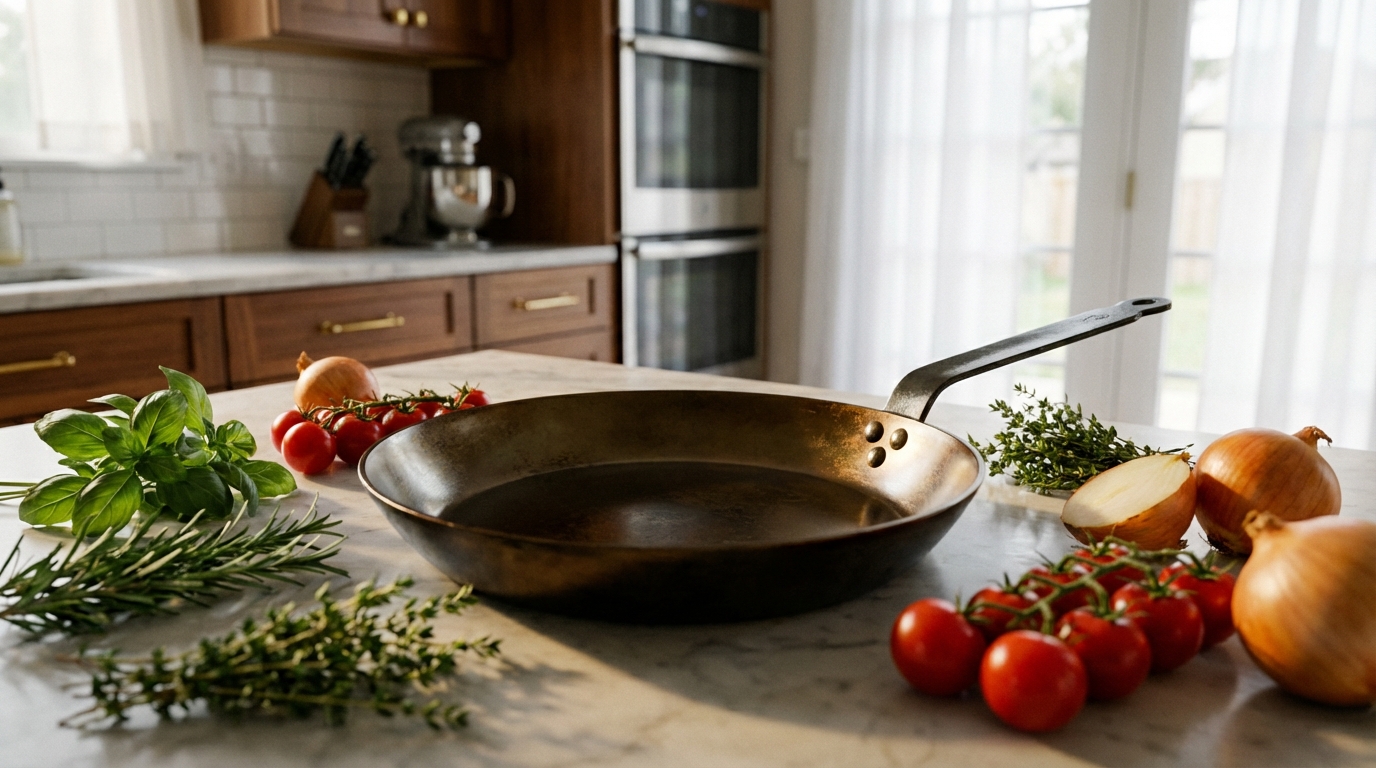
Carbon steel cookware is a safe, non-toxic alternative to non-stick pans, as scientific analysis confirms it does not leach harmful metals or synthetic chemicals into food; the article explains that this alloy of iron and carbon forms a naturally inert surface once seasoned, eliminating toxicity concerns while delivering professional heat conduction. Readers learn exactly how to keep it that way: heat the pan gradually, avoid prolonged simmering of acidic ingredients, rinse with hot water instead of soap, and rebuild the seasoning layer with a thin coat of oil after each use. By following these simple practices, home cooks transform the pan into a sustainable, virtually lifetime tool that outlasts coated cookware, reduces landfill waste, and sears, sautés, and bakes with restaurant-quality results. The guide empowers anyone to choose confidently--carbon steel offers a healthy, eco-friendly, high-performance solution for everyday cooking without the worry of hidden toxins.
Understanding Carbon Steel: Composition and Safety Basics
Grasp how carbon steel's iron-carbon blend and everyday safety steps keep your projects strong, rust-free, and injury-proof.
What carbon steel is and how it's made
At its core, carbon steel is remarkably simple: it's an alloy of iron and carbon, with carbon typically making up somewhere between 0.05% and 2.1% of the total composition by weight. That's it. Unlike stainless steel, which relies on chromium and nickel to create its signature corrosion resistance, carbon steel skips the extra alloying elements almost entirely. This lean formula is precisely why carbon steel pans heat up so quickly and respond so readily to changes in temperature--there's very little standing between the raw iron and the flame beneath it. It's the same fundamental material that's been forged into knives, woks, and skillets for centuries, prized by chefs for its ability to mimic cast iron's heat retention while staying lighter and more maneuverable.
Manufacturing a carbon steel pan starts with sheets or discs of this iron-carbon alloy, which are then shaped through spinning, stamping, or hammering--methods that compress and align the metal's grain structure without introducing any coatings or synthetic additives. Some pans are spun on a lathe for a thinner, more uniform wall, while others are hand-hammered to create the slightly dimpled surface you'll see on traditional woks and French-style skillets. Either way, what comes out of the factory is bare, reactive metal: no non-stick polymer, no enamel glaze, no ceramic layer standing between the steel and your stove. That bare-metal state is both the pan's biggest asset and its biggest liability, since raw iron rusts easily when exposed to moisture and air.
This is where seasoning enters the picture, transforming an otherwise vulnerable surface into a durable, kitchen-ready tool. By applying thin layers of oil and heating the pan until that oil polymerizes, manufacturers and home cooks alike build up a thin, semi-permanent coating that fills the microscopic pores in the metal. That seasoning layer isn't an artificial additive sprayed on in a factory--it's a natural transformation of plant-based oil into a protective film, chemically similar to the patina found on well-loved cast iron. Understanding this two-part identity--simple iron-carbon alloy underneath, protective organic seasoning on top--is the foundation for everything that follows in this article, especially when it comes to answering whether anything harmful actually makes its way from the pan into your food.
Common concerns about metal leaching
Anyone who has cooked with reactive metal cookware has likely heard the warnings: acidic foods can pull metal ions into your meal, meaning you may ingest more than just the intended seasoning over time. This concern is legitimate--it's just not equally distributed across all metals. Aluminum, copper, and even some stainless steel alloys can shed measurable amounts of metal when exposed to tomatoes, wine, or citrus, especially if the cookware is uncoated, scratched, or well-worn. That's the backdrop against which questions about carbon steel usually arise, and it's a fair one to ask.
The common worry breaks down into three specific fears: heavy metal contamination, excessive iron intake, and the assumption that any metal touching food is inherently risky. Heavy metal contamination--think lead, cadmium, or arsenic--is a legitimate concern with poorly made or low-grade cookware, particularly cheap imported pans or vintage pieces made from unknown alloys. Excessive iron intake sounds alarming, but the body regulates iron absorption tightly, and the trace amounts released from cookware fall nowhere near supplement-level doses. The blanket assumption that "metal equals toxic" also overlooks the fact that iron is an essential mineral your body needs daily, not a contaminant to avoid.
What sets carbon steel apart from the aluminum pot that prompted grandma's warnings is its composition and its protective seasoning layer. Because carbon steel is essentially pure iron with a small percentage of carbon, there simply isn't a reservoir of lead, cadmium, or synthetic coating chemicals to leach in the first place. Once seasoned, the polymerized oil layer acts as a barrier, further limiting even the minimal iron transfer that might otherwise occur during acidic or prolonged cooking. Understanding this distinction is the first step toward separating outdated kitchen folklore from what modern metallurgy and food safety science actually confirm.

Is Carbon Steel Cookware Toxic Free? The Science Explained
Carbon steel pans leach only minute, dietary-iron traces--never the nickel or chromium that make stainless steel a concern--so you can sear and deglaze without toxic worry.
Comparing carbon steel to other cookware materials
Stack carbon steel against the rest of your cookware cabinet, and the safety picture becomes even clearer. Unlike non-stick pans coated in PTFE, carbon steel has no polymer coating that can degrade, scratch off, or release fumes if accidentally overheated past 500 degreesF. Non-stick coatings are engineered chemical layers bonded to a metal base, which means their non-toxic status depends entirely on that coating staying intact. Once it's scratched by a metal utensil or worn thin after a few years of use, food comes into direct contact with the underlying substrate, and flaking particles may be ingested. Carbon steel has no such vulnerability because its "non-stick" quality comes from a food-based, self-renewing oil polymerization rather than a factory-applied synthetic film.
Ceramic-coated cookware markets itself as the "natural" non-toxic alternative, but some independent lab testing has found that certain ceramic coatings still contain trace nanoparticles or silicone-based compounds that may migrate at high heat. Their non-stick performance also tends to degrade with regular use over time. Aluminum cookware, meanwhile, is reactive enough that unanodized versions can leach measurable aluminum into acidic foods like tomato sauce--a concern carbon steel doesn't share once properly seasoned. Stainless steel is the closest competitor in terms of safety, but even it can release small amounts of nickel and chromium into food, particularly with acidic or salty dishes cooked over high heat for extended periods. These amounts are generally considered safe, but they're notably higher than the negligible iron transfer from a well-seasoned carbon steel pan.
Cast iron is carbon steel's closest cousin, sharing the same iron-based composition and seasoning process, but carbon steel edges ahead in everyday practicality: it's lighter, heats more evenly, and responds faster to temperature changes, meaning less time spent at scorching heat, where any material is more likely to react with food. When you line up the full spectrum of cookware options side by side, carbon steel consistently lands at the safer end of the spectrum--not because it's coated in some proprietary non-toxic technology, but because its simplicity leaves little room for hidden chemical risk in the first place.
Research on metal migration and health impact
Food scientists have studied metal migration from cookware for decades, and the findings on carbon steel are remarkably consistent: any leaching that occurs tends to be dominated by iron, not the heavy metals that raise genuine health concerns. Studies on cast iron and carbon steel pans--materials that share the same basic iron-carbon chemistry--have measured iron migration into acidic foods like tomato sauce, generally ranging from a few milligrams up to several milligrams per serving, depending on cook time and acidity. To put that in perspective, the recommended daily iron intake is 8 mg for adult men and 18 mg for women of reproductive age, meaning a skillet of shakshuka or marinara could meaningfully contribute to your nutritional needs rather than threaten them.
What's notably absent from this research is any significant migration of the metals that dominate cookware safety headlines--lead, cadmium, and chromium. Unlike stainless steel, which is alloyed with chromium and nickel to resist corrosion, carbon steel's composition stays close to pure iron with a small percentage of carbon, so there simply isn't a reservoir of these elements to migrate in the first place. Some research on stainless steel leaching under high-acid, high-heat conditions has flagged trace nickel release relevant to sensitive individuals, but carbon steel doesn't carry that same alloy profile, which is part of why it is generally regarded as one of the lower-risk metal cookware categories.
The seasoning layer itself has also drawn scientific attention. Once oil is polymerized onto the pan's surface through repeated heating, it forms a cross-linked, carbon-based film that acts as a physical barrier between the metal and the food. Research into polymerized oil coatings--the same chemistry behind traditional wok seasoning--suggests this layer remains stable at normal cooking temperatures and does not readily break down into measurable byproducts under typical use, reinforcing the idea that a well-maintained pan leaches even less than a bare one. Health organizations reviewing cookware safety broadly have not identified carbon steel as a source of concern in the way they've flagged certain non-stick coatings or improperly glazed ceramics, giving home cooks a reasonable, evidence-based basis for their kitchen choice.
Practical Tips to Keep Your Carbon Steel Non‑Toxic
Dry your carbon-steel pan immediately after each wash and give it a quick stovetop heat to stop rust and keep every meal safe and metal-flavor-free.
Avoiding cooking scenarios that increase leaching risk
Even the best-seasoned carbon steel pan can experience a temporary spike in iron leaching if you set up the wrong cooking scenario. The biggest offender is prolonged contact with high-acid ingredients--think tomato sauce simmered for an hour, a citrus-based pan sauce reduced low and slow, or wine deglazed and left to cook down for an extended period. Acid is mildly corrosive to the seasoning's polymerized oil layer, and the longer it sits against bare or thinly seasoned steel, the more iron ions it can pull into the food. This isn't dangerous, but it can affect flavor with a faint metallic taste, so it's worth reserving those dishes for stainless steel or enameled cookware and saving your carbon steel for searing, sautéing, and stir-frying, where it truly shines.
Another scenario to avoid is cooking on high heat with an empty or under-oiled pan, which can scorch the seasoning and create micro-cracks that expose the raw metal underneath. Similarly, using metal spatulas or steel wool to scrub off stuck-on food strips away the very barrier that keeps leaching in check, forcing you to re-season more often and increasing the odds of iron transfer in the interim. Soaking a carbon steel pan in water--especially with dish soap--for any length of time is equally risky, since it invites both rust and seasoning breakdown, two conditions that go hand-in-hand with higher metal migration.
Finally, be mindful of cooking delicate, high-acid dishes in a pan that's still relatively new or lightly seasoned. Seasoning builds in strength and thickness with each use, so a pan with only two or three coats is more vulnerable than one that's been cooked in dozens of times. If you're breaking in a new carbon steel piece, stick to fattier, neutral-pH foods like eggs, potatoes, or seared meats for the first several weeks, then gradually work your way up to bolder, acidic recipes once the surface has proven its resilience. Treat these guidelines as guardrails rather than restrictions--carbon steel is remarkably forgiving, and a few mindful adjustments to your cooking habits will keep it performing at its safest and most non-stick best for years to come.
Seasoning, cleaning, and maintenance best practices
Building a rock-solid seasoning layer is only half the equation--how you cook, clean, and store your carbon steel pan day to day determines whether that polymerized coating stays intact or breaks down over time. Start every cooking session with a dry pan and a gradual heat ramp: turn the burner to medium rather than jumping straight to high, since sudden thermal shock can cause the seasoning to flake or craze at the microscopic level. Once the pan is hot, add your oil or fat and let it shimmer before introducing food. This simple habit not only helps prevent sticking but also protects the seasoning from the kind of aggressive scorching that can strip it away and expose bare metal to whatever you're cooking.
Cleaning is where most home cooks unintentionally undo months of careful seasoning. Skip the dish soap and steel wool--modern seasoning is durable, but harsh detergents and abrasive scrubbers can cut through the oil polymer layer faster than an acidic tomato sauce might. Instead, let the pan cool slightly, then rinse it under hot water while using a soft sponge, a bamboo scraper, or even coarse salt as a gentle abrasive to lift stuck-on bits. For stubborn residue, simmering a little water in the pan for a few minutes can loosen debris without requiring a heavy scrub. Dry the pan immediately and thoroughly--carbon steel's biggest enemy isn't acid or detergent, it's lingering moisture, which can invite rust if the pan sits wet for too long.
Once dry, rub in a whisper-thin coat of a high smoke-point oil like flaxseed, grapeseed, or avocado oil, then wipe off any excess with a paper towel until the surface looks almost dry to the touch. Doing this after every use helps continuously rebuild and reinforce the seasoning, keeping your pan's surface protected and your food's flavor free of metallic notes. If you notice dull, patchy spots or a faint metallic taste creeping back into your cooking, that's your cue to re-season: heat the pan to around 400 degreesF for ten minutes, apply a fresh oil layer, and bake it upside-down for an hour to restore that protective, non-toxic barrier.
Finally, think about storage as part of your maintenance routine, not an afterthought. Store carbon steel in a dry cabinet rather than stacking it wet or nesting it with other pans that could scratch the surface; if you do stack cookware, slip a paper towel or cloth liner between pieces to help guard the seasoning. With this rhythm of gentle cleaning, immediate drying, and regular oiling, your carbon steel pan can improve--and become safer to use--with age, rewarding a few minutes of care with years of reliable, non-toxic cooking.

Choosing Sustainable, Long‑Lasting Cookware for Everyday Cooking
Invest once in heavy-gauge stainless steel or cast-iron pans and you'll skip years of warped, scratched replacements while cutting resource waste every time you cook.
Cost‑effective care that prevents landfill waste
A carbon steel pan asks for very little in return for a lifetime of service, and that's precisely what makes it one of the most cost-effective tools in your kitchen. There's no Teflon coating to scratch off after eighteen months, no ceramic glaze to chip, and no ticking clock counting down to the day the pan becomes non-stick in name only. A quick rinse in hot water, a wipe with a towel, and a thin swipe of oil make up the entire maintenance routine--no specialty cleaners, no replacement parts, and no recurring cost added to your cookware budget every couple of years.
Compare that to the hidden expense of disposable-feeling cookware: many non-stick pans get tossed within just a few years, and that pan doesn't simply disappear--it ends up in a landfill, coating and all, where synthetic polymers can take generations to break down, if they break down at all. A well-seasoned carbon steel skillet, by contrast, can realistically outlive the person who bought it. Many professional kitchens rely on carbon steel pans for years of heavy daily use, a testament to how well the material rewards consistent, low-effort care with a lifespan that non-stick cookware simply can't match.
Even when things go wrong--a patch of rust from being left wet in the sink, or a scorched spot from too-high heat--the damage is almost always reversible. A little scrubbing with steel wool, a re-seasoning session in the oven, and the pan is back to peak performance, with no trip to the landfill required. That reparability is the real cost-saving secret: you're not just buying a pan, you're investing in a surface you can restore indefinitely, which means the true cost per meal drops every year you keep using it.
Choosing cookware this way is a small decision with an outsized impact. Every carbon steel pan that stays in rotation instead of being replaced is one less piece of coated metal sitting in a landfill, one less manufacturing cycle spent mining and processing raw materials, and one more example of how a slightly higher upfront price pays for itself many times over through durability alone. Sustainable cooking isn't just about what's on your plate--it's also about what you're not throwing away.
Why quality carbon steel outperforms cheap alternatives
Not all carbon steel is created equal, and the difference between a $30 stamped pan and a properly forged one shows up long before any wear appears on the surface. Thin, mass-produced carbon steel--often 1.5mm or less--heats unevenly, warps over an open flame, and develops hot spots that scorch food and stress the seasoning layer prematurely. Thicker, quality carbon steel (typically 2.5-3mm) distributes heat evenly across the cooking surface, holds temperature through a cold protein drop, and resists the warping that eventually creates gaps where seasoning can flake and bare metal can rust. That structural integrity isn't just about performance--it's foundational to the pan staying non-toxic over its lifetime, since warped or pitted steel is far harder to season evenly and far easier to corrode.
Cheap alternatives often cut corners in ways that reintroduce the very concerns carbon steel is supposed to solve. Some budget pans arrive with a synthetic lacquer or wax coating meant to prevent rust on the shelf, which must be fully stripped and burned off before the pan is food-safe--a step many buyers skip or perform incorrectly. Others use riveted handles with exposed steel pins that trap grime, or cheap alloys with inconsistent carbon content that season unpredictably, leaving patchy spots prone to rust and metallic off-flavors. A well-made pan, by contrast, uses a single continuous sheet of high-purity carbon steel with a properly attached handle, so there's no seam, coating, or inconsistency working against you.
The sustainability case follows directly from this quality gap. A well-forged carbon steel pan, cared for with basic seasoning maintenance, can last for decades--many home cooks still use pans passed down from grandparents. Cheap stamped versions, on the other hand, tend to warp, rust through, or get discarded within a few years, feeding the same replace-and-discard cycle that non-stick cookware is often criticized for. Paying more upfront for a quality piece isn't just a performance upgrade; it's the difference between buying cookware once and buying it every few years, which is the real measure of both cost and environmental impact over time.
- Carbon steel contains 99% iron and 1% carbon, making it virtually free of toxic heavy metals.
- Trace iron migration into food is harmless and often nutritionally beneficial.
- Seasoning creates a polymerized oil layer that blocks metal leaching and prevents rust.
- Avoid prolonged acidic food contact to protect seasoning and reduce iron taste.
- Hand-wash, dry immediately, and lightly oil to maintain non-toxic seasoning.
- Carbon steel's decades-long lifespan cuts waste versus short-lived non-stick pans.