

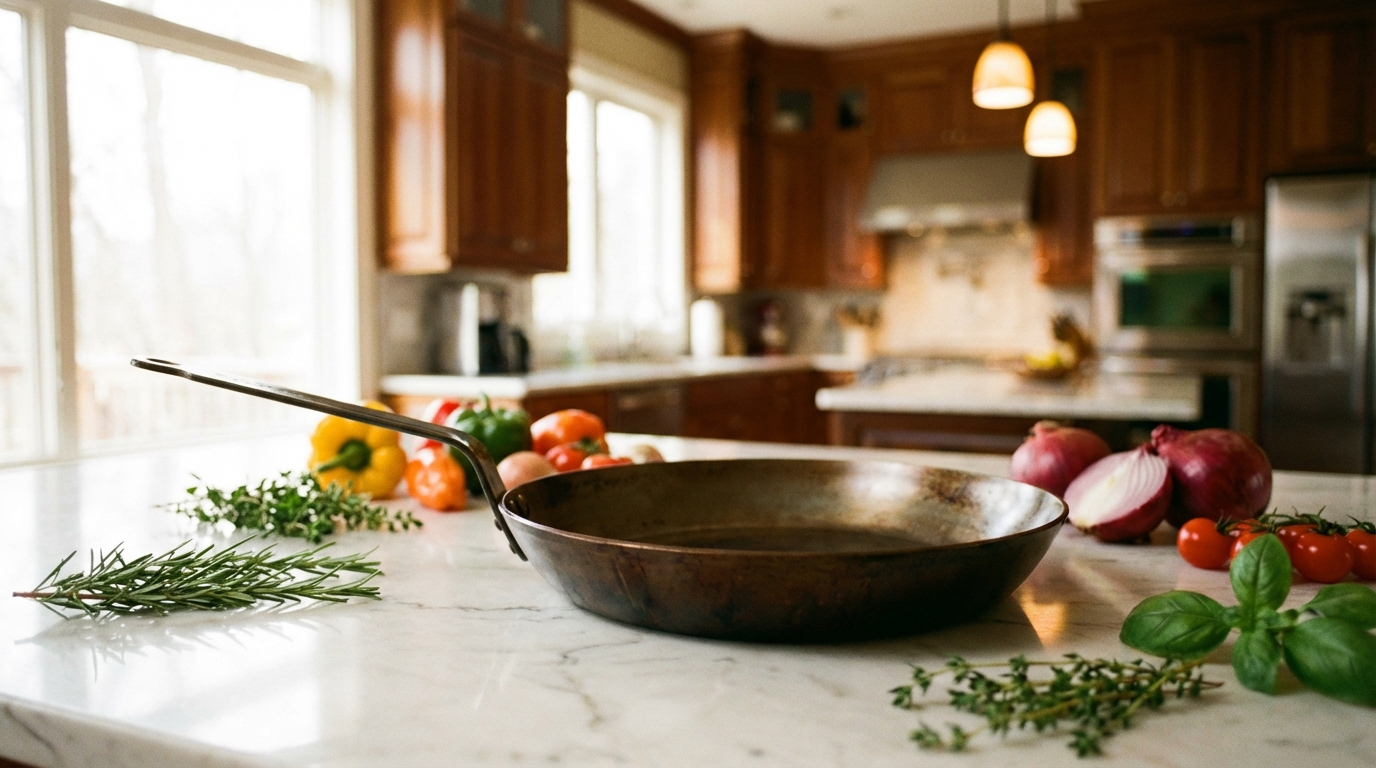
If you've been eyeing your scratched non-stick pan with suspicion, the article positions carbon steel as the non-toxic, high-performance hero you didn't know you needed: a single skillet that sears like cast-iron, slides an omelet like Teflon, and seasons itself into a naturally slick, forever-chemical-free surface. Readers learn why carbon steel is the chef's backstage secret--lighter than cast-iron, induction-friendly, and tough enough to bounce from stovetop to 900 degreesF oven without warping--while also discovering the science behind its safe, iron-based seasoning that only gets better with age. The piece walks through everyday cooking wins (perfect steak crust, crisp-edge cornbread, delicate crepes), then demystifies the simple care ritual--hot-water rinse, quick heat-dry, whisper-thin oil wipe--that prevents rust and keeps the skillet non-stick for decades. Budget-minded shoppers are shown how to spot restaurant-grade bargains (thicker 2 mm walls, welded French-style handle, under-$60 price tags) and avoid flashy knock-offs, ensuring they invest once and cook for life. By the final sentence you'll understand not just how to buy, use, and maintain carbon steel, but why swapping out toxic synthetic coatings for this one hardworking, endlessly renewable pan is the easiest, most delicious step toward a safer, greener kitchen.
Why Choose a Non‑Toxic Carbon Steel Skillet?
Ditch the synthetic coatings and cook with confidence--carbon steel's natural, non-toxic surface only gets slicker and more nonstick the longer you use it.
How carbon steel avoids harmful coatings
How carbon steel avoids harmful coatings
Most non-stick pans get their slide from a factory-sprayed layer of PTFE or, in cheaper versions, PFOA-based chemical coatings. These synthetic layers work great--until they don't. Scratch them with a metal spatula, overheat them on a screaming-hot burner, or simply use them for a few years, and that coating starts to break down, flaking into your food or off-gassing fumes that have been linked to flu-like symptoms in humans and can be lethal to pet birds. Carbon steel sidesteps this problem entirely by never having a coating to begin with.
Instead, a carbon steel skillet is just what its name promises: a single alloy of iron and carbon, forged and polished into a bare metal cooking surface.
There's no polymer layer, no chemical binder, and no factory-applied non-stick spray sitting between your food and the pan. What creates the slick, food-release surface you associate with non-stick cookware is a process called seasoning--thin layers of polymerized oil baked directly into the microscopic pores of the metal itself. Because that seasoning is made from the same cooking oil you already keep in your pantry (flaxseed, canola, and vegetable oil are common choices), there's nothing synthetic to break down, flake off, or leach into your dinner.
This also means carbon steel's performance actually improves with heat and time, rather than degrading. Where a non-stick coating has a hard ceiling--manufacturers typically cap safe use around 500 degreesF before the coating risks breaking down--carbon steel shrugs off broiler-level heat, open flame, and even a trip under the salamander at 900 degreesF, because the seasoning is chemically bonded iron oxide and polymerized fat, not a fragile plastic film.
Scratch it with a metal whisk or steel wool and you haven't ruined the pan; you've simply exposed bare metal that's ready to be re-seasoned in minutes. That resilience is exactly why professional kitchens have leaned on carbon steel for generations: it delivers the glide of non-stick without ever introducing a coating that can fail, flake, or turn a weeknight dinner into a chemistry experiment.
Health benefits of a non toxic carbon steel skillet
Health Benefits of a Non‑Toxic Carbon Steel Skillet
Swap out a scratched non-stick pan for carbon steel, and the biggest win isn't just in the sear--it's in what you're not eating. Traditional non-stick coatings rely on synthetic polymers like PTFE, which can break down at high heat and release fumes linked to flu-like symptoms sometimes called "polymer fume fever," or older PFOA-based formulas tied to broader health concerns. Carbon steel sidesteps that chemistry entirely. It's made from iron and a touch of carbon, full stop--no fluoropolymers, no PFAS, no mystery coating flaking into your dinner. What you get instead is a cooking surface built from the same elemental family as cast iron, seasoned with real fat and heat rather than a factory-applied chemical layer.
That seasoning process is where the health story gets interesting. Each time you heat oil into the pan's surface, you're building up a thin, polymerized layer of fat--essentially a natural, food-safe patina--rather than relying on a coating that degrades and needs replacing every year or two. Because this seasoning is just baked-on oil, there's nothing toxic to ingest if it flakes off, and nothing off-gassing if you accidentally leave the pan on the burner too long or crank up the heat for a steakhouse-style sear. Carbon steel can handle much higher temperatures than most non-stick alternatives without the surface chemistry turning against you.
There's also a quieter, longer-term health benefit: durability reduces waste and repeated exposure risk. Non-stick pans typically need replacing every couple of years as their coating scratches and wears thin, meaning more frequent contact with degrading synthetic material and more cookware ending up in landfills. A well-seasoned carbon steel skillet, by contrast, can last decades--even generations--getting more naturally non-stick with age rather than less safe. For anyone trying to quietly detox their kitchen without overhauling their entire cooking style, that combination of zero synthetic chemicals, high-heat resilience, and one-time investment makes carbon steel one of the simplest upgrades to make.

Performance Meets Durability: Real‑World Cooking Advantages
With triple-bonded, scratch-proof coating that survives 500 degreesF ovens and metal-utensil abuse, these pans turn every high-heat sear and dishwasher cycle into proof of long-haul performance rather than wear-and-tear.
Even heating and high‑heat searing
Even Heating and High-Heat Searing
Carbon steel occupies a sweet spot that neither cast iron nor stainless quite reaches: it's thin enough to heat up fast, yet dense enough to hold that heat evenly across the cooking surface. Where cast iron can take five or six minutes to fully preheat and stainless tends to develop hot spots right over the burner, a well-made carbon steel skillet reaches searing temperatures in two to three minutes and spreads that heat edge to edge. That means no more sad, pale patches on your steak while the center scorches--every square inch of the pan is doing its job.
This even heat retention is exactly why professional kitchens have relied on carbon steel for generations, especially for high-heat techniques like searing scallops, blackening fish, or getting a deep, caramelized crust on a ribeye.
Carbon steel can comfortably handle temperatures well above what most non-stick coatings can survive--often 600 degreesF or more on the stovetop and into the 800s in the oven--without any risk of the surface breaking down or releasing questionable fumes. That headroom lets you push the pan as hard as the recipe demands, whether you're finishing a thick pork chop in the oven or flash-searing shrimp over a roaring flame.
The payoff shows up on the plate. Because the pan holds its temperature so consistently, you get that coveted Maillard crust--the deep brown, flavor-packed sear that separates a good piece of protein from a great one--without babysitting the burner or constantly adjusting the flame.
And unlike synthetic coatings, which can degrade or lose their non-stick properties under repeated high-heat use, carbon steel's iron-based seasoning actually improves with every hot, oiled cook, meaning the pan you sear in today will perform even better a year from now.
Building a natural non‑stick patina
Building a Natural Non‑Stick Patina
Unlike synthetic non-stick coatings that arrive pre-loaded with chemicals and start degrading the moment they meet high heat, a carbon steel skillet builds its slick surface from scratch--through you, in your kitchen, with nothing but oil and heat. This process is called seasoning: thin layers of fat are polymerized onto the metal's surface, filling in the microscopic pores of the steel and creating a smooth, glass-like layer known as a patina. The result is a genuinely non-stick cooking surface with zero synthetic chemistry involved--just carbon, iron, and oil doing what they've done in kitchens for centuries.
The good news for skeptics is that seasoning carbon steel doesn't take long to get right.
A few rounds of stovetop seasoning--heating the pan until it just smokes, wiping on a whisper-thin coat of a high smoke-point oil like grapeseed or flaxseed, and letting it cool--can have your skillet performing well enough to slide a fried egg within your first week of ownership. From there, every meal you cook adds another invisible layer to that patina. Searing a steak, rendering bacon fat, or sautéing vegetables in butter all contribute oil and heat to the surface, so the pan you're using in month six will outperform the one you unboxed on day one.
This is the real magic that separates carbon steel from disposable non-stick cookware: instead of degrading over time, it improves.
Where a synthetic-coated pan has a countdown clock the moment scratches start to appear, a well-loved carbon steel skillet only gets more slick, more responsive, and more valuable with age--developing the deep, dark patina prized by chefs and home cooks who've used the same pan for a decade or more. Minor imperfections in the patina aren't cause for alarm, either; a quick touch-up with oil and heat repairs thin spots just as easily as the original seasoning was built, meaning the pan is essentially self-healing for the rest of its working life.
Caring for Your Skillet to Keep It Safe and Long‑Lasting
Season and dry your skillet after every use to lock out rust and keep its surface naturally non-stick for decades of safe cooking.
Cleaning tips that preserve non‑toxicity
Cleaning Tips That Preserve Non‑Toxicity
The whole point of switching to carbon steel is trading synthetic coatings for a naturally slick, food-safe patina, so how you clean the pan matters just as much as how you cook with it. The golden rule is simple: skip the soap. Dish soap is formulated to strip oils, which is exactly what your hard-earned seasoning is made of. A quick rinse under hot water, paired with a soft sponge or bamboo brush to loosen stuck-on bits, is almost always enough. For stubborn residue, a sprinkle of coarse salt scrubbed in with a paper towel acts as a gentle abrasive that lifts food without gouging the seasoning layer underneath.
Once clean, the pan needs to go from wet to bone-dry as quickly as possible. This is the step most people skip, and it's the one that invites rust. Set the skillet back on the burner over low heat for about sixty seconds; you'll watch the last droplets of moisture evaporate right before your eyes. While the pan is still warm, wipe on a whisper-thin coat of neutral oil (grapeseed, avocado, or flaxseed all work well) with a paper towel, buffing off any excess so the surface looks dry, not greasy. Over time, this micro-layer polymerizes into the seasoning, reinforcing the barrier that keeps food from sticking and keeps bare metal from ever contacting your next meal.
If you ever encounter rust spots or a seasoning failure, resist the urge to reach for a chemical rust remover. Carbon steel is forgiving enough to fix with nothing more than steel wool, water, and a fresh round of seasoning oil. Scrub back to bare metal, dry thoroughly, and rebuild the patina with two or three thin oil-and-heat cycles. This is a quiet advantage of carbon steel: instead of tossing a scratched pan into a landfill, you're simply restoring it, keeping both the cookware and your kitchen free of coatings that degrade, flake, or off-gas over time.
Finally, store your skillet with care to protect the seasoning between uses. Avoid stacking other pans directly on top of the cooking surface, which can scrape off oil layers before they've fully cured; a folded paper towel or felt pan protector between stacked cookware is a cheap safeguard. Keep the skillet somewhere dry rather than in a damp cabinet under the sink, and if you live in a humid climate, a light re-oiling every few weeks of storage is a smart insurance policy. These small habits cost seconds but add years to the life of a pan that's already built to outlast you.
Seasoning basics and maintenance routine
Seasoning Basics and Maintenance Routine
Seasoning is what transforms raw carbon steel from a bare, reactive metal into the slick, non-stick cooking surface you actually want in your kitchen. The process is simple chemistry: a thin layer of oil is heated until it polymerizes, bonding to the microscopic pores of the steel and forming a hard, plastic-like patina. Unlike synthetic coatings, this seasoning layer is entirely food-based--just oil and heat--so there's no risk of leaching questionable chemicals into your food, even if it scratches or wears thin over time. To season a new or stripped skillet, wash it with hot water and a little soap to remove the factory coating, dry it completely, then rub on a whisper-thin layer of a suitable oil, such as grapeseed or avocado oil. Heat the pan on the stovetop (or in a 450-500 degreesF oven) until it stops smoking and darkens slightly, then repeat two or three times to build up a solid base layer.
Once seasoned, the maintenance routine is refreshingly low-effort compared to babying a delicate non-stick coating.
After cooking, let the skillet cool just enough to handle, then rinse it with hot water using a soft sponge or brush--a small amount of soap is fine and won't strip a well-cured seasoning layer, despite old kitchen myths. Skip the soak; carbon steel left wet is the fastest path to rust. Instead, towel it off and set it back on a warm burner for sixty seconds to drive off any remaining moisture. While the pan is still warm, wipe on a few drops of oil with a paper towel, buffing until the surface looks matte rather than greasy. This quick three-step cycle--rinse, dry, oil--takes under two minutes but is the single habit that determines whether your skillet lasts five years or fifty.
If rust or sticky spots do appear, don't panic; carbon steel is remarkably forgiving.
A light scrub with steel wool or a chainmail scrubber strips the trouble spot back to bare metal, and a quick re-seasoning restores the surface to good condition. Cooking fatty foods like bacon, eggs, or a steak basted in butter can help reinforce the seasoning with use, so the more you cook, the better the pan tends to perform. Store your skillet in a dry spot, and if humidity is an issue, a light oil coat before it goes back on the shelf is cheap insurance. With this routine, you're not just avoiding rust--you're actively building a more durable, effective non-stick surface with every meal.


Smart Buying: Getting Quality Without Breaking the Bank
Score top-tier gear for half the price by mastering seasonal clearance timing, open-box apps, and price-match hacks that slash tags the moment you flash your phone.
Cost‑effective care that prevents landfill waste
Here's the math skeptics rarely run: a $50 non-stick skillet that limps along for eighteen months before its coating flakes into your eggs works out to roughly $33 a year--and that's before you count the pan itself sitting in a landfill, coating and all, for centuries to come. A well-made carbon steel skillet costs $40 to $70 upfront and, with basic care, can still be searing steaks decades later. Spread over even a conservative twenty-year lifespan, you're looking at pennies per use--and no need for a "replacement pan" drawer that never gets restocked.
That durability isn't just about the steel itself; it's about how forgiving the maintenance is. Unlike enameled or coated cookware, where a single deep scratch or a spin in the dishwasher can ruin the nonstick surface for good, carbon steel tends to improve with imperfect care. Scrub off some seasoning by accident? A quick reseason with a paper towel and a hot burner fixes it. A rust spot after a summer of neglect in a humid garage? A little steel wool and oil bring it right back--no replacement purchase, no coating to reapply, no warranty claim to file. You're not babying a fragile investment; you're maintaining a tool built to bounce back from mistakes.
This is where the environmental case and the budget case quietly merge. Every non-stick pan tossed because of a peeling coating represents manufacturing emissions, raw materials, and packaging that end up in a landfill--often after just a year or two of use. A single carbon steel skillet, cared for with nothing more than hot water, a stiff brush, and a little oil, sidesteps that entire replacement cycle. You're not buying disposable cookware with a longer warranty; you're buying a skillet meant to last, which makes it about as cost-effective--and as low-waste--as kitchen gear gets.
For buyers comparing sticker prices, it helps to reframe the question: instead of asking "what's the cheapest pan I can buy today," ask "what's the cost per year of actual cooking." By that measure, a $60 carbon steel skillet that lasts decades can easily beat a $25 non-stick pan replaced every twelve to eighteen months--all while keeping one more chemically coated pan out of the waste stream.
What to look for in a carbon steel skillet
What to Look for in a Carbon Steel Skillet
Not all carbon steel is created equal, and a few quick checks will separate a pan that lasts decades from one that warps after a single searing session. Start with gauge--the metal's thickness--which is usually listed in millimeters. Anything under 2mm tends to warp under high heat or react poorly to temperature swings, while true workhorse skillets sit between 2mm and 2.5mm, giving you enough mass to hold heat evenly without adding cast-iron levels of bulk. If a listing doesn't mention gauge at all, that's often a sign the manufacturer would rather you not ask.
Next, look closely at the handle.
Restaurant-grade carbon steel pans typically feature a welded, French-style handle (sometimes with a rounded helper handle opposite it) rather than a riveted plastic or rubber-wrapped grip. Welded steel handles can go straight from stovetop to a 900 degreesF oven without melting, cracking, or loosening over time--something you'll appreciate the first time you need to finish a steak or a frittata under the broiler. Rolled or hemmed edges are another small but telling detail: they reduce the risk of warping and help the pan season more evenly, since raw, sharp edges tend to season unevenly and rust first.
Finally, don't equate a bargain price with poor quality, or a premium price with guaranteed performance. Plenty of professional-grade carbon steel skillets sell for well under $60, especially in the 10-to-12-inch range home cooks use most.
What you're paying for is consistent gauge, a properly welded handle, and a flat, evenly milled cooking surface--not flashy laser-etched logos, gimmicky "pre-seasoned" coatings that flake off within a month, or unnecessarily oversized skillets that are heavier to maneuver than they need to be. A little research into gauge, construction, and reviews from cooks who've used the pan for years will steer you toward a skillet that only gets better--and safer--the longer you own it.
- Carbon steel skillets are non-toxic and free from synthetic coatings
- Develops natural non-stick surface through seasoning over time
- Heats faster and more evenly than cast iron while being lighter
- Requires hand-washing and immediate drying to prevent rust
- Improves with use as seasoning builds better cooking surface
- More affordable than premium stainless or ceramic pans