

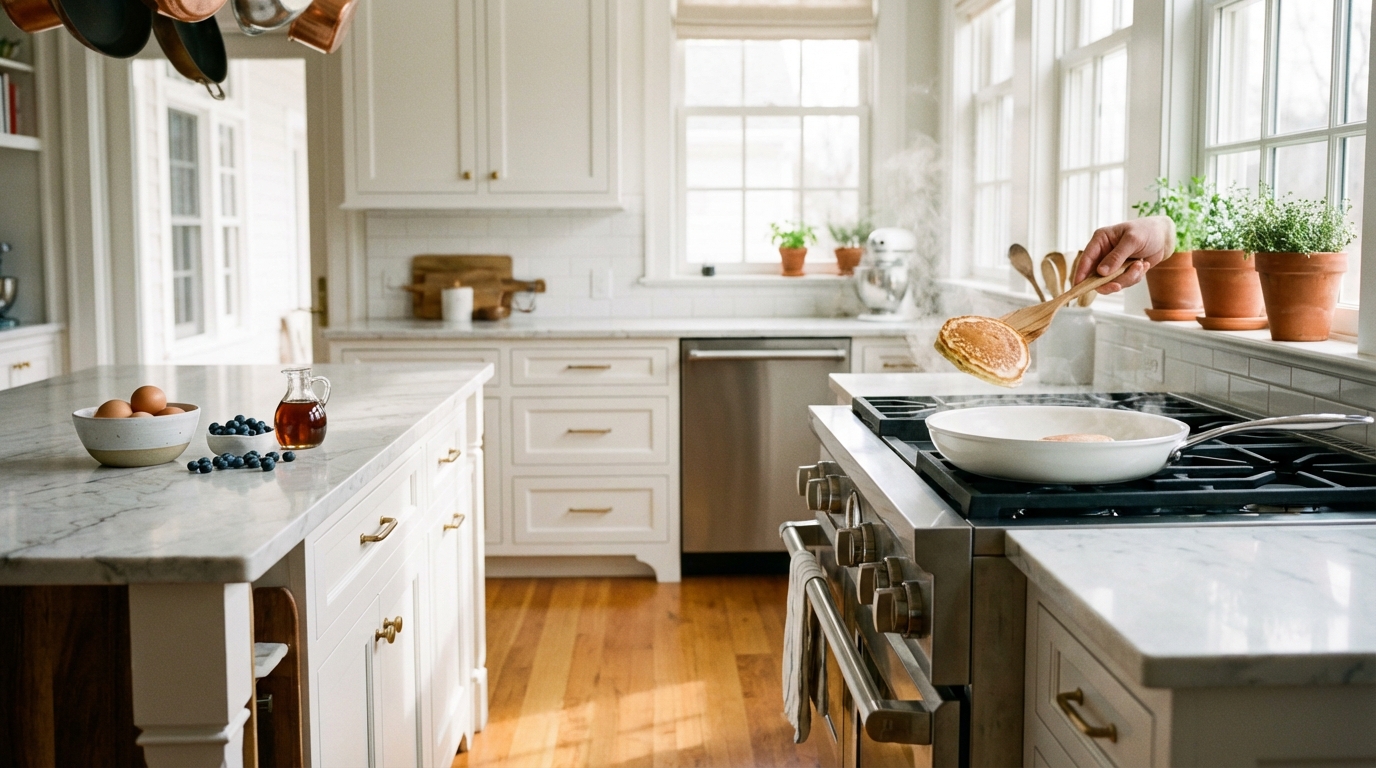
Ceramic pans free of PFAS "forever chemicals" give home cooks the same slick release and even heating as traditional non-stick while eliminating the health risks linked to liver damage, thyroid disruption, and environmental contamination, and this guide walks you through choosing, using, and maintaining them so they actually last. You'll learn to choose reinforced, scratch-resistant coatings bonded to multi-layer aluminum or stainless steel for consistent heat without hot spots. You'll match pan shapes--gently sloped 10- or 12-inch skillets with helper handles and pour spouts--to your flipping, searing, and batch-cooking style. And you'll protect that investment by cooling pans before gentle scrubbing, seasoning occasionally with high-smoke-point oil, and storing them stacked with soft liners. The payoff is years of pure, untainted flavor from a non-reactive surface that needs little or no fat, stretches food budgets by turning out perfect eggs and sauces every time, and keeps toxic chemicals out of your kitchen, body, and planet.
Why Non‑Toxic Ceramic Pans Matter
Ceramic pans give you flawless non-stick cooking without the PFAS chemicals that linger in your body for years and release toxic fumes when overheated.
Health Benefits of PFAS‑Free Cookware
Traditional non-stick cookware contains PFAS chemicals that can impact your health--and ceramic pans offer a smart alternative. These "forever chemicals" stick around in your body for months or even years, breaking down slowly in the environment [1]. Research has linked PFAS exposure to serious health concerns: liver damage, reduced immunity in kids, thyroid issues, heart disease risk, fertility problems, and certain cancers [1][2].
Here's what really matters: when PTFE coatings (you know them as Teflon) get too hot, they release fumes that trigger flu-like symptoms in people and can kill pet birds--a clear warning about their toxicity [1][2]. The problem goes beyond your kitchen too. PFAS contaminate our environment during manufacturing and disposal, eventually showing up in food, water, and air [1].
The good news? Independent testing by Consumer Reports found that ceramic-coated pans labeled PTFE-free actually delivered on that promise--they contained zero of the 96 PFAS compounds tested [1]. You get the same cooking performance without the health worries, especially important since traditional non-stick coatings degrade over time [1].
How Ceramic Coatings Protect Flavor
Ceramic coatings protect your food's natural flavors with a completely nonreactive cooking surface. When you cook acidic ingredients like tomato sauce, ceramic won't leach metals or chemicals that alter how your food tastes [3]. The coating's silicon and titanium-based construction stays stable--no corrosion, no interaction with ingredients, just pure flavors without metallic undertones [3].
Here's where it gets interesting: ceramic's non-stick surface means you need less oil for cooking. You can actually sauté vegetables in water instead of butter, letting their real flavors come through [4]. The coating holds heat evenly too, developing flavors properly without hot spots that cause scorching or bitter notes [4].
Whether you're perfecting a delicate sauce in a ceramic-coated pan or searing vegetables, this nonreactive surface keeps your ingredients tasting exactly how they should--clean, pure, and true to their nature.

Key Features to Look for in the Best Non Toxic Ceramic Pans
Look for a ceramic pan with a reinforced, abrasion-resistant coating and multi-layer aluminum-steel construction that heats evenly without hot spots, so the surface stays truly non-toxic and your food cooks uniformly from edge to edge.
Durable Scratch‑Resistant Coating
The coating's durability determines how long your ceramic pan stays safe and effective. Quality ceramic coatings use inorganic materials like silicon dioxide and metal oxides to create a hard, non-reactive surface [5]. Even top-performing pans that ace rigorous durability tests (like Consumer Reports' 2,000-stroke steel wool abrasion test) will eventually show wear [1].
Here's what matters: scratches and chips don't just reduce non-stick performance--they can expose the metal underneath, potentially allowing leaching that defeats the whole purpose of choosing ceramic [5]. When shopping, look for reinforced coatings specifically designed to resist everyday wear and tear. These maintain their non-toxic benefits longer and provide a stable cooking surface that won't react with your food [5].
(For detailed care instructions to maximize coating life, see our maintenance tips below.)
Even Heat Distribution and Temperature Control
Even heat distribution is the difference between perfectly seared steaks and frustrating hot spots. Quality ceramic cookware achieves this through smart material layering. Multi-layered construction--with aluminum cores wrapped in stainless steel--creates cooking surfaces that heat uniformly across the entire pan [6]. This strategic layering delivers superior heat retention and distribution, producing evenly cooked food from edge to edge [6]. The trade-off?
Thicker, multi-layered pans take a bit longer to heat up [6]. Most ceramic cookware relies on aluminum for responsive temperature control. Some aluminum-based pans react quickly to burner adjustments--great for recipes needing rapid temperature changes, but they can run hot and require careful monitoring [7]. The sweet spot? Pans that heat at a moderate pace without burning your butter or testing your patience [7].
Heavier pan bottoms generally distribute heat more evenly, preventing those annoying hot spots that burn food in some areas while leaving it undercooked in others [7]. Match your pan to your cooking style: if you're constantly adjusting temperatures for stir-fries or delicate sauces, go for responsive aluminum construction. For steady-heat dishes like braises or pan roasts, heavier
Choosing the Right Size and Shape for Your Cooking Style
Pick a 10-inch, gently sloped pan--tall enough to toss stir-fries, curved enough to flip eggs without tearing, and sized to cook four of them at once.
Flipping, Frying, and Searing: Pan Shapes that Perform
Pan shape significantly influences your cooking performance, with wall height and angle determining how easily you can manipulate food. Low, sloped walls make flipping delicate foods effortless--your spatula can easily slide under eggs and crepes, while allowing tossing techniques for stir-fries and sautés [8]. The sweet spot? Look for deep, rounded shapes with tall-but-tapered walls that create an ideal balance between capacity and maneuverability.
This design lets you access food edges with your spatula while providing ample cooking surface [10]. On the flip side, steep-sided pans require more finesse when flipping delicate foods--though modern designs increasingly offer more user-friendly sloped sides [8]. Bowl-shaped designs provide exceptional versatility for multiple cooking techniques. The curved profile naturally funnels ingredients back toward the center when you're stirring or flipping [9][10].
Some innovative hybrid designs even combine raised stainless steel ridges with ceramic coating, enabling both exceptional searing capability and easy food release--perfect for achieving that restaurant-quality crust on steaks while maintaining the easy cleanup you love about nonstick [10]. For optimal performance across multiple techniques, choose pans with medium-height, gently sloped sides rather than steep walls or ultra-shallow designs. This shape works beautifully for everything from pancake flipping to sauce reduction [8][9].
Batch Cooking and Versatility: Size Matters
Pan size directly impacts your cooking capacity and versatility. For everyday cooking, 8-inch pans provide the maneuverability you need for "cooking one or two eggs," while medium 10-inch pans can handle "up to four eggs, two pancakes, or a multi-serving meal at once" [6]. Larger 12-inch pans excel at batch cooking with expansive surface area for family portions, though "a larger size will also come with a heavier build" [6].
This weight consideration becomes crucial when you're selecting cookware for frequent family meals--smart design features like helper handles make it easy to lift a large pan full of food around your kitchen [11]. Pan depth and wall design significantly impact versatility beyond just diameter measurements. Look for thoughtful features like "subtle spouts on the pots and skillets" that "make pouring precise and let you use the lids as strainers" [10], increasing functionality for batch cooking.
For smaller kitchens with limited storage, space-saving options that provide "a flexible system with integrated tools like a nesting steamer basket, spatulas and spoons that nest, built-in strainers, and thoughtful pour spouts" [11] maximize functionality while minimizing cabinet space. When investing in ceramic cookware, consider both your immediate cooking needs and long-term versatility.


Care, Maintenance, and Longevity Tips
Treat your ceramic pans to gentle cleaning, low-to-medium heat, protective stacking, and an occasional oil seasoning, and they'll reward you with 3-5 years of flawless non-stick performance instead of months.
Cleaning Practices that Preserve the Ceramic Layer
You'll get years more life from your ceramic pans with the right cleaning approach. Let pans cool completely before washing--sudden temperature changes can crack the coating [12]. Stick to soft sponges and regular dish soap for daily cleaning. Those steel wool pads might seem efficient, but they'll scratch up your ceramic surface and ruin the non-stick properties [12]. Got stubborn food stuck on?
Here's what works: soak the pan in warm soapy water for 30 minutes, then try again with a soft sponge [12]. Still stuck? Make a paste with baking soda and a bit of hot water, let it sit for half an hour, then scrub gently in circles [12]. For those really burnt-on disasters, mix 2 parts water with 1 part white vinegar and let it soak overnight--it'll loosen everything without harming the ceramic [12]. Notice some discoloration?
Pour enough 3% hydrogen peroxide to cover the bottom of the pan and wait 30 minutes. If it bubbles, you're good to go--that means it's fresh enough to work [12]. Follow these simple steps, and you're looking at 3-5 years of reliable performance instead of the few months many people get from neglected pans [12].
Seasoning, Storage, and Extending Pan Life
Smart storage and heat control make all the difference in how long your ceramic pans last. Always slip something protective between stacked pans--paper towels work fine, or invest in pan protectors to prevent scratches [14]. Skip the hanging rack too--it puts unnecessary stress on handles. Just stack them properly with protection [14]. Here's a pro tip: season your ceramic pans occasionally with avocado oil or another high-smoke-point oil.
It creates an extra non-stick barrier that makes both cooking and cleanup easier [15]. Temperature control is where most people mess up. High heat breaks down ceramic coatings twice as fast as medium heat [13]. Always preheat on low-to-medium for a couple minutes--your food will cook more evenly and your pan will last longer [15]. Match your pan size to your burner size too.
Using a small burner with a large pan creates hot spots that wear down the coating unevenly [15]. Remember what we mentioned about thermal shock earlier? Same rules apply here--no hot pans under cold water, and always let them cool naturally [13][14]. Get these basics right, and you'll stretch that typical 1-3 year lifespan to a solid 5 years. That's real value from your cookware investment [13][14].


Conclusion
- PFAS-free ceramic pans eliminate health risks linked to liver damage, thyroid issues, and cancers.
- Ceramic coatings stay inert: no metal leaching or flavor changes, even with acidic foods like tomato sauce.
- Look for silicon-dioxide-based, reinforced coatings; scratches can expose metal and defeat non-toxic benefits.
- Multi-layer aluminum-steel pans give even heat; match responsive aluminum to quick recipes, heavier pans to slow dishes.
- Choose 10-inch, gently sloped walls for versatile flipping and easy spatula access across cooking techniques.
- Cool pans before washing, use soft sponges, and avoid high heat to stretch lifespan from ~1-3 to 5 years.
- Protect stacked pans with paper towels or separators and season occasionally with high-smoke-point oil for extra release.
- https://www.consumerreports.org/toxic-chemicals-substances/you-cant-always-trust-claims-on-non-toxic-cookware-a4849321487/
- https://thepaleodiet.com/choosing-the-right-non-toxic-cookware/
- https://www.seriouseats.com/nonstick-vs-ceramic-skillets-7110252
- https://uae.cosmiccookware.com/blogs/the-joyful-kitchen/the-non-stick-debate-ceramic-vs-traditional
- https://nephcure.org/safe-kitchen-choices-a-comprehensive-guide-to-non-toxic-cookware/
- https://www.forbes.com/sites/forbes-personal-shopper/article/best-ceramic-pan/
- https://www.thespruceeats.com/best-ceramic-cookware-sets-4140142
- https://www.seriouseats.com/best-ceramic-cookware-8723380
- https://www.cnn.com/cnn-underscored/reviews/best-nonstick-pan
- https://www.foodandwine.com/best-ceramic-cookware-sets-7483280
- https://www.organicauthority.com/organic-food-recipes/best-ceramic-cookware-sets-reviewed-tested
- https://www.thespruce.com/how-to-clean-ceramic-pan-4775268
- https://www.asaicookware.com/blogs/all/how-to-make-ceramic-pans-last-longer?srsltid=AfmBOorVFTIoE763FZmqIhg1L-BMFAWuiNcmbA2Mw3LfitBr3yFIdLb2
- https://www.leafscore.com/eco-friendly-kitchen-products/cookware/most-non-stick-pans-dont-last-very-long-heres-what-to-do-about-it/
- https://xtrema.com/blogs/blog/lifespan-of-all-ceramic-cookware?srsltid=AfmBOopubyrcL-JdFCHy9hJC4af6PD8Sck14udkpbV9e5XHM_0i12nWl