

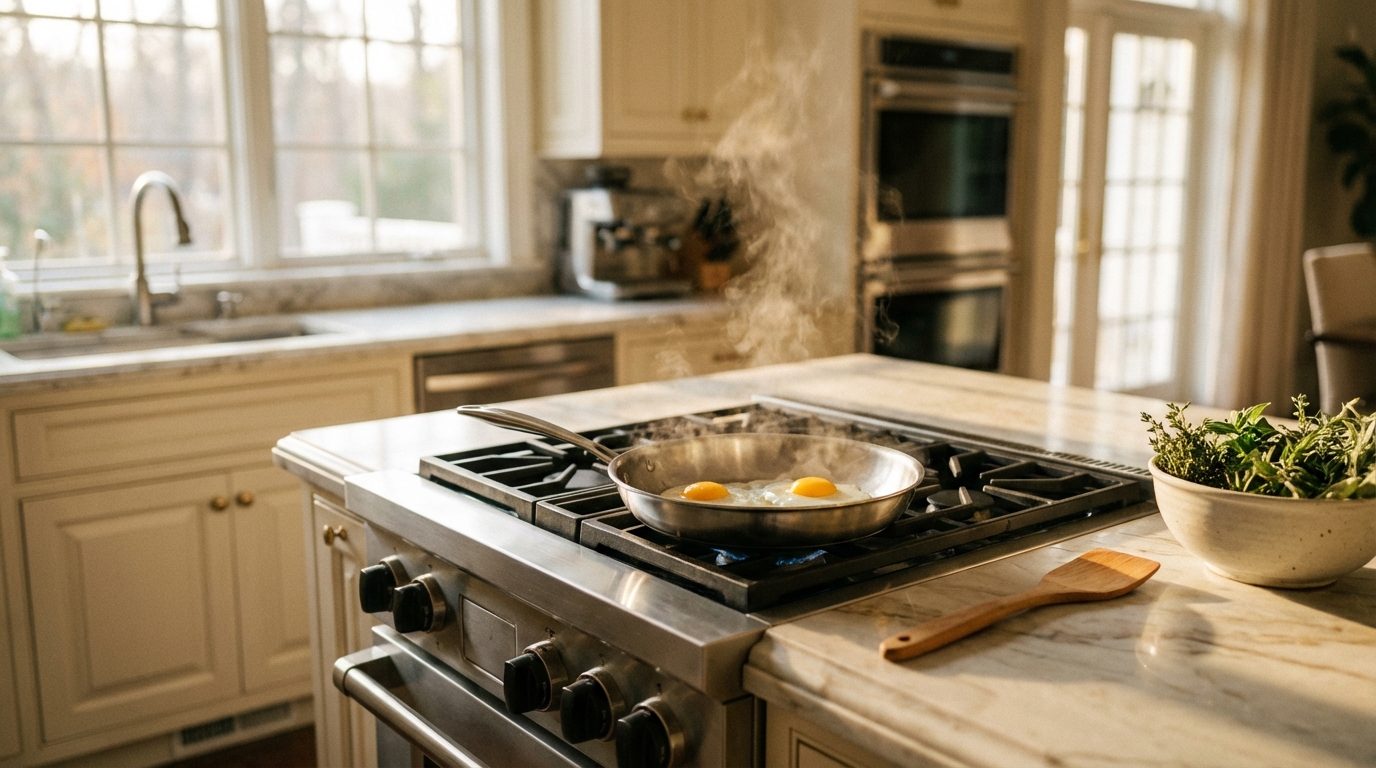
The article "Skip the PTFE" arms home cooks with everything they need to ditch toxic non-stick pans without sacrificing effortless eggs: it explains how everyday heating of PTFE coatings releases carcinogenic fumes and "forever chemicals" that linger in bodies, birds, water supplies, and landfills, then maps out safer, high-performance alternatives--ceramic-coated aluminum for low-oil release, hard-anodized or carbon steel for mid-weight responsiveness, and stainless or cast iron for lifetime durability--detailing exactly how to pick, preheat, season, and maintain each material so eggs slide cleanly at 300 degreesF, hot spots vanish, and the pan lasts decades instead of years, all while sidestepping the looming wave of state bans and disposal headaches facing PFAS cookware.
Understanding PTFE Risks and Why Switch
Every time you heat a non-stick pan, it can spike past 700 degreesF in under four minutes, releasing carcinogenic fumes that kill pet birds and may be slowly harming you and your family.
What PTFE does to air quality and health
Let's talk about what really happens when PTFE heats up in your kitchen. This synthetic polymer coating starts releasing harmful particulates at just 464 degreesF--a temperature you can hit during regular cooking. Push it to 680 degreesF (which happens faster than you'd think when preheating), and you're looking at six different toxic gases, including two known carcinogens [1]. These emissions can trigger polymer fume fever, leaving you with flu-like symptoms that include chest tightness, headaches, and breathing difficulties [2]. Here's something that might surprise you: pet birds are essentially early warning systems for PTFE toxicity.
Their respiratory systems are so sensitive that exposure causes immediate hemorrhaging and fluid buildup, often proving fatal within minutes. We're talking about birds dying in homes where pans reached normal cooking temperatures, sometimes rooms away from the kitchen [2]. If it's that harmful to birds, what's it doing to us over years of exposure? The testing data is eye-opening. One study found a non-stick pan hit 736 degreesF in just three minutes and twenty seconds on a regular electric burner [2].
That's well beyond the danger zone, and it happened during normal use--not some extreme scenario. You might have heard that modern PTFE products no longer contain PFOA, that notorious environmental pollutant. True, but here's the catch: manufacturers simply switched to chemicals like GenX, which research suggests carry similar health risks [1]. Meanwhile, the FDA hasn't conducted comprehensive safety studies on non-stick cookware, despite mounting evidence of toxic emissions at everyday cooking temperatures [2]. These fluoropolymers create a lasting environmental problem too--they simply don't break down, persisting indefinitely wherever they end up [3].
How fumes affect everyday cooking and the environment
So how do these fumes affect your everyday cooking? Every time you heat that non-stick pan for breakfast eggs or a quick stir-fry, you're potentially exposing yourself to harmful emissions. Remember those temperature thresholds we mentioned? They're easier to hit than you might think during regular cooking [5]. The result isn't just immediate health concerns like polymer fume fever--it's the cumulative effect of breathing these chemicals day after day. But the impact reaches far beyond your stovetop. PTFE production facilities release PFAS chemicals that seep into nearby water supplies, affecting entire communities [5].
These aptly named "forever chemicals" don't just disappear--they accumulate in our bodies and environment, with research linking them to thyroid problems, weakened immune systems, and various cancers [4]. It's a sobering thought: the convenience of your non-stick pan contributes to a much larger environmental problem. Consider the lifecycle too. Most non-stick pans last just a few years before the coating degrades, creating a disposal nightmare. Can't recycle them normally--the coating must be burned off first, potentially releasing more toxins. Toss them in the trash? Those PFAS compounds leach into groundwater from landfills.
Even incineration isn't a clean solution, as it can create new toxic byproducts [5]. The good news? You have options. Switching to materials like carbon steel or stainless steel eliminates these concerns entirely, giving you cookware that performs beautifully without the chemical baggage. These alternatives last decades, not years, breaking the cycle of disposal and environmental contamination [5].
Choosing a non toxic non stick pan no ptfe that Performs
Top material alternatives: ceramic, hard‑anodized, stainless steel with nano‑coating
Ceramic-coated pans offer the most direct alternative to PTFE, featuring an aluminum base with a mineral-based sol-gel layer made from silica and other natural compounds [6]. This coating creates a slick surface without PFAS or PTFE chemicals that maintains its non-stick properties at temperatures where traditional coatings would release toxic fumes [8]. In testing, quality ceramic pans distribute heat evenly with no hot spots and release eggs without oil [7]. While convenient for daily cooking, you'll find ceramic coatings typically last only 1-3 years before losing effectiveness [6].
Hard-anodized aluminum isn't technically nonstick but creates a harder, darker surface that's nonreactive with acidic foods [8]. This process strengthens the aluminum surface, making it more durable than basic aluminum while avoiding health concerns [8]. When combined with ceramic or other non-PTFE coatings, these pans offer improved durability while maintaining safety at higher cooking temperatures [8]. Stainless steel provides the most durable and longest-lasting option, often performing for decades with proper care [6].
While not inherently nonstick, many manufacturers now apply nano-coatings or special treatments to improve food release properties. Quality
Key performance criteria: heat distribution, durability, price point
When choosing a non-toxic frying pan for eggs, three critical performance factors determine whether your purchase will deliver long-term satisfaction: heat distribution, durability, and price point. For consistent egg cooking, even heat distribution prevents hot spots that can burn food in one area while leaving it undercooked in another. Cast iron excels here, holding heat remarkably well for super even cooking [9]. Stainless steel provides excellent evenness, making it ideal for browning and creating pan sauces [9]. Copper heats quickly and responds instantly to temperature changes, offering the most precise control for cooking delicate foods [11]. Ceramic-coated aluminum heats rapidly and distributes heat evenly, though it doesn't retain heat as well as heavier materials [9].
Durability varies dramatically across materials, directly impacting value over time. Stainless steel stands as the most resilient option, highly resistant to rust, corrosion, and scratching--even with metal utensils [11]. Cast iron pans can literally last generations when properly maintained, becoming family heirlooms [10]. Enameled cast iron provides similar longevity but can chip if mishandled, requiring gentler care [9]. As mentioned above, ceramic coatings typically degrade within 1-3 years, making them the least durable option despite their non-stick performance [11]. Price considerations should factor in both upfront cost and longevity.
Budget-conscious shoppers might opt for cast iron, with quality skillets starting under $40 [11] that perform reliably for decades with proper care. Mid-range stainless steel offers excellent value--professional-grade pans deliver lifetime performance without designer pricing [10]. Premium copper pans command high prices but justify their cost through superior heat control and decades of use [11]. Ceramic-coated pans present the poorest value proposition despite moderate pricing, as their relatively short lifespan means more frequent replacements [11].
Egg‑Perfect Cooking: Features that Ensure Easy Release
Surface texture and heat control for flawless egg slides
Surface texture plays a decisive role in whether eggs stick or slide. Cast iron's classic pebbled surface, when properly seasoned, creates a naturally slick finish that delivers eggs with crispy edges and gooey yolks that won't adhere to the skillet [12]. Smoothness matters too--some dedicated cooks even sand their cast iron with progressively finer grits (120 through 800) to create a glass-like cooking surface [13]. The rounded rim design found on quality carbon steel pans significantly improves egg release, allowing delicate foods to slide out more easily than pans with flat edges [12]. Heat management creates the difference between stuck and sliding eggs regardless of material.
Preheat thoroughly before adding fat--the pan should be hot enough for butter to heat visibly but not smoke [13]. Most pans perform best around 300 degreesF for eggs [13]. This moderate heat allows proteins to set without bonding to the cooking surface. Even non-stick pans require some fat for optimal performance; tests consistently show adding oil or butter dramatically improves results across all materials [12]. The cooking technique matters equally--proteins naturally release from the surface once properly cooked.
Place eggs on a medium-hot surface and resist flipping or moving them too soon, as they'll stick like glue if disturbed prematurely [13]. When properly cooked, you should be able to shake the pan and watch the eggs slide freely--a signal they're ready to flip [13]. With stainless steel, which lacks inherent non-stick properties, proper preheating and fat application become even more critical, but reward you with superior searing capabilities alongside decades of performance [12].
Design details that boost longevity while staying affordable
Rounded edges significantly improve both food release and durability in nonstick pans. A reinforced rounded lip provides warping resistance while making food sliding effortless, extending the pan's useful life [14]. Quality carbon steel pans with curved edges help delicate foods like fried eggs slide out more easily than pans with flat edges [12]. Flush rivets--where fasteners sit level with the cooking surface--eliminate food-trapping crevices that often become failure points in conventional designs.
This design feature not only makes cleaning easier but also prevents premature coating deterioration around rivet areas [14]. Handle construction significantly impacts longevity; silicone sleeves or guards keep handles cool while protecting the connection points from stress [12]. Pre-seasoning on carbon steel and cast iron creates a naturally slick finish that actually improves with use, unlike degrading ceramic coatings [12]. Even affordable cast iron options start under $40 yet deliver decades of reliable performance through smart design choices--their classic pebbled surface, when properly maintained, creates a naturally nonstick finish that outlasts any chemical coating [14].
For those seeking the responsiveness of stainless steel with improved food release, a pre-seasoned carbon steel pan combines the best of both worlds. The combination of material thickness and construction technique determines how evenly pans distribute heat--a critical factor in preventing premature coating failure from hot spots [15]. While fully-clad stainless steel construction commands higher prices, professional-grade performance can be achieved through smart design tweaks like curved edges on handles that improve grip comfort without adding cost [12].
Caring for Your Non‑Toxic Frying Pan for a Lifetime
Treat your non-toxic frying pan to low-medium heat, gentle hand-washing after it cools, and high-smoke-point oils, and when it's finally worn out, hunt for a take-back program instead of tossing it in the trash.
Cleaning and maintenance habits that preserve the non‑stick surface
Here's the good news: keeping your non-toxic pans performing like new doesn't require special skills--just smart habits. Start with temperature control. Never shock a hot pan with cold water; that quick temperature change warps your cookware faster than anything else [16]. Instead, let pans cool naturally before washing with warm water, gentle dish soap, and a soft sponge. Skip the steel wool entirely--even on tough residue [16].
Got stubborn bits stuck on? Try this kitchen trick: add water and a splash of white vinegar to the pan, bring it to a quick boil, then let it cool. The stuck-on food practically dissolves itself, no scrubbing required [16]. Your cooking technique protects your investment too. Stick to low and medium heat (where most cooking happens anyway), and reach for oils with high smoke points like grapeseed or avocado oil [16].
Cooking sprays might seem convenient, but they leave a residue that builds up over time--better to add a touch of regular oil [16]. Storage matters more than you might think. Placing
Repair, recycling, and responsible end‑of‑life options
When your cookware finally reaches the end of its useful life, disposal gets complicated. Standard recycling facilities can't handle most nonstick pans because they're made of bonded materials--metal fused with synthetic coatings that can't be separated [17]. Each disposal method for PTFE-coated pans comes with environmental concerns: incineration might not fully destroy the coating, potentially releasing harmful chemicals, while landfilling can contribute to water contamination [18]. Looking for responsible options?
Start by checking if cookware manufacturers offer take-back programs--many now accept old pans regardless of brand [18]. Some scrap metal facilities will take cookware, though they typically burn off coatings during processing, which raises similar environmental concerns [18]. If your pan has minor wear but no peeling coating, consider donating it to thrift stores or repurposing it for non-food uses like organizing garden supplies [17]. The regulatory landscape is changing too.
Minnesota has already banned PFAS-coated cookware sales as of January 2025, with six more states--Colorado, Maine, Connecticut, Vermont, Rhode Island, and New Mexico--following suit between 2026 and 2028 [18]. For pans with removable parts, take off any plastic or wooden handles before recycling the metal components [18]. This disposal challenge reinforces why choosing durable, non-toxic materials makes sense. As we've discussed throughout this guide, options like cast iron and stainless steel deliver decades of performance--dramatically reducing waste compared to coated pans that need replacing every few years [5].
- PTFE begins releasing toxic gases at 464 degreesF and hits 736 degreesF in under 4 min on a normal burner.
- Birds can die within minutes of PTFE fumes; Minnesota and 6 other states will ban PFAS cookware by 2028.
- Ceramic coatings give 1-3 years of non-stick before failing; cast iron or stainless lasts decades.
- Preheat to ~300 degreesF and let eggs set undisturbed so proteins release naturally on any surface.
- Use gentle heat, no cooking spray, and boil vinegar-water to remove residue and extend pan life.
- https://pubmed.ncbi.nlm.nih.gov/28913736/
- https://www.ewg.org/research/canaries-kitchen
- https://www.polyfluor.nl/en/is-ptfe-harmful/
- https://www.sfenvironment.org/should-i-be-concerned-about-using-non-stick-cookware
- https://www.ecocenter.org/our-work/healthy-stuff-lab/reports/whats-cooking
- https://www.zendaguide.com/post/ceramic-vs-nonstick-vs-stainless
- https://www.consumerreports.org/home-garden/cookware/best-frying-pans-if-you-want-to-avoid-pfas-chemicals-a1006253549/
- https://www.cnet.com/home/kitchen-and-household/guide-to-nonstick-cookware-teflon-ceramic-anodized-aluminum/
- https://www.cnet.com/home/kitchen-and-household/best-nontoxic-cookware/
- https://www.thegoodtrade.com/features/nontoxic-cookware/
- https://www.homesandgardens.com/living/best-non-toxic-cookware
- https://www.seriouseats.com/best-egg-pans-8661782
- https://www.quora.com/How-do-I-cook-fried-eggs-without-sticking-on-a-pan-that-is-not-nonstick
- https://www.foodandwine.com/lifestyle/kitchen/best-egg-pans
- https://www.bonappetit.com/story/best-nonstick-pans?srsltid=AfmBOorQmRkgO84XmlqB10E-4pcYNvVm7QA1L_AJMMlh-fH_dx0Ziv8i
- https://food52.com/story/25458-how-to-care-for-nonstick-pans
- https://www.sensarte.com/blogs/all/can-you-recycle-nonstick-pans-a-guide-to-sustainable-kitchenware-5
- https://earth911.com/home-garden/how-to-recycle-your-old-cookware/