

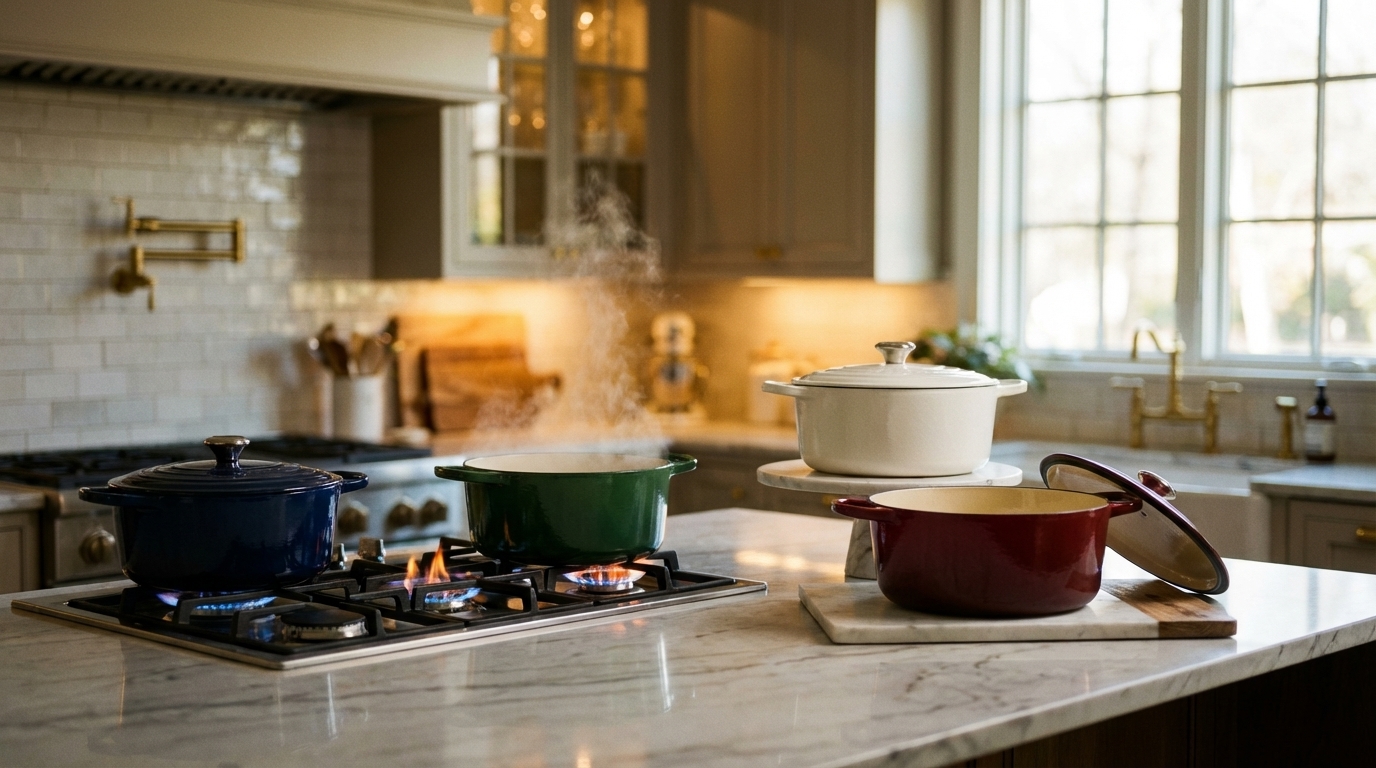
Enameled Dutch ovens are the ultimate kitchen multitasker, delivering cast-iron heat retention and even cooking without the seasoning hassle, so you can braise, bake bread, or whip up weeknight one-pot meals with minimal cleanup and zero metallic off-flavors. This guide walks you through the five best 2025 models--ranging from a versatile, grill-lid Misen and feather-light ceramics to heirloom-quality French classics--while demystifying size, shape, and price so you can confidently pick the 5- to 6-quart sweet spot that feeds four with leftovers or scale up for crowds without breaking your wrists or budget. You'll learn why cooking performance is virtually identical across price tiers, how to match pot geometry to your style (wide and squat for better browning and evaporation, round for even stovetop heat), and what features really matter: light interiors for monitoring fond, oversized handles for secure grip, and lifetime warranties that turn a modest investment into decades of daily service. Beyond reviews, the article packs expert tips on low-to-medium heat use, thermal-shock avoidance, baking-soda steam cleanups, and proper storage that prevents chips and rust, plus safety hacks like silicone mitts and waist-level shelving for these heavy vessels. Whether you're a beginner after an $60 workhorse or a pro seeking a $400 heirloom, you'll discover how to maximize value, protect your purchase, and cook everything from 30-minute lemon pasta to campsite stews while slashing energy use and landfill waste--making this the only Dutch-oven resource you'll ever need.
What Makes an Enameled Dutch Oven the Best Choice
An enameled Dutch oven's thick cast-iron core stores heat like a battery and its glassy enamel shield blocks metallic flavors, so you can start on low heat and let steady, edge-to-center warmth braise short ribs or simmer tomato sauce for hours without hot spots, metallic aftertaste, or yesterday's curry haunting today's apple crisp.
Heat Distribution and Retention
Here's what makes enameled Dutch ovens such reliable kitchen workhorses: they excel at holding and distributing heat evenly, which means your food cooks consistently from edge to center [1]. While enamel conducts heat differently than raw cast iron, this actually works in your favor--it helps correct those annoying hot spots from your stovetop burner [1]. The real magic happens when you add cold ingredients to a hot Dutch oven. Unlike thinner cookware that loses temperature immediately, cast iron's exceptional heat retention keeps things cooking steadily [1].
This makes Dutch ovens perfect for braising short ribs, simmering soups, or any recipe that benefits from gentle, consistent heat [1]. That substantial weight you feel when lifting a quality Dutch oven? It's working for you. The thick walls and heavy bottom store heat like a battery, releasing it slowly and evenly throughout your cooking [1].
This creates the kind of consistent environment that develops rich, complex flavors in your dishes [1]. A quick tip: always start with low to medium heat and increase gradually. These pots hold heat so well that cranking up the burner often does more harm than good--potentially damaging the enamel coating [1]. And remember to treat the enamel gently by avoiding empty preheating or shocking a hot pot with cold water [1].
Durable Enamel Coating
Think of enamel coating as protective armor for your cast iron. This glass-based layer creates a barrier between your food and the metal, which means you can cook acidic dishes without worry. Go ahead and simmer that tomato sauce for hours, reduce wine for your pan sauce, or add plenty of lemon to your braised chicken--the enamel handles it all [3]. Beyond protecting against reactions, the non-porous enamel surface keeps flavors where they belong. Yesterday's curry won't show up in today's apple crisp, and that's a promise [3].
The coating also stands up to high temperatures and resists corrosion, giving you a pot that performs consistently year after year [3]. Let's talk about the practical perks: that glossy enamel finish doesn't just look good in your kitchen photos. Food releases more easily than with traditional cast iron, and cleanup becomes refreshingly simple--no scrubbing required for most meals [3]. Yes, enamel can chip if you drop it on your tile floor, and these pots are heavier than some alternatives. But for cooks who value performance and convenience, the tradeoff is worth it [3].
Best of all? No seasoning rituals needed. Your Dutch oven arrives ready to cook, straight out of the box [3].
Versatile Sizes and Shapes
Choosing between round and oval Dutch ovens comes down to your cooktop and cooking style. Round models work best for most home cooks--they sit perfectly on standard burners, heating evenly from edge to edge [4]. Oval shapes shine when you're cooking longer cuts of meat like pork tenderloin or whole fish, but they can develop hot spots on circular burners [4]. Size matters more than you might think. While options range from tiny 1/4-quart personal sizes to massive 13-quart vessels, the sweet spot for most kitchens falls between 5 and 7 quarts [4].
This range feeds four people comfortably with leftovers for tomorrow's lunch, yet stays manageable when you're moving a full pot from stove to oven [4]. The 5.5-quart size hits that perfect balance--industry data shows it's the most popular choice among home cooks [4]. For smaller households, a 3.5-quart Dutch oven handles everyday meals for one to three people beautifully. Cooking for a crowd? You'll want at least 7 quarts, though be prepared for the weight--these larger pots demand some muscle [4].
Don't overlook pot geometry when shopping. Wider, shorter Dutch ovens with lower walls give you better browning and allow liquids to reduce properly [5]. That extra surface area means your beef actually sears instead of steaming, and your sauces concentrate into rich, flavorful reductions [5]. Some innovative designs even include
Ease of Cleaning and Maintenance
One of the biggest advantages of enameled cast iron? The easy cleanup. Unlike traditional cast iron that needs careful seasoning and maintenance, enameled Dutch ovens clean up with simple soap and water [7]. That smooth enamel surface naturally resists sticking, making post-dinner cleanup less of a chore [6].
For everyday cleaning, let your Dutch oven cool down first (thermal shock from hot to cold can crack enamel), then wash with warm soapy water and a soft sponge [6]. Skip the steel wool--it'll scratch that beautiful finish. Stubborn bits? Fill the pot with hot water and a couple tablespoons of baking soda, let it sit for 15 minutes, then give it another gentle scrub [6].
As covered in detail in our cleaning and maintenance section below, you have several options for tackling tougher stains and keeping your Dutch oven looking great for years. The key is treating the enamel gently while taking advantage of its low-maintenance nature [7]. With proper care, your Dutch oven becomes a reliable kitchen companion that only gets better with use.
Top 5 Best Enameled Dutch Ovens for 2025
The Misen Dutch oven's innovative grill-pan lid and solid performance at a mid-range price make it the standout pick among 2025's top-rated enameled Dutch ovens.
Misen 5.5‑Quart Enamel Cast Iron - All‑Round Performer
The Misen 5.5-Quart Dutch Oven combines versatility and thoughtful design features that set it apart from traditional options. Its most distinctive attribute is the dual-purpose lid system - rather than a conventional lid, it comes with both a cast iron grill pan that doubles as a lid and a universal silicone cover [9]. This innovative approach gives you additional cooking functionality without requiring extra storage space.
The pot features a substantial cooking surface ideal for browning multiple pieces of meat simultaneously and thick walls that retain heat effectively for consistent cooking temperatures [9]. While it excels at deep-frying and functions well as a stockpot thanks to its depth [10], its considerable weight (over 17 pounds) makes it one of the heaviest options available [11]. This heft becomes noticeable when moving it full of food, though the oversized handles provide secure grip points [11].
The enamel coating has shown some vulnerability in durability testing, with testers noting a large chip forming on the inside lip when subjected to impact [11]. Priced at around $195 (though often available with discounts), it occupies a middle ground between budget options and premium brands [9]. Customer feedback consistently praises its versatility, quality construction, and the practical addition of the grill lid, with many considering it excellent value compared to higher-priced alternatives [9].
Budget‑Friendly Model Under $100
Budget-friendly Dutch ovens deliver remarkable performance at a fraction of premium brands' cost. Models priced around $90-100 feature wide, looped handles that allow for secure gripping even with oven mitts - critical when transferring a heavy pot filled with stew [12]. Their cooking performance rivals much pricier alternatives, with testers noting they sear meats well and heat quickly while distributing heat evenly across the cooking surface [12].
Look for options with slightly curved bases that prevent food from trapping in corners, and shorter sides with wider bases that allow appropriate steam evaporation, creating richer, more concentrated flavors in braises and stews [5]. While budget enamel coatings have shown some vulnerability to chipping in durability tests, many manufacturers back their products with lifetime warranties against defects [12][5]. Another excellent budget option typically available for about $60 features oversized handles, a self-basting lid that redistributes moisture, and heat resistance up to 500 degreesF [13].
Testing revealed consistent, even browning capabilities and excellent heat retention, though cooking surfaces may run slightly smaller than premium models [13]. For those seeking maximum value under $80, several options offer solid construction and comparable cooking performance to costlier alternatives [12]. While budget options may not maintain their pristine appearance as long as heritage brands, their cooking performance remains remarkably similar - making them ideal investments for practical cooks who prioritize function over prestige [5].
Lightweight Ceramic Alternative
For cooks who struggle with the heft of traditional Dutch ovens, ceramic alternatives offer significant weight reduction without sacrificing cooking performance. French ceramic options weigh just 7.8 pounds - roughly half the weight of many cast iron models - making them ideal for those with mobility concerns or wrist issues [12]. Their wide handles remain cool during stovetop cooking, providing added safety and comfort when maneuvering. While ceramic doesn't conduct heat as rapidly as cast iron, quality ceramic pots still deliver excellent browning capability and produce tender, well-braised meats [12].
With heat resistance up to an impressive 930 degreesF, they offer exceptional versatility beyond what traditional enameled cast iron can handle. Another standout lightweight option made from ceramic-coated aluminum weighs just 6.2 pounds. It provides significant weight savings while remaining oven-safe to 550 degreesF [12]. Though ceramic options typically don't achieve the same deep searing as cast iron counterparts, they compensate with better maneuverability, cool-touch handles, and comparable braising results [12].
The tradeoff comes in heat retention - ceramic cools more quickly when food is added - and induction compatibility, with some models requiring traditional heat sources [12]. Many alternatives feature durable construction backed by lifetime warranties, making them legitimate considerations rather than mere compromises [12].
Premium Performance for Serious Cooks
Premium French-made Dutch ovens stand as the gold standard for professional-quality cooking performance. At 11.4 pounds, leading models are significantly lighter than comparable options while featuring exceptionally wide, looped handles that provide secure grip even with oven mitts [12]. These premium cookers heat quickly and distribute heat remarkably evenly, creating a deep, burnished crust on meats while maintaining perfect moisture balance in braises [12].
Light-colored interiors make monitoring browning effortless, unlike darker alternatives that can make it difficult to gauge cooking progress [14]. Many serious cooks consider lifetime warranties and exceptional durability the most compelling attributes of premium brands--editors have used these pots for decades without damage, making the significant investment (around $400-$435) worthwhile for those seeking heirloom-quality cookware [5]. For those preferring a slightly different premium experience, alternative French options offer comparable performance with distinct advantages.
Black interior enamel hides stains better but requires more confident cooking technique, while special lids with interior nubs create a "rainforest effect" for exceptional moisture retention [14]. At 13.2 pounds, some models are heavier but deliver equally impressive searing capability with slightly wider 8.75-inch cooking surfaces [12]. Premium options feature exceptional enamel finishes that resist chipping far better than budget alternatives, translating to decades of reliable performance that justifies their premium pricing for dedicated home cooks [5].
Family‑Size Model for Large Meals
For large families or frequent entertainers, a Dutch oven exceeding 7 quarts provides the capacity needed for generous portions. Premium brands offer sizes up to a substantial 13¼-quart round Dutch oven that comfortably serves 10 people, while budget manufacturers produce round models up to 7½ quarts [5]. When selecting a family-sized model, consider that the substantial weight increase becomes particularly noticeable when full--as discussed in "Handling Hot Handles Safely," the heaviest Dutch ovens tested weighed over 17 pounds empty [11].
Premium 7-quart models excel for large gatherings, offering ample cooking space with the same exceptional browning capabilities as smaller counterparts [11]. Budget 7.5-quart models provide similar capacity at more accessible price points while maintaining reliable heat distribution [5]. For maximum browning capability in a family-sized model, look for wider, squatter pots with shorter walls rather than taller, narrower designs, as this shape enables better searing and more efficient evaporation when cooking larger quantities [12].
The extra capacity proves invaluable when preparing enough food for six or more people, particularly for one-pot meals like stews, roasts, and large batches of soup that can be served directly from the pot to the table [5].
How to Match the Right Oven to Your Cooking Style
Choose a wide, light-colored, 5-6-quart Dutch oven with a rounded base and tight lid to balance evaporation and moisture for richer stews and artisanal loaves.
Everyday Braising and Stews
Here's what makes a Dutch oven perfect for your braising and stew-making needs. Look for a wide, squat shape rather than a tall, narrow design--this allows better evaporation that concentrates flavors and enhances browning [12]. The shape directly impacts your results: Dutch ovens that allow 14-16% liquid evaporation create significantly richer, more flavorful stews than those that trap too much moisture [5].
A rounded base prevents food from sticking in corners during long cooking sessions, making it easier to scrape up those flavorful browned bits when deglazing [5]. Light-colored interiors let you monitor browning progress and fond development--essential for building deep, complex flavors [5]. For braising larger cuts like pot roast, you'll want at least 5-6 quarts of capacity with a cooking surface wide enough to properly sear meat without crowding (which leads to steaming instead of that beautiful caramelization you're after) [12].
The key is finding that sweet spot between evaporation and moisture retention--too much evaporation dries out your meat, while too little leaves you with watery, less concentrated flavors.
Baking Bread and Desserts
Dutch ovens transform bread baking by creating the perfect sealed environment that traps steam--exactly what you need for that coveted artisanal crust while keeping the interior moist and tender. When preheated, those heavy cast iron walls maintain consistent high temperatures that encourage excellent oven spring (that magical initial rise when dough meets hot surface) as water vaporizes and creates air pockets throughout your bread [5].
The tight-fitting lid captures steam during the crucial first stage of baking, letting your loaf rise fully before the crust sets [5]. You have two approaches: preheat the empty Dutch oven before adding dough (though manufacturers caution about potential enamel damage from thermal shock), or let the dough rise directly in the pot before baking [13].
Beyond bread, Dutch ovens excel at desserts like cobblers, bread puddings, and deep-dish pies--the even heat distribution eliminates soggy bottoms while the enameled surface prevents sticking for easy serving [13]. For consistent results, consider a
One‑Pot Meals and Quick Weeknight Dinners
Dutch ovens are weeknight dinner game-changers, developing rich flavors in just one pot while cutting down on cleanup. Those thick walls and tight-fitting lids work together to trap moisture and heat, helping ingredients meld into something special [15]. Want a quick family dinner? Try one-pot pasta dishes where everything--including uncooked noodles--goes right into the simmering liquid.
Think creamy goat cheese pasta or chicken fajita pasta ready in minutes [15]. The wide cooking surface lets you properly brown proteins before adding other ingredients, so dishes like cheeseburger soup or buffalo chicken sloppy joes come together in under 45 minutes [15]. When you have a bit more time, Dutch ovens really shine with hands-off cooking--toss chicken with your favorite aromatics, slide it in the oven, and tackle other tasks while dinner practically makes itself [15]. Thanks to excellent heat retention, your meals stay perfectly warm at the table without drying out [16].
Here's a meal prep tip: Dutch oven dishes like jambalaya, chili, or beef stew actually taste better as the week goes on because those flavors continue developing [16]. You'll be surprised by quick options too--like lemon pasta ready in 30 minutes or one-pot lasagna that delivers all the classic flavors without the fussy layering [17]. The thick construction prevents dairy-based sauces from scorching, making it perfect for creamy weeknight favorites [17].
Outdoor and Camping Use
Let's talk about taking your Dutch oven camping--enameled versions actually aren't your best choice for outdoor adventures. Those beautiful enamel coatings can't handle the high temperatures of open flames, and most manufacturers specifically warn against direct flame exposure [18]. While you could use an enameled Dutch oven on a campfire grate instead of directly on coals, traditional uncoated cast iron models designed for camping offer much better durability and performance in outdoor settings [18].
Purpose-built camping Dutch ovens have three essential features: legs to elevate the pot over hot coals, flanged lids that hold coals on top for even heating from both directions, and wire bail handles for safe hanging over a fire [18]. Weight matters when you're packing for camping--traditional cast iron camping Dutch ovens can weigh around 14 pounds empty, while aluminum alternatives offer similar cooking performance at just 6 pounds for backpackers watching their pack weight [18][19]. Campsite care differs from your home routine.
Wash with warm water and mild soap (yes, modern soap is perfectly safe for cast iron), using a chainmail scrubber for stubborn bits [18]. The crucial step? Thoroughly dry your pot by placing it back over the fire or camp stove to evaporate all moisture, then apply a light coating of neutral oil like sunflower or canola to prevent rust [18].
Caring for Your Best Enameled Dutch Oven
Protect your enameled Dutch oven's glass-like surface from thermal shock, stick to hand-washing with soft sponges and gentle baking-soda soapy water, oil only the exposed cast-iron rim, and skip metal utensils, dishwasher, and viral "cleaning hacks" to keep it performing flawlessly for years.
Cleaning Tips to Preserve Enamel
Your Dutch oven's enamel needs protection from sudden temperature changes--never place a hot pot under cold water or preheat it empty [20]. For everyday cleaning, you'll find warm soapy water and a soft sponge handle most residue without scratching the surface [21]. When food sticks stubbornly, try this simple solution: boil 2 cups water with 4 tablespoons baking soda, then loosen debris with a wooden spoon or non-metal scraper [20].
For tougher stains, Bar Keepers Friend applied in gentle circular motions brings back the shine. The exposed cast iron rim deserves special attention--dry it thoroughly after washing and rub on a thin layer of oil to prevent rust [20]. While dishwashers might seem convenient, hand washing keeps your enamel's finish looking new longer [21].
Skip the metal utensils and steel wool entirely--silicone, wood, or nylon tools protect your investment while cooking just as effectively [21]. Don't worry about light staining that develops over time--it's completely normal and won't impact how your Dutch oven performs [20].
Seasoning Myths Debunked
Here's the truth: your enameled Dutch oven doesn't need seasoning--that's what makes it so convenient [22]. The smooth enamel coating acts like glass, creating a non-reactive surface that's ready to use straight from the box.
You might encounter confusing advice about "regular oiling" from manufacturers who also claim their products need no seasoning [24]. This contradiction exists because while the cooking surface never needs seasoning, that thin exposed cast iron edge around the rim does benefit from occasional oil protection [23].
To care for just the rim, apply a light coat of neutral oil (canola works great) and bake the pot upside down at 350 degreesF for an hour [23]. Skip the internet "hacks" you might find--especially the salt and lemon mixture that actually damages enamel instead of helping it [22].
Storage Solutions for Longevity
Smart storage keeps your Dutch oven in prime condition while saving precious kitchen space. After drying completely, tuck a paper towel inside to absorb any moisture and keep odors at bay [25]. Here's a space-saving trick: flip the lid upside down to create a flat surface for stacking other cookware--this works both in cabinets and when storing leftovers in the fridge [26]. You can even nest smaller skillets inside to maximize cabinet space [26].
Safety tip: store these heavy pots at waist level or below to avoid straining when you lift them down [26]. If your pot has exposed cast iron edges, wipe them with a thin layer of oil before storing to prevent rust [25]. Got a few chips in the enamel? Place a soft cloth between stacked items to prevent further damage [22].
Always let your Dutch oven cool completely before putting it away--sudden temperature changes can crack the enamel [22]. Take care of your Dutch oven this way, and it'll serve you for decades--many home cooks pass down pieces that still cook beautifully after twenty years of use [22].
Handling Hot Handles Safely
Those Dutch oven handles get seriously hot--often exceeding 400 degreesF during cooking [29]. Silicone handle covers slip right over the handles, giving you heat protection without sacrificing your grip. For moving a full pot from oven to table, extra-long silicone mitts that protect your forearms work wonderfully, handling temperatures up to 500 degreesF [27].
Many seasoned cooks swear by welding gloves--they're available in various sizes and handle higher heat than standard kitchen gloves [28]. The best hand protection balances heat resistance with control. You need to feel secure when lifting a heavy pot full of hot stew.
Silicone mitts can feel slippery with heavier loads, so leather BBQ gloves often provide better grip and confidence [28]. Here's a practical tip: if you're finding your Dutch oven too heavy when full, consider using two smaller pots instead. A 4-quart model weighs significantly less while still handling most recipes beautifully [28].


Maximizing Value: Getting the Most Out of Your Investment
Choose a Dutch oven that's slightly larger than your household size to unlock decades of versatile cooking--then register it immediately to secure a lifetime warranty that turns a premium purchase into a value-packed investment.
Choosing the Right Size for Your Household
The ideal Dutch oven size directly impacts cooking efficiency and food quality for your specific household needs. For singles or couples, a 3-4 quart Dutch oven provides perfect portions without wasted space or food [4]. These smaller sizes offer easier handling while remaining versatile enough for daily cooking--making them practical for apartments or limited storage [30].
Most home cooks find the 5-7 quart range hits the sweet spot--large enough to feed a family of four with leftovers while remaining manageable to lift when full [4]. This middle size, with 5.5-quart being the most popular according to both Staub and Le Creuset representatives, handles everything from soups and stews to bread and roasts without limitation [4]. For households of six or more, look to sizes above 7 quarts, though consider the significant weight increase--some models exceed 17 pounds empty before adding ingredients [4].
Le Creuset suggests a helpful measurement guideline of 1 liter capacity per person you'll typically cook for [31]. When debating between sizes, slightly larger generally proves more versatile than too small, as you can cook smaller amounts in a larger pot but can't exceed the capacity of a smaller one [4].
Leveraging Warranty and Customer Support
Premium Dutch oven manufacturers offer robust warranties that provide significant long-term value. Le Creuset and Staub both include limited lifetime warranties covering manufacturing defects, making the higher price point a worthwhile investment for those seeking decades of reliable use [14]. These warranties don't cover normal wear like minor scratches or damage from misuse, but they do protect against significant flaws like enamel cracking under normal conditions [33].
Lodge, despite its lower price, also backs their enameled Dutch ovens with a similar lifetime warranty against defects, creating exceptional value in the budget category [33]. To maximize warranty protection, register your Dutch oven immediately after purchase and save your receipt in digital format. When contacting customer support, high-end brands typically provide more responsive service--Le Creuset representatives are known for honoring legitimate claims without excessive questioning, sometimes even replacing products with minor manufacturing imperfections [33].
Before making a claim, document any issues with clear photographs showing the damage in good lighting, as companies require visual evidence before processing replacements. Some retailers like Williams Sonoma and Crate & Barrel offer additional purchase protection beyond manufacturer warranties, potentially extending your coverage [14]. When deciding between brands, consider not just the written warranty terms but also the company's reputation for honoring claims--premium brands like Le Creuset have maintained their exceptional customer service standards for decades, turning generations of cooks into loyal brand advocates [32].
Extending Lifespan with Proper Use
Proper use significantly extends your Dutch oven's life beyond basic cleaning routines. Always use low to medium heat settings since enameled cast iron distributes and retains heat exceptionally well--high temperatures rarely prove necessary and may damage the enamel coating [7]. After cooking, let your Dutch oven cool naturally before cleaning to prevent thermal shock; never place a hot pot under cold water as drastic temperature changes can crack the enamel [7]. When removing stuck-on food, avoid steel wool or metal scrapers which permanently damage the surface.
Instead, fill with water and add two tablespoons of baking soda, then simmer for 8-10 minutes while gently scraping with a wooden spoon--this lifts burnt residue without harming the enamel [34]. For tougher stains, Bar Keepers Friend applied in circular motions works effectively on wet surfaces, requiring just a thorough rinse afterward [7]. When storing, place a paper towel inside to absorb moisture and prevent odors [25]. Use silicone pads or trivets under the pot when cooking to protect both the enamel and your surfaces [25].
Despite marketing claims, quality Dutch ovens can last decades with proper care--some cooks report using inherited pieces that remain functional after twenty years [25]. Remember that minor staining and slight dulling are normal signs of use that don't affect cooking performance [7].
Eco‑Friendly Benefits of Durable Cookware
Enameled Dutch ovens deliver significant environmental advantages through their exceptional lifespan. Unlike conventional cookware that requires frequent replacement, quality Dutch ovens often last for decades or even generations, dramatically reducing waste and resource consumption [35]. The durability factor translates to fewer manufacturing cycles and decreased environmental impact over time [36].The enamel coating eliminates exposure to potentially harmful chemicals found in traditional non-stick alternatives.
While many non-stick pans contain PFAS, PFOA, and PTFE that can leach into food at high temperatures, enamel creates a non-reactive glass-like barrier that keeps meals chemical-free [35][36]. This coating requires less oil for cooking, further reducing overall resource consumption while supporting healthier meal preparation [36].From a production perspective, while the enameling process is energy-intensive, the extended product lifespan offsets this initial environmental cost [36]. The base cast iron material often incorporates recycled metal, with modern foundries increasingly using electric arc furnaces that generate less waste than traditional blast furnaces [37].
Many manufacturers reuse manufacturing byproducts like slag for construction material and filter and reuse sand from the molding process, minimizing waste [37].Enameled Dutch ovens contribute to kitchen energy efficiency through exceptional heat retention. Their ability to maintain consistent temperatures means less energy consumption during cooking, particularly valuable for slow-cooking techniques [36]. The versatility to move seamlessly from stovetop to oven eliminates the need for multiple cooking vessels, reducing your overall cookware footprint [37].


Final Verdict and Next Steps
Skip the hype: a mid-range 5-6-quart round Dutch oven with a tight lid and a light interior delivers the same braising magic as the $400 version, so shop clearance racks and holiday sales to score a lifetime workhorse without overspending.
Key Takeaways
Here's what really matters when choosing an enameled Dutch oven: they excel at holding and distributing heat evenly, making them perfect for braising, slow-cooking, and getting that perfect sear [38]. For most home cooks, a 5-6 quart size hits the sweet spot--it's large enough to feed four people with leftovers but won't feel overwhelming when you're lifting it full of your famous chili [38]. When it comes to durability, quality enamel coatings make a real difference. Better coatings resist chipping and cracking, turning your Dutch oven into something you'll pass down to your kids [39].
Light-colored interiors let you see exactly when your onions are perfectly caramelized, while darker interiors are more forgiving with everyday stains [38]. Here's something manufacturers don't want you to know: cooking performance is virtually identical across all price points. Your beef stew will taste just as amazing in a budget Dutch oven as in a premium one [39]. The differences in wall thickness between brands are so minimal you won't notice them in actual cooking [39].
One last tip: if you're choosing between round and oval, go round unless you regularly cook whole chickens or roasts. Round Dutch ovens heat more evenly on standard burners, while oval ones can develop hot spots on typical stovetops [38].
Shop the Best Enameled Dutch Oven for You
Ready to find your perfect Dutch oven? Start by checking multiple retailers--prices can vary significantly, especially during seasonal sales. Holiday weekends and post-holiday clearances (think January-February) often bring the best deals as stores make room for new inventory. When shopping in person, here's what to check: Test the lid fit by placing it on the pot--any gaps mean moisture will escape during cooking [40].
Try lifting the Dutch oven with oven mitts on to ensure you're comfortable with the weight, especially if it's over 13 pounds. For online shopping, always verify warranty coverage first. Look for warranties that cover manufacturing defects (though they won't cover normal wear and tear) [41]. Read the fine print--some warranties require you to register your purchase immediately.
A few practical shopping tips: Light-colored interiors make it easier to see when you're building fond or monitoring browning, though they'll show stains over time [40]. Dark interiors hide wear better but require more cooking confidence since you can't see browning as clearly. Consider starting with a versatile
- 5.5-quart round Dutch ovens fit most home cooks, feeding four with leftovers.
- Budget and premium Dutch ovens cook identically; price differences are cosmetic.
- Enameled cast iron needs low-medium heat to prevent enamel damage.
- Avoid empty preheating or cold-water shocks to prevent enamel cracking.
- Light interiors show browning; dark interiors hide stains better.
- Round ovens heat evenly on standard burners; oval can hot-spot.
- Hand-wash only; skip steel wool and metal utensils to protect enamel.
- https://nl.siaocastiron.com/resources/regular-vs-enameled-cast-iron-how-they-compare-for-cooking-and-cleaning-6691e53b550f4.html
- https://www.sparklymaidofnorthshore.com/blog/enamel-vs-porcelain
- https://www.reddit.com/r/Cooking/comments/z5d04s/what_is_an_enameled_dutch_oven_actually_good_for/
- https://www.epicurious.com/expert-advice/what-size-dutch-oven-should-i-buy-article
- https://www.nytimes.com/wirecutter/reviews/best-dutch-oven/
- https://www.allrecipes.com/article/how-to-clean-a-dutch-oven/
- https://www.seriouseats.com/how-to-clean-dutch-oven-7092999
- https://www.americastestkitchen.com/articles/537-how-to-clean-and-care-for-enameled-cast-iron-cookware-dutch-ovens-and-skillets
- https://www.amazon.com/Misen-Enameled-Cast-Iron-Dutch/dp/B0F1KT8L2W
- https://www.bonappetit.com/story/best-dutch-ovens?srsltid=AfmBOoqRNHnmDWnG70laZxClvEJ5YrKZz0Ou1djtQ8gxD8ejOYEm9MTd
- https://www.techgearlab.com/topics/kitchen/best-dutch-oven
- https://www.seriouseats.com/best-cast-iron-dutch-ovens-equipment-review
- https://www.thespruceeats.com/best-dutch-ovens-4072913
- https://www.eater.com/24430346/le-creuset-vs-lodge-vs-staub-dutch-oven-pros-cons
- https://www.thepioneerwoman.com/food-cooking/meals-menus/g69109092/best-dutch-oven-recipes/
- https://www.foodandwine.com/cooking-techniques/dutch-oven-recipes
- https://cookingwithcarlee.com/tasty-recipes-for-your-enameled-dutch/
- https://www.fieldandstream.com/outdoor-gear/cooking/cooking-gear/best-dutch-ovens-for-camping
- https://www.allrecipes.com/article/best-dutch-ovens/
- https://www.lodgecastiron.com/pages/cleaning-care-enameled-cast-iron?srsltid=AfmBOop58dDxBYq7ePL2B4nIY5qh4Eiqbw65SSye6b8wPmg-ptXxwKtf
- https://www.realsimple.com/how-to-clean-a-dutch-oven-8749646
- https://www.theirishmanswife.com/how-to-care-for-enamel-cast-iron-cookware/
- https://www.meganfranceslloyd.com/how-to-care-for-clean-and-season-your-enameled-cast-iron
- https://www.reddit.com/r/staub/comments/1ade4u7/season_an_enameled_dutch_oven/
- https://www.marquettecastings.com/blogs/blog-2/how-to-care-for-a-dutch-oven
- https://www.thetakeout.com/1788338/dutch-oven-storage-tip/
- https://www.epicurious.com/expert-advice/best-pot-holders-oven-mitts-for-handling-hot-pots-while-staying-safe-article
- https://www.reddit.com/r/DutchOvenCooking/comments/112fxbq/how_to_protect_hands_handling_heavy_6_qt_dutch/
- https://www.amazon.com/Magnaware-Silicone-Handle-Covers-Heat-Resistant/dp/B0F147KJC1
- https://www.marquettecastings.com/blogs/blog-2/what-size-dutch-oven-should-i-buy
- https://www.weddingpresentco.com/journal/list-inspiration/le-creuset-size-guide
- https://www.bonappetit.com/story/staub-or-le-creuset-which-is-better?srsltid=AfmBOorCRQ_O8D1T7IXgt9EN584XaYWG_CD8-Q-ajBmt_u73B7eoeL0p
- https://prudentreviews.com/staub-vs-le-creuset/
- https://www.thekitchn.com/best-method-cleaning-dutch-ovens-23064164
- https://gourmetkitchenworks.com/blogs/recipes/eco-friendly-cookware-a-comprehensive-guide-to-sustainable-cooking-solutions
- https://www.cookware-factory.net/news/industry-news/the-environmental-and-health-benefits-of-enamelcoated-cookware.html
- https://www.leafscore.com/eco-friendly-kitchen-products/cookware/cast-iron-green/
- https://www.everythingkitchens.com/blog/choose-the-best-dutch-oven-5-features-to-consider.html?srsltid=AfmBOopyszN1G0cuf2mi5rEbZ99MwuyOPlHNWC4zXPZX474q1-nVwrMR
- https://www.marquettecastings.com/blogs/blog-2/dutch-oven-comparison
- https://www.americastestkitchen.com/articles/503-dutch-oven-shopping-guide
- https://www.organicauthority.com/guide/best-dutch-ovens
- Summary
- What Makes an Enameled Dutch Oven the Best Choice
- Top 5 Best Enameled Dutch Ovens for 2025
- How to Match the Right Oven to Your Cooking Style
- Caring for Your Best Enameled Dutch Oven
- Maximizing Value: Getting the Most Out of Your Investment
- Final Verdict and Next Steps
- Key Takeaways
- References