

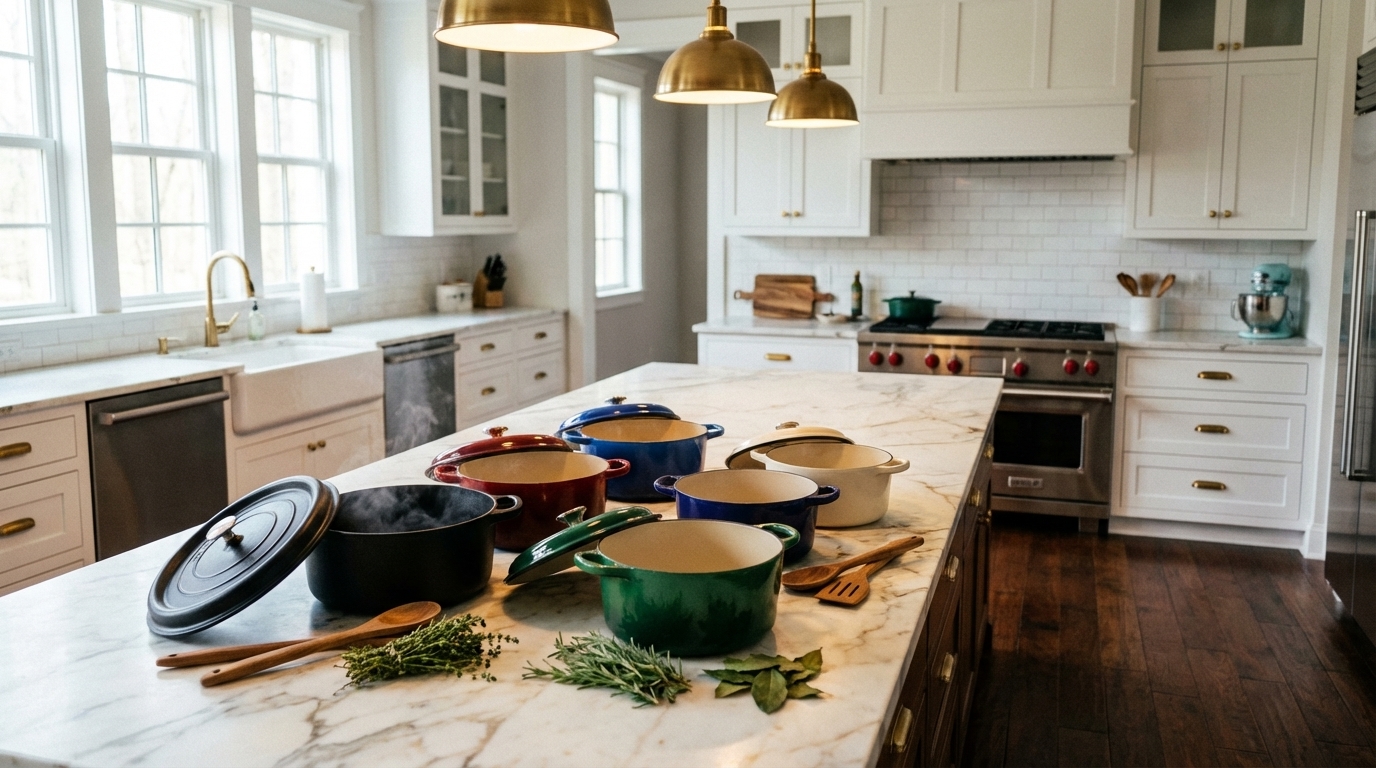
This guide teaches you how to choose a cast-iron Dutch oven that will become your kitchen's lifetime workhorse, explaining why its unmatched heat retention and even cooking turn tough ingredients into deeply flavored, fork-tender dishes while outlasting--and ultimately costing less than--any parade of cheaper pots. You'll learn exactly what to inspect before buying: uniform wall thickness, the ideal 5-7-quart family size, helper handles you can grip securely with welding gloves, and a heavy, wobble-free lid with self-basting rings that recycle moisture for succulent braises and artisanal bread with crackling crusts. The article demystifies price tiers--from $65 budget models to $400 heirloom pieces--showing how cost-per-use drops to pennies, why premium enamel resists chipping for decades, and which lifetime warranties really protect against accidents. It also walks you through low-maintenance care routines: easy oven seasoning for raw iron, baking-soda soaks for enameled interiors, and smart storage that prevents chips and rust so your grandchildren will fight over the same pot. By matching shape, weight, and heat tolerance to your cooking style--stovetop searing, outdoor campfire coals, holiday roasts, or weekly no-knead bread--you'll confidently pick one Dutch oven that replaces a cupboard of disposable pans, slashes landfill waste, and keeps improving every meal for generations.
Understanding Cast Iron Dutch Ovens
Cast iron's unmatched heat-holding power turns a single Dutch oven into a lifetime investment that sears, braises, and bakes food evenly while building layers of caramelized flavor your grandchildren will still fight over.
What makes cast iron unique for cooking
Cast iron stands out in the kitchen for one simple reason: it holds and distributes heat like nothing else. When you cook with cast iron, the thick walls absorb heat and release it slowly, maintaining steady temperatures that turn tough cuts into fork-tender meals and develop those deep, complex flavors we all crave [3]. This isn't just cooking--it's transformation [1]. Unlike thinner cookware that creates hot spots and uneven results, cast iron heats uniformly throughout the entire pot, including the sides and lid. This creates a complete cooking environment where heat surrounds your food from all directions [3].
Think of it as your own personal oven-within-an-oven, where both direct heat and circulating warmth work together for perfectly even results [3]. Here's what really sets cast iron apart: it's built to last. We're talking about cookware that your grandchildren will fight over--pieces that actually improve with age and use [1]. While that initial price tag might seem steep, you're investing in decades of reliable performance [2]. The real beauty of cast iron lies in its versatility.
Start a dish on the stovetop with a good sear, then slide the whole pot into the oven to finish--no transferring, no extra dishes [3]. That heavy lid locks in moisture and flavor, creating a self-contained cooking system that keeps meats tender and stews rich [1]. Whether you're braising short ribs or simmering a Sunday sauce, cast iron delivers results you simply can't achieve with other materials.
How heat retention improves flavor
Here's where the magic happens: cast iron's incredible heat retention actually builds flavor. When your Dutch oven maintains rock-steady temperatures, ingredients transform in ways that thinner cookware simply can't achieve. Natural sugars caramelize perfectly, proteins develop those gorgeous golden crusts, and the Maillard reaction works its science to create complex, layered flavors [6]. The slow, even heat gives ingredients time to really get to know each other. Spices bloom, aromatics meld, and what starts as separate components becomes one harmonious dish [5].
That tight-fitting lid? It's doing double duty--trapping moisture while creating a continuous flavor cycle [4]. Look for Dutch ovens with basting rings underneath the lid. These clever ridges catch rising steam and drip it back down, essentially bathing your food in its own concentrated flavors [4]. It's like having a sous chef constantly spooning those delicious juices back over your roast.
For braising enthusiasts, this is where cast iron truly shines. The steady heat gradually breaks down tough connective tissues into silky gelatin while keeping every drop of moisture--and flavor--right where it belongs [5]. You're not just cooking; you're coaxing out flavors that were there all along, waiting to be discovered [6].
Why durability matters for everyday use
Let's talk about why cast iron Dutch ovens earn their keep in busy kitchens. These workhorses handle whatever you throw at them--day after day, year after year. We're not talking about cookware you'll replace in a few seasons; these pots become part of your kitchen's foundation [7]. The beauty of cast iron durability shows up in everyday cooking. Crank up the heat for a hard sear, then pop the whole thing in a 450 degreesF oven without a second thought.
No warping, no cracking, no babying required [9]. This is cookware that matches your cooking ambitions, whether you're perfecting a weekend cassoulet or throwing together a weeknight stew [9]. Yes, quality cast iron costs more upfront. But when you consider that Dutch ovens like these outlast multiple cheaper pots, the math becomes clear. You're looking at pennies per use over decades rather than constantly replacing inferior cookware [8].
The best manufacturers back this up with lifetime guarantees because they know these pots become the ones your kids will want to inherit [7]. And here's something to feel good about: choosing one well-made Dutch oven over a parade of disposable pots keeps unnecessary waste out of landfills [9]. It's kitchen sustainability that actually makes your cooking better.
Key Features to Evaluate
Run your hand along the walls to feel for uniform thickness, pick a 5-7-quart round pot with dual helper handles, and keep a dry kitchen towel ready so your Dutch oven heats evenly, feeds a family, and can be lifted safely when it's 500 degreesF hot.
Material thickness and heat distribution
As covered in Understanding Cast Iron Dutch Ovens, thickness plays a crucial role in heat performance. When shopping, here's what to actually look for: run your hand along the pot's walls and bottom--they should feel uniformly thick without thin spots or irregularities [11].
Quality pieces won't have pits, bumps, or rough patches that create uneven heating [11]. This uniform thickness creates the consistent cooking environment that makes Dutch ovens perfect for everything from bread baking to braising tough cuts of meat [10][12].
Size options and family cooking needs
Choosing the right size Dutch oven is simpler than you might think. For singles or couples, a 3-4 quart Dutch oven handles most everyday cooking while staying manageable [13][14]. The real sweet spot? 5-7 quarts--this size works for families of four, bread baking, and even meal prep without becoming too heavy to handle [15].
Remember, these pots can weigh 15 pounds empty, so consider your comfort level when filled with food [14]. Here's a practical tip: use the one-quart-per-serving rule as your starting point, then size up if you like leftovers or batch cooking [14]. Shape matters too--round Dutch ovens heat more evenly on stovetops, while oval ones fit better in narrow ovens and accommodate whole chickens or roasts [15].
For bread baking specifically, you'll need at least 5 quarts to give dough room to rise properly [15].
Handle design for safe handling
Let's talk safety--those handles get seriously hot. Cast iron handles can reach oven temperatures (up to 500 degreesF), so proper protection is non-negotiable [16]. Look for Dutch ovens with helper handles on both sides; they make lifting a 15-pound pot full of stew much safer [16].
Skip the silicone handle covers--they often slip off at the worst moments and heat can still seep through during long cooking sessions [17]. Instead, do what professional cooks do: keep dedicated kitchen towels handy for grip and protection [18]. For serious heat protection (especially when pulling Dutch ovens from high-temp ovens), invest in leather welding gloves.
They offer better grip and heat resistance than any kitchen-specific option [16]. Whatever you use, make sure you can maintain a secure grip--a dropped Dutch oven full of hot food is dangerous for everyone nearby.
Lid fit and moisture retention
A proper-fitting lid makes all the difference between good and great results. Check for a heavy lid that sits snugly without wobbling--this weight creates the seal needed for moisture retention [20].
Some Dutch ovens feature self-basting lids with ridges underneath that continuously drip condensation back onto your food, keeping everything moist during long braises [7][19]. When shopping, test the lid fit: it should sit securely but still allow tiny gaps for pressure release [20].
This tight seal is what separates Dutch ovens from regular pots--it creates a mini steam oven perfect for bread baking (hello, crispy crust!) and ensures your pot roast stays tender instead of drying out [19][20]. As mentioned earlier, this moisture-trapping ability works with the even heat distribution to transform tough ingredients into melt-in-your-mouth dishes.
Balancing Price and Value
Match your Dutch-oven budget to how often you cook--spend $65-$100 for occasional use, around $200 for daily performance, or $270-plus for heirloom-grade enamel that drops to pennies per use over decades.
Identifying the best cast iron dutch oven within your budget
Finding the right Dutch oven means matching your cooking style with your budget. Premium Dutch ovens can range from $270 to over $400, and they often become cherished pieces passed through generations [21]. The chip-resistant enamel on these higher-end models stays beautiful after decades of regular use, making them worthwhile investments for serious home cooks [21]. Mid-range options around $200 deliver comparable cooking performance without the premium price tag [21][22].
These Dutch ovens handle daily cooking tasks beautifully and offer excellent value for most home kitchens. Budget-friendly choices between $65-$100 still perform well in cooking tests, though they may show wear sooner than pricier alternatives [21]. If lifting heavy cookware is challenging, lightweight ceramic Dutch ovens provide a practical solution without breaking your budget [21]. These typically cost between $140-$165 and weigh significantly less than traditional cast iron options.
Here's a practical tip: think about how often you'll actually use your Dutch oven. Daily cooks benefit from investing in higher quality, while weekend warriors might find budget models perfectly adequate [22]. Even less expensive Dutch ovens can last years with proper care, and many brands offer lifetime warranties to protect your investment [22]. Whatever your budget, focus on these essentials: even heat distribution, comfortable handles that offer secure grip, and a well-fitting lid that allows just enough steam to escape for proper reduction [23].
Long‑term cost savings of quality cookware
Quality Dutch ovens prove their worth through decades of reliable service. A well-made Dutch oven becomes more cost-effective each year you use it, unlike cheaper cookware that needs replacing every few years [24]. Think of it this way: one quality pot can outlast several cheaper alternatives that would eventually end up in the trash, spreading your investment across decades instead of years [23]. The math becomes even more compelling when you calculate cost per use.
A Dutch oven used weekly for 20 years costs pennies per meal, making even premium options economical choices. Many manufacturers back this longevity with lifetime warranties--some even offer generous replacement terms when accidents happen [23]. The real difference between budget and premium Dutch ovens shows up over time. Manufacturing quality in enamel coating and casting precision means higher-end models typically handle decades of daily cooking without showing their age [25].
These become the pots you'll pass down to your kids, still cooking as beautifully as the day you bought them [24]. Even moderately priced Dutch ovens deliver impressive value, providing years of dependable cooking while outperforming cookware that costs the same but won't last nearly as long [23]. When you consider environmental impact alongside financial cost, investing in durable cookware makes even more sense.
Assessing warranty and customer support
Warranty coverage reveals how much confidence manufacturers have in their products. Top-tier brands often provide lifetime protection that goes beyond standard coverage--some even offer discounted replacements when accidents are your fault [21]. Most reputable manufacturers back their Dutch ovens with lifetime warranties, though the fine print varies significantly [21]. Since enamel chipping is the most common Dutch oven issue, pay close attention to how warranties handle this type of damage [25].
Check whether normal wear, thermal shock (from temperature changes), or accidental drops are covered. These details matter when you're investing in quality cookware. Customer service response time makes a real difference too. Some companies ship replacements within days, while others might leave you without your Dutch oven for weeks [25].
Before buying, test their responsiveness by asking a pre-purchase question--quick, helpful replies usually mean they'll handle warranty claims just as efficiently. Consider whether the warranty transfers to new owners. This matters for cookware that often becomes a family heirloom. Some warranties protect only the original buyer, while others follow the pot wherever it goes.


Care, Seasoning, and Maintenance
Wash, oil, bake, and repeat--four easy cycles at 450 degreesF create a near-indestructible seasoning on your cast-iron Dutch oven, and every future meal with fat keeps it improving for decades.
Step‑by‑step seasoning for raw cast iron
Getting your raw cast iron Dutch oven ready for cooking is simpler than you might think. Start by washing your new Dutch oven with warm, soapy water to remove any manufacturing residue [26]. Dry it completely, then heat on your stovetop for 1-2 minutes to drive off any lingering moisture [26]. Now comes the key step: apply a thin layer of cooking oil (canola, vegetable, or corn oil work great) to every surface--inside, outside, and handles [26]. Here's what many people miss: buff that oil until the surface looks almost dry.
You shouldn't see any greasiness [26]. Place your Dutch oven upside down in a 450 degreesF oven for 30 minutes, with a baking sheet underneath to catch drips [26]. The heat bonds the oil to create a protective coating that gets better with use [26]. Let it cool slightly, then repeat the oil-and-heat process 3-4 more times to build up your initial seasoning [26]. Skip oils like flaxseed--they season quickly but tend to flake off [26].
The best part? Every time you cook with fat, you're naturally maintaining that seasoning. If you prefer to skip this process entirely, many manufacturers now offer pre-seasoned cast iron Dutch ovens that come ready to use from the factory [26].
Cleaning tips that protect the finish
Cleaning your Dutch oven properly keeps it performing beautifully for years. The method depends on whether you have raw or enameled cast iron. For raw cast iron, wipe out food debris with a paper towel right after cooking [27]. Got stuck-on bits? Boil some water in the pot to loosen them, then scrub with a stiff brush [28].
Never let your cast iron soak--that's a recipe for rust. Chain mail scrubbers work wonderfully for stubborn food without harming your seasoning [28]. After cleaning, dry your Dutch oven completely by toweling it off or heating it on the stove for 5-6 minutes [28]. While it's still warm, apply a thin layer of cooking oil and wipe away any excess [27]. Enameled cast iron needs gentler care.
Mix hot water, dish soap, and two tablespoons of baking soda, let it soak for 15 minutes, then clean with a soft sponge [29]. Steel wool is your enemy here--it'll scratch that beautiful enamel permanently. For tough stains, make a paste with three parts baking soda to one part water, spread it on the stains, cover overnight, and scrub clean in the morning [29]. Yes, some enameled Dutch ovens claim to be dishwasher-safe, but hand washing helps them last much longer [29].
Storing to prevent rust and damage
Smart storage keeps your Dutch oven in perfect condition between uses. First rule: make sure it's completely dry before putting it away--moisture is the enemy of cast iron [30]. For raw cast iron, rub a thin layer of cooking oil over all surfaces and wipe away the excess to create a protective barrier [31]. Here's a simple tip that works for both raw and enameled Dutch ovens: tuck a paper towel inside before storing.
It absorbs any lingering moisture and prevents odors from settling in [31]. Store your Dutch oven in a cool, dry spot away from humid areas like under the sink or near the dishwasher [30]. Never stack heavy cookware directly on top of your Dutch oven--the weight can crack enamel or damage seasoning [30]. If you must stack due to space constraints, use paper towels, dish towels, or silicone mats as buffers between pieces [30].
For those special Dutch ovens you don't use often, consider investing in a carrying bag or storage box for extra protection [32]. These simple steps protect both the cast iron edges and enamel surfaces, ensuring your Dutch oven stays ready for your next cooking adventure [31].


Making the Final Decision
Match your cooking style to the perfect Dutch oven--seasoned cast iron for outdoor searing, enameled for easy stovetop cleanup, 5-7 quarts for bread baking, wider shapes for braising, and always check the actual dimensions and weight before you buy.
Matching features to your cooking style
Let's match your cooking style to the right Dutch oven features. If you love outdoor cooking, traditional seasoned cast iron handles high heat from open flames and coals like a champ [33]. You'll get incredible searing capability, though it does need regular seasoning. For everyday stovetop cooking, enameled Dutch ovens make life easier--no seasoning required, simple cleanup, and they're perfect for acidic tomato sauces [33]. Think about your go-to recipes.
Bread bakers, you'll want that sweet spot of 5-7 quarts for proper dough expansion. Love braising? Look for wider, shallower designs that give you more surface area for browning [34]. As we covered in the features section, shape matters too--round Dutch ovens work beautifully on most stovetops, while oval ones accommodate those longer roasts. Don't forget about comfort.
If lifting heavy pots is a concern, consider lighter ceramic options that weigh around 7 pounds versus cast iron's heftier build. Your cooking visibility preference matters as well--light-colored interiors let you monitor fond development easily, while dark interiors help develop that gorgeous caramelization on meats. For sizing, refer back to our detailed breakdown in Section 2, but here's the quick version: 3-4 quarts for singles, 5-7 for families of four, and 7-9 quarts if you're the designated holiday host [34].
Checking product specifications before purchase
Time to verify the specs that really matter. Don't just look at quart size--check the actual dimensions to ensure your new Dutch oven fits both your oven and storage space. The cooking surface diameter makes a difference too--wider surfaces (8+ inches) give you room to properly brown multiple chicken thighs at once. As discussed in Section 2, weight impacts daily use, so double-check those numbers.
Most quality pieces run 11-13 pounds empty, though ceramic options offer a lighter alternative around 7 pounds. Make sure your chosen Dutch oven works with your cooktop--most enameled cast iron handles all surfaces including induction, but ceramic typically doesn't play nice with induction burners. Heat tolerance varies more than you'd think. Standard enameled cast iron handles 500 degreesF comfortably, while some ceramic options can take the heat up to 930 degreesF.
Check warranty coverage too--it varies dramatically between manufacturers, with some offering lifetime protection while others limit coverage [35]. Here's what else to verify: Can it handle temperature changes without cracking? Look for those self-basting lid features we mentioned earlier--the rings or spikes that keep moisture circulating during long braises [35]. And consider interior color based on your cooking style--light shows fond development clearly, dark hides wear better over time [35].
How to use the Shop Now link for a hassle‑free checkout
Ready to make your purchase? Let's make checkout as smooth as possible.
When you click Shop Now, look for the guest checkout option if you want to skip creating an account--it's the fastest way to complete your order [36]. Check those shipping timelines right away so you know exactly when your
- Cast iron's thick walls absorb and release heat slowly, eliminating hot spots and surrounding food with steady, even warmth.
- A 5-7 qt round Dutch oven is the most versatile size--big enough for families, bread baking, and batch cooking without becoming unliftable.
- Look for uniformly thick walls, a heavy snug lid with self-basting rings, and two helper handles for safe grip when the pot is full.
- Enameled Dutch ovens need gentle cleaning: baking-soda soak and soft sponge; never use steel wool or dishwasher for long life.
- Higher-end models cost $270-$400 but carry lifetime warranties and can outlast several cheaper pots, dropping cost to pennies per use.
- Raw cast iron requires oven-seasoning 3-4 layers of thin oil at 450 degreesF; each future fat-based cook session maintains the non-stick surface.
- Match shape and weight to your routine: round for stovetop efficiency, oval for whole birds; ceramic under 8 lb if lifting 15 lb of cast iron is difficult.
- https://www.ckitchen.com/blog/2024/11/the-benefits-of-cooking-with-a-dutch.html?srsltid=AfmBOopP0BJMFE7djOa0u-bqd-MCgHNEeTyEwi57Pb5yhkuDQz9BN7Aq
- https://www.dioro.com/blogs/news/dutch-oven-cooking?srsltid=AfmBOoqsq0LpQ4O-jpbugJeyb84iy8QuaWjE47-ZZeYI9sRVQgEiUg0s
- https://saute.co.nz/blogs/info/the-science-behind-cooking-with-cast-iron-dutch-ovens-heat-retention-and-even-cooking?srsltid=AfmBOory_aBKEXSplogsABWK1o9_qgz3DKYEB-z3NZM6UkmVs9v7YntG
- https://becauseyoucook.com/blog/using-a-cast-iron-dutch-oven-in-your-oven/?srsltid=AfmBOop6jXgI-rCFuCPutSdQNEcl3va9nGZIK51UTzgTWPtvZlusQYTB
- https://cruciblecookware.com/blogs/tips-and-inspiration-for-cookware-cooking-baking/mastering-the-art-of-slow-cooking-why-cast-iron-and-dutch-ovens-are-your-best-friend?srsltid=AfmBOorVjRLzjf0XLd9eB4xTJVidTuTW-p23V05PwrjeB_4Q01tnsn1h
- https://saute.co.nz/blogs/info/the-science-behind-cooking-with-cast-iron-dutch-ovens-heat-retention-and-even-cooking?srsltid=AfmBOop_ThNYR6AesTME-YgQrkITDqZ27Tdl0GwRN2TNMTG5SVLIdpcC
- https://www.marthastewart.com/what-is-a-dutch-oven-8391081
- https://www.thekitchn.com/everything-you-need-to-know-about-your-new-dutch-oven-and-how-to-make-it-last-for-decades-23718043
- https://www.ckitchen.com/blog/2024/11/the-benefits-of-cooking-with-a-dutch.html?srsltid=AfmBOop7vp6ovkAXctgTooWn1e-WCKF8GvHA5mUqXMezsgnrAWi5yNSa
- https://www.szcookware.com/blog/do-cast-iron-dutch-ovens-distribute-heat-evenly-1079383.html
- https://skeppshult1906.com/learn/identifying-quality-in-cast-iron-what-to-look-for/?srsltid=AfmBOorwdavRzd4V25nrtYeIHdKYdJSD-xxkkhvliFWSIV4SXSqzwKQf
- https://imarku.net/blogs/news/dutch-ovens-everything-you-need-to-know?srsltid=AfmBOoqXk003-OXfK7V9gYZW21I4Q-8ljWHk9RUlzoIjvjpNmvUb74Ph
- https://www.lodgecastiron.com/blogs/story/what-size-dutch-oven-do-i-need?srsltid=AfmBOooKwx9tyeOLcQ58nCJu4jI2nBtyaLqtjdeMqQbsc1k3dcScCCed
- https://www.booniehicks.com/what-size-dutch-oven-is-best/
- https://www.marquettecastings.com/blogs/blog-2/what-size-dutch-oven-should-i-buy
- https://www.reddit.com/r/DutchOvenCooking/comments/112fxbq/how_to_protect_hands_handling_heavy_6_qt_dutch/
- https://www.amazon.com/Joyhalo-Skillet-Handle-Resistant-Silicone/dp/B0BZHL2GFT
- https://forums.egullet.org/topic/101194-stay-cool-is-uncool-getting-a-handle-on-handles/
- https://www.kitchenaid.com/pinch-of-help/major-appliances/how-to-use-a-dutch-oven.html
- https://www.marquettecastings.com/blogs/blog-2/dutch-oven-vs-stock-pot
- https://www.seriouseats.com/best-cast-iron-dutch-ovens-equipment-review
- https://www.bonappetit.com/story/best-dutch-ovens?srsltid=AfmBOoqOGZYV7UDlDhbHzByp3SwupVK_4tRswNF3oT9fOeBSalFNmuYQ
- https://www.nytimes.com/wirecutter/reviews/best-dutch-oven/
- https://www.seriouseats.com/cheap-versus-expensive-dutch-ovens-6827315
- https://www.marquettecastings.com/blogs/blog-2/dutch-oven-comparison
- https://www.seriouseats.com/how-to-season-cast-iron-pans-skillets-cookware
- https://www.lodgecastiron.com/pages/cleaning-and-care-camp-dutch-oven?srsltid=AfmBOopLVd3k11yaQ5t5R0MZ3KjkXrb7njFzxYY30gVFeXMxNvvCYvC8
- https://fieldcompany.com/pages/how-to-care-for-a-cast-iron-dutch-oven?srsltid=AfmBOoqftx-Nk8Q92GSBPfklTMDFVzH8jlXST2g_QGbQ2MP73GBDawPM
- https://www.allrecipes.com/article/how-to-clean-a-dutch-oven/
- https://ichefpower.com/blogs/kitchenware-university/how-to-care-for-a-cast-iron-dutch-oven?srsltid=AfmBOorBRi7NFEco35j7w0qsZG1t4Q-d3avoWhhzPg8kZDXnplNaHu0J
- https://www.marquettecastings.com/blogs/blog-2/how-to-care-for-a-dutch-oven
- https://www.campmaid.com/blogs/news/how-to-pack-and-store-cast-iron-cookware-for-camping?srsltid=AfmBOoouoy1RgrWtZAtroGxFnUPZhcaMz__dWIVTQuYiXgc8JboGFnUz
- https://southerncastiron.com/dutch-oven-buying-guide/
- https://www.tastingtable.com/2027437/right-dutch-oven-size/
- https://www.everythingkitchens.com/blog/choose-the-best-dutch-oven-5-features-to-consider.html?srsltid=AfmBOoqEdNFDyxyMxxvvGropxU9ZmvQHZSgE9PpBYD4AiPsNg9hy27M7
- https://www.bazaarvoice.com/blog/e-commerce-checkout-process-tips/
- https://www.identixweb.com/shopping-cart-optimization-proven-tips-to-boost-sales/
- https://www.convertcart.com/blog/ecommerce-checkout-process-optimization