

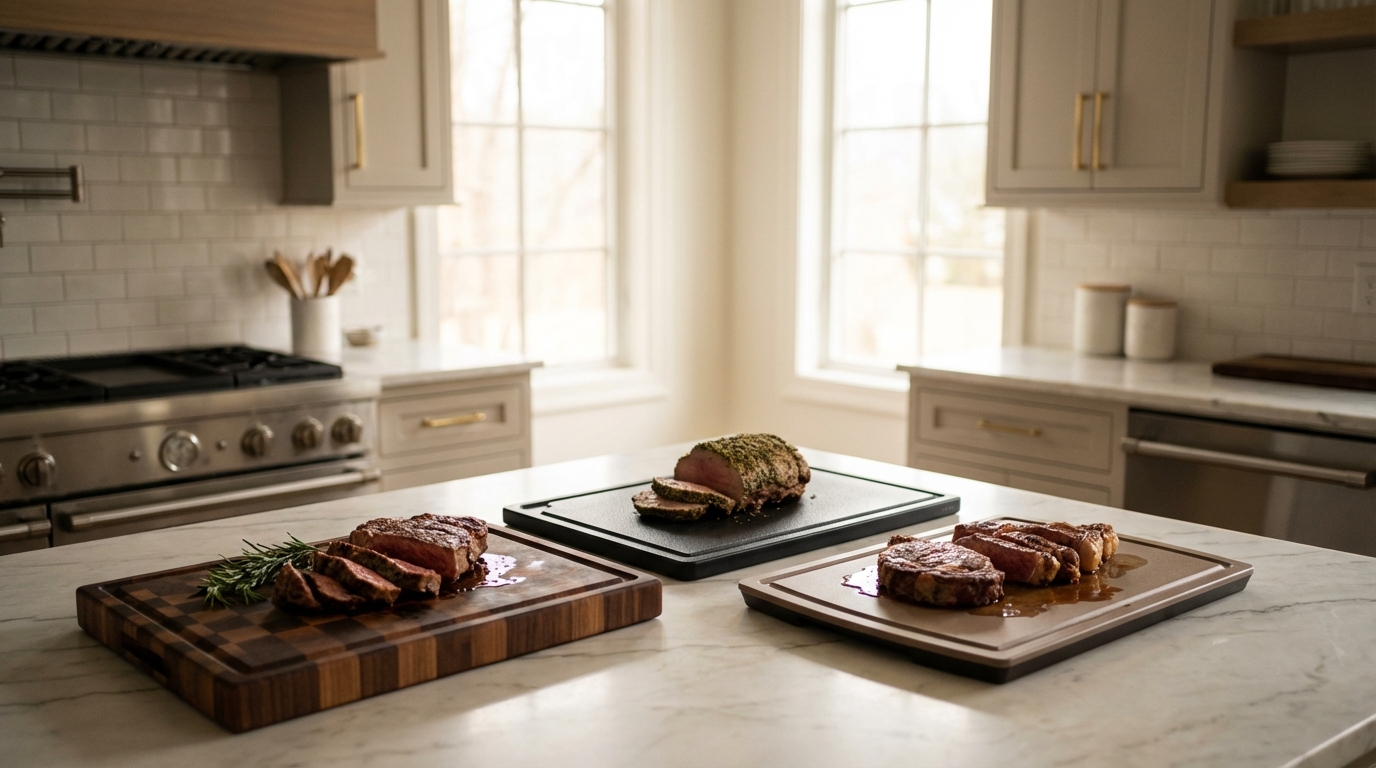
Choosing the right cutting board for raw meat is a non-negotiable step toward safer, more efficient cooking, and this guide shows exactly how to pick, use, and maintain one that will last for years. Readers learn why a dedicated, color-coded board--ideally 1.5-2 inches thick, at least 15 x 20 inches, and equipped with a ½-cup juice groove--prevents cross-contamination while keeping counters clean and knives sharp. The article weighs the trade-offs between dishwasher-safe, high-density plastic for daily sanitizing and bacteria-fighting end-grain maple or walnut that self-heals knife marks and can last decades with routine oiling. Step-by-step care routines are spelled out: hot, soapy washes after every use, periodic lemon-salt scrubs or peroxide-baking-soda soaks to lift stains and odors, quarterly mineral-oil conditioning for wood, upright storage to avoid warping, and clear replacement cues when deep grooves appear. By the end, home cooks know how to match size, weight, feet, and handle features to their cooking volume, confidently sanitize and deodorize both plastic and wood, and turn a humble slab into a long-term kitchen ally that protects family health and knife edges alike.
Why the Right Cutting Board Matters for Meat
Dedicate a separate, color-coded cutting board to raw meat and replace it once knife grooves appear--those tiny scratches are bacteria's favorite hiding spot.
Food safety and cross‑contamination prevention (best cutting board for meat)
Let's be honest--nobody wants to serve their family contaminated food. That's why dedicating specific boards to raw meat matters so much. The USDA's guidance is straightforward: keep separate boards for raw meat, poultry, and seafood versus your produce and bread [1].
This simple system prevents harmful bacteria from raw meats from hitching a ride to foods you won't be cooking further [2]. Here's a practical approach: use color-coded boards or distinctly different materials to eliminate guesswork. When those deep knife grooves start appearing--you know, the ones that trap food particles no matter how hard you scrub--it's time for a replacement [2].
Those grooves aren't just unsightly; they're bacterial hideouts that compromise your kitchen safety [1]. We'll cover detailed cleaning methods later, but remember the basics after each meat prep: hot, soapy water followed by thorough drying keeps your boards safe between uses [1].
Protecting knife performance and longevity
Think of your cutting board as your knife's best friend--or worst enemy.
The wrong board can turn your sharp
Core Features of the Best Cutting Board for Meat
Choose a 1.5-2-inch-thick, 18 x 24-inch board with a ½-cup-capacity juice groove and grippy feet to keep raw-meat prep stable, safe, and countertop-clean.
Size, juice groove, and stability essentials
When working with meat, your cutting board needs to handle everything from a weeknight chicken breast to a holiday turkey. For larger tasks, you'll want a board measuring at least 18 x 24 inches, while 15 x 20 inches works perfectly for everyday cuts [4]. But size alone isn't enough--thickness is what really matters for stability. Look for boards between 1.5 to 2 inches thick, which provide enough heft to stay put when you're working through tougher cuts [6].
Here's where smart design makes all the difference: a well-crafted juice groove. This isn't just about keeping your counters clean (though that's certainly nice). A proper juice groove--at least 0.4-0.5 inches deep--can hold about a half-cup of liquid, creating a barrier against cross-contamination [5][6]. Think of it as your board's built-in safety feature.
Stability features transform a good board into a great one. The best boards combine substantial weight (12-15 pounds) with practical additions like silicone or wood feet [5][6]. These feet do double duty: they anchor your board during vigorous chopping while lifting it slightly for better airflow, which helps prevent warping. Don't overlook convenient features like edge handles or finger grooves either--they make moving a heavy board loaded with carved meat much safer [6].
Material durability, slip resistance, and easy cleaning
Your cutting board material affects everything from knife care to cleaning ease. Let's break down what really matters when choosing between plastic, wood, and composite options.
Plastic boards are the practical workhorse--they're dishwasher-safe and won't absorb meat juices, making them a smart choice for raw meat prep. While they'll develop knife marks over time, high-density plastic with fine texturing hides scratches better and resists stains more effectively than bargain options [7].
For home cooks who value convenience,
Top Material Choices Balancing Quality and Cost
End-grain maple, walnut or oak boards outlast plastic by decades, self-heal knife cuts, fight bacteria naturally, and save money long-term--yet color-coded high-density plastic boards still rule for dishwasher-safe raw-meat safety.
End‑grain hardwood: durable, knife‑friendly, sustainable
If you're investing in a quality cutting board for meat prep, end-grain hardwood deserves serious consideration. As we discussed earlier, these boards treat your knives kindly--the vertical wood fibers separate and close back naturally after each cut [10]. This unique construction creates a board that actually gets better with use rather than worse. The best hardwoods for meat boards?
Look for maple, walnut, or oak. These closed-grain woods contain natural tannins that actively fight bacteria [10]. Yes, they cost more upfront, but here's the thing: a well-maintained end-grain board can serve your kitchen for decades. That's fewer replacements, less waste, and ultimately better value [10].
Unlike plastic boards that shed tiny particles into your food, hardwood boards keep things natural. You'll recognize quality end-grain construction by its distinctive checkerboard pattern--those visible tree ring cross-sections tell you the fibers are positioned for maximum durability [10].
High‑density plastic & composites: hygienic, budget‑friendly
For many home cooks, high-density plastic boards make practical sense--especially when dealing with raw meat regularly. Their non-porous surface won't absorb meat juices, and you can toss them right in the dishwasher for thorough sanitization [11] [1].
That's peace of mind when food safety matters most. Here's a pro tip: use color-coding to keep things organized.
Dedicate red boards for raw meat, green for vegetables, and so on. It's a simple system that prevents dangerous mix-ups [12].
Care and Maintenance for Long‑Lasting Use
Protect your cutting boards--and your health--with a simple routine of hot, soapy washes, periodic lemon-salt scrubs to banish stains and odors, and regular mineral-oil conditioning so water beads up instead of soaking in.
Quick cleaning, sanitizing, and odor control
Proper cleaning routines protect both your board and health. For everyday care after meat preparation, wash with hot, soapy water, rinse thoroughly, and pat dry--this basic cleaning helps prevent bacterial growth but isn't sufficient for boards with lingering odors or visible stains [13]. For deeper cleaning, try the lemon-salt method: sprinkle coarse salt across the board surface, then rub with a cut lemon half in circular motions while squeezing slightly to release juice.
Let this mixture sit for five minutes before scraping away the resulting gray liquid with a bench scraper and rinsing with a clean, damp sponge [13]. While effective for removing stains and neutralizing odors, note that lemon doesn't disinfect. According to Jessica Ek of The American Cleaning Institute, proper sanitization requires hot, soapy water after each use [13].
For plastic boards, a more effective cleaning method combines hydrogen peroxide, baking soda, and dish soap--spread this mixture across the board and let it sit overnight to lift stubborn stains [13]. Adding baking soda to the lemon-salt mixture provides extra cleaning power for particularly odorous boards that have absorbed strong meat smells [13].
Regular oiling, conditioning, and proper storage
Wooden cutting boards require regular maintenance to prevent warping, cracking, and bacterial absorption. When breaking in a new board, apply multiple coats of food-safe mineral oil until it's fully saturated--pour what seems like excess oil, rub it in with a dedicated cloth, and repeat 2-3 times [14]. For ongoing maintenance, reapply a thin layer whenever the board's water-repellent properties diminish.
Test this by sprinkling water droplets on the surface; properly oiled boards cause water to bead up rather than spread or absorb [14]. Most home cooks should oil boards 2-3 times annually, though professional chefs may need monthly applications [14]. For boards with knife scratches, sand with fine-grit sandpaper (at least 220-grit, preferably 400-grit), wipe clean, and re-oil before next use [14].
Bamboo cutting boards require less frequent oiling as they're harder and less porous than hardwoods, naturally resisting moisture and knife scarring [1]. Proper storage between uses is equally important--store boards upright to maintain airflow around all surfaces, keep away from excessive moisture or heat sources, and never soak wooden boards in water [14]. Regardless of material, replace boards once they develop excessive wear or hard-to-clean grooves where bacteria can hide [1].
- Use separate boards for raw meat vs produce to prevent cross-contamination
- Replace boards when deep knife grooves appear; they trap bacteria
- Choose 1.5-2 in thick, 12-15 lb boards with juice grooves for stable, sanitary meat prep
- End-grain hardwood (maple/walnut/oak) self-heals and fights bacteria for decades
- High-density plastic boards are dishwasher-safe and ideal for frequent raw-meat use
- Sanitize plastic boards overnight with hydrogen peroxide, baking soda, and dish soap
- Oil wooden boards 2-3 times yearly (or when water stops beading) to prevent cracking
- http://www.fsis.usda.gov/food-safety/safe-food-handling-and-preparation/food-safety-basics/cutting-boards
- https://extension.illinois.edu/meat-safety/cutting-boards
- https://www.reddit.com/r/Cuttingboards/comments/zsuwl6/how_much_of_a_difference_does_edge_grain_vs_end/
- https://lignawooddesign.com/blog/meat-cutting-board/
- https://noyerdenmark.com/blogs/inspiration-eng/cutting-board-for-meat-walnut
- https://www.seriouseats.com/best-carving-boards-6826743
- https://www.allrecipes.com/longform/best-cutting-boards-for-meat/
- https://www.seriouseats.com/the-best-plastic-cutting-boards
- https://www.cnn.com/cnn-underscored/reviews/best-cutting-boards
- https://lignawooddesign.com/blog/healthiest-cutting-board/
- https://www.ruvati.com/wood-vs-plastic-cutting-board/
- https://woodhillboards.com/blogs/infos/plastic-vs-wood-cutting-boards-which-one-to-choose
- https://www.thekitchn.com/how-to-clean-wooden-cutting-boards-with-lemon-and-salt-cleaning-lessons-from-the-kitchn-195151
- https://www.seriouseats.com/how-to-season-and-maintain-a-wood-cutting-board