

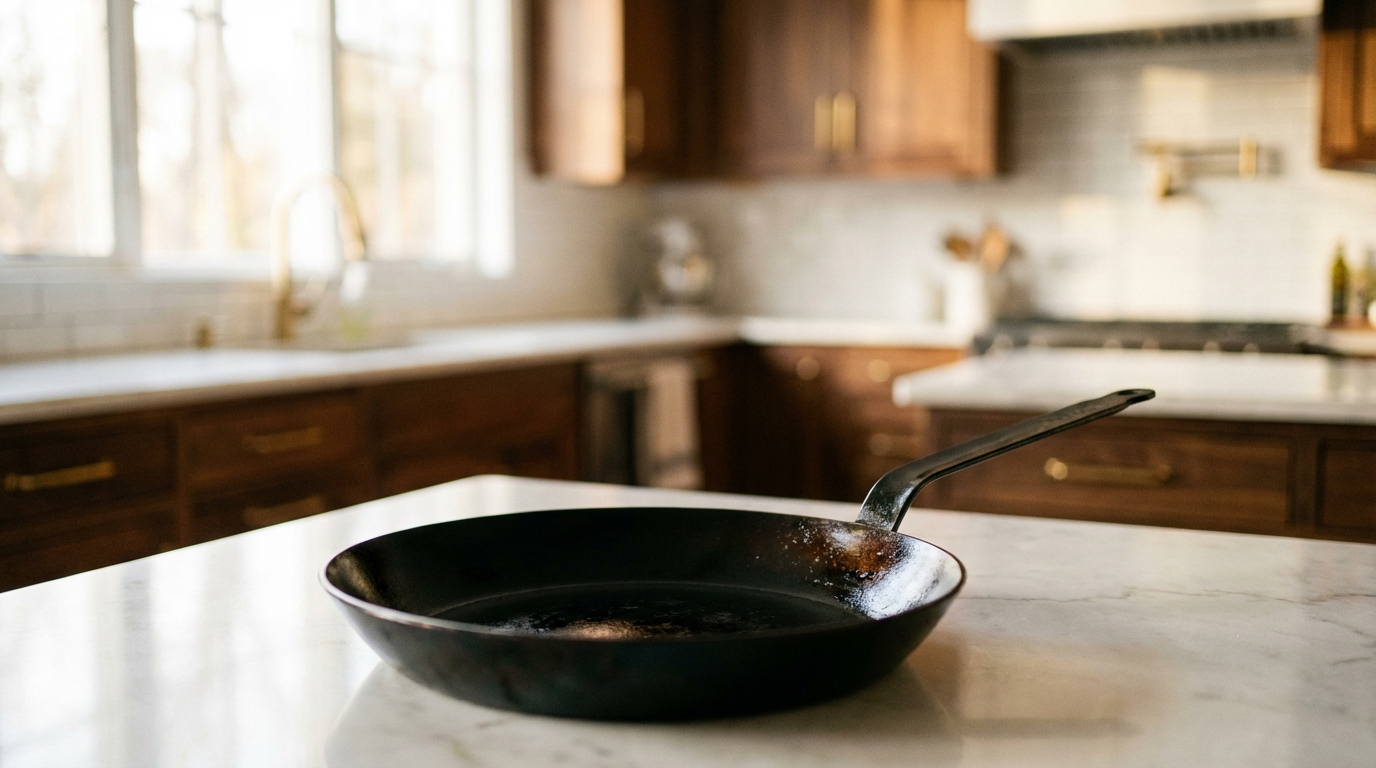
Traditional non-stick pans hide a toxic legacy--PFAS "forever chemicals" that off-gas above 500 degreesF, flake microplastics into food, and pollute communities for millennia--but carbon non-stick cookware offers a safe, high-performance escape: a naturally seasoned, PFAS-free surface that gets slicker with every meal, survives metal utensils and oven heat up to 660 degreesF, and can be re-seasoned indefinitely instead of being thrown away when the coating dies. Readers will learn why even "PFOA-free" PTFE pans still pose health and environmental hazards, how carbon steel's hydrophobic, polymerized layer releases food without synthetic coatings, and how to choose the right weight and induction-compatible pan for under $100. The article delivers step-by-step seasoning and daily-care instructions that turn a $50 workhorse into a lifetime non-stick powerhouse, plus stove-specific cooking tips--preheat thoroughly, use medium heat for eggs, sear meats undisturbed--that build patina while dinner cooks. By swapping disposable Teflon for renewable carbon steel, home cooks eliminate toxic fumes, slash landfill waste, and gain versatile cookware that outperforms ceramic's short lifespan and PTFE's temperature limits, all for the price of a single premium non-stick pan that will need replacing in a few years.
Why Non-Toxic Cookware Matters
Every scratch on your non-stick pan releases toxic "forever chemicals" that persist in your body for years, contaminate entire communities' water supplies, and can be fatal to pets when overheated.
Health risks of traditional non-stick coatings
You might not realize it, but traditional non-stick pans could be introducing unwanted chemicals into your kitchen. Most conventional non-stick cookware contains PTFE coatings (often called Teflon) that release various gases and chemicals during normal cooking [1]. Here's what makes this concerning: these pans were historically made using PFOA, a chemical linked to liver damage and lowered immunity in children [2][3]. Even though manufacturers stopped using PFOA in 2016, the problem isn't solved.
Consumer Reports found that pans labeled "PFOA-free" still contain measurable amounts of PFAS--those "forever chemicals" that stick around in our bodies and environment for years [2]. When PTFE coatings overheat (easier than you'd think), they produce fumes that can be fatal to pet birds and potentially harmful to your family [2]. And those scratches on your old non-stick pan? They're releasing PFAS particles too [2].
The cycle doesn't end in your kitchen. These chemicals contaminate our environment during manufacturing and disposal, eventually making their way back into our food and water [2][3]. Even replacement chemicals like GenX, marketed as safer alternatives, appear to have similar toxicity concerns [1]. That's why many home cooks are turning to safer options like
Environmental impact of toxic materials
The environmental impact of traditional non-stick cookware reaches far beyond your recycling bin. Manufacturing PTFE coatings leaves a toxic trail that affects entire communities. Take the Fayetteville Works Plant in North Carolina--GenX production there has contaminated groundwater in over 4,000 homes since the 1980s [4]. In West Virginia, communities near Teflon factories face increased rates of cancer and thyroid disease from PFAS contamination [4].
When you throw away that old non-stick pan, the problems multiply. In landfills, PTFE breaks down and releases PFAS into soil and groundwater [6]. Incineration is even worse--burning PTFE creates greenhouse gases with 6,500 times the warming potential of carbon dioxide [6]. These chemicals earn their "forever" nickname by persisting in the environment for thousands of years [5].
The numbers tell a sobering story: about 80% of environmental PFOA comes from PTFE products [5]. Real communities pay the price--like Henderson, Kentucky, where PFAS contamination from a PTFE recycling facility cost them a $102 million investment opportunity when a food company discovered the groundwater was too polluted for their operations [5]. Making the switch to non-toxic cookware isn't just about your family's health--it's about protecting communities and ecosystems from permanent contamination.

Carbon Non-Stick Technology Explained
Carbon non-stick technology gives you a high-heat, chemical-free surface that forms only weak, temporary bonds with food so steaks sear beautifully and everything slides right off when you're done.
How carbon non-stick coating works
When food sticks to a pan, it's forming chemical bonds with the metal surface. Uncoated metals naturally attract food molecules, and their microscopic roughness creates tiny pockets where food gets trapped [7]. That's why non-stick technology matters--it prevents these bonds from forming in the first place. Carbon non-stick technology creates a cooking surface with exceptionally low reactivity.
Unlike traditional coatings that rely on potentially harmful chemicals (as discussed in our health risks section), carbon-based surfaces use the element's natural properties to keep food from sticking. The manufacturing process involves multiple steps: thorough surface preparation, primer application, several coating layers, and high-temperature curing [8]. Each step builds on the last to create a durable, effective non-stick surface. What makes carbon technology particularly impressive is its heat tolerance.
While PTFE coatings have significant temperature limitations, carbon surfaces handle high heat beautifully--perfect for searing steaks or getting that golden crust on vegetables. The surface allows only temporary, weak bonds with food molecules, so everything slides right off when you're done cooking [7]. Quality carbon steel pans combine this technology with thoughtful design for exceptional cooking performance.
Comparing carbon to ceramic and PTFE alternatives
Let's compare your non-stick options honestly. PTFE (Teflon) pans work well and cost less upfront, but Consumer Reports found that even "PFOA-free" versions can contain these forever chemicals [9]. Carbon steel takes a different approach entirely--it develops its non-stick surface naturally through seasoning, where oils bond to create a patina that actually improves over time [10]. Made from just 99% iron and 1% carbon, it heats quickly like stainless and holds heat like cast iron [10]. Each option performs differently in your kitchen.
PTFE works great for eggs and delicate foods at low temperatures but has serious limitations above 260 degreesC [9]. Ceramic coatings handle higher heat but chip and scratch more easily than PTFE [9]. Carbon steel shines at high-heat cooking and develops better non-stick properties the more you use it, though acidic foods can affect the seasoning when the pan is new [10]. Here's what really matters: longevity and value. Both ceramic and PTFE coatings will wear out within a few years, no matter how carefully you treat them [9].
Carbon steel? It can last generations with basic care [10]. While the upfront cost is higher, you'll save money long-term by not replacing pans every few years. Plus, as we covered earlier, you avoid the environmental impact of discarded coated cookware. Carbon steel does require some patience--learning to season and maintain it properly--but the payoff is cookware that performs better year after year [10].
Choosing the Best Non-Toxic Cookware for Your Kitchen
Match your cookware to both your stove--induction needs a magnetic base, gas loves carbon steel--and your recipe, letting cast iron sear, carbon steel scramble eggs without PTFE, and enameled cast iron tame acidic sauces.
Matching cookware to stove types and cooking styles
Different cookware materials perform better on specific stove types. For induction cooking, you need pots and pans with ferromagnetic bases--typically cast iron, carbon steel, or special stainless steel with magnetic properties. To test compatibility, see if a magnet sticks to the bottom; if it does, the piece will work on induction [11].
Carbon steel pans excel on all cooktops but particularly shine on induction, heating quickly like stainless while retaining heat like cast iron [12]. For gas stoves, woks and carbon steel pans maximize the direct flame contact, while electric coil stoves work best with flat-bottomed, heavy cookware that distributes heat evenly across the uneven heating element. Your cooking style should also guide material selection--high-heat searing demands cast iron or carbon steel, while delicate sauces benefit from responsive stainless steel or ceramic-coated options.
For acidic foods like tomato sauces, enameled cast iron or quality stainless steel prevents metallic flavors, while quick-cooking proteins and vegetables perform best in carbon steel pans that offer excellent heat responsiveness [12]. If you frequently prepare eggs or delicate fish, a non-toxic nonstick option prevents frustrating sticking issues while avoiding traditional PTFE coatings.
Key performance factors: heat distribution, durability, and price
When choosing non-toxic carbon cookware, three factors significantly impact performance: heat distribution, durability, and price. Heat distribution varies based on construction--pans with aluminum cores distribute heat more evenly while eliminating the hot spots that plague thinner carbon steel pans [13]. Weight plays a crucial role--lighter pans (around 2.6 pounds) heat quickly and maneuver easily but sacrifice heat retention, while heavier options (3.1-3.3 pounds) maintain consistent cooking temperatures better for searing steaks or chops [13]. For eggs and delicate proteins, lighter pans offer superior control [13].Carbon steel's durability far exceeds traditional non-stick cookware.
While ceramic and PTFE coatings inevitably deteriorate within a few years even with careful use, carbon steel improves with use and can last decades [14]. This exceptional longevity comes from the material's physical properties rather than temporary coatings. Newer nitrided carbon steel pans offer enhanced durability through a manufacturing process that infuses nitrogen into the surface, creating a harder, more rust-resistant finish [14]. This technology allows some pans to withstand metal utensils and overnight soaking that would destroy conventional non-stick surfaces [15].Price points span from budget-friendly options around $40 to premium models exceeding $100. The initial investment typically reflects construction quality and heat performance--pans with aluminum cores command higher prices but deliver superior cooking experiences [13].
Despite higher upfront costs, carbon steel's decades-long lifespan makes it more economical than replacing conventional non-stick pans every few years [14]. For most home cooks, mid-range options ($60-80) offer the best balance between performance and value, particularly if they include features like stay-cool handles or pre-seasoned surfaces [13].


Care, Use, and Cooking Tips for Carbon Non-Stick
Warm the pan, scrub with coarse salt, dry it, heat a whisper-thin film of oil until it smokes, and your carbon non-stick will keep building the dark, natural patina that makes it outperform--and outlast--ordinary non-stick pans.
Cleaning, seasoning, and longevity best practices
Taking care of your carbon non-stick cookware is simpler than you might think. For everyday cleaning, just use warm water, dish soap, and a nylon brush--this handles most cooking residue without harming your pan's surface [16]. Got stubborn spots? Here's a pro tip: warm your pan on low heat for about 30 seconds, then scrub with coarse salt using the rough side of a sponge or a chainmail scrubber [16]. This gentle approach removes buildup while protecting your investment. For really tough residue, let the pan soak in water mixed with baking soda and soap for a few hours [16].
Just skip the green scouring pads--they'll leave tiny scratches that change how your pan looks [16].Once your pan is clean, maintaining its non-stick surface is straightforward. Dry it completely, spread a super thin layer of oil across the surface, and heat until you see the first wisps of smoke--then turn off the heat [16]. This simple routine builds the natural patina that makes your pan perform better with every use. Don't worry when your carbon steel darkens to a brownish-black color like cast iron--that's exactly what you want to see [16]. This color change shows your seasoning is developing properly, not that anything's wrong. Some discoloration will stick around permanently, but it won't affect how well your pan cooks [16].Keep your pan in top shape with these simple habits: always preheat properly before cooking--uneven heating is the main reason food sticks to cooler spots [16].
Clean after each meal to prevent stubborn buildup later [16]. Modern carbon non-stick pans blend the best of both worlds--traditional carbon steel strength with innovations like aluminum cores for better heat distribution and nitrided surfaces that fight corrosion while boosting non-stick performance [16]. This smart construction means they'll outlast conventional non-stick pans, though they need slightly different care than traditional carbon steel or PTFE-coated options. For best results, consider using specialized
Cooking techniques that maximize non-stick benefits
Getting the most from your carbon non-stick pan comes down to technique. First things first: preheat thoroughly--this wakes up your seasoned surface and keeps food from grabbing onto cool spots [17]. Stick with medium heat for most cooking; carbon steel conducts heat so well that cranking it up high can actually hurt delicate foods [18]. Wait to add oil or fat until after your pan is hot--this creates an extra non-stick barrier between food and pan [19]. Cooking proteins?
Bring them to room temperature first and pat them dry--wet, cold meat is a recipe for sticking [19]. Here's the key: patience. Let proteins sear undisturbed until they naturally release from the pan--if you have to force it, it's not ready [19]. Carbon steel shines when precision matters: think silky scrambled eggs, fish with crispy golden skin, or vegetables that need a quick sauté without overcooking [18]. Protect your seasoning by lifting foods rather than dragging them across the surface [18].
Need to adjust temperature fast? Carbon steel responds instantly--perfect for preventing that moment when "nicely browned" turns into "oops, burnt" [19]. This control is why pros love it for two-stage cooking: get that beautiful sear, then dial back the heat to cook through perfectly [19]. Fattier foods actually help your seasoning during cooking, but go easy on acidic ingredients like tomatoes--especially with newer pans. Keep those tomato-based sauces to quick cooking times to protect your developing patina [18].
- PTFE non-stick pans release toxic fumes above 500 degreesF and shed microplastics into food.
- Ceramic pans are PFAS-free but lose non-stick ability as their surface cracks over time.
- Carbon steel forms a natural, high-heat non-stick layer that improves with use and lasts decades.
- Induction cooking needs magnetic bases; cladded bottoms give the most even heat.
- Season carbon steel by thinly oiling and heating until smoking; repeat 3-4 times for a slick surface.
- Avoid soap and prolonged acidity; dry and lightly oil after each use to prevent rust.
- Preheat carbon steel, use medium heat and a little fat to keep eggs and fish from sticking.
- https://pubmed.ncbi.nlm.nih.gov/28913736/
- https://www.consumerreports.org/toxic-chemicals-substances/you-cant-always-trust-claims-on-non-toxic-cookware-a4849321487/
- https://www.sfenvironment.org/should-i-be-concerned-about-using-non-stick-cookware
- https://www.ecocenter.org/cooking-chemicals-toxic-lifecycle-pfas-used-nonstick-kitchen-products
- https://www.nrdc.org/stories/why-nonstick-pans-are-hot-mess
- https://blogs.edf.org/health/2023/04/07/national-teflon-day-seriously/
- https://cen.acs.org/environment/persistent-pollutants/does-nonstick-cookware-work-should/103/web/2025/04
- https://www.linkedin.com/pulse/professionals-guide-inside-process-non-stick-coating-carbon-lai
- https://www.seriouseats.com/nonstick-vs-ceramic-skillets-7110252
- https://www.debuyer-usa.com/blogs/guides/carbon-steel-vs-ceramic-pans-which-is-right-for-your-kitchen?srsltid=AfmBOoqQnNy_xJgeBGaQDADAJSPiLyMngcoFFqjWHBIt8d26JE3V1Mwb
- https://www.seriouseats.com/best-induction-cookware-5216877
- https://www.nytimes.com/wirecutter/reviews/best-induction-cookware/
- https://nymag.com/strategist/article/best-carbon-steel-pans.html
- https://www.bonappetit.com/story/best-carbon-steel-pans?srsltid=AfmBOorGttXRV4eRQ26XaQnBnHjnzgALpA9PRBDNXSTGjEzkAgrg3rgE
- https://www.amazon.com/Misen-Carbon-NonstickTM-Frying-Ultra-Durable/dp/B0FLFD4W5R
- https://www.reddit.com/r/carbonsteel/comments/1npf70h/how_do_i_clean_this_misen_carbon_nonstick/
- https://gastrotools.com/blogs/guides/carbon-steel-guide-how-to-build-natural-nonstick-seasoning
- https://blanccreatives.com/pages/carbon-steel-guide?srsltid=AfmBOorYNk6dgfijuBMeiP3SEI0zjKR07Xkueh7-z0eruqUDhEtypcVE
- https://santabarbaraforge.com/blogs/the-blacksmiths-journal/why-professional-chefs-love-carbon-steel-and-why-you-will-too?srsltid=AfmBOooriDxBZ4fQQ6CVrvTDK5bgfSst2rLTzHfGJnPCR7aDvvbYfreF