

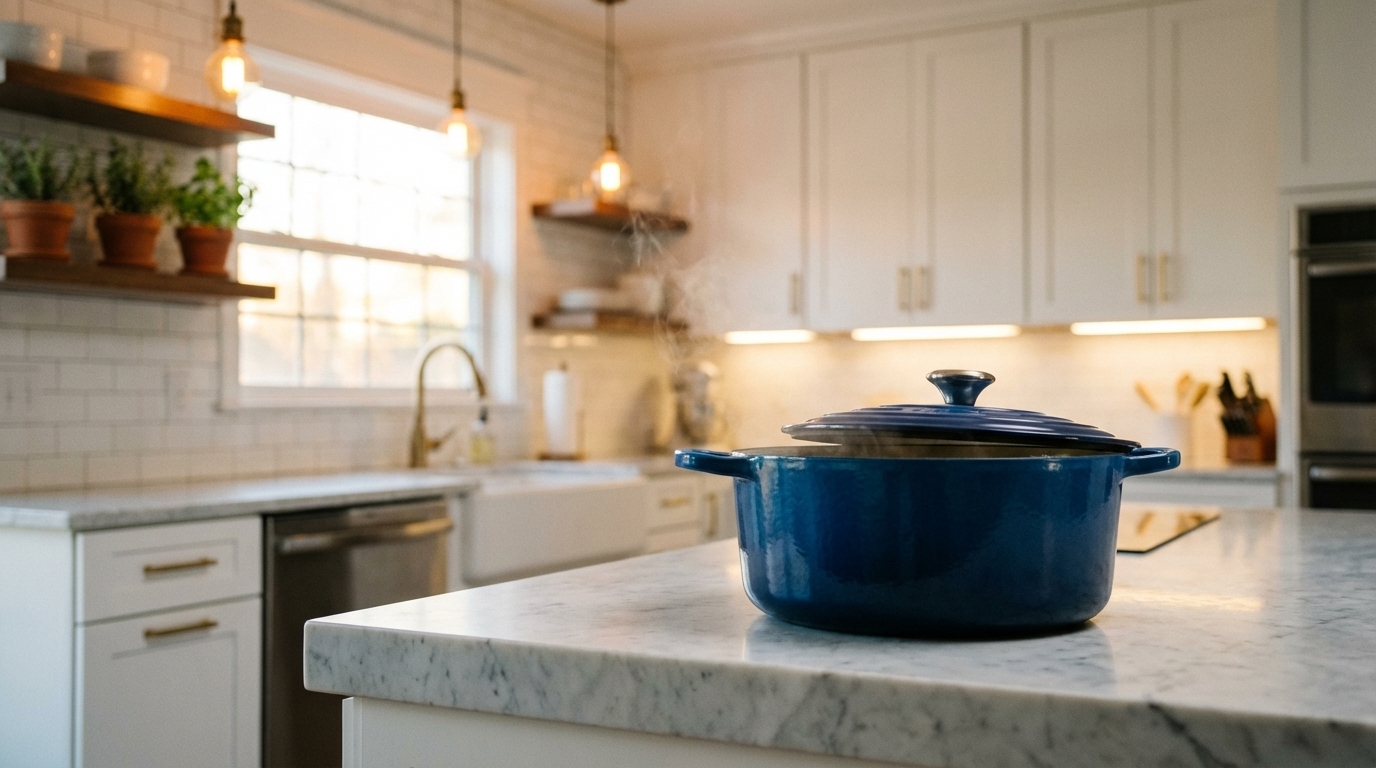
This 2026 guide empowers home cooks to choose the perfect Dutch oven by demystifying materials, sizes, and features that truly matter: enameled cast-iron marries low-maintenance convenience with rock-steady heat retention, while bare cast-iron rewards seasoning patience with generational durability, and lightweight ceramic suits gentle hands; size-wise, 6-quart round ovens hit the family sweet spot, oval lids with metal knobs handle 450 degreesF bread bakes, and wide loop handles keep heavy loads safe. Readers learn to balance budget against longevity--$80 pots cook as well as $300 heirs, but premium enamel survives decades of metal spoons--and to spot value in discontinued colors that drop 60 % in fall sales. The article also delivers pro-maintenance playbooks: quick soap-and-water cleans for enamel, overnight bleach soaks that erase stubborn stains, and cast-iron seasoning cycles that build heirloom patinas, plus storage tricks like paper-towel spacers that prevent rust and chips. Ultimately, the guide proves that selecting and caring for the right Dutch oven unlocks flawless stews, crusty sourdough, and one-pan roasts, turning everyday cooks into confident kitchen architects without overspending.
How to Choose the Best Dutch Oven for Your Kitchen
Pick enameled cast iron if you want one pot that sears like a champ, laughs at tomato sauce, and skips the seasoning ritual--just preheat and add oil so food doesn't glue itself on.
Material Matters: Cast Iron vs. Enameled vs. Ceramic
The material you choose directly impacts how your Dutch oven performs and how much maintenance it needs. Let's break down your options to help you make the right choice. Bare cast iron delivers exceptional heat retention--perfect for slow cooking, deep frying, and even campfire cooking. You'll need to season it regularly to maintain the cooking surface and prevent rust. While these workhorses last generations, they don't play well with acidic foods like tomatoes, which can damage the surface and create off-flavors [1]. Enameled cast iron gives you the best of both worlds: superior heat retention without the fussy maintenance. The porcelain enamel coating creates a nonreactive surface that handles acidic ingredients beautifully and never needs seasoning.
It works on all cooktops (yes, including induction) and moves seamlessly from stovetop to oven [3]. You'll find options with light interiors--great for monitoring browning--or dark interiors that hide wear better over time [1]. One important note: despite what you might think, enameled cast iron isn't nonstick. You'll still need proper preheating and a bit of fat to prevent sticking [3]. Ceramic Dutch ovens weigh significantly less while still distributing heat well. These pots, made from clay, water, and natural minerals fired at extreme temperatures, won't leach metals into your food [2]. They excel at stews and bread baking but require gentle handling--drops or sudden temperature changes can cause cracks [1].
Modern ceramic cookware typically avoids the harmful chemicals (PFAS, PFOA, PTFE) found in some nonstick coatings [2]. Your cooking style should guide your choice. If you want versatility with minimal fuss, enameled cast iron delivers--though you'll pay more for the convenience. Bare cast iron offers unbeatable durability if you don't mind the extra care. Ceramic works wonderfully if you prioritize lightweight handling and can treat it gently. For more detailed information on heat retention properties, see our section on "Heat Retention and Distribution" below.
Size & Capacity: Picking the Right Volume
Dutch ovens typically range from 2 to 12+ quarts, with each size serving specific cooking needs. A practical rule of thumb is to allow approximately 1 quart per person when determining your ideal capacity [5]. For single households, a 3-4 quart Dutch oven gives you enough space for daily cooking without the burden of excessive weight or storage demands [4]. This size handles side dishes, desserts, and modest one-pan meals perfectly. If you're cooking for a family of four, look at the 5-7 quart range. This size handles most recipes--from hearty soups to no-knead bread--while staying manageable to lift and maneuver [6].
The 6-quart size hits the sweet spot: it tackles weeknight family dinners and easily accommodates when friends drop by [4]. You'll maximize your cooktop space without cramming your cabinets. Need something bigger? Dutch ovens over 7 quarts shine when you're hosting, batch cooking, or wrestling with large cuts of meat [6]. A 7-7.5 quart pot fits up to a 6-pound chicken comfortably, while a 9-quart handles birds up to 9 pounds [4]. Just remember--bigger means heavier and harder to store [5].
Shape matters too. Round Dutch ovens distribute heat more evenly on stovetops and excel at soups, stews, and bread baking [4]. Oval models give you extra length for roasts and whole fish, though they work less efficiently on round burners [4]. When comparing sizes, don't just look at diameter--depth and wall thickness dramatically affect the actual capacity [5]. If you need versatility for different cooking methods, consider pairing your Dutch oven with a quality
Lid Design & Seal Quality
Your Dutch oven's lid design directly affects how well it retains moisture and controls evaporation--two critical factors for perfect braises and stews. The best lids seal effectively while letting you adjust steam release as needed. Heavy lids with interior basting divots prevent water from sputtering out during vigorous boiling [7]. These divots theoretically help distribute condensation across your food rather than letting it run down the pot sides, though the real-world impact proves hard to measure [7]. Some designs feature small bumps around the lid rim that release steam strategically, helping you achieve perfectly reduced sauces [8].
Lighter lids offer different advantages--they seal well but let you easily prop them ajar for precise evaporation control [7]. This adjustability helps you nail the perfect consistency in stews and allows sauces to reduce exactly as needed [7]. The fit quality matters enormously: loose lids dry out your food with excessive evaporation, while overly tight seals prevent proper reduction. Don't overlook the lid hardware. Many manufacturers now use stainless steel knobs as standard--essential for high-heat applications like bread baking that require temperatures above 450 degreesF [7].
Knob design affects safety and usability too. Flared knobs give you a secure grip when wearing oven mitts [8], while flush-mounted knobs can prove frustratingly difficult to grasp safely [8]. Before buying, check the lid's seal by looking for excessive wobbling or visible gaps. Even small imperfections can sabotage moisture control during those long, slow braises you're planning.
Handle Comfort and Oven Compatibility
Handle design can make or break your Dutch oven experience, especially when you're maneuvering a pot full of hot food. Wide, looped handles give you a secure grip through oven mitts, turning heavy lifting into a manageable task [8]. The difference becomes clear when comparing designs: pots with generous handles and reasonable weight (around 11-12 pounds) handle easily, while those with small fin-like handles on 15+ pound vessels become awkward and potentially dangerous [8]. Don't forget about the lid knobs. Flared designs let you grip confidently with mitts, while flush-mounted knobs leave you struggling for purchase [8].
Handle material matters too--ceramic Dutch ovens often feature handles that stay cooler during stovetop cooking, while cast iron handles heat up and require protection [8]. Oven compatibility deserves careful consideration. Most enameled cast iron safely withstands temperatures up to 500 degreesF, though lid components might have lower limits [9]. Classic phenolic (plastic) knobs typically max out at 500 degreesF, requiring metal replacements for higher-heat cooking [9]. Some models push the boundaries--certain pots handle up to 900 degreesF without lids [9].
For bread baking enthusiasts who need 450 degreesF+ temperatures, metal knobs are non-negotiable [8]. Ceramic options can excel here, with some rated for temperatures up to 930 degreesF--perfect for extreme-heat applications [8]. Match your Dutch oven's heat tolerance to your cooking style. If you primarily braise and stew, standard limits work fine. But if you're serious about artisan bread or high-heat roasting, invest in models built for those demanding temperatures.
Key Features That Define the Best Dutch Oven
Thick, heat-hoarding enameled cast iron--especially in a wide, gently curved pot--delivers the rock-steady temperatures and flawless browning that turn tough cuts tender, while thinner or non-cast materials falter the moment cold food hits the metal.
Heat Retention and Distribution
make the biggest difference in your cooking results. Enameled cast iron really shines here--once it's hot, it stays hot. Those thick walls and bottom work like a heat bank, storing warmth and releasing it evenly throughout your cooking [10]. Yes, cast iron takes about six minutes to heat up properly, but that patience pays off [11]. You'll get better browning, deeper fond development, and rock-steady braising temperatures that turn tough cuts tender [10].Here's something interesting: interior color affects how you cook, not how well the pot performs. Tests with infrared thermometers showed dark and light interiors heat equally [11].
But darker enamel does absorb more thermal energy, which can give you faster, more intense sears [10]. The trade-off? It's harder to see when your fond is perfectly browned in a dark pot, so you might accidentally overcook [10].Wall thickness matters more than you might think. Thicker cast iron takes longer to heat but holds steady temperatures better during long cooking sessions [11]. Slightly thinner walls heat faster while still providing excellent retention [10]. Alternative materials like ceramic and ceramic-coated aluminum heat up quickly but struggle when you add cold ingredients [8].
In frying tests, aluminum-core pots saw significant temperature drops when food went in, while cast iron barely budged [8].Shape affects heat distribution too. Wider, lower pots give you more surface area for searing--essential when you're browning meat in batches [11]. Round bottoms distribute heat more evenly than squared corners, which can create cold spots [11]. The sweet spot? A gently curved bottom that spreads heat evenly while still letting you get into the corners when deglazing [11]. This design works beautifully whether you're using a
Durability and Enamel Longevity
Durability might be the most important factor when you're investing in a Dutch oven. Premium enameled cast iron consistently survives impact tests that would damage cheaper options--that's why some pots last for generations [8]. The best enameled surfaces use multiple protective layers that can handle metal utensils without damage [12]. Some users report using the same pot for 65+ years [12].
Budget-friendly options work well but show their limits in durability testing--many chip during basic spoon-tap tests [8]. This explains the price gap between entry-level and premium Dutch ovens. Even budget options from manufacturers with over a century of cast iron experience offer decent reliability [12]. Dark enamel interiors hide wear better than light surfaces, though both perform equally well [8].
Many premium manufacturers back their products with lifetime warranties, showing confidence in their construction [8]. When shopping, look for smooth, uniform enamel without bumps or drips--uneven coating often signals corners cut during manufacturing [8].
Ease of Cleaning and Maintenance
Different Dutch oven types require different cleaning approaches, which affects your daily cooking routine. Enameled cast iron wins for convenience--just wash with soap and water, no special treatment needed [13].
Traditional cast iron needs more attention but rewards you with rugged durability and lower cost [14]. For detailed cleaning instructions and maintenance tips for both types, check out our complete guide in the "Caring for Your Dutch Oven" section below.
Price-to-Performance Ratio
You'll find quality Dutch ovens at every price point, though what you pay affects longevity more than cooking performance. Budget options at around $80-100 cook just as well as premium models in testing--they produce the same tender stews and crusty breads [11]. The difference shows up in durability tests, where premium ovens withstand impacts that chip budget models [15].
Some premium Dutch ovens last for decades, even generations, which justifies their higher price for serious cooks [11]. Mid-range options ($150-250) often provide the best value, delivering near-premium construction at more accessible prices [15][16]. Think about how often you'll use your Dutch oven.
Weekly bread bakers and stew makers might want the lifetime warranty that comes with premium models. Weekend cooks will get years of great meals from budget options [11].
Top Affordable Options That Deliver Professional Results
For $55-100 you can grab an enameled cast-iron Dutch oven that braises, bakes and browns like the $300 classics--just look for metal knobs, roomy loop handles and a light interior, then handle it with care to keep the enamel chip-free for years.
Budget-Friendly Cast Iron Picks
You don't need to spend hundreds on a quality Dutch oven that delivers professional results. Many budget-friendly options in the $55-100 range provide excellent heat retention and cooking performance that rivals pricier models [8]. Look for 5-6 quart capacities that offer versatility for most cooking tasks, from braising meats to baking bread [8].
When shopping for affordable Dutch ovens, focus on these key features: wide, looped handles that you can grip securely with oven mitts, metal knobs that withstand high oven temperatures, and light-colored interiors that make it easier to monitor fond development [11]. Testing shows that budget models heat quickly and produce tender braised meats with properly reduced cooking liquids--the same results you'd expect from premium cookware [8]. The main difference between budget and premium Dutch ovens isn't cooking performance--it's durability.
Impact testing reveals that more affordable options may chip more easily than their expensive counterparts [8]. However, with proper care and handling, budget-friendly Dutch ovens can serve reliably for years, making them smart investments for home cooks who want professional results without the premium price tag [11].
Value Enameled Dutch Ovens Under $100
The sweet spot for value-conscious cooks lies in enameled cast iron Dutch ovens priced between $55-100. These affordable options deliver the same cooking performance as premium models--they heat evenly, maintain steady temperatures, and produce beautifully braised meats with perfectly reduced sauces [8]. What makes a budget Dutch oven worth buying? Look for thoughtful design features that enhance usability: manageable weight (11-12.5 pounds for a 5-6 quart model), metal knobs that handle high heat, and flared handle designs that are easy to grip with oven mitts [8].
Some budget models even outperform expectations in blind testing, feeling much more premium than their price tags suggest [9]. The key to getting great results from an affordable Dutch oven is understanding its strengths. These workhorses excel at slow braising, bread baking, and one-pot meals.
While they may require slightly more careful handling than premium options to avoid chipping, proper care ensures years of reliable service [8]. Choose models with light-colored interiors for better visibility while cooking, and remember that good cooking technique matters more than brand name [11].
Versatile Multi-Use Models for Everyday Cooking
The best value comes from Dutch ovens that handle multiple cooking techniques with ease. Look for models with wide, bowl-shaped designs that maximize surface area--this gives you room to properly brown meats before adding liquid for braising [8]. The most versatile Dutch ovens master both high-heat searing and gentle, moist cooking methods. Round Dutch ovens typically offer the most versatility for everyday cooking.
Their shape distributes heat evenly on stovetops and provides ideal conditions for everything from soups to sourdough bread [11]. Some designs feature special lid features like interior divots that help distribute moisture during cooking, though the practical impact varies [17]. For maximum flexibility, choose enameled cast iron that transitions seamlessly from stovetop to oven. This material combination lets you sear, braise, bake, and even serve from the same pot.
While lighter alternatives exist, traditional cast iron's superior heat retention makes it unbeatable for long, slow cooking processes [17]. If you're building a minimalist kitchen, a quality
Where to Find Reliable Deals
Smart shoppers know when and where to find the best Dutch oven deals. Fall and holiday shopping seasons bring the deepest discounts--often 60% or more off retail prices--as retailers stock up for peak cooking months [18]. Post-holiday sales in January and February offer another prime opportunity to score quality cookware at reduced prices. Kitchenware specialty stores frequently run sales on specific colors or when introducing new product lines.
Don't overlook discontinued colorways--they perform identically to current models but often sell for significantly less. Some retailers markdown Dutch ovens by over 60%, bringing quality enameled cast iron below $100 during promotional periods [18]. When hunting for deals, focus on functionality over aesthetics. A Dutch oven in last season's color cooks just as well as this year's trendy hue.
Look for models that have been tested by reputable sources--this helps you identify which sale items deliver genuine value versus those that are simply cheap [18]. Sign up for retailer newsletters to get early access to sales, and remember that investing in one quality Dutch oven beats buying multiple inferior ones over time.


Caring for Your Dutch Oven to Keep It Performing
A few thin coats of high-smoke-point oil, baked and cooled in sequence, forge a natural, non-stick surface on your cast iron Dutch oven that daily hot-water scrubbing, immediate drying, and a light oil wipe keep flawless for generations.
Seasoning Cast Iron for Longevity
Seasoning your cast iron Dutch oven doesn't have to be complicated--it's simply about building up protective layers of oil that create a natural non-stick surface. This protective coating transforms bare cast iron into a reliable cooking workhorse that gets better with age [19]. Starting fresh? Whether you've got a brand-new Dutch oven or you're reviving a neglected one, thorough cleaning comes first. New pots need their manufacturing residue removed, while older ones might need rust and old seasoning stripped away. For seriously rusty pieces, grab some 60-80 grit sandpaper and work your way to steel wool with a 50/50 vinegar-water solution. You'll know you're done when you see bare, silvery metal [20]. Once your Dutch oven is completely dry, it's time for the magic.
Apply a thin layer of high-smoke-point oil--flaxseed oil gives fantastic results, but grapeseed, canola, or vegetable oil work great too [19][20]. Here's the key: less is more. Wipe away excess oil until the surface looks almost dry [19]. Place your Dutch oven upside down in a 400-450 degreesF oven with a baking sheet underneath to catch any drips [21]. Let it bake for an hour, then cool completely in the closed oven [19]. For a really durable seasoning, repeat this process 2-3 times [21]. Daily maintenance keeps your seasoning in top shape. After cooking, clean your Dutch oven while it's still warm using hot water and a soft brush.
Despite what you might have heard, a well-seasoned pot can handle mild dish soap without any issues [20]. The crucial step? Dry it immediately and thoroughly--pop it on the stovetop or back in the oven for a few minutes to evaporate any lingering moisture [19][21]. If the surface looks dull, apply a light coating of oil [19]. When storing, keep the lid slightly cracked to allow air circulation and prevent moisture buildup [19]. Follow these simple steps, and your cast iron Dutch oven will develop an incredible cooking surface that lasts for generations [19][21].
Cleaning Enameled Surfaces Without Damage
Cleaning enameled Dutch ovens is refreshingly simple when you know the right techniques. Skip the abrasive cleaners and scouring pads--they'll permanently scratch that beautiful glass-like coating. Instead, stick with warm water and mild dish soap for your everyday cleaning routine [22][23]. Got stubborn stuck-on food? Here's a trick that works every time: fill your Dutch oven with water, bring it to a gentle boil, then use a wooden spoon to coax off the loosened bits [23]. This gentle approach keeps your enamel pristine while getting the job done. Those brown stains that build up over time on light-colored interiors?
Mix 1 part bleach with 3 parts room-temperature water and let it sit overnight [22]. Really stubborn stains might need a second overnight soak, but they'll come clean [22]. Important safety tip: never boil the bleach solution--the fumes are harmful [23]. Yes, light-colored interiors show stains more easily, but they also let you monitor your browning and fond development better (as covered in our earlier sections on choosing features) [22]. For exterior stains, prevention is your best friend. Always wipe off grease before putting your Dutch oven in a hot oven--otherwise, that grease polymerizes into dark, stubborn marks [23]. Already have exterior stains?
A melamine foam eraser can work wonders on those layers of polymerized fat [23]. Here's the thing about Dutch oven care: embrace the imperfections. As one expert wisely notes, "These are utility items. They're made to get messed up a little... It's part of the charm" [23]. Your Dutch oven tells the story of every meal you've cooked--and that's exactly how it should be.
Storing to Prevent Rust and Chips
Smart storage keeps your Dutch oven performing beautifully for years. The golden rule? Never store with the lid sealed tight. Instead, create a small gap for air circulation by placing a folded paper towel across the rim before setting the lid on top [24]. This simple trick does double duty--it promotes airflow and wicks away any lingering moisture that could cause rust [26].
For cast iron Dutch ovens, add one more step: apply a thin layer of vegetable oil to all surfaces before storing. This protective coating guards against oxidation and keeps your seasoning in great shape [24]. If you're storing enameled Dutch ovens or stacking multiple pots, cushion them with soft cloths or pan protectors to prevent chips and scratches [25]. Got limited space? Consider these storage solutions: - Hang cast iron Dutch ovens from sturdy hooks to save cabinet space and prevent stacking damage - Use dedicated cookware rack systems for side-by-side storage - Invest in Dutch oven covers for long-term storage or when transporting [26] Whatever storage method you choose, avoid nesting pots tightly together--trapped moisture leads to problems down the road [25].
And here's a crucial tip: never leave food in your Dutch oven for extended periods. Not only can this transfer odors into the cookware, but it can also cause oil-based seasonings to turn rancid [26]. Clean it, dry it, store it properly--your Dutch oven will thank you with decades of reliable service.
Troubleshooting Common Issues
Even with the best care, Dutch ovens sometimes develop issues. Don't worry--most problems have simple solutions. Rust spots on cast iron? This happens when moisture lingers on the surface. Attack rust with steel wool or a metal scouring pad, then re-season your pot [27]. For stubborn rust, make a scrubbing paste with oil and coarse kosher salt, then follow up with a vinegar solution (1 part vinegar to 4 parts water) to dissolve any remaining rust [21]. Cracked or chipped enamel? This usually comes from thermal shock--heating an empty pot or exposing it to sudden temperature changes.
Prevention is key: always add oil or liquid before heating, and let your Dutch oven adjust to temperature changes gradually [28]. Stuck-on food? As mentioned in our cleaning section, fill with water, bring to a gentle boil, and use a wooden spoon to loosen debris [28]. Metal utensils are the enemy of enamel--they'll scratch the surface and compromise both appearance and performance [28]. Fuzzy mold? This happens when food gets forgotten (we've all been there). You'll need a complete do-over: thoroughly clean away all organic matter, then follow the full re-seasoning process for cast iron [27]. Stubborn discoloration on enamel? Make a paste with baking soda and water, apply it overnight, then rinse clean in the morning. This gentle method brightens enamel without damage.
Remember, these issues are usually easy fixes. With proper troubleshooting, your Dutch oven will bounce back and keep cooking beautifully for years to come.
- Enameled cast iron needs no seasoning and handles acidic foods safely.
- Allow 1 quart capacity per person; 6-quart is the most versatile family size.
- Heavy lids with interior basting divots lock in moisture for tender braises.
- Budget enameled Dutch ovens ($55-$100) cook as well as premium models but chip sooner.
- Season bare cast iron with thin oil layers baked at 450 degreesF for one hour, repeated 3 times.
- Clean enamel with warm soapy water; boil water inside to loosen stuck food safely.
- Store Dutch ovens lid slightly ajar with paper towel to prevent rust and odors.
- https://www.everythingkitchens.com/blog/choose-the-best-dutch-oven-5-features-to-consider.html?srsltid=AfmBOooyUPjMk5hH3o5TBqJUBVw4_XeI75pLnJpwtv-0wexW_R9pqWFu
- https://xtrema.com/blogs/blog/ceramic-vs-cast-iron-cookware?srsltid=AfmBOopAT0QubK1nLsXBDYHpN1x2ic-EOBjDxyXF1GBqUFTYhXis4TDP
- https://www.bonappetit.com/story/is-enameled-cast-iron-nonstick?srsltid=AfmBOopAOt8suEgy79kYzdvhG_7ia8fi6vTaQ7BPmEbbVfy5CR4siNXD
- https://www.solamexhome.com/dutch-oven-sizes-explained-quarts-inches-and-which-one-to-buy.html
- https://www.marquettecastings.com/blogs/blog-2/what-size-dutch-oven-should-i-buy
- https://www.epicurious.com/expert-advice/best-dutch-oven-enameled-cast-iron-casserole-pot-article
- https://www.seriouseats.com/best-cast-iron-dutch-ovens-equipment-review
- https://www.thespruceeats.com/best-dutch-ovens-4072913
- https://www.bonappetit.com/story/best-dutch-ovens?srsltid=AfmBOor5XquIZJcMkWkwp1Rmf3aumOO9Lh9crpz45xhlHhUcumD1DvhJ
- https://www.nytimes.com/wirecutter/reviews/best-dutch-oven/
- https://www.organicauthority.com/guide/best-dutch-ovens
- https://www.allrecipes.com/article/how-to-clean-a-dutch-oven/
- https://www.thekitchn.com/difference-dutch-oven-cast-iron-enameled-253838
- https://www.techgearlab.com/topics/kitchen/best-dutch-oven
- https://www.foodandwine.com/lifestyle/kitchen/best-dutch-ovens
- https://www.homesandgardens.com/buying-guides/best-dutch-oven
- https://www.goodhousekeeping.com/life/money/a69280269/sur-la-table-dutch-oven-sale/
- https://www.youkneadsourdough.com/blogs/faq/how-to-season-and-maintain-your-cast-iron-dutch-oven
- https://www.rei.com/learn/expert-advice/how-to-restore-and-cook-on-cast-iron.html
- https://www.fieldandstream.com/stories/cooking/restore-and-season-your-dutch-oven
- https://www.americastestkitchen.com/articles/537-how-to-clean-and-care-for-enameled-cast-iron-cookware-dutch-ovens-and-skillets
- https://www.nytimes.com/wirecutter/reviews/how-to-restore-enameled-cast-iron-dutch-ovens/
- https://www.marquettecastings.com/blogs/blog-2/how-to-care-for-a-dutch-oven
- https://smart.dhgate.com/the-ultimate-guide-to-safely-cleaning-and-maintaining-your-dutch-oven-for-long-lasting-use/
- https://canvascampers.com/forum/hobbies-activities/dutch-oven-cooking/dutch-oven-storing-and-stripping-rusty/
- https://dutchovendude.com/dutch-oven-restoring.php
- https://www.marquettecastings.com/blogs/blog-2/dutch-oven-mistakes