

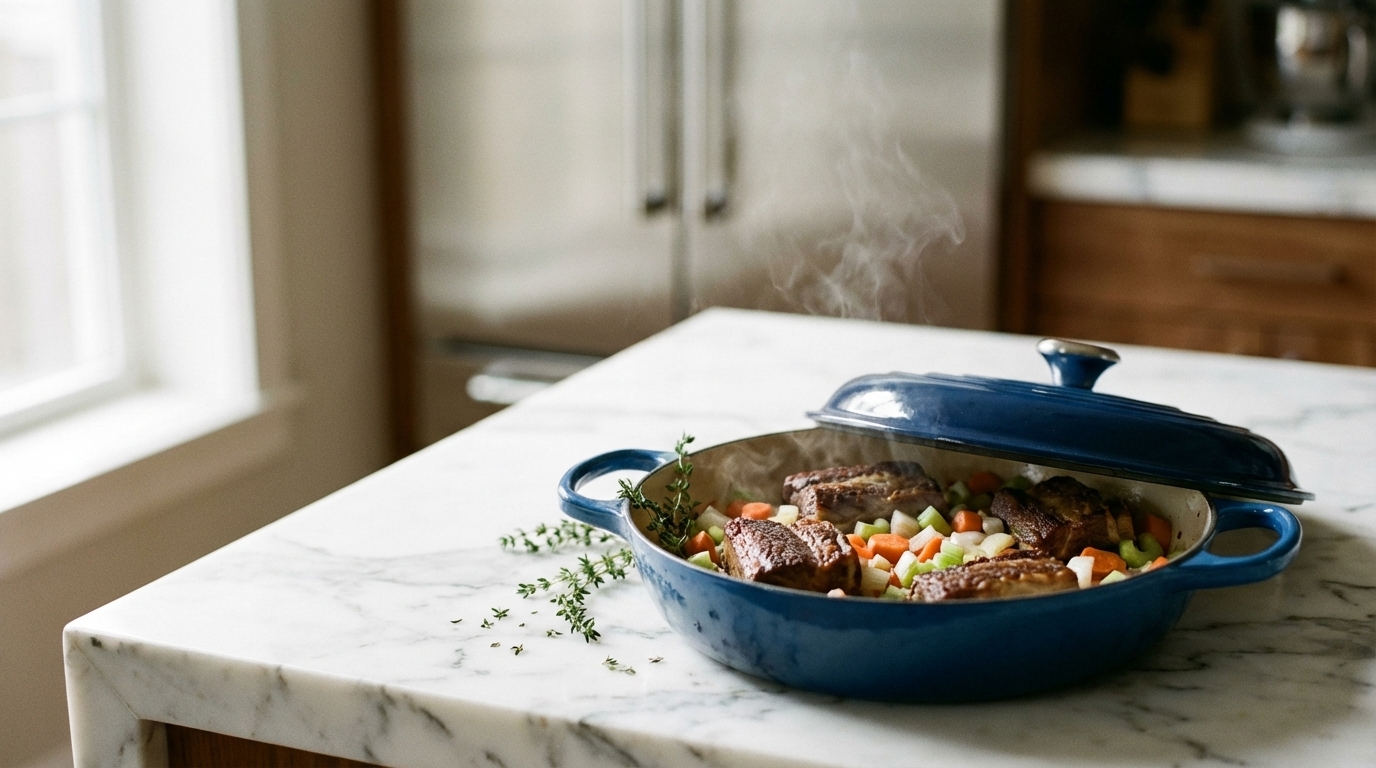
Master the art of braising at home by choosing the right 4-6 quart enameled cast-iron braiser with roomy handles, then keep it pristine with simple oil-rubbed rim seasoning and gentle medium-heat cooking that never starts dry. You'll learn why steady 325 degreesF heat and 180-190 degreesF liquids transform collagen-rich short ribs, brisket, or lamb shanks into silken, 203 degreesF perfection while vegetables braise in just enough liquid to create a glossy glaze. The article shows how a spoonful of miso, dried mushrooms, or vinegar builds depth, how chickpeas or focaccia can be baked in the same pot, and how overnight storage actually improves flavor for effortless entertaining or meal prep. With seasonal twists--from spring leeks to fall butternot squash--and easy-care tricks like baking-soda pastes or overnight bleach soaks, your braiser will develop a performance-boosting patina that makes every one-pot dish taste better tomorrow than today.
Getting Started: Choosing and Preparing Your Braiser
Pick a 4-quart enameled-cast-iron braiser with long, wide handles, oil its bare rim, and keep the heat at medium so it's ready to deliver steady, even results right out of the box.
Selecting the right braiser for everyday use
Braisers come in various sizes, typically between 3.5 and 5 quarts. For one or two people, a 4-quart braiser provides ample room, while a 5-6 quart size works better for families or batch cooking [2]. When selecting your braiser, think beyond just capacity--the slope of the sides affects how much food actually fits and how quickly liquids reduce [1]. Enameled cast iron delivers superior heat retention and excellent browning, making it the go-to material for most home cooks [1].
You'll want to invest in quality here--premium enameled cast iron resists chipping and staining better than budget options during durability testing [1]. Don't overlook the handles when choosing your braiser. The best designs feature side handles at least four inches long and two inches wide, giving you a secure grip even with bulky oven mitts [1]. Similarly, lid knobs smaller than two inches can be tough to grasp safely [1].
Weight is another practical consideration. While heavier braisers provide more even heat distribution, they can be challenging to maneuver--some larger models weigh over 18 pounds empty [1]. Find the balance that works for your cooking style and physical comfort. Whether you're investing in a premium braiser or starting with a more budget-friendly option, focus on finding one that fits your needs and cooking habits [1][2].
Seasoning and caring for a durable braiser
Getting your braiser ready for years of delicious meals starts with proper initial care. Unlike traditional cast iron, enameled braisers don't need extensive seasoning--they're ready to cook right out of the box. However, you'll want to protect the exposed cast iron rim where the lid meets the base.
Simply apply a light coat of high smoke-point oil (like canola) and bake at 350 degreesF for one hour [4]. For day-to-day cooking, remember that enameled cast iron performs best with some fat or liquid in the pan--never heat it empty on the stovetop as this can damage the enamel [4]. Stick to medium heat settings where braisers truly shine, delivering that steady, even temperature perfect for transforming tough cuts into tender meals.
For detailed cleaning and long-term maintenance tips, see our comprehensive guide in "Maintaining Your Braiser for Long-Term Joy" below, where we cover everything from removing stubborn residue to preventing rust.

Fundamentals of Braising: Techniques Every Home Cook Should Know
Hold your braise at a gentle 325 degreesF, keep the liquid at 180-190 degreesF, and give collagen the time it needs to melt into gelatin--no shortcuts--so tough cuts transform into silky, juicy perfection.
Understanding the low‑and‑slow cooking principle
Braising works its magic through gentle, steady heat over time. Keep your cooking temperature at or below 325 degreesF (163 degreesC)--this sweet spot prevents browning while allowing deeper transformations to happen [5]. You'll notice the difference immediately: no more overcooked edges or dry spots, just even cooking throughout [5]. Here's what makes braising special: it breaks down collagen, the stuff that makes tough cuts chewy [6].
When you cook slowly with moisture, that collagen melts into gelatin, creating the silky texture you're after [5]. For reference on which cuts work best, check out our recipes section below. Keep your braising liquid between 180-190 degreesF (82-88 degreesC) for best results--hot enough to be safe, gentle enough to preserve tenderness [6]. Unlike high-heat methods that squeeze moisture out of meat, braising keeps everything juicy [6].
The breakdown starts around 170 degreesF (79 degreesC), with most cuts hitting perfect tenderness at 203 degreesF (95 degreesC) internal temp [5]. This is why you can't rush a braise--those proteins need time to transform, and there's no shortcut that won't sacrifice quality [5].
Step‑by‑step guide on how to use a braiser for perfect results
Start by seasoning your meat generously with salt. For deeper flavor, dry-brine larger cuts by salting and refrigerating for 1-2 hours on a wire rack [8].
This simple step helps the meat hold onto its juices during cooking. Heat your
Recipes and Variations: From Classic to Modern Braised Dishes
Unlock next-level flavor by braising tough cuts with miso, dried mushrooms, and a splash of vinegar, then use the same pot to glaze vegetables in their reduced sauce or even steam-crisp focaccia under the domed lid.
Classic braised meats and vegetables
The best cuts for braising are the tough ones--short ribs, lamb shanks, brisket, and chuck roast. These work-horse muscles have plenty of collagen that melts into rich gelatin during cooking [8]. As we covered in the braising guide above, proper salting makes a real difference in your final dish. Here's what really takes your braise to the next level: three simple additions that build incredible depth. Stir in a spoonful of miso paste, toss in some dried mushrooms, or add a splash of red wine vinegar. Together, these create layers of flavor without masking your main ingredient [8].
Vegetables need a different approach than meat. Your best bets are hearty options that hold their shape--carrots, parsnips, onions, turnips, cabbage, Brussels sprouts, fennel, and cauliflower [9]. Skip the browning step for most vegetables since they don't sear like meat does [9]. The key to perfect braised vegetables? Getting the liquid level right. Add enough to come one-third up the sides--this creates a concentrated sauce while the vegetables cook through [9].
Dense vegetables like carrots need a bit more liquid than tender ones like endive [9]. Try the braise-and-glaze technique for restaurant-quality results: Near the end of cooking, remove the lid and turn up the heat. Let the liquid reduce into a glossy glaze that coats your vegetables [9]. And here's a time-saving tip: Both meat and vegetable braises taste even better the next day, making them perfect for meal prep [8][10].
Creative one‑pot meals and seasonal twists
Your braiser isn't just for meat--it's a versatile tool for creative one-pot cooking. Transform simple canned chickpeas into something special by braising them with ginger, cumin, coriander, and tomatoes for an easy Tandoori-style dish [12]. The wide base of a braiser gives you room to combine textures, like wilted greens topped with crispy spiced chickpeas [11]. You can even bake focaccia in it--the domed lid traps steam for a perfect crust [11].
Match your braises to the seasons for the best flavors. Spring calls for quick-braised leeks, peas, and lettuce--just a few minutes under the lid and they're ready [12]. Summer brings fruit into the mix with dishes like pork braised in apple cider or chicken with oranges and olives [12]. When fall arrives, go for hearty options like butternut squash in coconut gravy--a 25-minute vegetarian showstopper [12].
Here's the real secret: Braised dishes get better with time. Professional chefs know this trick--make your Moroccan lamb curry or short rib ragu ahead, and it'll taste even better tomorrow [13]. This makes braising perfect for both meal prep and entertaining. Cook lamb shanks with pomegranate and walnuts the day before your dinner party, then relax and enjoy your guests [12].


Maintaining Your Braiser for Long‑Term Joy
Use your braiser often, protect it with smart storage and gentle cleaning tricks, and let its earned patina become the secret to better, non-stick performance for years to come.
Cleaning, storage, and rust prevention tips
As covered in our seasoning and care guide above, daily maintenance keeps your braiser performing beautifully. Here's your quick reference for long-term care success. For storage, stack carefully with pan protectors between pieces to prevent chips--soft fabric or silicone dividers work best [14].
If displaying your braiser, the dry kitchen counter works perfectly, but avoid humid areas like above the dishwasher [14]. Combat stubborn stains that develop over time by creating a paste with baking soda and water, letting it sit for 30 minutes before gentle scrubbing [14]. For deep cleaning after years of use, fill with water and a cup of bleach, let soak overnight, then rinse thoroughly--this removes built-up discoloration without damaging the enamel [14].
Remember that light staining and patina actually improve your braiser's non-stick properties, so don't stress about keeping it pristine [14]. Most importantly, use your braiser regularly--these workhorses get better with age and frequent cooking [14]. If you notice the rim developing persistent rust despite regular oiling, apply a high-heat cooking spray before storing for extra protection [14].
- Braise below 325 degreesF; collagen melts to gelatin for silky texture.
- Keep liquid at 180-190 degreesF; gentle heat preserves juiciness.
- Choose 4-qt for two people, 5-6 qt for families; slope affects fit.
- Enameled cast iron browns best; oil rim to prevent rust.
- Tough cuts like short ribs and chuck roast braise perfectly.
- Vegetables need liquid one-third up; reduce for glossy glaze.
- Braises taste better next day--ideal for meal prep and parties.
- https://www.seriouseats.com/best-braisers-6753394
- https://www.thespruceeats.com/best-braising-pans-5080036
- https://www.lodgecastiron.com/pages/cleaning-care-enameled-cast-iron?srsltid=AfmBOoruzCozvqyZlpLrdFfF5aNouoKfzpICgkYRaihhfFXirzulmmmE
- https://www.meganfranceslloyd.com/how-to-care-for-clean-and-season-your-enameled-cast-iron
- https://blog.thermoworks.com/meat-cooking-101-when-to-cook-low-and-slow/
- https://annex.exploratorium.edu/cooking/icooks/2-1-03article.html
- https://www.foodnetwork.com/how-to/articles/how-to-braise-meats-a-step-by-step-guide
- https://virginiawillis.com/braising-basics-five-steps-to-perfectly-braised-meats/
- https://www.thekitchn.com/the-transformative-power-of-braising-on-vegetables-23105937
- https://food52.com/story/26005-how-to-braise
- https://www.lecreuset.ca/en_CA/blog/6-braiser-features-and-5-braiser-recipes.html?srsltid=AfmBOorTYhJBnjbchZkTUCM5h3M0vvDkCrFXbPCj4dQan_oRsQqXg5Aa
- https://www.epicurious.com/recipes-menus/braising-recipes
- https://www.wellseasonedstudio.com/slow-braised-meat-dishes-for-cozy-dinners/
- https://blog.pamperedchef.com/kitchen-tips-tools/how-to-clean-and-maintain-enameled-cast-iron-cookware/