

Mastering stainless steel cookware unlocks professional-level results at home: the article teaches you to harness multi-ply pans that heat evenly, won't react with acidic foods, and can last decades when treated right. You'll learn the water-drop test that turns the surface naturally non-stick at 370-450 degreesF, a quick oil-seasoning trick for delicate eggs or fish, and the visual and audio cues that tell you exactly when to flip a steak or toss stir-fry for maximum sear without sticking. It walks you through core techniques--medium-heat searing that builds fond for restaurant-quality pan sauces, crowd-free stir-frying that keeps vegetables vibrant, and gentle deglazing that lifts every caramelized bit--while emphasizing patience and listening to your pan instead of fighting it. Equally important, the piece shows how simple, grain-following cleaning, immediate drying, and smart storage protect the chrome-oxide layer so your investment stays warp- and spot-free, potentially keeping high-quality stainless out of landfills for a lifetime.
Why Stainless Steel Is the Everyday Cook's Best Ally
Stainless steel's tri-ply, non-reactive construction sears, simmers, and outlives every other pan in your kitchen while keeping flavors pure and meals safe for decades.
Durability and heat performance for lasting quality
Here's what makes stainless steel such a workhorse in the kitchen: it's built to last and performs beautifully. While non-stick pans need replacing every few years, a good stainless steel pan can serve you for decades--many cooks pass theirs down through generations.
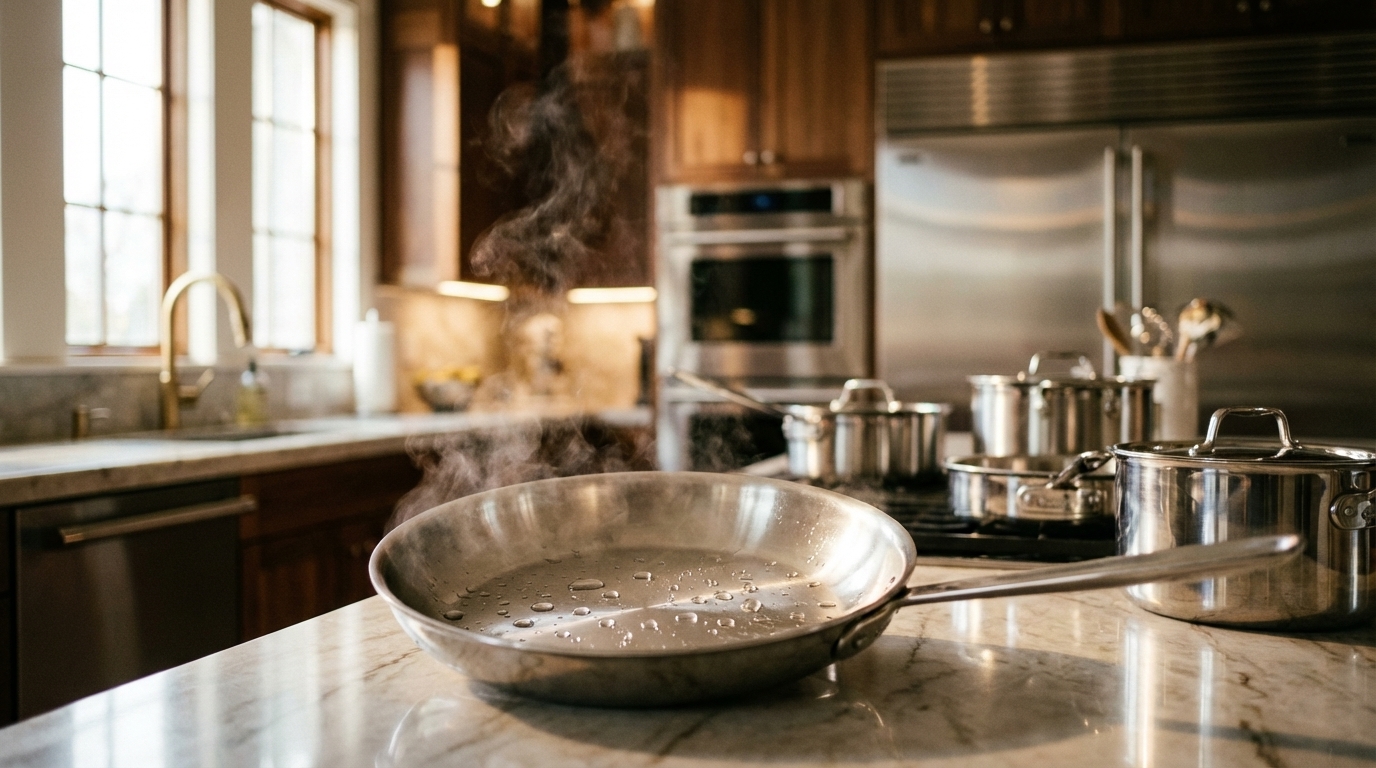
Look for 18/10 or 18/8 stainless steel (those numbers tell you how much chromium and nickel protect against rust and corrosion). The best performing pans feature tri-ply construction--like this stainless steel pan with its aluminum core for even heating sandwiched between stainless layers for durability.
This design eliminates hot spots while standing up to high heat without warping. You can sear steaks, deglaze with confidence, and create those gorgeous caramelized crusts that make restaurant-quality meals possible at home.
Food‑safe, non‑reactive material that protects flavor
Your food tastes exactly as it should when you cook with stainless steel. The non-reactive surface means you won't get any metallic off-flavors, even when making acidic dishes like tomato sauce or lemon-butter reductions [1].
This matters for both flavor and safety--stainless steel doesn't leach metals or chemicals into your food, no matter how hot your pan gets or how long you simmer [2]. So go ahead and perfect that marinara, pickle those vegetables, or reduce that balsamic--your pan won't interfere with the flavors [2].
Whether you're quickly sautéing vegetables or slow-cooking a stew, stainless steel keeps your ingredients pure and safe, letting the real flavors shine through [2].

Preparing Your Pan for Consistent Results
Master the water-drop dance--when a single droplet glides across your preheated stainless steel pan at 370-450 degreesF, you've unlocked a naturally nonstick surface that turns out flawless eggs and fish without any special coatings.
The water‑drop preheat test and temperature cues
Getting your stainless steel pan ready is simpler than you might think. The key is proper preheating, which creates a naturally nonstick surface without any special coatings. The water-drop test takes the guesswork out of temperature control [3]. Here's how it works: Heat your stainless steel pan over low heat for a couple minutes, then bump it up to medium.
Flick a small water droplet onto the surface and watch what happens. If it immediately evaporates, you need more heat. If it splatters into tiny beads that jump around, dial it back--you're too hot. You've hit the sweet spot when the water forms a single droplet that glides across the pan like it's dancing [4].
This happens around 370-450 degreesF, when something called the Leidenfrost effect kicks in [3]. The metal expands just enough to create a smooth surface where food won't stick [4]. Once you nail the temperature, add your oil and wait for it to shimmer and ripple before adding food [3]. We'll explore more advanced techniques for working with these temperatures in the next section.
Essential tips for cooking with stainless steel - oil selection and seasoning
While stainless steel doesn't need permanent seasoning like cast iron, a quick temporary seasoning can work wonders for tricky foods like eggs and fish [5]. Think of it as extra insurance for those delicate cooking moments. Start with a clean, dry pan. Heat it up, then add a thin layer of high-smoke-point oil--grapeseed, avocado, or refined coconut oil work great [6].
Let the oil heat until it just starts to smoke, then turn off the heat and let everything cool down completely. Wipe out the excess with a clean cloth [6]. This creates a temporary slick surface that helps prevent sticking without changing your pan's natural properties. Skip this step for fatty proteins like steak or chicken thighs--their natural fats will do the job for you [5].
But for eggs, delicate fish, or anything starchy, this little trick provides peace of mind [5]. When you're done cooking, just wash with regular dish soap. No special maintenance needed--this isn't a protective coating you need to preserve [5].
Core Cooking Techniques with Stainless Steel
Patience--waiting for the shimmering oil, the natural release of the protein, and the golden fond that deglazes into a restaurant-quality pan sauce--is the stainless-steel secret to flawless browning and unforgettable flavor.
Searing, sautéing, and pan‑sauce basics without sticking
Mastering stainless steel cooking comes down to patience and proper technique. As covered in "Preparing Your Pan," proper preheating is essential--but here's how to put that knowledge into action. Start by bringing proteins to room temperature 15 minutes before cooking for even browning [7]. Once your pan passes the water droplet test (see previous section), add your oil or cold butter and wait until it shimmers. This "hot pan, cold fat" method creates a natural barrier that prevents sticking [7]. The key is patience--when you first add food, it may seem stuck, but that's normal. The pan's surface is actually gripping the protein to create that perfect crust.
Here's the secret: don't flip too early. Your steak, chicken, or fish will release naturally when it's ready. If you feel resistance when testing with a spatula, wait another minute [7]. This patience rewards you with beautifully browned crusts and crispy skin every time. The stainless steel pan excels at this high-heat searing, delivering restaurant-quality results at home. Where stainless steel really shines is in building flavor through fond--those caramelized bits left after searing. Unlike nonstick surfaces, stainless steel encourages this browning, which becomes the foundation for incredible pan sauces.
After removing your protein, add wine, stock, or another liquid to deglaze, scraping up all those flavorful bits. Reduce the liquid, swirl in some butter, and you've created a sauce that elevates any dish. Remember: if food does stick, don't force it. This usually means it needs more time to develop that release crust [7]. Trust the process, and your stainless steel will reward you with superior results.


Maintaining Your Stainless Steel Cookware for a Lifetime
Treat your stainless steel pans like quality tools--clean with the grain using a damp microfiber cloth, banish stuck-on food with baking-soda paste and vinegar soaks, dry immediately to prevent water-spot damage, and slip soft liners between stacked pieces to keep them flawless for life.
Everyday cleaning, stain removal, and shine preservation
Taking care of your stainless steel doesn't have to be complicated--think of it like caring for any quality tool that rewards a little attention. For daily cleaning, a microfiber cloth dampened with water works wonders, followed by a quick dry to prevent water spots [10]. When you're dealing with stuck-on food (we've all been there), add just a drop of non-chlorine dish soap to your damp cloth, wipe clean, rinse with another cloth, and dry right away [10]. For those stubborn stains that won't budge, here's a simple trick: make a paste with baking soda and water, then gently scrub with the grain--those visible lines in the steel [10].
Skip the steel wool and harsh cleaners; they'll scratch and damage your pans [10]. Got some rainbow discoloration from high-heat cooking? Lay a towel soaked in boiled distilled vinegar on the spot for 30 minutes, sprinkle baking soda on top, then gently scrub away [10]. Fingerprints and grease marks disappear with a cloth and a touch of rubbing alcohol [10].
Here's a pro tip: always clean in the direction of the grain. Run your cloth both ways to feel which direction has less resistance--that's your grain [10]. Once a month, give your cookware some extra love with a few drops of lemon oil (olive oil works too) on a clean cloth for that showroom shine. Just remember--never use oils on cooking surfaces, as they can create a fire hazard [10].
Proper drying, storage, and care to avoid landfill waste
Drying your cookware right after washing isn't just about aesthetics--it's about protecting your investment. Water spots and mineral deposits can actually damage stainless steel over time, so grab a microfiber cloth and give each piece a quick wipe rather than letting them air-dry [11]. When it comes to storage, think protection. Placing something soft between stacked pans--paper towels, cloths, or pan protectors--prevents those annoying scratches that can affect cooking performance down the line [12].
If you've got the space, hanging your cookware on a rack is even better. It eliminates stacking damage entirely while keeping everything within easy reach [13]. Don't forget about the lids--store them separately or standing upright to avoid trapping moisture that can lead to spots and corrosion [13]. And here's something many cooks overlook: keep your cookware away from humid spots near the sink or dishwasher where constant moisture can speed up wear [13].
Smart organization matters too. Keep your go-to pans accessible without constantly shuffling through rarely used pieces--less handling means less chance for dings and scratches [12]. With these simple habits, your stainless steel won't just last years; it'll last generations. That "expensive" cookware set suddenly looks like a bargain when you're still using it decades later [12].
- Multi-ply stainless steel with aluminum/copper core heats fast and evenly
- Water-drop test (Leidenfrost) signals 370-450 degreesF for natural non-stick surface
- Preheat pan first, then add oil when it shimmers to prevent food sticking
- Let proteins sear undisturbed; they self-release when browning is complete
- Use medium heat and cook in batches to avoid overcrowding and soggy stir-fries
- Cool pans before washing, clean with the grain, and dry fully to prevent spots
- Avoid chlorine cleaners and steel wool to protect the chrome oxide layer
- https://www.chefs-resources.com/stainless-steel-cookware-pros-and-cons/
- https://triplycircletitanium.com/how-does-the-non-reactive-nature-of-stainless-steel-benefit-cooking-with-acidic-foods/
- https://gastrotools.com/blogs/guides/heres-how-easy-it-is-to-cook-in-a-stainless-steel-pan
- https://www.forksoverknives.com/how-tos/make-stainless-steel-pans-nonstick-with-mercury-ball-water-drop-test/
- https://www.thechoppingblock.com/blog/seasoning-stainless-steel
- https://www.knivesandtools.com/en/ct/seasoning-stainless-steel-carbon-steel-cast-iron-pans.htm
- https://www.foodnetwork.com/fn-dish/recipes/how-to-make-stainless-steel-nonstick
- https://www.heritagesteel.us/pages/cooking-techniques?srsltid=AfmBOoqLj74XhTEIV22jFo6VkXHBzJ-YFItEELqNkmXVMsVBqll1A6kU
- https://brimckoy.com/how-do-i-cook-in-a-stainless-steel-pan-without-food-sticking/
- https://www.bhg.com/how-to-clean-stainless-steel-11857993
- https://www.lecreuset.ca/en_CA/blog/stainless-steel-cookware-care-and-use-guide.html?srsltid=AfmBOopL-R10lOAAiLcHjuHRzqZfG10534QzY6xasEuY0Cm-m-u1YLfC
- https://chopchopusa.com/blogs/news/how-to-make-stainless-steel-cookware-last-a-lifetime
- https://nestasia.in/blogs/news/learn-how-to-take-care-of-your-steel-cookware?srsltid=AfmBOooZIM26Vth3s6wVZ0_bJhBiuZCN1IM1Gtgzu855cRqZJEMQ1TtN