

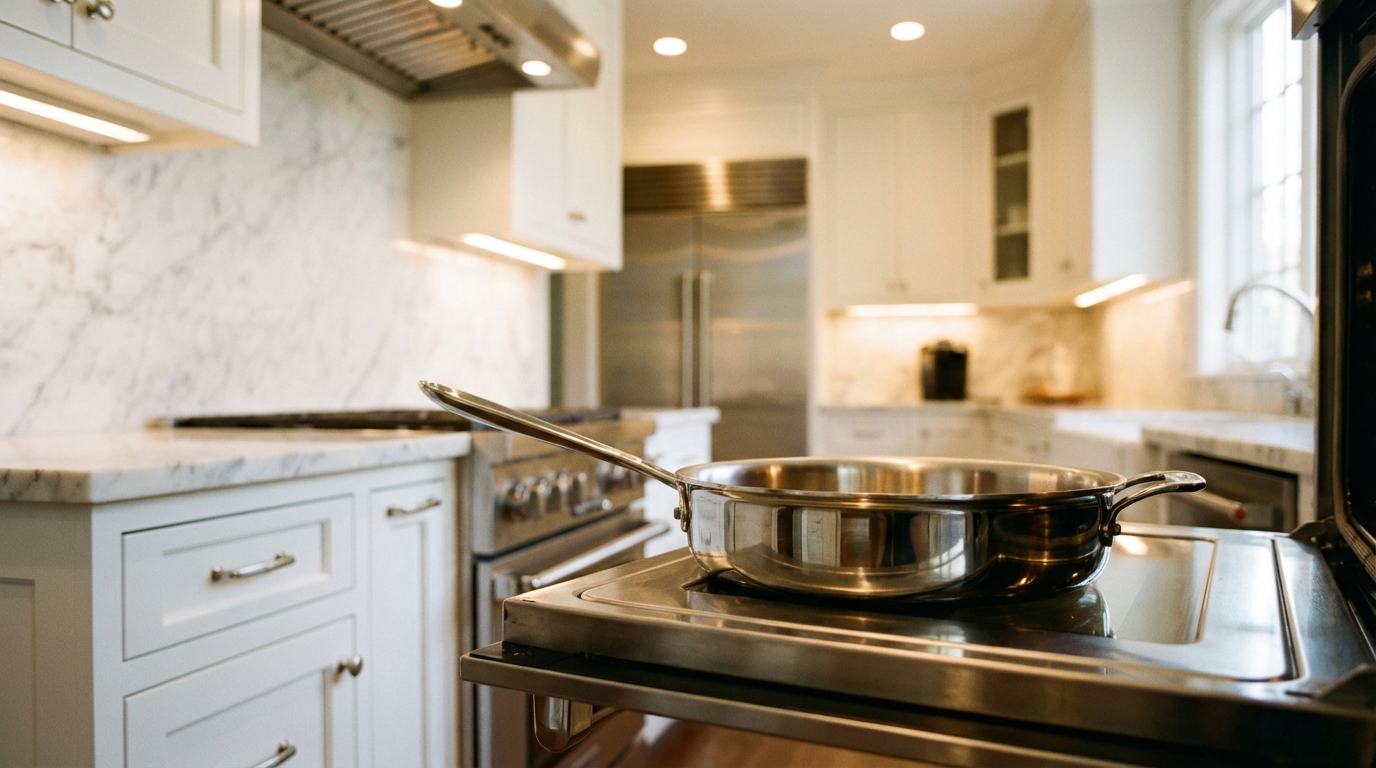
Your stainless steel pan is far more oven-capable than you think--most household grades laugh at 500 degreesF--so this guide shows you how to read the handle, not the hype, to find its real limit, then walks you through a fool-proof pre-oven routine (deep-clean, optional quick-season, skip the floppy silicone sleeve) and pro-level temperature tactics that let you slide the same skillet from stove-top sear to 425 degreesF oven finish for steaks, 350 degreesF braises or 400 degreesF roasted veg without warping, sticking or burned knuckles. You'll learn why sudden temperature swings, not heat itself, ruin pans, how to preheat gradually, deglaze wisely, and cool on a trivet so your cookware stays flat for decades, plus the simple vinegar or baking-soda tricks that erase rainbow stains and keep the steel gleaming. Master these habits and your stainless workhorse turns into a non-stick, oven-safe, lifetime investment that goes from frittata to finishing broil without missing a beat.
Understanding the stainless steel pan in oven safety
Check your pan's handle, not just its steel: silicone caps cap heat at 350 degreesF, while all-metal 18/10 stainless lets you roast safely up to 500 degreesF--just don't plunge the hot pan into cold water or thermal shock will warp it forever.
How high temperatures affect stainless steel
Stainless steel pans respond to heat in several distinct ways that affect their oven performance. Your stainless steel pan can handle serious heat--most household cookware safely withstands temperatures up to 500-600 degreesF [1]. You might notice some rainbow discoloration after high-heat cooking, but don't worry--that's just a harmless surface change that won't affect performance [1].
Here's what happens when stainless steel gets hot: it expands slightly and can lose some strength at extreme temperatures [2][3]. Most kitchen-grade stainless steel (like 304 grade) is incredibly resilient, resisting oxidation well beyond typical cooking temperatures [2]. The real danger isn't the heat itself--it's sudden temperature changes.
Placing a hot pan directly in cold water creates thermal shock that can permanently warp your cookware [1]. That's why every quality pan comes with specific temperature guidelines.
Checking your pan's oven‑safe rating
Finding your pan's oven-safe temperature is straightforward. Start by checking the manufacturer's label, user manual, or website for specific ratings like "Oven safe up to 450 degreesF" [4]. No documentation?
Look at the pan's composition--18/10 stainless steel (18% chromium, 10% nickel) and 300 series grades typically handle higher temperatures than 400 series varieties [5]. The handle often tells the whole story. Silicone or plastic components usually mean staying below 350-400 degreesF, while fully metal construction allows for much higher heat [5].
Quality

Preparing Your Stainless Steel Pan for Oven Use
Scrub your stainless-steel pan clean, give it a quick high-heat oil wipe for a temporary non-stick boost, and ditch the silicone handle cover in favor of trusty oven mitts before sliding it into the oven.
Proper cleaning and seasoning
Getting your stainless steel pan ready for the oven starts with a good clean--you don't want any leftover bits smoking up your kitchen. Start by scraping out excess oil with a spatula or paper towel, then pour in some hot water while the pan's still warm (not blazing hot) to loosen any stuck food [6]. Grab a dish brush to work on stubborn bits, then wash with dish soap and a non-abrasive scouring pad using circular motions [6]. For those really tough stains, make a baking soda paste and let it work its magic for a few minutes or even overnight [6].
Still not budging? Try boiling water with baking soda right in the pan, or if you have a bigger pot, submerge the whole pan in boiling water with baking soda [6]. Now, about seasoning--it's a hot topic among cooks. Some swear by it, others skip it entirely [7].
If you want to give your pan a quick non-stick boost, here's the simple method: heat the clean pan, add a thin layer of high-smoke-point oil like canola, and when it shimmers, roll it around to coat the surface [7][8]. Let it heat until you see the first wisps of smoke, then remove from heat and wipe out the excess [7]. Just remember, this isn't like seasoning cast iron--it's a temporary fix that'll help food release a bit easier [8]. With quality stainless steel cookware, this simple seasoning method provides enough non-stick performance for most oven-baked dishes.
Choosing the right cookware accessories
Let's talk handles--they get seriously hot in the oven, and that's where many home cooks run into trouble. You might think removable silicone handle covers are the answer, but here's what real users report: these covers often heat up right along with the pan, and you can still get burned [9]. Even worse, some covers get stuck after oven use, making it dangerous when you need to grab or adjust your hot pan [9].
Your best bet? Skip the removable covers and invest in quality oven mitts that you trust. If you're shopping for new cookware, look for pieces with permanently attached heat-resistant handles designed for oven use.
Remember to check temperature ratings on any accessories--many silicone products max out way below what your stainless steel can handle. (As we'll cover in the next section, proper temperature control helps avoid other issues like warping too.)
Practical Oven Cooking Techniques with Stainless Steel
Master stainless steel oven cooking by matching precise temperatures to each dish--325-350 degreesF for braised meats, 400-425 degreesF for caramelized vegetables, 375-425 degreesF for oven-finished steaks--and protect your pan from warping by keeping temperature shifts under 50 degreesF and never deglazing or rinsing while hot.
Ideal temperature ranges for common dishes
Stainless steel pans excel at various oven temperatures, making them incredibly versatile in your kitchen. As we covered in the safety section above, your pan's temperature tolerance depends on its construction and quality. Professional chefs leverage these temperature ranges for specific dishes--Chef Gabriel Kreuther uses stainless steel daily for oven cooking, noting its reliability for transitioning from stovetop to oven [4]. Here's how to use those temperature ranges for specific dishes.
For braised meats, set your oven between 325-350 degreesF--this gentle heat breaks down tough connective tissues without scorching. Want perfectly roasted vegetables? Crank it up to 400-425 degreesF to develop that caramelization while keeping the insides tender. When you're searing proteins like steaks or pork chops on the stovetop first, preheat your oven to 375-425 degreesF for a smooth transition.
Baked pasta dishes and casseroles do best at 350-375 degreesF, ensuring even heat through all those delicious layers. The real beauty of cooking with a quality stainless steel pan is this seamless movement--start your frittata on the burner, then slide it under the broiler without missing a beat [10].
Avoiding warping and sticking pitfalls
Let's talk about preventing two common issues: warping and sticking. As discussed in our safety section, thermal shock is your pan's worst enemy. The quickest ways to damage your pan? Deglazing with cold liquids, cranking the heat to maximum, or--as we'll cover in the care section--washing a hot pan in cold water [11][12]. Here's how to keep your pan in perfect shape during oven cooking.
First, let your pan warm up gradually--don't shock it by placing it directly into a blazing oven. After cooking, set it on a heat-resistant trivet, not your cold countertop [13]. When transitioning from stovetop to oven, keep temperature changes modest--no more than 50 degreesF difference [13]. You'll know if warping has occurred when the pan wobbles on flat surfaces or liquids pool at the edges [13]. The good news?
Even slightly warped pans still work, though they're less efficient on flat cooktops. To prevent sticking, always preheat your pan on the stovetop before adding food. This creates that crucial release layer, especially important for proteins. With these simple habits, your stainless steel will deliver reliable results for years to come.


Caring for Your Pan After Oven Cooking
Let your pan cool naturally after oven use, skip the dishwasher, and give it a quick vinegar wipe to erase rainbow marks--simple habits that keep stainless steel flawless for decades.
Cooling and storage tips
As we covered earlier, thermal shock is your pan's worst enemy. After oven cooking, always let your pan cool naturally on a heat-resistant surface or wire rack before washing. Need to cool soups or stews quickly?
Place the hot pan in your sink with water up to the handles--adding ice speeds the process [15]. Stir occasionally to distribute heat evenly. For the fastest results, transfer contents to smaller containers [15].
Store your pans with care--use pan protectors or towels between stacked cookware to prevent scratches. Like well-loved cookie sheets that develop character over time [14], your stainless steel pans will show their history through minor marks that won't affect performance. These signs of use are normal--even inevitable--with quality cookware.
Maintaining performance for long‑term use
Quality stainless steel cookware lasts decades with simple care. Hand wash with mild dish soap and a soft sponge--skip the dishwasher even if it's labeled safe [16]. Those rainbow marks from high-heat cooking?
They're harmless. Wipe with diluted white vinegar to remove them instantly [17]. For stubborn stains, make a baking soda paste instead of reaching for harsh cleaners that scratch [18].
Your daily habits matter most: - Always preheat before adding oil - Cook at medium heat when possible - Let food release naturally before flipping [17] Monthly deep clean: Mix equal parts white vinegar and water with a tablespoon of baking soda. Scrub gently with the grain of the steel [17]. This simple maintenance keeps your pans performing like new for years, saving you money and hassle.
- Most stainless steel pans are oven-safe up to 500-600 degreesF; check handles first.
- Sudden temperature swings--like rinsing a hot pan in cold water--can warp it permanently.
- Preheat the pan on the stove before oven use to prevent warping and sticking.
- After oven use, cool the pan on a rack; wash only after it reaches room temperature.
- Hand-wash with mild soap; remove rainbow heat stains with a quick vinegar wipe.
- For stuck-on residue, soak with hot water and baking soda, then scrub gently.
- https://www.thekitchn.com/stainless-steel-pans-tips-things-to-avoid-22997775
- https://www.marlinwire.com/blog/what-is-the-temperature-range-for-304-stainless-steel-vs-316-vs-330
- https://eoxs.com/new_blog/temperature-limits-for-different-grades-of-stainless-steel/
- https://www.thekitchn.com/stainless-steel-in-oven-23705483
- https://www.solamexhome.com/how-to-choose-an-oven-safe-frying-pan-materials-temp-ratings-and-dos-donts.html
- https://www.nytimes.com/wirecutter/guides/how-to-clean-stainless-steel-pans/
- https://www.knivesandtools.com/en/ct/seasoning-stainless-steel-carbon-steel-cast-iron-pans.htm
- https://www.reddit.com/r/Cooking/comments/wd1m5z/need_help_with_seasoning_stainless_steel/
- https://jeanpatrique.com/products/silicone-handles-for-the-whatever-pan
- https://www.foodandwine.com/guide-to-stainless-steel-cookware-8558171
- https://www.reddit.com/r/Cooking/comments/499la4/does_stainless_steel_cookware_warp/
- https://support.rachaelraykitchenware.com/support/solutions/articles/65000168228-warped-pans
- https://www.skottsberg.com/en/blogs/blog/how-to-avoid-a-warped-pan/
- https://www.reddit.com/r/AskCulinary/comments/kjj5wg/can_i_put_a_cold_metal_cookie_sheet_in_the_oven/
- https://www.reddit.com/r/Cooking/comments/12wqgt0/i_cool_my_stainless_steel_pot_of_soup_off_by/
- https://www.bobsredmill.com/articles/how-long-do-stainless-steel-pots-last
- https://www.lagostina.ca/en/blog/why-stainless-steel-cookware-last-for-years?srsltid=AfmBOopFeEwfJpURXUIMIJd82sHgjXL1_SexE_h_yDh_uCNR_75PswwL
- https://www.welcometomykitchen.net/2023/11/stainless-steel-cookware-maintenance-tips-for-longevity.html