

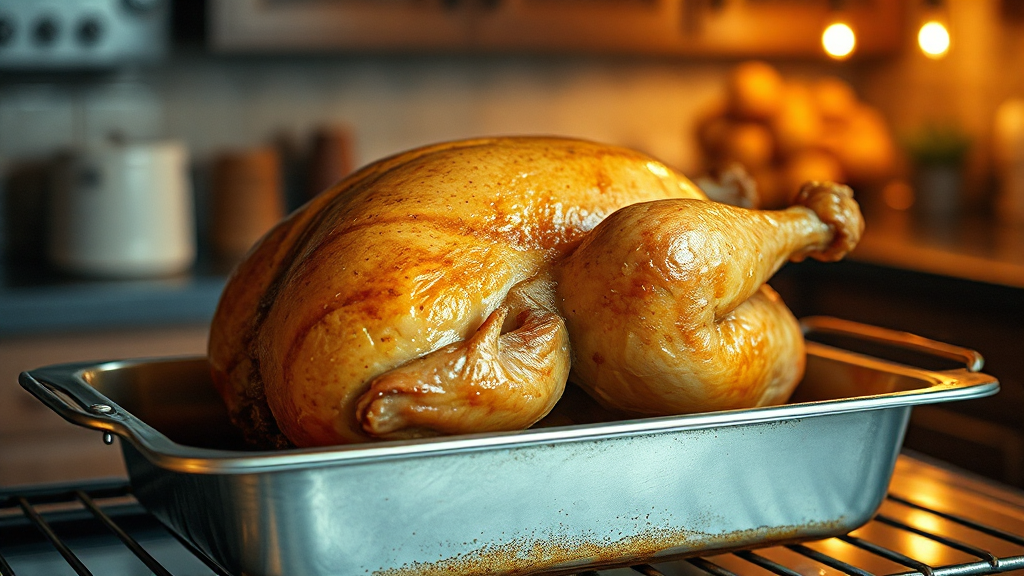
A roasting pan is the correct choice for a whole bird because its deep sides and sturdy handles are designed to contain significant cooking drippings without overflow [1]. Baking sheets typically have a thin lip or no lip, making them unsuitable for large roasts that release a lot of liquid [2].
Structural Differences: Depth, Sides, and Rack Support
Measuring Pan Depth for Poultry Size
A roasting pan is a deep vessel with high edges and sturdy handles, designed to contain a whole bird and its cooking drippings without overflow [1]. Baking sheets, by contrast, have a thin lip or no lip at all, making them unsuitable for holding a whole turkey or large roasts that release significant liquid [2].
The depth of the pan directly affects heat circulation; if the vessel is too deep, it can trap steam and prevent proper browning, while a pan that is too shallow risks spilling hot juices onto the oven floor [3]. As a practical guideline, look for edges that are 5 to 8 centimeters (roughly 2 to 3 inches) tall to balance air circulation with liquid containment [3].
For a whole turkey, you need a pan that is at least 16 to 18 inches long to accommodate the bird without the wings or legs touching the sides, which can block heat flow [4]. Always check that the pan and bird do not block the convection fan or heating elements, as an oversized pan can obstruct heat circulation [5].
The Role of the Rack in Air Circulation
Placing your poultry on a rack inside the roasting pan allows hot air to circulate around the entire bird, including the underside, which is critical for even cooking and crisp skin [6]. Without a rack, the meat sits in its own juices, which can steam the bottom and prevent the skin from crisping properly.
You can create a makeshift rack by arranging sturdy vegetables like onions or carrots in the bottom of the pan to elevate the meat and infuse the drippings with flavor [6]. If you use a baking sheet for smaller items, a wire rack is still beneficial for promoting airflow, especially for chicken wings or small roasts that need to crisp on all sides [7].
Heat Distribution and Cooking Performance
How Pan Material Affects Browning
The material of your pan influences how heat is distributed and how well your food browns. Stainless steel is durable and resistant to rust, but it transfers heat more slowly than aluminum [8].
Aluminum pans spread heat quickly and evenly, making them ideal for consistent browning [8]. Dark-colored pans absorb more heat, which can lead to faster and more intense browning, but they also carry a higher risk of burning the food if not monitored closely [9].
Light-colored, reflective pans promote lighter, more even browning by reflecting heat, which is better for delicate items [9]. For roasting poultry, a light-colored, bare aluminum or aluminized steel pan is often preferred for its versatility and even heat distribution [9].
Managing Drippings and Splatter
A deep roasting pan contains juices, allowing you to easily pour them into a gravy base without losing flavor to the oven floor [1]. To reduce splatter, avoid adding too much oil to the pan, as excess oil can bubble over and create a mess [10].
For baking sheets, which have little to no containment, monitor the cooking process closely to prevent drippings from spilling over the edges [2]. You can also place a smaller baking sheet or a piece of foil on the rack below the food to catch any drips, which protects your oven floor and makes cleanup easier.
Practical Usage: When to Choose Each Pan
Roasting Pans for Whole Birds and Large Cuts
A roasting pan is the best choice for whole birds like turkeys and chickens, as well as large cuts of meat like prime rib. The deep sides and sturdy handles make it easy to transport a heavy, liquid-filled pan from the oven to a cutting board [1].
The capacity of the pan also allows you to add vegetables like potatoes and carrots around the meat for a one-pan meal [1]. For a whole turkey, an 18-inch roasting pan, such as the 18" Stainless Steel Roasting Pan + Silicone Liner, is ideal to provide enough space for the bird and its drippings without overcrowding the oven [4].
Baking Sheets for Vegetables and Small Poultry
Baking sheets are best for vegetables, small poultry portions like chicken breasts, and items that benefit from high heat exposure on all sides. The flat surface allows for even browning and crisping, especially when the food is not overcrowded.
For vegetables, a light-colored baking sheet is ideal to promote even browning without burning [9]. If you are roasting small poultry pieces, using a wire rack on the baking sheet can help promote airflow and crispier skin [7].
Baking sheets are also versatile for everyday use, including cookies and pastries that require a flat surface [2].
Care, Maintenance, and Storage Considerations
Cleaning Burnt Drippings and Residue
Many roasting pans and baking sheets are dishwasher-safe, but always check the manufacturer's instructions to ensure the material can withstand high heat and detergents [3].
For a more effortless experience, using a Silicone Roasting Pan Liner can cover the surface of your pan to keep it spotless during the cook.
If residue has already burnt onto the pan, soaking it in warm, soapy water is a gentle way to loosen the debris before scrubbing.
Storing Large Pans in Limited Kitchen Space
Storing large pans in a small kitchen can be managed with a few organization strategies. Vertical storage is an excellent option for baking sheets; using a flat tray with dividers can hold multiple sheets in an organized manner, making them easy to retrieve [11].
For roasting pans, consider nesting them to save space, placing a soft cloth between the pans to prevent scratching. It is recommended to measure your cabinet space before purchasing a storage organizer to ensure a proper fit [11].
Conclusion
Selecting the Right Pan for Your Next Roast
Choosing between a roasting pan and a baking sheet depends on the size of your food and the desired cooking outcome. For whole birds and large cuts of meat, a deep roasting pan with a rack is the best option, as it contains drippings, promotes even heat circulation, and makes it easy to transport the food [1].
For vegetables and small poultry portions, a baking sheet is more versatile and allows for even browning and crisping [2]. Consider the material of the pan, with light-colored aluminum being a good choice for even browning, and dark-colored pans for faster, more intense browning [9].
Finally, think about your storage space and cleaning preferences when making your purchase. A well-chosen pan will serve you well for many holiday roasts and weeknight dinners alike.
Frequently Asked Questions
-
Can I use a baking sheet to roast a whole turkey?
No, baking sheets are unsuitable for whole turkeys or large roasts because they have a thin lip or no lip, which cannot contain the significant amount of liquid released during cooking [2].
-
What size roasting pan is best for a whole turkey?
An 18-inch roasting pan, such as the 18" Stainless Steel Roasting Pan + Silicone Liner, is ideal to provide enough space for the bird and its drippings without overcrowding the oven [4].
- How can I prevent grease and drippings from making a mess in the oven?
- For a whole turkey, choose a pan at least 16 to 18 inches long with edges 5 to 8 centimeters (2 to 3 inches) tall to ensure proper heat circulation and liquid containment [3][4].
- Using a rack is critical for whole birds to allow hot air to circulate underneath, which prevents the bottom from steaming and ensures crisp skin [6].
- Light-colored aluminum pans are ideal for consistent, even browning, while dark-colored pans absorb more heat for more intense browning but carry a higher risk of burning [9].
- To organize large pans in limited spaces, store baking sheets vertically in a tray with dividers and nest roasting pans with a soft cloth between them to prevent scratches [11].
- https://thelivingstyles.co.nz/blogs/bakeware-guide/whats-difference-between-baking-tray-roasting-pan
- https://www.annclark.com/blogs/tutorials/how-to-choose-the-right-baking-pan
- https://www.tastingtable.com/985005/what-you-should-consider-before-purchasing-a-roasting-pan/
- https://www.tastingtable.com/1304230/easily-replace-roasting-pan-common-baking-dish/
- https://whatscookingamerica.net/roasting-perfect-turkey.htm
- https://food-hacks.wonderhowto.com/how-to/cook-perfectly-roasted-chicken-0167064/
- https://backyardchickencoach.com/best-wire-rack-for-baking-chicken-wings/
- https://www.vikaskitchenware.com/aluminium-sheet-pan-vs-stainless-steel-baking-tray/
- https://quickkitchentools.com/cookware-bakeware/the-best-baking-sheets-for-even-browning/
- https://hestancue.com/blogs/blog-recipes/reducing-splatter
- https://www.housedigest.com/1090760/easy-ways-to-organize-your-bakeware-in-your-kitchen/