Searing Steak: Countdown From Cold Pan to Crust
About Misen
We make kitchen tools that work better, last longer, and cost less than you’d expect: everyday innovations with a radical focus on our customers’ actual need.
Table of Contents
Summary
Master the cold-pan method to sear steak evenly from edge to edge without oil or guesswork. You'll lock in a deep, flavorful crust while the center cooks to perfect doneness every time.
Prep the Steak and Choose the Right Misen Pan
Pat your steak bone-dry, salt it early, and drop it into a cold Misen carbon or stainless pan so the fat renders as the heat rises, giving you an edge-to-edge crust without the charred-outside-raw-inside letdown.
Pat dry and season for a perfect crust
Moisture on the steak's surface is the primary barrier to a good crust -- excess water causes the meat to steam rather than sear, preventing proper browning. [1] When amino acids and sugars react under high heat (the Maillard reaction), you get those complex flavors and deep caramelization that make steak irresistible. [1] Start by patting your steak completely dry with paper towels -- every drop counts.
Salt the steak at least 30 minutes before cooking (or right before if you're short on time). [1] Salt draws out surface moisture that evaporates during cooking, setting you up for a restaurant-quality crust instead of disappointing gray edges. [1]
Heat the Misen pan from cold to hot for optimal sear
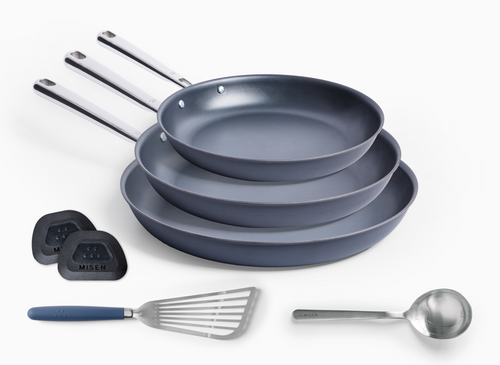
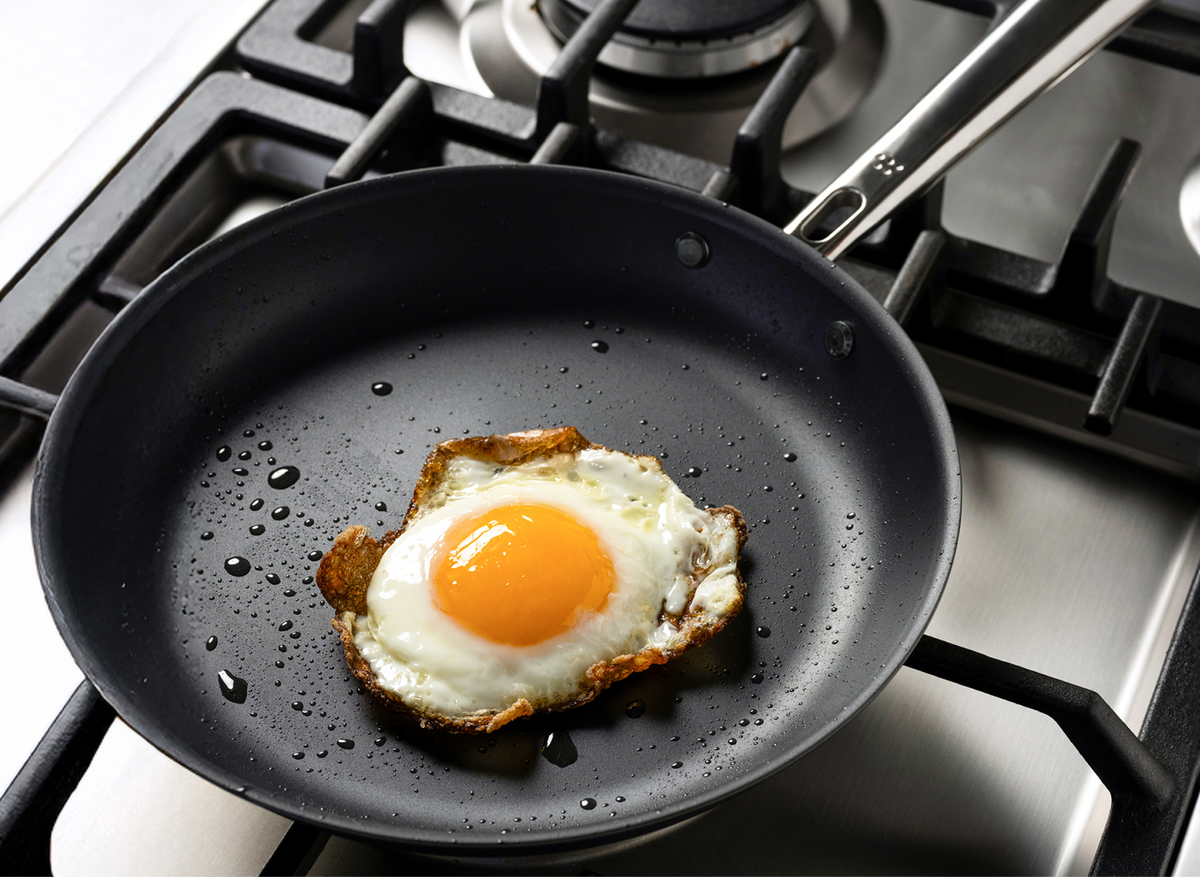
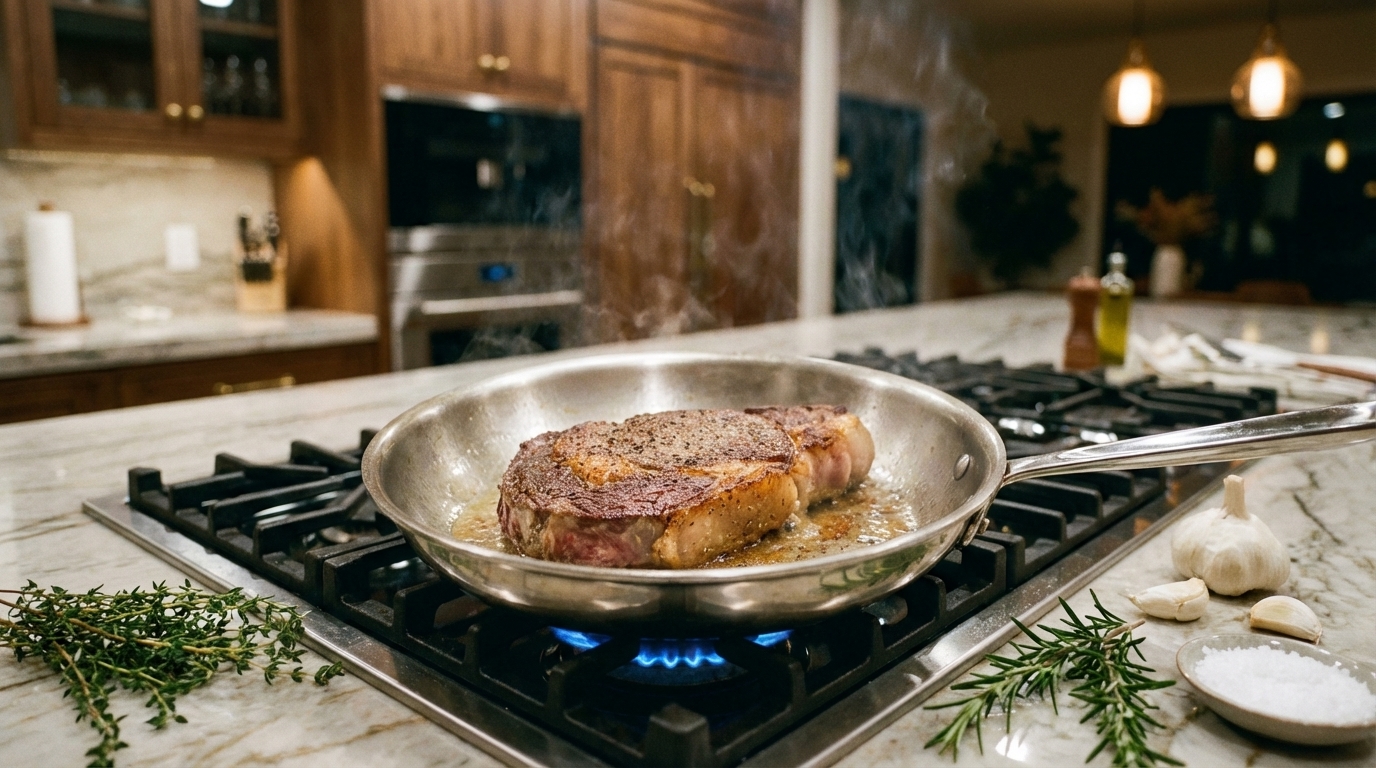
The cold-pan method flips traditional searing on its head: place your steak directly into a cold, dry pan (no oil needed), then crank the heat to high. [2] This gradual temperature rise lets the steak's own fat render out slowly, naturally lubricating the pan while building an even crust from edge to edge -- no more charred outsides with raw centers. [3] As the pan heats up, flip frequently (detailed timing covered in the next section), then reduce to medium heat to finish cooking. [2] Misen's carbon steel and stainless steel pans excel at this technique -- they heat evenly from cold to scorching hot without warping, giving you consistent results every time.
Mastering the Countdown: How Long to Sear Steak
Grab your instant-read thermometer and count on 8-10 minutes for a 1-inch steak to hit perfect medium-rare, adding 2 minutes per side for medium or finishing thicker cuts in a 400 degreesF oven so you never burn the surface.
Heat levels and timing charts by thickness and doneness
Steak thickness and target doneness determine your total cook time and heat adjustments. For a 1-inch steak using the cold pan method described above, you'll need 8 to 10 minutes total to reach medium-rare (130-135 degreesF internal).
A thicker 1.5-inch steak requires 12 to 14 minutes -- or you can finish it in a 400 degreesF oven for the last few minutes to prevent surface burning. For medium doneness (140-145 degreesF), add about two minutes per thickness level.
Always use an instant-read thermometer to check internal temperature rather than relying on time alone -- different pans heat at different rates, and actual thickness can vary even within the same cut.
Build Flavor While You Sear
Wait to add butter until you've lowered the heat, then tilt the pan and steadily baste the steak with foaming, herb-speckled butter for the final few minutes to layer on rich, nutty flavor without a hint of bitterness.
Add butter, garlic, and herbs at the right moment
Butter burns at high heat, so adding it too early creates bitter, acrid flavors instead of rich, nutty ones. Add unsalted butter -- along with smashed garlic cloves and hardy herbs like thyme or rosemary -- only after you've reduced the heat to medium, typically in the last two to three minutes of cooking.
Once the butter melts and begins to foam, tilt the pan toward you and use a spoon to continuously ladle it over the steak. This basting builds flavor with each pass, and the foam signals that the butter is hot enough to brown without burning.
Basting techniques for an even crust without burning
Effective basting requires keeping the butter moving -- stationary butter in a hot pan browns unevenly and turns bitter quickly. Tilt the pan at a 30 to 45-degree angle so butter pools at the lower edge, giving your spoon enough depth to draw from.
Baste the sides of the steak too, not just the top, since the edges hold fat that benefits from direct contact with the herb-infused butter. Our stainless steel and carbon steel pans retain heat evenly, so if the foam subsides and the butter darkens past golden brown, simply pull the pan off heat -- the residual temperature will finish the job without burning.
Finish, Rest, and Serve with Confidence
Rest your steak for five minutes after cooking, slice it confidently against the grain, and serve immediately for the juiciest, most impressive results.
Key Takeaways
- Pat steak bone-dry and salt 30 min early to maximize crust-forming Maillard browning.
- Start steak in a cold, dry pan, then flip frequently for even edge-to-edge crust without burning.
- 1-inch steak needs 8-10 min total; 1.5-inch needs 12-14 min; finish thick cuts in 400 degreesF oven if needed.
- Add butter, garlic, herbs only after reducing to medium heat; baste constantly to avoid bitter burnt butter.
- Tilt pan 30-45 degrees and baste sides so herb-infused butter seasons fat along steak edges.
- Pull pan off heat if butter darkens past golden; residual heat finishes basting without burning.
- Rest steak after cooking to let juices redistribute, ensuring moist, flavorful slices.