

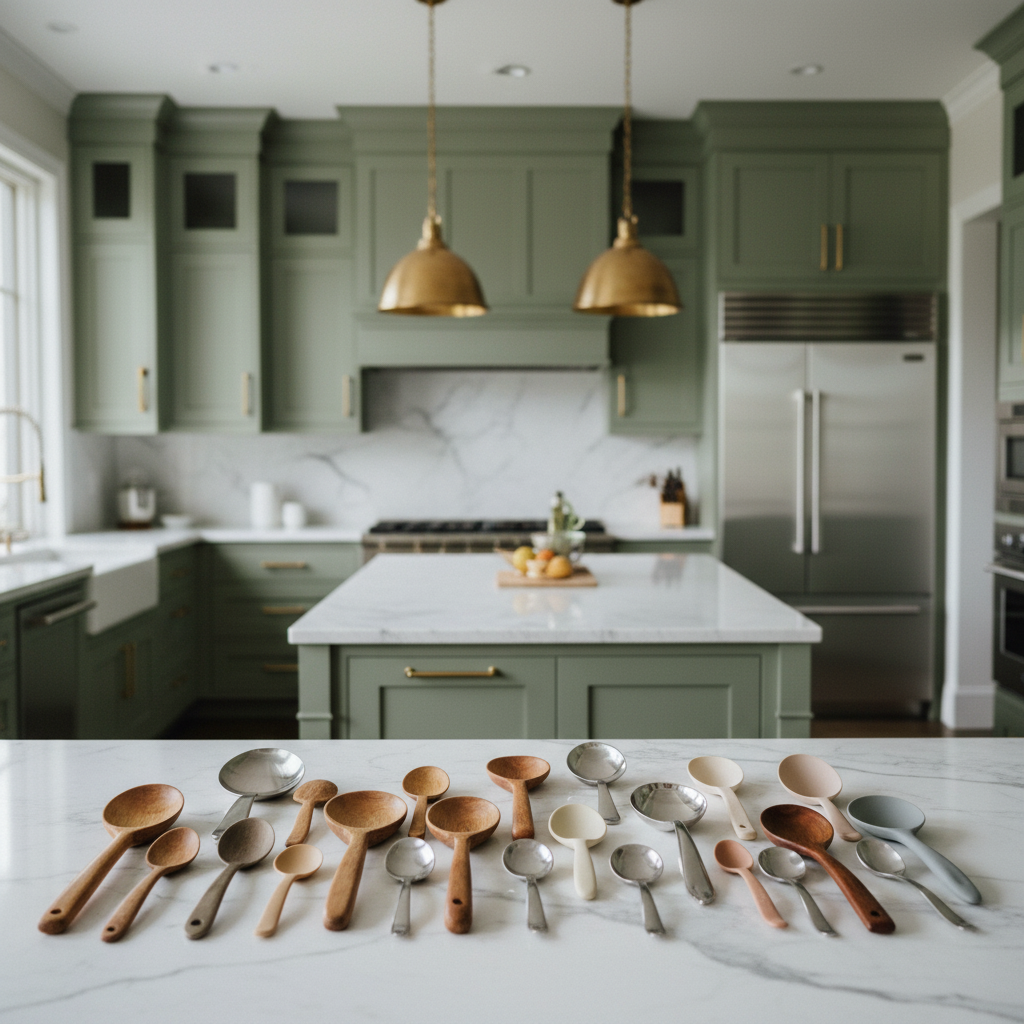
From wooden workhorses that guard non-stick pans and naturally kill bacteria, to the precision Kunz sauce spoon that plates like a pro, every chef spoon has a purpose--and this guide shows you exactly which ones deserve space in your drawer. You'll learn why silicone spoonulas scrapes every molecule of batter while protecting cookware, how a spider strainer lifts entire portions of pasta in one swoop, and when a tiny 6¾-inch plating spoon turns home cooking into restaurant art. The article breaks down material science--stainless steel's lifetime durability, silicone's 600 degreesF heat tolerance, wood's natural insulation--then matches each to cookware and cooking habits, whether you're protecting non-stick coatings, stirring caramel at 300 degreesF, or plating quenelles for guests. It delivers pro-level ergonomics and budget picks (think $8 IKEA beech spoons that outlast flashy sets), plus care hacks that extend life from months to decades. By the end you'll know the five-spoon arsenal that replaces drawer clutter--wooden stirrer, sauce spoon, spoonula, tiny garnisher, spider--and how to buy once, buy right, and cook better forever.
Understanding the Core Types of Chef Spoons
Master your kitchen with three game-changing spoons: wooden spoons that self-sanitize while protecting your pans, the Kunz sauce spoon that gives restaurant-perfect control for basting and plating, and the spoonula that scrapes every last bit from bowls with its flexible edge.
Wooden Spoon - All‑Purpose Stirrers
Wooden spoons remain your kitchen's most versatile tool for good reason. They protect your cookware--especially non-stick surfaces that metal utensils would scratch and ruin [1]. Wood naturally insulates, so you can stir hot dishes without burning your hand or affecting cooking temperatures [2].
Unlike metal spoons, they won't react with acidic foods or leave metallic tastes in your tomato sauce [1]. Here's something surprising: wood actually fights bacteria. Its porous structure traps and kills bacteria within hours [2].
Look for hardwoods like beech or olive--they're strong enough for thick batters yet comfortable for extended stirring [3]. Keep them in top shape with simple care: hand wash with soap, dry overnight, and rub with mineral or coconut oil every few months [2].
Kunz Sauce Spoon - Oversized Shallow Design
The Kunz sauce spoon transformed professional kitchens when Swiss chef Gray Kunz designed it in the late 1990s. What makes it special? Its oversized shallow bowl holds 2.5 tablespoons--more than double a standard spoon [4].
At 9 inches long, it keeps your hands a safe distance from hot surfaces while giving you precise control [4]. The tapered edge directs liquids exactly where you want them, while the wider, shallower belly excels at basting [4]. Built from 18/10 stainless steel and weighing 78 grams, it offers the perfect balance for controlled movements [4].
You'll use it everywhere: basting steaks with hot butter for incredible crusts, forming elegant quenelles, or drizzling sauces with restaurant precision [4]. It handles everyday tasks too--from scooping yogurt to portioning risotto [4]. Once you cook with one, you'll understand why chefs treat it as an extension of their hand [5].
Spoonula - Hybrid Spatula‑Spoon Tool
The spoonula solves a common kitchen problem--constantly switching between spoons and spatulas. This clever hybrid features a spoon-shaped bowl with a flexible, flat edge that scrapes every last bit from bowls and pots [6][7]. Choose between wood or silicone based on your needs.
Wooden versions (sometimes called "Spootles") typically measure 12 inches with a broad, flat edge perfect for thick batters, sauces, and breaking up ground meat [6]. Silicone options handle temperatures up to 600 degreesF without melting, protect your non-stick cookware, and have no seams where bacteria can hide [7][8]. Plus, they're dishwasher-safe and stay cool while cooking [8].
At around $28 for quality wooden versions, they earn their keep by reducing the number of tools cluttering your kitchen [6].

Specialty Spoons for Specific Tasks
Master your kitchen with precision-engineered ladles and slotted spoons that control portions, prevent spills, and safely transfer foods while their smart spouts, ergonomic grips, and strategic slot designs maximize efficiency whether you're portioning soup, draining vegetables, or serving pickles.
Ladle - Deep Bowl for Soups and Stews
Ladles feature deep, cup-shaped bowls designed specifically for serving and transferring liquids and semi-solid foods. Their defining characteristic--a wide, shallow bowl with higher sides--captures and holds significantly more volume than regular spoons, typically between 100-177ml (around ½ cup) [11]. The most effective designs incorporate spouts on either side that minimize spills when pouring thin broths or transferring hot pasta water [11][12].
Handle design proves crucial: longer, convexly curved handles (9-10.5 inches) allow you to reach deep into stockpots while keeping your hand safely away from heat, with the best models offering ergonomic grips that prevent slipping when wet [11]. Material choices include stainless steel (heavier but more durable for scraping pot bottoms), silicone/plastic (lighter and won't scratch nonstick surfaces), and hybrid options with silicone tips that can flex into pot corners to capture every last bit of soup [12]. Lightweight options (3-5.5 ounces) prevent arm fatigue during extended use, while wider, shallower bowls pour more smoothly than deeply curved alternatives that require awkward wrist twisting to empty completely [11].
Beyond soups and stews, these versatile tools excel at portioning pasta sauce with meatballs, transferring stock through sieves, and even pouring pancake batter in controlled amounts [12].
Slotted Spoon - Efficient Draining and Lifting
Slotted spoons feature vertical openings in the bowl that allow liquids to drain while retaining solid foods. These specialized tools lift solid food from cooking liquids, such as retrieving vegetables from boiling water or serving items from soups and stews [13]. The slots efficiently drain excess liquid back into the cooking vessel--more quickly than perforated spoons, which have small holes and retain some moisture [13].
Size variations serve distinct purposes: large slotted spoons handle ingredients in cooking processes, while smaller versions excel at retrieving foods stored in liquid like pickles or canned fruits [13]. Beyond cooking functions, these versatile tools transition seamlessly from kitchen to table, allowing for neat service of meatballs, braises, and other saucy dishes without excess liquid [14]. Their practical applications extend to checking pasta doneness, lifting poached eggs from water, and retrieving blanched vegetables or deep-fried foods [14].
Typically crafted from stainless steel for durability, standard models measure approximately 8.7 inches long and weigh around 3.8 ounces--giving you enough reach for deep pots without tiring your arm during extended use. For a well-designed option that handles everything from pasta to poached eggs, consider the
Tiny Spoon - Precision Garnish Work
Tiny spoons bring precision to your plating game with their smaller bowls and carefully shaped tips. These specialized tools typically measure 6¾ to 7 inches long, featuring narrow, deep bowls that hold just the right amount of sauce or garnish for controlled application [16]. The lightweight, balanced design paired with ergonomic handles gives you the steady control you need for placing micro-herbs, creating sauce dots, or adding delicate finishing touches [16].
Quality versions use 18/10 stainless steel that stands up to daily use while maintaining that precision edge you rely on [16][17]. You'll find these spoons invaluable for creating elegant quenelles (those perfect oval shapes from ice cream or mousse), placing sauces with restaurant-level precision, and ensuring every plate looks consistent [17]. Some specialized versions, like spherification spoons, cater to molecular gastronomy techniques where liquids transform into perfect spheres [15].
If you're working on your plating skills, these tools help bridge the gap between home cooking and professional presentation--giving you the control to add those finishing touches that make all the difference [16].
Spider - Wire‑Mesh for Blanching and Frying
Spider strainers bring serious efficiency to your kitchen with their shallow wire-mesh basket and long handle design--keeping your hands safe from hot liquids while you work [18]. The distinctive web-like structure (hence the spider name) creates quarter-inch gaps that drain liquids quickly while keeping your food secure [19]. Originally developed for wok cooking, these tools have become kitchen workhorses for three essential tasks: lifting blanched vegetables without the extra colander step, retrieving pasta while saving that precious starchy water for your sauce, and removing fried foods while excess oil drains away [19].
What sets spiders apart from slotted spoons? Capacity. While a slotted spoon grabs a few pieces at a time, a spider's wide basket scoops up entire portions--think full batches of rigatoni in one go [19].
You'll find them in traditional brass with wooden handles or modern all-stainless versions that handle the dishwasher without complaint [18][19]. The gentle basket design is especially valuable when you're working with delicate items--it cradles fragile foods that tongs might tear or damage [19].
Material Matters - Choosing Between Stainless Steel, Silicone, and Wood
Choose stainless steel when you need lifetime durability for heavy-duty jobs, silicone for scratch-free, high-heat flexibility that salvages every drop from corners, and wood only if you're willing to trade longevity for low-cost tradition.
Stainless Steel - Durability and Heat Resistance
Stainless steel spoons deliver unmatched durability for your toughest kitchen tasks. Unlike wood that can warp or silicone that may tear, stainless steel keeps its shape through years of heavy use and high heat. This makes it your go-to material when you need serious strength--think stirring thick caramel or working with blazing-hot ingredients. Professional kitchens choose stainless steel because it simply doesn't quit.
The non-porous surface won't harbor bacteria and handles sanitizing temperatures without breaking a sweat. That's why commercial kitchens with strict hygiene standards rely on it daily. At home, you'll appreciate how stainless steel never transfers flavors between dishes, keeping your food tasting exactly as intended. Yes, quality stainless steel costs more upfront.
But when you consider that well-made stainless steel utensils often outlast other materials by decades, that investment starts looking pretty smart. The durability means fewer replacements and less waste over time.
Silicone - Flexibility and Nonstick Safety
Silicone spoons combine flexibility with heat resistance, withstanding temperatures up to 482 degreesF (250 degreesC) without melting or releasing harmful chemicals [21]. Their soft, pliable structure allows them to conform to pot corners and curved surfaces, retrieving every bit of food that would otherwise be wasted [22]. Unlike metal alternatives, silicone won't scratch non-stick cookware, preserving expensive pan coatings while preventing surface damage [21].
The non-porous material resists staining and odor absorption, eliminating the flavor transfer that can occur with wooden utensils [23]. Food-grade silicone doesn't leach chemicals into food even at high temperatures, making it safer than plastic which may release BPA and other compounds when heated [23]. This material's natural non-stick properties mean sauces and batters slide off easily during cooking and cleaning [21].
Despite costing more than plastic options, silicone's durability justifies the investment--these spoons won't crack, warp or deteriorate with regular use [23].
Wood - Classic Heat‑Resistant Feel
Wood brings a classic feel and practical benefits to your kitchen. The biggest advantage? Wood stays cool when metal would burn your hand--perfect for those long-simmering sauces where the spoon lives in the pot.
As we covered in the wooden spoon section above, quality hardwoods like maple or cherry offer natural antibacterial properties and won't scratch your cookware. The ergonomic curves of most wooden handles just feel right during extended cooking sessions. There's something satisfying about using a tool that gets better with age--developing its own character through years of stirring, mixing, and serving.
For care tips and wood selection guidance, see the detailed information in "Wooden Spoon - All-Purpose Stirrers" above.
Eco‑Friendly Longevity - Caring for Sustainable Materials
Making sustainable choices means getting the most life from your kitchen tools. Each material has its sweet spot for longevity when you treat it right. For wood, think of care as preserving a natural resource. Hand wash only (dishwashers are wood's worst enemy), dry immediately, and oil when the surface looks thirsty. When wooden tools finally reach end-of-life, they can return to the earth through composting--true zero-waste [25].
Silicone presents a different challenge. Since it's not biodegradable, your best environmental move is making it last. Watch for cracks that could shed particles into food--that's your replacement signal [27]. The good news? Quality silicone can serve you for years with basic care.
Stainless steel wins the sustainability game hands down. It's virtually indestructible and endlessly recyclable without losing quality [25]. One well-made stainless steel spoon could easily outlive several generations of other materials. For detailed maintenance techniques that maximize each material's lifespan, check out "Maintaining Performance - Cleaning and Storage Tips" later in this guide.


Matching Spoon Style to Your Cookware and Cooking Habits
Choose silicone, bamboo, or composite utensils with ergonomic, one-piece designs to safeguard your nonstick coatings from toxic scratches while sparing your hands from fatigue during marathon cooking sessions.
Pairing with Nonstick Surfaces - Scratch‑Free Options
Protecting nonstick surfaces requires utensils that won't scratch their delicate coatings, which can release harmful chemicals when damaged [25]. Silicone spatulas offer the best combination of flexibility and protection, withstanding temperatures up to 482 degreesF without releasing chemicals into food [25]. Look for one-piece designs like GIR's Mini Flip, which features a fiberglass core, tapered edge for easily sliding under delicate foods, and seamless construction that prevents food from getting trapped [28].
The OXO Good Grips Silicone Flexible Turner provides an excellent alternative with its wider blade, making it ideal for pancakes while remaining completely safe for nonstick surfaces [28]. For those preferring natural materials, wooden or bamboo utensils with natural oil finishes offer scratch-free performance without the environmental drawbacks of silicone, which isn't biodegradable [25]. Bamboo options like Bambu's spatulas provide exceptional durability and sustainability (look for FSC certification), while composite utensils from brands like Epicurean deliver the feel of wood with dishwasher-safe convenience [25].
Whatever material you choose, avoid all metal utensils with nonstick cookware, as even a single use can permanently damage protective coatings [25].
Ergonomic Grip - Reducing Strain During Use
Ergonomically designed chef spoons reduce hand fatigue and wrist strain during extended cooking sessions. Professional-grade utensils often feature handles specifically engineered to distribute weight evenly, preventing the physical stress that comes from repetitive motions [29][30]. The most effective designs incorporate slightly curved handles that conform naturally to the palm, providing a firm yet comfortable grip that remains secure even when hands are wet or greasy [31].
For professional chefs who might use the same spoon hundreds of times during a service, these ergonomic features prevent the cumulative strain that can lead to repetitive stress injuries. High-quality stainless steel spoons with balanced weight distribution allow for more controlled movements when plating delicate sauces or stirring thick mixtures [30]. Some manufacturers have developed specialized grips like Vollrath's Ergo Grip(TM) and Kool-Touch(R) handles, which keep hands comfortable while protecting them from heat transfer during extended stovetop work [29].
The length of the handle also plays a crucial role in ergonomics--longer handles (typically 9-10.5 inches) allow for greater reach into deep pots while maintaining a comfortable distance from heat sources [30].
Budget‑Friendly Picks - Quality Without Overpaying
Quality chef spoons don't require premium prices if you know what to look for. The IKEA Rört Beech Spoon stands out at just $8, offering solid beechwood construction that's lightweight yet sturdy enough for daily cooking tasks. The 12.4-inch length keeps hands safely away from heat while the tapered handle provides comfortable grip during extended use [32].
When considering budget-friendly silicone options, look for pharmaceutical-grade silicone that resists bacteria and staining - GIR's offerings deliver professional-grade performance without the professional price tag, with their unibody construction preventing food from getting trapped in crevices [33]. For those seeking a complete set without overpaying, consider Our Place Utensils Essentials, which provides six essential tools including a spatula, turner, ladle, whisk, tongs, and pastry brush for under $100 - each piece featuring silicone over a sturdy interior spine that prevents heat transfer [33]. When evaluating budget options, prioritize materials and construction quality over aesthetic bells and whistles - the Hedley & Bennett 6-Piece Tool Set offers a comprehensive collection that covers all cooking essentials while maintaining professional-grade durability [34].
Always inspect joint construction in multi-material tools, as connection points often reveal where manufacturers cut costs, and consider individual piece purchases rather than sets when specific high-use tools justify higher investment [34].
Maintaining Performance - Cleaning and Storage TipsTaking care of your chef spoons requires material-specific approaches that extend their lifespan and preserve functionality. For stainless steel spoons, wash with hot soapy water and avoid steel wool to prevent scratches that can harbor bacteria [35]. Wooden spoons demand more attention - hand wash with unscented soap immediately after use, dry thoroughly overnight, and never put them in the dishwasher or soak them as this leads to warping and cracks [36]. Silicone utensils, while generally dishwasher-safe, benefit from hand washing to preserve their quality over time [27].
To restore wooden spoons showing signs of age, sand them from coarse to fine grit following the wood grain, then apply food-grade mineral oil and let it absorb overnight before use [36]. Apply this conditioning treatment every few weeks to prevent splintering and cracking [36]. For stainless steel looking dull, a mixture of boiling water, baking soda, salt and white vinegar can restore shine without harsh chemicals [35]. Store your spoons properly to maintain their integrity - keep wooden tools away from heat sources and direct sunlight in cool, dry spots with good airflow [35].
Avoid jumbled drawers where tools can damage each other; instead, use vertical containers, drawer dividers, or wall-mounted storage that allows air circulation and prevents moisture buildup [35]. Make inspection a habit - check for cracks or rough spots regularly and replace wooden spoons that have developed significant cracks, as these can harbor bacteria [36]. Choosing quality, durable utensils creates a sustainable kitchen practice - quality stainless steel produces just 7 grams of CO2 over its lifetime compared to 597 grams for disposable plastic versions [35]. With proper care, these tools can last decades and ultimately be recycled (metal) or composted (wood), completing their sustainable lifecycle [35].


Conclusion - Build a Versatile Spoon Set That Lasts
Key Takeaways on Types of Chef Spoons
The right spoon transforms your cooking from functional to effortless. Each material brings distinct advantages to your kitchen--stainless steel delivers unmatched durability for heavy-duty tasks, wood provides natural heat insulation that keeps your hands safe, and silicone protects your non-stick surfaces while handling extreme temperatures [37][39]. Professional kitchens rely on specialized designs for good reason.
A well-chosen sauce spoon enables precision plating that elevates home cooking to restaurant quality. Slotted spoons streamline your workflow by draining efficiently. Tiny spoons give you the control needed for those finishing touches that make dishes memorable [38].
Shape matters too--shallow bowls excel at sauce work, deeper designs handle soups perfectly, and longer handles keep you comfortable when working with deep pots [39]. Start your collection with three versatile workhorses: a solid wooden spoon for everyday stirring, a
Next Steps: Curate Your Essential Spoon Collection
Stop collecting random spoons--build a focused arsenal that actually works. You need just five essential tools to handle any cooking task: a reliable wooden spoon for daily use, a sauce spoon for plating and precision work, a versatile spoonula that combines stirring and scraping, small spoons for garnishing, and a spider for safe retrieval from hot liquids [40]. Quality beats quantity every time. One properly crafted wooden spoon with the right depth and balance outperforms a drawer full of cheap alternatives [40]. Skip the pre-packaged sets and choose individual pieces that match your cooking style.
Test different handles, bowl shapes, and weights to find what feels right in your hand [42]. Your strategy: Start small and upgrade thoughtfully. Notice which spoons you reach for repeatedly--those deserve investment in ergonomic designs and premium materials [41]. Build gradually as gaps in your collection reveal themselves through actual cooking, not imagined needs [42]. Keep your tools in top condition with smart storage.
Wooden spoons need cool, dry spots away from heat. Vertical containers or drawer dividers prevent damage and make selection easy. With proper care, these essentials will serve you for decades--making them the best kitchen investment you'll make [40].
- Wooden spoons insulate, kill bacteria, and protect non-stick pans without metallic taste.
- Kunz sauce spoon's 2.5-T bowl and 9-in length give pro-level basting and plating control.
- Spoonula hybrids merge spoon and spatula, scraping bowls clean and cutting tool clutter.
- Stainless steel lasts decades, silicone guards non-stick up to 482 degreesF, wood composts at end.
- Five core tools--wooden spoon, sauce spoon, spoonula, tiny spoon, spider--cover every task.
- https://www.newhampshirebowlandboard.com/blogs/blog/ten-reasons-to-cook-with-a-wooden-spoon
- https://nomliving.com/blogs/thingswedo/why-are-wooden-spoons-and-utensils-better-to-cook-with-a-brief-explanation
- https://www.pacificmerchants.com/blog/the-wooden-cooking-spoon-and-why-you-should-care/?srsltid=AfmBOorz-fIfXMW-fuS6S4oSAdxA16k9nz-47fb6EfJm3VdsACC4GIqq
- https://www.nytimes.com/wirecutter/reviews/gray-kunz-sauce-spoon-review/
- https://www.bonappetit.com/story/kunz-spoon?srsltid=AfmBOor733oCAX2CQHTv9wC6q0kYxnl2Em0zlNPhESFWNmMCvBD_Fsd3
- https://www.tastingtable.com/1278103/spoon-spatula-hybrid-might-change-way-cook/
- https://chefequipment.com/blogs/resources/types-of-spatulas-and-their-uses?srsltid=AfmBOooKUWoPBzPeQy9k5Vf21wY-YSKxAGBhFKtkPLCkFYVqo3Bf2Wl2
- https://gir.co/products/spoonula?srsltid=AfmBOoo2I2cKsxPvEJhFKVaThjg07eiV0fRr3nAzGLiqEh8704MZWkXt
- https://www.seriouseats.com/sauce-spoon-review-7500742
- https://www.culinaryartsswitzerland.com/en/news/plating-food/
- https://www.seriouseats.com/best-ladles-6499821
- https://www.epicurious.com/shopping/the-best-ladles
- https://www.jbprince.com/collections/spoons?srsltid=AfmBOopAYZj6HoFGMxNwo4AVthohas4SiitVMkeTipCiPQ4SvotHqNmH
- https://misen.com/products/slotted-chef-spoon?srsltid=AfmBOooLCVbN_xPXNJlStJestDuFoDCiRZDF1GAmGb0bCyXdXuAjFakS
- https://www.mercerculinary.com/product-category/plating/plating-spoons/
- https://www.jbprince.com/products/small-plating-spoon?srsltid=AfmBOopK4Zta8uwcdZxOGCCCAGxAqG8tF_9qVN1Xg60p8aLS4_25kHD-
- https://www.amazon.com/Bonigour-Chef-Kunz-Spoons-Vintage-inspired/dp/B0FCSGXKPM
- https://www.foodandwine.com/best-spider-strainers-8425437
- https://www.seriouseats.com/best-spider-spoon-8600888
- https://www.bobsredmill.com/articles/wood-vs-stainless-steel-utensils
- https://schoolofwok.co.uk/blog/show/7-reasons-why-you-should-use-silicone-kitchen-utensils-2
- https://www.siliconemania.com/blogs/post/the-ultimate-guide-to-silicone-cooking-utensils-for-your-kitchen?srsltid=AfmBOorpKTfSZURBysYyLPA2q5JYb3m9A0n5flLGkdnMJEnyc7waglOK
- https://thedoublewave.com/blogs/blog-articles/silicone-vs-plastic-cooking-utensils?srsltid=AfmBOoqcfv6K3ee1SwdgSRji6p6F1MTz_JMtqx7zqZqvlwdOIjWfbugM
- https://www.reluctantgourmet.com/wooden-spoons-a-must-in-every-kitchen/
- https://letsgogreen.com/blog/non-toxic-cooking-utensils/
- https://www.earlywooddesigns.com/pages/theultimateguidetowoodutensilcare?srsltid=AfmBOopQiRzkp4d-Z0UxpivIaN1jeez8e0P_SQWP25ll8BYorlUYfN9V
- https://www.anzhucraft.com/wood-vs-silicone-utensils/
- https://www.nytimes.com/wirecutter/reviews/best-spatula/
- https://www.vollrathfoodservice.com/products/smallwares/kitchen-essentials
- https://delivisor.com/blog/top-5-commercial-kitchen-tools-that-save-time-and-boost-efficiency/
- https://www.techefusa.com/product-page/chefcore-stainless-steel-cooking-spoon?srsltid=AfmBOopZIjPHGr19XGrPDRVj7dF51JeYk_gIZX_p5_aw3E_ewQ-6U02s
- https://www.thespruceeats.com/best-wooden-spoons-5120972
- https://www.foodandwine.com/lifestyle/kitchen/best-utensil-sets
- https://nymag.com/strategist/article/best-kitchen-utensil-set.html
- https://misen.com/blogs/news/serving-with-a-chef-spoon-presentation-and-portion-control?srsltid=AfmBOoq_y7slByvBdOL_rqIluWd1wFLfxpHCpAMbsS1aaV96r-3oaGah
- https://www.nytimes.com/wirecutter/reviews/how-to-clean-wooden-spoon/
- https://www.seriouseats.com/basic-starter-kitchen-equipment
- https://www.parisgourmet.com/blog/what-every-professional-kitchen-needs
- https://www.anchengfoodservice.com/15-different-types-of-spoons-and-their-uses.html
- https://www.epicurious.com/expert-advice/the-5-kitchen-spoons-you-absolutely-need-article
- https://www.cooksmarts.com/cooking-guides/create-a-functional-kitchen/20-must-have-kitchen-tools/
- https://www.reddit.com/r/bingingwithbabish/comments/7ck7t9/building_the_best_set_of_kitchen_tools_on_amazon/