

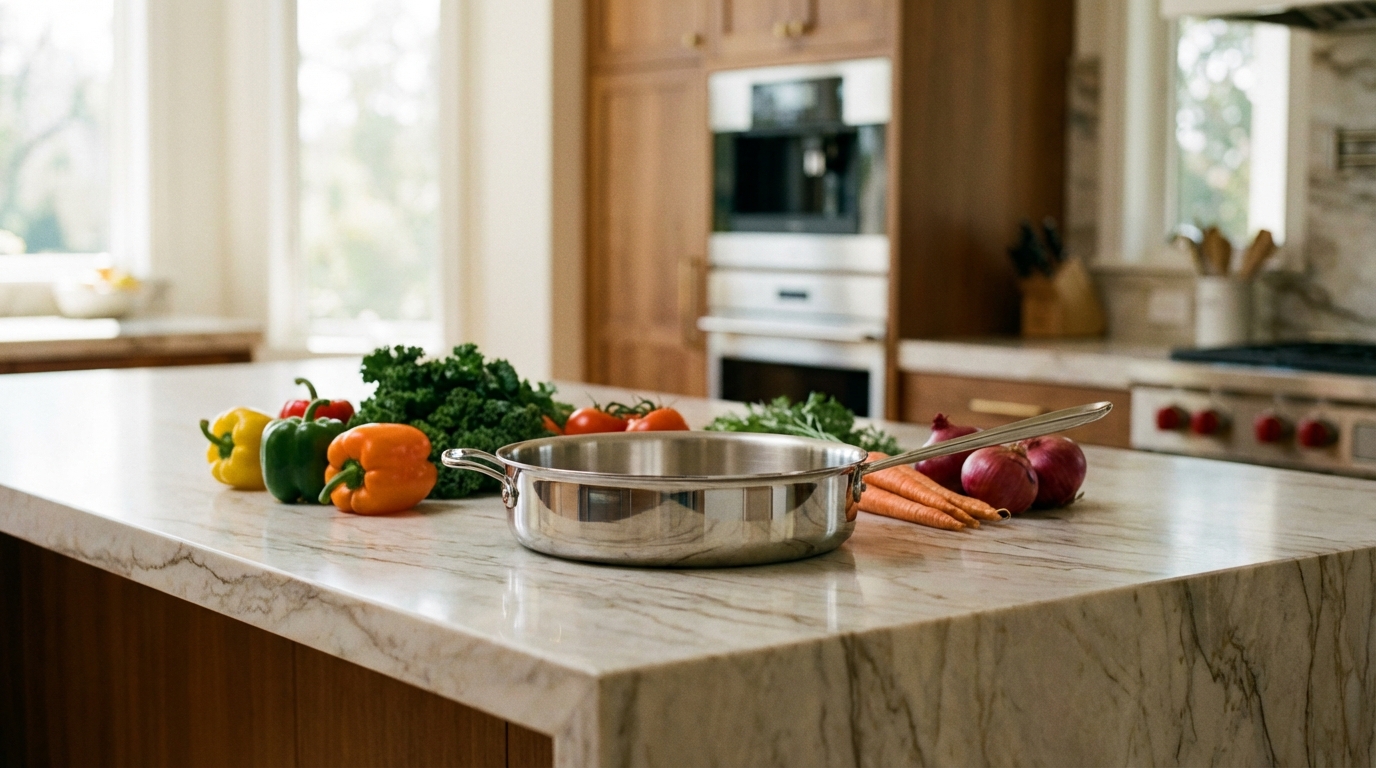
A wide, shallow, non-toxic pot revolutionizes big-batch cooking by maximizing surface area for faster, more even heating and evaporation while eliminating worries about harmful chemicals leaching into food. The article guides readers through selecting the safest materials--such as 18/10 stainless steel, enamel-coated cast iron, or ceramic titanium--explaining how each balances durability, heat conductivity, and chemical inertness so families can confidently simmer gallons of chili or stock. It demystifies sizing (6-12 quart options) and key features like riveted loop handles, tempered-glass lids, and oven-safe rims that transition seamlessly from stovetop to oven to table, turning one vessel into a multifunctional workhorse. Practical care tips--preheating with oil to create a natural non-stick layer, deglazing instead of scouring, and thorough drying to prevent pitting--extend the pot's lifespan for decades, saving money and landfill waste. Ultimately, readers learn that investing in the right non-toxic, wide, shallow pot not only safeguards health and flavor but also streamlines prep, reduces cleanup, and future-proofs their kitchen for holiday crowds, meal-prep Sundays, and everyday one-pot wonders.
Why a Non Toxic Wide Shallow Pot Is a Kitchen Game-Changer
Swap your deep stockpot for a non-toxic, wide-shallow pot and get faster, more even cooking with zero chemical leaching and way less scrubbing.
Cooking efficiency: how width and shallow depth speed up big-batch prep
Here's the physics behind the magic: a wide, shallow pot dramatically increases the surface area of your food that's in direct contact with heat, compared to a tall, narrow stockpot holding the same volume. When you're browning five pounds of ground beef for a double batch of bolognese, that extra square footage means more meat touches the hot cooking surface at once instead of steaming in its own trapped juices. The result is faster, more even browning across the entire batch, rather than babysitting three separate rounds in a cramped pot while the rest of the meat waits on the cutting board turning gray.
That same surface-area advantage pays off in a completely different way once you move from searing to simmering. A shallow pot exposes more of your liquid to open air, which speeds up evaporation and lets sauces, stocks, and braising liquids reduce in a fraction of the time a deep pot would need. If you've ever watched a marinara simmer for an hour in a stockpot and still look watery, you'll notice a wide pan can concentrate those same flavors in twenty minutes simply because there's more surface releasing steam. For big-batch cooks working against a ticking clock -- Sunday meal prep, a holiday crowd, a soup for the freezer -- that time savings compounds fast across every stage of the recipe.
Width also solves a practical spacing problem that deep pots simply can't. Searing chicken thighs, caramelizing a mountain of onions, or reducing a pan sauce all require room for ingredients to spread into a single layer rather than piling on top of each other. Overcrowding a narrow pot traps steam, and steam is the enemy of browning -- it's the difference between a golden-crusted batch of vegetables and a sad, pale, boiled-tasting one. A wide non-toxic pan gives every piece its own patch of hot metal, so the whole batch develops color and flavor at the same rate -- no stirring in shifts, no doing it twice.
Finally, because a wide, shallow pot heats and cools faster than a deep one, it responds more quickly to adjustments you make on the stove. Drop the heat to rescue a sauce that's reducing too fast, or crank it up to finish a quick pan-fry, and you'll see the change reflected in seconds rather than minutes. That responsiveness, paired with the safety of a non-toxic cooking surface, means you're not just working faster -- you're working with more control, which is exactly what big-batch cooking demands when there's no room for a ruined pot of stew.
Health impact: eliminating harmful chemicals from batch meals
When you're cooking in bulk--think five-gallon batches of bolognese or a week's worth of bone broth--your pot's surface spends hours in direct contact with acidic tomatoes, salty broths, and simmering liquids that are notoriously good at leaching whatever they touch. Older nonstick pans coated in PTFE or PFOA, along with cheap aluminum cookware that has worn or unsealed surfaces, can shed microscopic particles and chemical byproducts into your food, especially at high heat or when scratched by a metal spoon. Multiply that exposure across dozens of servings meant for your family or meal-prep containers, and the health stakes of your cookware choice suddenly feel a lot bigger than a single dinner.
A non-toxic wide, shallow pot--made from inert materials like 18/8 stainless steel, enamel-coated cast iron, or ceramic-titanium composites--largely sidesteps this problem. These materials are far less likely to react with acidic or alkaline ingredients, off-gas at high temperatures, or break down into flaky coatings that end up in your soup. That means the tomato sauce you're simmering for two hours to feed a crowd stays closer to what it should be: tomatoes, herbs, and salt, rather than a mix of trace metals or synthetic polymers. For families managing food sensitivities, feeding young children, or simply trying to reduce their overall chemical exposure, this is a meaningful, everyday benefit hiding in plain sight on the stovetop.
The wide, shallow shape actually reinforces this health benefit rather than working against it. Because heat distributes more evenly across a broad, thin layer of food, you're less likely to develop scorched hot spots that tempt cooks to crank up the heat or scrape aggressively--both of which can accelerate wear on lower-quality nonstick surfaces. Even, gentle heat means your non-toxic pot stays non-toxic for longer, since there's less thermal stress pushing coatings or seals past their safe limits. In short, the design and the material work together: one helps keep temperatures moderate and consistent, and the other reduces the chances that anything harmful transfers into dinner.
Finally, there's a compounding effect worth mentioning: batch cooking means batch exposure. A single meal cooked in questionable cookware is a minor risk; a pot of chili destined for freezer meals, lunches, and reheats over two weeks multiplies that same risk many times over. Choosing a genuinely non-toxic wide, shallow pot isn't just a one-time upgrade--it's a standing decision that helps protect every future batch you cook in it, which is exactly the kind of quiet, cumulative health win that's easy to overlook until you really add it up.

Materials That Make Your Non Toxic Wide Shallow Pot Safe and Durable
Crafted from 18/8 stainless steel and a 100% ceramic non-stick coating free of PFAS, PTFE, lead, and cadmium, this wide, shallow pot delivers professional-grade durability without leaching toxins into your food.
Stainless-steel cores with truly non-reactive interiors
Stainless steel earns its reputation as a truly non-reactive material the old-fashioned way: through its chromium and nickel content. Look for 18/10 (sometimes labeled 18/8) stainless steel on the interior cooking surface, meaning 18% chromium and 10% nickel fused into the alloy. That chromium content forms an invisible oxide layer that won't react with tomatoes, wine, citrus, or vinegar-based sauces the way bare aluminum or unlined copper can. You can simmer a large batch of marinara for hours without worrying about a metallic tang creeping into the sauce or trace metals leaching out with every acidic bite--a real concern with cheaper, uncoated cookware.
The catch is that stainless steel alone is a mediocre heat conductor, which is why the best wide, shallow pots sandwich it around a core of aluminum or copper rather than relying on a single layer of steel. This tri-ply or multi-ply construction offers the best of both worlds: a fully non-reactive cooking surface inside and out, with a conductive metal hidden safely in the middle where it never touches food. Heat spreads evenly across the cooking surface instead of pooling in hot spots, which matters enormously when you're trying to reduce a stock evenly across twelve inches of surface area rather than the narrow base of a traditional stockpot.
It's also worth checking that the steel is magnetic-grade (usually 430-series on the exterior base) if you're cooking on induction, since not all 18/10 stainless is induction-compatible on its own. Reputable manufacturers solve this by bonding a magnetic stainless layer to the cooking base while keeping the 18/10 non-reactive layer as the food-contact surface--so you get induction compatibility without sacrificing the chemical inertness that makes the pot safe in the first place. When a pot's construction is fully disclosed this way, layer by layer, that transparency itself is a good sign you're buying something built to last and genuinely non-toxic, not just a marketing label slapped on a bargain pan.
Eco-friendly finishes and construction that resist wear
Beyond the base metal, the finish determines whether your wide shallow pot stays toxin-free after years of hard use. Look for coatings bonded through PVD (physical vapor deposition) or sol-gel ceramic processes rather than sprayed-on nonstick layers. These methods fuse the finish to the metal at a molecular level, so it's less likely to flake, blister, or off-gas at high heat the way older PTFE coatings can. Reputable non-toxic cookware brands now publish third-party lab results confirming their finishes are free of PFOA, PFOS, lead, and cadmium. This is worth checking before you buy, especially since a wide shallow pan's larger cooking surface means more finish is exposed to daily wear.
Construction matters just as much as the coating itself. A fully-clad, multi-ply build--where the aluminum or copper core runs edge-to-edge rather than stopping at the base--helps prevent warping around the rim, a common failure point in cheaper wide pans that see frequent high-heat searing. Look for a continuous seam where the cooking surface meets the sidewall; visible welds or seams can become weak spots where coatings crack first and grime collects over time. Riveted attachments (rather than screws or adhesives) for handles and helper grips also matter, since they're less likely to loosen or trap bacteria in hidden crevices, keeping the whole pot both structurally sound and easy to sanitize.
Finally, consider the finish's resistance to thermal shock and metal-utensil abuse, since a wide shallow pot naturally invites more scraping and stirring across its broad base. Enamel-coated cast iron holds up well here because the glass-like glaze is fired at extreme temperatures, making it dense enough to resist scratching from wooden or silicone tools. Brushed stainless steel finishes, meanwhile, disguise the fine scuffs that build up from years of sautéing. Ceramic-titanium hybrids split the difference, offering a slick, easy-release surface reinforced with titanium particles that add hardness without introducing synthetic polymers--so the pot keeps its non-toxic integrity and its like-new appearance well past the point where a lesser finish would have started chipping into your dinner.
Sizing and Features for Your Non Toxic Wide Shallow Pot
Choose the perfect non-toxic wide shallow pot by matching its exact dimensions, capacity, and safety certifications to your cooking needs.
Practical lids, handles, and ergonomics for daily use
A wide, shallow pot only stays worry-free if you can actually lift, pour, and store it without a struggle, which is why lid and handle design deserve just as much attention as the metal itself. Look for a tempered-glass lid with a stainless steel rim rather than an all-metal cover; the glass lets you monitor a simmering batch of marinara or bone broth without lifting the lid and losing heat, while the steel edge resists the warping and questionable coatings sometimes found on cheaper plastic-knobbed versions. A vented steam hole is a small but mighty feature too, letting you control evaporation for a quick reduction without removing the lid entirely and inviting a boil-over onto your stovetop.
Handles matter even more once a pot is filled to the brim with soup or stock, since a wide, shallow design shifts weight outward rather than down. Riveted, stay-cool stainless steel loop handles are the gold standard here: double-rivet construction keeps handles from loosening with years of daily use, and the wide loop shape gives you room to grip with an oven mitt or thick towel when the pot comes out of a hot oven for a shakshuka or baked pasta finish. Avoid handles that are welded or bonded with adhesive, as these joints can degrade with repeated heat cycling and eventually introduce the very leaching risk you bought a non-toxic pot to avoid.
Ergonomics extend beyond the handles to how the pot behaves on your specific stovetop and in your storage space. A wide base needs a burner that can actually heat it evenly--an induction-ready disc base or a tri-ply construction helps here--so check that your cooktop's largest burner comfortably supports the pot's diameter before you buy. Also consider stackability: many wide, shallow pots have straight, slightly tapered sides so lids nest and pots stack in a cabinet, a small design choice that pays off daily if your kitchen storage is tight. Finally, test the pour: a pot with a subtly shaped rim or small pour spout built into the lip makes decanting soup into storage containers dramatically less messy, which matters enormously when you're portioning out a large batch of chili for the freezer.
Ultimately, the best non-toxic wide, shallow pot disappears into your routine rather than announcing itself as a chore. Lids that let you see and vent without fuss, handles that stay cool and secure under real weight, and a build that matches your burner and cabinet space are what transform a well-intentioned purchase into the pot you reach for every single week.
Choosing the right capacity for families and meal-prep routines
Before you fall for a pretty pot, do the math on who you're actually feeding. A single adult or a couple who batch-cooks lunches for the week can usually get by with a 6-quart wide, shallow pot -- enough room to simmer a pound of grains, braise a few chicken thighs, or reduce a quart of sauce without crowding the pan. Families of four to six, though, should size up to the 8-to-10-quart range. That extra volume isn't just about fitting more food; in a shallow silhouette, it also preserves the surface-area-to-depth ratio that makes these pots shine, so you're not sacrificing the fast evaporation and even browning that drew you to a wide pot in the first place.
If you're a dedicated Sunday meal-prepper who cooks once for the whole week, lean toward the top of the range -- 10 to 12 quarts. This is the sweet spot for a double batch of chili, a full pot of broth, or a few pounds of shredded chicken destined for multiple lunches. A too-small pot forces you to cook in shifts, which defeats the purpose of a wide, shallow design: getting more food exposed to heat at once so it cooks faster and more evenly. Undersizing is a common regret among home cooks, so when in doubt, size up rather than down.
Capacity isn't only about quarts, though -- it's also about how that volume is distributed. A wide, shallow pot with a large diameter but modest depth (think 11 to 12 inches across, 4 to 5 inches deep) will generally outperform a narrower, deeper pot of the same stated capacity when searing meat for a big batch of stew or reducing a sauce quickly, because more of the food touches the hot cooking surface. When comparing pots, check both the quart rating and the diameter; two 10-quart pots can behave very differently depending on their proportions.
Finally, think about where the pot will live and how it will be used day-to-day, not just on holidays. If your stovetop has limited burner space or your cabinets are shallow, a 12-quart pot with a wide, flat bottom may not fit as easily as a taller, narrower vessel of the same capacity -- so measure your storage and cooking space before you buy. And if your household's needs swing between weeknight dinners for two and holiday cooking for twelve, consider that a single 8-to-10-quart pot with a well-fitted lid is often the most versatile compromise, capable of scaling down for a smaller meal or handling an ambitious batch of soup without feeling like the wrong tool for the job.
Care and Longevity for Your Non Toxic Wide Shallow Pot
Hand-wash your wide shallow pot with mild soap, skip the dishwasher and metal utensils, and it'll stay naturally non-stick for years.
Storage tips and habits that extend life and reduce landfill waste
Even the sturdiest non-toxic pot can develop scratches, warping, or a dulled finish if it's shoved into an overcrowded cabinet night after night. The wide, shallow profile that makes this pot so efficient on the stovetop also makes it a little more awkward to store than a tall stockpot, so it's worth building a few intentional habits around where and how it lives when it's not in use. Stack it on the bottom shelf of your cookware cabinet, away from heavier pots that could rest directly on its cooking surface, and always place a felt pan protector, a folded kitchen towel, or even a paper towel between it and anything stacked on top. That thin buffer absorbs the friction that causes micro-scratches, which matter more than they seem: in stainless steel, scratches create tiny crevices where food residue and moisture can hide; in enamel-coated cast iron, they can chip away the very coating that keeps the pot non-toxic and non-reactive.
Hanging storage is another excellent option if your kitchen allows for it, particularly for pots with sturdy loop handles. A wall-mounted rail or ceiling pot rack keeps the wide base from bearing any weight or pressure and serves as a visual cue to dry the pot fully before hanging it, since trapped moisture against a stored surface is one of the fastest routes to pitting or rust spots, especially on carbon steel or uncoated cast iron. If cabinet space is your only option, store the pot with its lid off or slightly ajar. Sealing in residual humidity beneath a tight-fitting lid, even after the pot looks dry, can quietly degrade both the metal and the seal over time.
Beyond placement, a few small habits go a long way toward extending the pot's working life, which is really the whole point of choosing non-toxic cookware in the first place. Avoid nesting your wide, shallow pot inside a smaller pot or bowl for storage; the pressure points created by mismatched shapes are a common source of the tiny warps that throw off heat distribution. If you're tight on space, consider storing the lid separately, either flat in a lid organizer or hung on an interior cabinet door rack, so it isn't constantly clanking against the pot's rim and chipping the very edge that seals in moisture during simmering.
All of this matters beyond the convenience of your cabinet space. A pot that's cared for and stored thoughtfully can last many years longer than one that's neglected, meaning it's less likely to become another piece of scratched, leaching cookware headed for a landfill. Compare that to the cycle so many households fall into with cheap non-stick pans, replaced repeatedly as coatings flake and degrade. Every non-toxic pot you keep in rotation longer instead of discarding means fewer resources extracted, fewer manufacturing emissions, and fewer pots ending up in a dump somewhere leaching who-knows-what into the ground. Good storage habits aren't just about keeping your cookware looking sharp; they're a quiet, ongoing act of waste reduction that starts the moment you decide where the pot goes when dinner's done.
Cleaning methods that preserve the non-toxic surface
The whole point of cooking in a non-toxic pot is defeated if you scrub away its protective surface every time you wash it, so your cleaning routine matters just as much as your cooking technique. For stainless steel and ceramic-titanium pots, hand-washing with warm water and a few drops of mild dish soap is really all you need for daily maintenance. Let the pot cool slightly before washing--a temperature shock between a hot pan and cold water can warp thin-gauge metal or stress a ceramic coating--then wipe it down with a soft sponge or dishcloth. Avoid steel wool, abrasive scouring pads, and harsh powdered cleansers; these create micro-scratches that give food and grime somewhere to hide, and over time they can wear through a ceramic or enamel layer entirely, exposing the base metal underneath.
For stuck-on residue after a big batch of chili or a reduced sauce, skip the aggressive scrubbing and try deglazing instead. Add a splash of water, or a mixture of water and white vinegar, to the still-warm pot, set it back on low heat, and use a wooden or silicone spatula to loosen the fond. This is the same technique that builds flavor into pan sauces, and it also lifts baked-on bits without damaging the surface, usually finishing the job in under a minute. If you're dealing with mineral deposits or faint discoloration on stainless steel, a paste of baking soda and water applied with a soft cloth will buff it out gently without introducing scratches.
Dishwashers are technically an option for many non-toxic stainless and ceramic pots, but I'd treat that as a last resort rather than a habit. The high heat, harsh detergents, and jostling against other cookware in a dishwasher can accelerate wear on coatings and dull the finish of polished stainless steel over time. If you do run a pot through the dishwasher occasionally, remove it promptly at the end of the cycle rather than letting it sit in residual moisture and heat. And always dry your pot thoroughly by hand immediately after washing, whether it went through the dishwasher or the sink--lingering water droplets are a leading cause of pitting and spotting on stainless steel, and trapped moisture under a lid can encourage mildew over time.
Finally, be mindful of what you store inside the pot between uses. Stacking heavier pots or metal lids directly on top of a non-toxic cooking surface, even when it's clean and dry, can scratch or chip a ceramic or enamel coating. A simple pot protector, a folded dish towel, or just enough shelf space to store pots separately will go a long way toward keeping that surface pristine for the long haul.
- Wide, shallow design maximizes surface area for faster, even cooking
- Non-toxic materials eliminate chemical leaching into food
- Large capacity accommodates big-batch soups, stews, and sauces
- Proper care extends pot lifespan and maintains safety properties
- Material choice directly impacts both health and cooking performance