

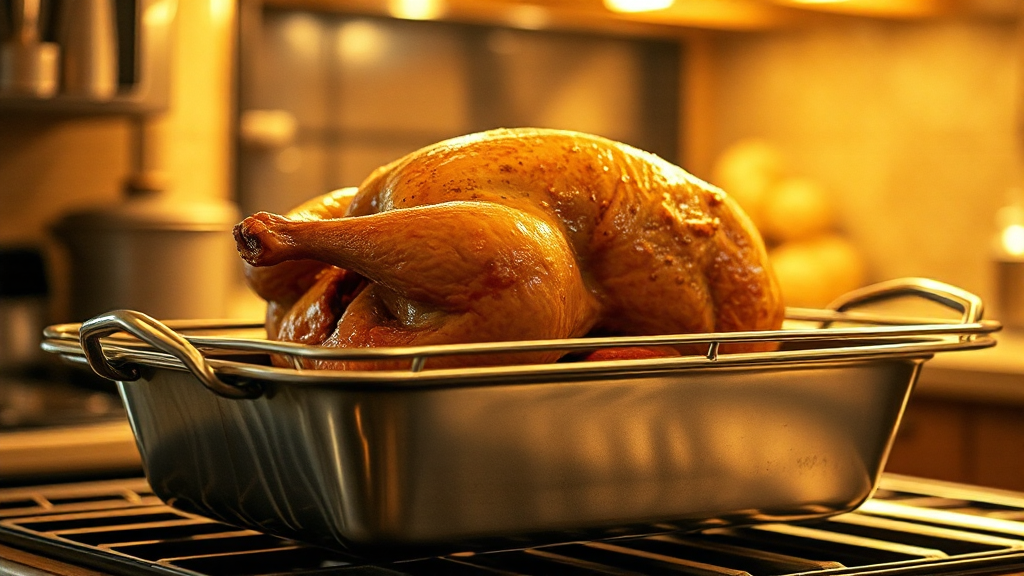
Selecting the right roasting pan for Thanksgiving requires balancing your turkey's weight with your oven's dimensions and your preference for browning versus ease of cleaning. For a standard 20-pound bird, an 18-inch pan is the recommended size, provided it fits your oven with at least 2 inches of clearance on each side. Using a roasting rack is essential to lift the bird off the drippings, which promotes even heat circulation and crispy skin rather than steaming. While stainless steel pans offer superior browning and durability, nonstick options are lighter and easier to clean, though they have lower maximum oven temperatures and are more prone to coating wear.
Choosing the Right Size for Your Bird
Matching Pan Dimensions to Turkey Weight
Start with the weight of your turkey to determine the necessary pan length. For a 20-pound bird, an 18-inch roasting pan is the standard recommendation [1]. Before purchasing, confirm the pan’s handle-to-handle width fits your oven with approximately 2 inches of clearance on each side [1]. A standard 30-inch range typically has an interior about 24 to 25 inches wide, but because handles can add several inches, you should measure your specific oven first [1].
For smaller birds or side roasts, a more compact footprint is more manageable. The 13" Stainless Steel Roasting Pan is a versatile mid-range option, while the 9" Stainless Steel Roasting Pan is ideal for single servings or sides. For larger gatherings, the 18" Stainless Steel Roasting Pan provides the necessary space for a whole turkey and its drippings. If you need flexibility for various meal sizes, the Stainless Steel Roasting Pan Set includes all three dimensions.
Why Extra Space Prevents Overflow and Ensures Even Cooking
Extra space in the pan prevents juice overflow and supports better heat circulation. During roasting, a turkey releases significant fat and moisture; if the pan is too small, these drippings can boil over, potentially leading to uneven cooking as the bird sits in liquid. A larger pan helps ensure the bird is elevated above the drippings, which promotes browning rather than steaming [2].
Sufficient depth and width also help collect the drippings needed for gravy. A 16-inch stainless steel pan is often cited as a balanced choice for standard turkeys, offering enough room for the bird and juices without occupying the entire oven [3].
The Importance of a Roasting Rack
How Racks Promote Crisp Skin and Even Heat Circulation
A roasting rack is essential for achieving crispy skin and even cooking. By lifting the turkey off the bottom of the pan, the rack allows hot air to circulate around the entire bird, preventing the bottom from stewing in drippings [1].
This elevation also simplifies the collection of drippings for gravy, as juices pool in the bottom of the pan for deglazing [3]. For a lighter alternative, the Silicone Roasting Racks - 4 Pack - Green are oven-safe and lift food so it crisps instead of steams.
Selecting Rack Material and Stability for Heavy Loads
Stability is critical when choosing a rack, as a flimsy design can bend under the weight of a large turkey, compromising even cooking. Look for materials that can support the load without flexing. A V-shaped rack is often recommended for turkeys because it holds the bird securely and allows for optimal air circulation [1].
When using silicone racks, verify they are designed for the weight of your specific bird. The Silicone Roasting Racks - 4 Pack - Green are versatile for various roasting tasks, but a metal rack may be more appropriate for very large birds due to higher load-bearing capacity. Always check the rack's weight limit before use.
Material Options and Their Impact on Performance
Stainless Steel vs. Nonstick: Durability and Cleaning Trade-offs
The choice between stainless steel and nonstick depends on whether you prioritize browning or ease of cleaning. Stainless steel pans are excellent for browning drippings, which is vital for flavorful gravy, and can last for decades [2].
Nonstick pans are lighter and easier to clean, making them a good choice for minimizing scrubbing. However, nonstick coatings can wear over time, particularly if metal utensils are used, and they do not brown food as effectively as stainless steel [3]. For a balance of both, the 9" Stainless Steel Roasting Pan + Silicone Liner offers the browning capability of stainless steel with a silicone liner for easier cleanup.
Heat Distribution and Oven Safety for High-Temperature Roasting
Material affects how heat is distributed. Aluminum, for example, has high thermal conductivity and spreads heat across the base and sides quickly, which is beneficial for even roasting [4]. Stainless steel is highly durable and typically oven-safe up to 500°F [3].
Check the maximum oven-safe temperature of your pan; nonstick pans often have lower limits, around 450°F [2]. To prevent warping in a hot oven, choose a sturdy, thick construction that maintains its shape [4].
Practical Features for the Thanksgiving Table
Handles, Lids, and Ease of Maneuvering in a Full Kitchen
Because a full roasting pan is heavy, handle design is critical for safe maneuvering. Vertical handles are the safest and provide the most stability [5]. For a secure grip that reduces the risk of the pan slipping, look for handles that are at least 4 inches wide [5].
When transporting a hot pan, always use oven mitts and move slowly to prevent spills. The Stainless Steel Roasting Pan Set provides various sizes designed for ease of use.
Care and Maintenance Tips for Long-Lasting Use
Proper care extends the life of your cookware. Many stainless steel pans are dishwasher-safe, though soaking in warm, soapy water is an effective way to loosen stuck-on food without abrasive scrubbing. For nonstick pans, use only non-metal utensils to prevent scratching the coating and avoid high-heat searing that could damage the surface.
Silicone liners and racks are easy to maintain; wash them with warm, soapy water or use a dishwasher if labeled. To prevent rust, especially with stainless steel, dry your pan thoroughly after cleaning and store it in a dry location.
Conclusion
Final Checklist for Your Purchase Decision
Selecting the right roasting pan for Thanksgiving comes down to balancing size, material, and practical features. Before you buy, run through this final checklist to ensure your choice fits your kitchen and your meal.
- Measure Your Oven: Confirm the interior width is at least 2 inches wider than your pan's handle-to-handle span [1].
- Match Size to Bird: For a 20-pound turkey, aim for an 18-inch pan; for smaller birds, a 13-inch or 16-inch pan may suffice [1].
- Check Rack Stability: Ensure the rack is sturdy enough to support the weight of your bird without bending, preferably a V-shaped design for secure holding [1].
- Evaluate Material Needs: Choose stainless steel for superior browning and durability, or nonstick for easier cleanup, keeping in mind the temperature limits of nonstick coatings [2].
- Inspect Handles and Weight: Look for vertical handles at least 4 inches wide for a secure grip, and consider the total weight of the pan when full to ensure you can maneuver it safely [5].
By following these steps, you can select a roasting pan that not only fits your turkey perfectly but also makes the cooking and cleanup process as smooth as possible. A well-chosen pan is a practical investment that will serve you well for many holiday meals to come.
Frequently Asked Questions
-
What size roasting pan do I need for a 20-pound turkey?
Use an 18-inch roasting pan for a 20-pound bird. Before buying, confirm that the pan’s handle-to-handle width fits your oven with about 2 inches of clearance on each side to ensure a proper fit [1].
-
Why is a roasting rack important for turkey skin?
A rack lifts the turkey off the bottom of the pan, allowing hot air to circulate around the entire bird. This prevents the skin from stewing in drippings and promotes even browning and crispness [1].
- Which material is better for roasting a turkey: stainless steel or nonstick?
-
What handle design is safest for a heavy roasting pan?
Look for vertical handles that are at least 4 inches wide. This design provides a secure grip and stability, reducing the risk of the pan slipping when you move it in and out of the oven [5].
- An 18-inch roasting pan is the standard recommendation for a 20-pound turkey, but you must measure your oven to ensure the handle-to-handle width fits with about 2 inches of clearance on each side [1].
- A roasting rack lifts the turkey to allow hot air to circulate, preventing the bottom from stewing in drippings and promoting even browning [1].
- Stainless steel pans are better for browning drippings for gravy and can last for decades, whereas nonstick pans are easier to clean but have oven limits around 450°F and may not brown as effectively [2].
- Vertical handles that are at least 4 inches wide provide the safest grip and most stability when maneuvering a heavy, full roasting pan [5].
- https://comfykitchen.com/blog/best-roasting-pans-for-turkey/
- https://team5e.com/best-roasting-pan-for-turkey/
- https://www.bocaratontribune.com/bocaratonnews/2024/11/master-the-art-of-turkey-roasting-top-tips-and-must-have-pans-for-a-perfect-feast/
- https://kitchengearly.com/best-bakeware-for-even-heat-distribution/
- https://m.lestubes.com/article/test-drive-roasting-pans