

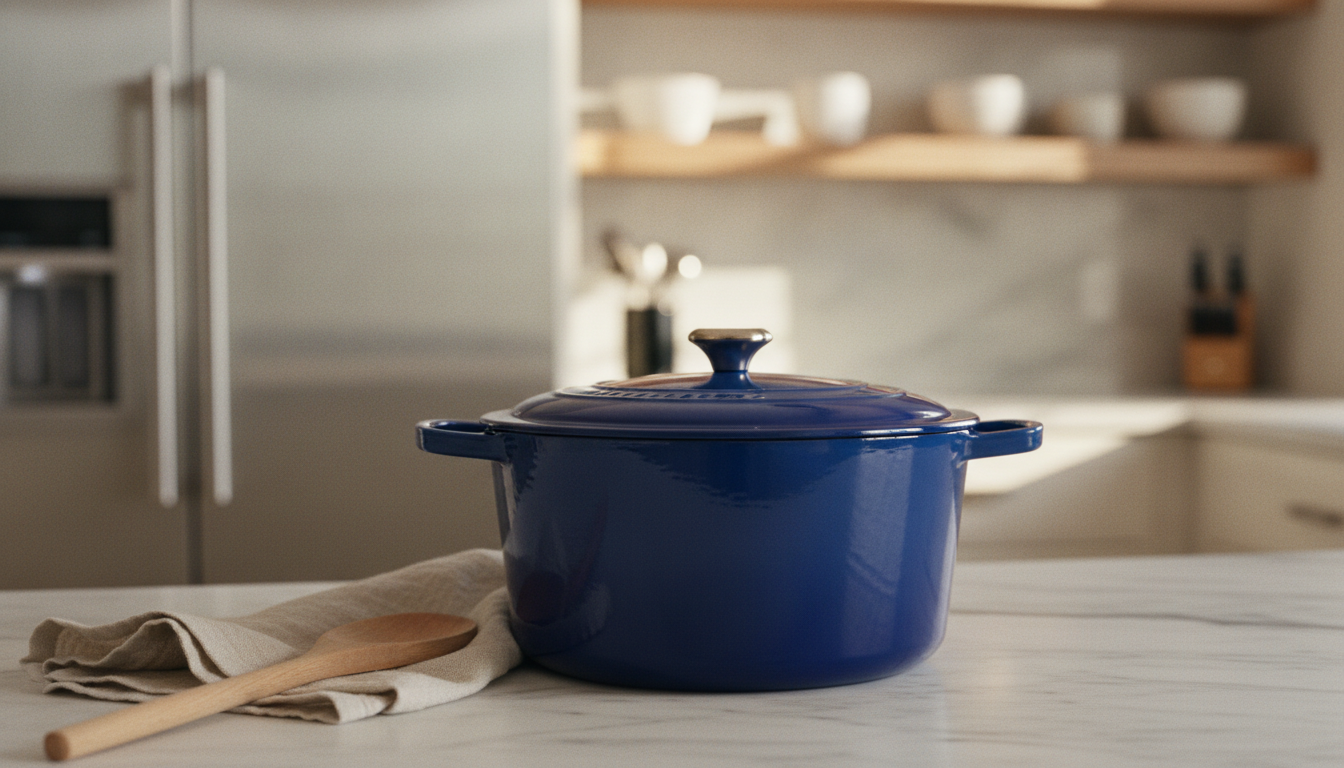
Learn which common care habits--dishwasher use, metal utensils, thermal shock, and improper storage--void your Dutch oven warranty and damage the enamel. Simple daily practices like hand washing, using wood or silicone utensils, and cooling gradually keep your cookware claim-eligible for years.
Why Dutch Oven Warranties Matter and What Voids Them
Rust, staining, and cosmetic wear from normal use aren't covered by most Dutch oven warranties, even when damage looks like a factory defect.
Common Warranty Exclusions That Catch Home Cooks Off Guard
Most cast iron and enameled cast iron warranties exclude the same handful of issues, and they catch home cooks off guard because the damage looks like a manufacturing flaw when it's actually a care issue. Rust, pitting, staining, scuffing, and powdery or rough surfaces are explicitly not covered, since these typically trace back to moisture exposure or skipped maintenance rather than a factory defect [1]. Cosmetic changes from normal use, including color shifts on interior and exterior finishes, also fall outside coverage because high heat naturally alters enamel and cast iron surfaces over time [1].
Residue left behind by abrasive cleaners or polishes is another common exclusion, as is damage from melted items or overheating beyond the cookware's intended use [1]. Variations in enamel color, finish, and casting are considered part of the product's natural character rather than a defect, which means a mismatched or uneven-looking piece usually won't qualify for a claim [2]. Commercial use is excluded across the board too.
Warranties from major cast iron makers apply only to normal household cooking, so using a Dutch oven in a restaurant or catering operation voids coverage entirely [1][2].
How Improper Care Leads to Claim Denials and Costly Replacements
Improper care often starts as a small flaw that snowballs into a full replacement cost. A chip in the interior enamel tends to grow if cooking continues over the damaged spot, and sharp enamel fragments can end up in food [4]. Even when a chip looks like a manufacturing flaw, brands require the piece be shipped back for inspection before approving a replacement, a process that commonly takes four to six weeks [4].
That return shipping isn't free. One owner paid roughly $25 to ship a single Dutch oven to a manufacturer's U.S. headquarters, a cost that adds up quickly if the damage is traced back to care rather than a defect [4]. Even when a claim isn't approved, customers generally aren't left paying full price: returning a damaged piece without an approved claim still qualifies for at least a 75% discount on a replacement [4].
Heating an empty enameled pot too fast is a frequent cause of cracked enamel, since the surface needs fat or liquid and gradual heat to avoid thermal stress [3]. Combined with shipping costs and a weeks-long wait for inspection, one avoidable habit can end up costing both the claim and the price of a full replacement [3][4].

Can a Dutch Oven Go in the Dishwasher? The Warranty Reality
Dishwasher use voids your Dutch oven's warranty and gradually dulls the enamel finish through abrasive detergent and contact with other dishes.
Why Dishwashers Damage Enamel and Interior Finishes
Can a Dutch oven go in the dishwasher? Based on manufacturer warranty language, the answer is no if you want to protect the finish or keep coverage valid. Enameled cast iron warranties specifically list dishwasher use as an exclusion, right alongside metal utensils and heat exposure above 580 degreesF [5]. Care guides for enameled cast iron go further, recommending hand washing as the standard method and explaining why: dishwasher detergents are abrasive enough to gradually dull the enamel's glossy finish over repeated cycles [6]. The dishwasher's mechanical action adds a second risk. Pieces shift and knock against other dishes or the rack during the wash cycle, and that contact is often enough to chip the enamel [6]. For general Dutch oven care habits that extend the life of enameled cookware, sticking with warm water and a soft sponge avoids both problems at once. In short, three things happen when enamel meets a dishwasher cycle:
- Detergent chemicals slowly dull the glossy enamel surface [6]
- Knocking against other dishes chips the interior finish [6]
- Dishwasher use voids manufacturer warranty coverage outright [5]
Skipping the dishwasher isn't just a cosmetic preference. It's the difference between a Dutch oven that stays claim-eligible for years and one that loses coverage the first time it goes through a cycle.
Hand Washing vs. Dishwasher: A Maintenance Comparison Chart
A side-by-side look makes the trade-offs easy to weigh. Hand washing with warm, soapy water takes about a minute and keeps the enamel's glossy finish intact for years, while dishwasher cycles save a step but expose the pot to abrasive detergent and knocking against other dishes [7]. Some manufacturers state their enameled cast iron is dishwasher-safe, yet testers and care guides alike still recommend hand washing as the better long-term habit [9]. Warranty coverage tracks the same line: following the provided care and use instructions keeps a claim valid, and normal wear tied to skipped care isn't treated as a defect [8].| Factor | Hand washing | Dishwasher |
|---|---|---|
| Time per wash | About 1 minute | Faster, less hands-on |
| Enamel finish | Stays glossy over years [7] | Dulls gradually with repeated cycles [7] |
| Chip risk | Minimal | Higher, from contact with other dishes [7] |
| Warranty standing | Matches care instructions [8] | Can fall outside care guidelines [8] |
Five Daily Habits That Secretly Void Dutch Oven Warranties
Avoid metal utensils and abrasive scrubbers on your enameled dutch oven, as scratches and residue are visible warranty claim denials.
Thermal Shock: Rapid Temperature Changes That Crack Enamel
Thermal shock happens when one part of the enamel is contracting from cold while another part is still expanding from heat, and that mismatched stress is what cracks the coating [11]. Cast iron and enamel heat and cool at different rates, so the strain concentrates right at the surface instead of spreading evenly through the metal [11]. Even brands that market their enamel as the most durable on the market acknowledge thermal shock can still crack it or cause the enamel to flake off [10]. The fix is simple: let a hot pot cool for a few minutes before it touches water or a chilly counter, and always set it down on a trivet, wooden board, or silicone mat rather than an unprotected surface [10]. The same risk runs in reverse, since adding cold ingredients to a pan straight off high heat creates the same kind of stress [11].
Common thermal shock triggers:
- Cold tap water hitting a hot interior [10][11]
- Setting a hot pot on a cold countertop [10]
- Plunging a hot pan straight into cold water [10]
- Adding cold ingredients to a scorching-hot pan [11]
Metal Utensils, Abrasive Scrubbers, and Interior Scratching
Metal utensils and abrasive scrubbers leave marks that warranty reviewers can spot immediately, and that visual evidence is often enough to deny a claim outright. Many enameled cookware warranties specifically exclude scratches from knives and sharp utensils, treating them as misuse rather than a material defect [13]. Enameled cast iron faces a related exclusion: residue left behind from abrasive cleaners or polishes falls outside coverage, since that buildup signals the wrong cleaning method rather than a flaw in the casting [12]. Scouring pads, steel wool, and metal spatulas all create the same problem, grinding into the enamel's glossy surface and leaving fine scratches that trap food and stain over time. A few habits cause most of this damage:
- Stirring with metal spoons or whisks against enamel [13]
- Scraping stuck food with metal spatulas [13]
- Scouring with steel wool or abrasive pads [12]
- Using scouring powders or polishing compounds [12]
Switching to wood, silicone, or nylon utensils, paired with a soft sponge for cleanup, helps keep the enamel smooth and supports a cookware piece's eligibility for warranty coverage if a real defect ever shows up.
How to Protect Your Dutch Oven Investment and Maintain Warranty Coverage
Proper cleaning, heat management, and storage habits protect your Dutch oven's enamel and keep your warranty valid.
Best Practices for Cleaning, Seasoning, and Storage
Enameled cast iron skips the seasoning step altogether since the glass-like coating is ready to cook on straight out of the box [14]. A Misen Dutch oven is ready to use the moment you unbox it, with no seasoning required. For daily cleanup, warm water, a few drops of dish soap, and a soft sponge handle most messes without stressing the finish. Stuck-on food responds well to a 15 to 20 minute soak in warm soapy water, or a simmer with a tablespoon or two of baking soda for about 8 to 10 minutes before wiping clean [14]. Heat management matters just as much as cleaning: add fat or liquid before the pot ever touches the burner, stick to low or medium heat, and skip the empty-pot preheat that scorches both food and finish [15]. Thorough drying before storage prevents the musty odors and moisture buildup that come from sealing a damp pot away in a cupboard [14][15]. A few storage habits protect the enamel long after cleanup is done:
- Dry completely before putting cookware away [14]
- Use felt pan protectors or towels between stacked pieces [14][15]
- Keep lid spacers or leave lids slightly ajar for airflow [14][15]
- Store in a dry cupboard away from steam [14]
These habits take a few extra minutes but keep the enamel glossy and chip-free, which matters both for everyday cooking and for staying inside the care guidelines that keep a warranty claim valid.
When to Contact Support and What Documentation You'll Need
Contact support as soon as damage appears rather than waiting, since brands need to assess whether a flaw is a defect or wear before a claim can move forward [16]. Before reaching out, gather documentation: proof of purchase, photos of the damage from multiple angles, a description of how the piece is normally used and stored, and any model or batch information printed on the cookware [16]. Submit through the brand's preferred channel, since using the wrong one can delay or kill a claim outright, and if the first contact happens by phone, follow up with an email summarizing the conversation and noting any case reference number [16]. Standard practice is to follow up at the four-week mark if there's no response, since persistence tends to move stalled claims forward while passive waiting lets them fall through the cracks [16]. If a claim is denied for "damage from misuse," the strongest response is evidence showing normal use: photos of typical cooking, a description of routine storage, and a comparison to how the brand itself markets the product's intended use. Keeping this documentation on hand before a problem ever shows up, rather than scrambling for it after the fact, is what usually decides whether a claim succeeds [16].
The habits here all point the same direction: hand wash instead of running the dishwasher, reach for wood, silicone, or nylon utensils, add fat or liquid before heat, cool a hot pot before it touches water, and dry it fully before storage. None of them take more than a minute, and together they can help keep your enameled cast iron glossy, chip-free, and claim-eligible for years. Questions about caring for your Misen Dutch oven or filing a warranty claim? Contact us and we'll walk you through it.
Frequently Asked Questions
-
Can a Dutch oven go in the dishwasher without losing warranty coverage?
No - enameled cast iron warranties specifically list dishwasher use as an exclusion, alongside metal utensils and heat exposure above 580°F. Dishwasher detergent gradually dulls the glossy enamel, and pieces knocking against other dishes in the rack can chip the interior finish. Hand washing with warm water and a soft sponge keeps both the finish and the warranty intact.
-
What common habits void a Dutch oven's warranty?
Warranties typically exclude rust, pitting, staining, scuffing, cosmetic color changes from normal heat use, residue from abrasive cleaners, damage from melted items or overheating, and any commercial (restaurant or catering) use. Scratches from metal utensils and dishwasher use are also explicitly excluded in many enameled cast iron warranties.
-
Why did my enamel Dutch oven crack, and is that covered under warranty?
Cracking is usually thermal shock - one part of the enamel contracting from cold while another is still expanding from heat. Common triggers include cold tap water hitting a hot interior, setting a hot pot on a cold countertop, or adding cold ingredients to a scorching-hot pan. Even brands that call their enamel highly durable acknowledge thermal shock can still crack or flake it, so this kind of damage is generally treated as a care issue rather than a covered defect.
-
How much does it cost to send a Dutch oven back for a warranty claim, and how long does it take?
One owner paid roughly $25 to ship a single Dutch oven to a manufacturer's U.S. headquarters for inspection, and the review process commonly takes four to six weeks. If the claim isn't approved, the article notes customers generally still qualify for at least a 75% discount on a replacement rather than paying full price.
-
Does a Misen Dutch oven need to be seasoned before first use?
No - enameled cast iron like the Misen Dutch oven skips seasoning entirely because the glass-like coating is ready to cook on straight out of the box. For care afterward, the article recommends warm water, a few drops of dish soap, and a soft sponge for daily cleanup rather than any seasoning step.
- Rust, pitting, staining, and rough surfaces are excluded from warranties because they trace back to moisture exposure or skipped maintenance.
- Dishwasher use voids warranty coverage and dulls enamel gradually, while hand washing takes about one minute and keeps the finish glossy for years.
- Thermal shock from cold water hitting a hot pot or setting it on a cold counter can crack enamel, even on durable coatings.
- Metal utensils and abrasive scrubbers leave visible scratches that warranty reviewers use as grounds to deny claims outright.
- A chip in the interior enamel can grow if cooking continues over the damaged spot, and inspection takes four to six weeks plus return shipping costs.
- Adding fat or liquid before heat and letting a hot pot cool before washing prevents most damage that voids coverage.
- Contacting support immediately with documentation of purchase, damage photos, and usage description strengthens warranty claims significantly.
- https://www.lodgecastiron.com/pages/lodge-promise
- https://www.google.com/goto?url=CAESbQHrOzAVR2tjCm8M1uzvt6SkFDQe7uCLA9dn4Sr_BVntg6IsQKjFkJPeE0hoM4RNefWhxWESqddomCAamDoixJq59eYBRrqZx6raTnRHw2uMqPhuD_TltZZkX7wT7D-OtINrUV5E_0C0-txYQN0
- https://www.lecreuset.fi/en_FI/care-and-use/cop002.html
- https://www.reviewed.com/cooking/features/how-to-claim-your-le-creuset-lifetime-warranty
- https://madeincookware.ca/pages/warranty
- https://alva-cookware.us/pages/caring-cast-iron-cookware
- https://www.google.com/goto?url=CAESdwHrOzAVGVdaVi_SqKo4Cvy1_WgL8u7oPDiYwzQEf3rPlXGHaeCAbh9hun94XJTTYQzUzN25Uhna8ekFUGRy-4vvLT1xMW3yAs_taIR5ny7f6sJa0vI1SeeozZOrXnMo5EoEY6XvurbJN5hT9CcoKsZ7YsOhPsav
- https://www.google.com/goto?url=CAESYgHrOzAVrF53o0xHXA6dg7Iigi-9M65BXFMQURuKZkY5fiXk8z3JIS0ltibtpixfCfGyIaY9vbzwO-3Gi_tZZJUknKEj70UloFqQdQAi632kUzw-PxA40T8SC9cgXnIAjJBi
- https://www.google.com/goto?url=CAESkQEB6zswFbUmWRmMRoJyh2Z7yR7d6vRNMPPKW-Ge7_97iBo7kiYWdAJRG13pz4TX-B8onv4o6_vusA8-dK7hhrDAqaI-iGvPD_MCHtVla_UqOX9NLL-nm3wBiXoawic8YI6SVqvKWLYgOpOdNAlrc7EjH-vITAWNM7YI_2sycvH2XgcSJXSM_LzqavpyyU4KG_iw
- https://www.lecreuset.ca/en_CA/care-and-use.html
- https://www.tastingtable.com/2213743/common-issues-le-creuset-cookware/
- https://www.google.com/goto?url=CAESrQEB6zswFT20M_Ot59vfKKHrDhuNwiJwXhQWeaYQSaUl201gw1EaU5JOz8qiUhCsiEaqXtbsd9SOU07raWpvaBpQjF8d2Yyou65vYhlBy_2BA_8MSv5mKvjDVtkvAT8Bii-lpdKeZeMkuhwrCe0YJGwLQV-ZY1WohQZzBYCQFhafaoBqOk9GDR7bSaJtpoaLqF84ZqMbd-ZPTK0_sW7_A_qopqmeHUAir2zy2QH-0g
- https://www.google.com/goto?url=CAESYgHrOzAVBfskCAdHwHOFOpLI8rJYAU8Fkh36WUUo4Hqps0fC3ymNDLID0Z2xeSht_IIyCHDefTh4ZijSHPvenlix79bY3M8Hhz_UxVc5NLRspfzzz8vwDQaI1yCaPm8FHe8z
- https://www.google.com/goto?url=CAESiwEB6zswFbspdf3HjvsEBEC45h6OKHB9oXb-6KN8rqtavMOBfOmA_qqQOeTKZdNvPGcWi5esTJKmcR_RPRuk89-DJrgpaxX--2ukPWHNXKNGrmQkVz5YRwJDvKoB3DvI2_0yz1xGz5U765uTYojdF2Yr-P4_0le5FQW-1vSuysCGT44Rd66Kn0M3iV3_
- https://www.google.com/goto?url=CAESmQEB6zswFWTdWLEzEs3Q8ekZ5Yz7OyR3RK5sfQhq2DnvrdAf4Pa6bVbq1ZE578pXxiO2ZIYOkjFZi1pV8JgnUg1SRH_1rypTbArQELOpXKZ5ogw7fQ9OHgKc4QU1m1H-o6K1QPtqdzNiFiM81TzAa3L0nyPGFngNm6LLL2mFFf1QE5mk6BTcgOYr1iQV0wjOrcib01wNU08MVQw
- https://guaranteemystuff.com/how-to-claim-lifetime-guarantee-2026