

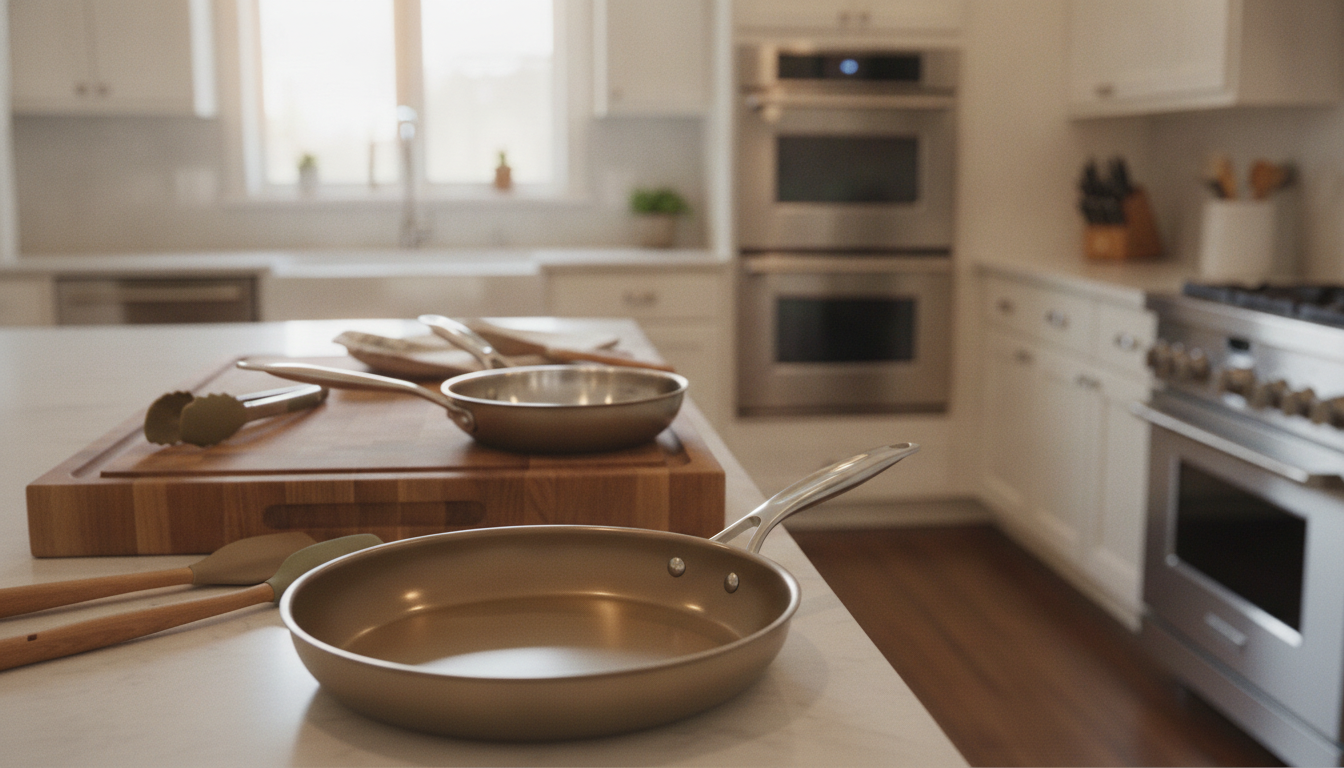
Plant-based proteins need cookware and tools designed for their delicate, low-fat nature--nonstick pans for searing tofu and tempeh, stainless or carbon steel for batch-cooking grains and legumes, and durable cutting boards and silicone tools for high-volume prep.
Why Vegan Cooking Demands Different Cookware Than You Think
Plant-based proteins need nonstick surfaces to prevent sticking and tearing during cooking, since they lack the fat content that makes meat forgiving.
How plant-based proteins and vegetables cook differently than meat
Meat gets its texture from muscle fiber and connective tissue, which firm up and brown predictably under heat. Plant-based proteins don't have that built-in structure, so manufacturers rely on binding and texturizing agents to hold meat analogues together during cooking [1]. That difference matters at the stove: without the same fibrous network, plant proteins can break apart, dry out, or turn mushy if they sit too long in a pan that doesn't release food cleanly.
Color and flavor development also work differently. Meat's browning comes largely from fat and myoglobin, while plant-based products use added flavoring and coloring agents to mimic that same seared, savory result [1]. Tofu, tempeh, and vegetable-forward proteins need a cooking surface that lets you control contact time precisely, since they don't have the same margin for error that meat's fat content provides.
Getting a good crust on a plant-based patty or a slab of tofu depends more on pan surface and heat management than it does with a burger that's naturally forgiving thanks to its fat content. That's the starting point for why cookware choice matters more, not less, once meat leaves the pan.
The nonstick advantage: why delicate vegan foods need the right surface
Delicate plant-based foods like tofu, tempeh, and sliced mushrooms release moisture as they cook, and a surface that doesn't let go cleanly turns a seared cutlet into a shredded mess. A nonstick surface solves that problem directly: it lets food separate from the pan without tearing, which matters most for ingredients that lack the fat and connective tissue that make meat forgiving [3]. Nonstick cooking also cuts down on the oil needed to prevent sticking, since the surface itself does the work that extra fat would otherwise handle [3].
That lower-oil cooking style fits naturally with vegan meal prep, where you're often trying to let a vegetable or protein's own flavor come through instead of masking it. The tradeoff is that nonstick coatings only perform this way while intact, scratches or worn spots compromise food release and can shed into what you're cooking, so surface care directly affects how well tofu or seared vegetables turn out over time [3]. For cooks who want that same reliable release without depending on a coating that degrades, carbon steel offers a coating-free alternative that builds slickness through use rather than a factory coating.
Either way, the surface you choose should match how often you're searing delicate, low-fat ingredients, since that's where pan performance shows up first.
What "actually helps" means: skipping the vegan-marketed gimmicks
Plenty of cookware gets marketed specifically to vegan cooks, but the surface, base material, and heat behavior that make a pan or tool genuinely useful aren't vegan-specific at all, they're the same qualities that help with any delicate, low-fat, or high-volume ingredient.
A pan labeled "plant-based" doesn't release tofu any better than a quality nonstick pan chosen for the right reasons, and a gadget sold as a vegan essential doesn't do anything a well-made spatula or sturdy cutting board wasn't already doing.
What actually helps is matching surface, material, and tool design to how plant-based proteins and vegetables behave in a pan, not buying into packaging that implies you need a special, separate set of equipment just because meat isn't on the menu.

Essential Cookware for Vegan Meal Prep: Build Your Core Set
Nonstick pans with aluminum bases heat evenly and respond quickly to temperature changes, giving you better control when searing tofu, tempeh, and delicate vegetables.
Nonstick pans for tofu, tempeh, and delicate vegetable searing
A nonstick pan built on an aluminum base is one of the most common configurations you'll find for home kitchens, and that construction matters for vegan cooking because aluminum heats evenly and responds quickly to temperature changes, which helps you control how tofu or tempeh browns without scorching one side before the other finishes cooking. For tofu, that even heat response makes it easier to get a firm, golden crust on multiple sides before you flip, since the pan isn't holding onto hot spots that cook unevenly. Tempeh behaves similarly: its denser, fermented texture benefits from steady contact with a surface that releases cleanly, so you get a crisp exterior instead of torn, sticking patches left behind in the pan.
Delicate vegetables like mushrooms, eggplant, or thin-sliced zucchini release a lot of moisture fast, and a nonstick surface lets that moisture cook off instead of steaming the food against a surface it can't separate from. Oven roasting comes up just as often in vegan meal prep, so it's worth keeping a heavy-gauge, rimmed sheet pan on hand for crisping tofu or roasting a full tray of vegetables alongside your stovetop nonstick. None of this means every nonstick pan performs the same, coating quality, base material, and how the pan distributes heat all affect results, so it's worth checking what separates nonstick pans that hold up from ones that wear out fast before you build your searing routine around one.
A pan that releases food reliably is the baseline for cooking plant-based proteins well, everything else, oil amount, heat level, and timing, builds from that foundation.
Stainless steel and carbon steel for legumes, grains, and batch cooking
Legumes and grains need steady heat over longer cook times, which is where carbon steel and a stainless steel pan outperform nonstick for batch work. Carbon steel behaves like cast iron in this respect, a dense material with low specific heat capacity that heats more slowly than aluminum but retains and distributes that heat evenly once it's up to temperature [5].
That matters when you're simmering a pot of lentils or browning a large batch of grains, since the goal is steady heat across the whole surface rather than hot spots that scorch one section while the rest stays undercooked [5]. A thicker base reinforces that advantage, giving heat time to spread sideways as well as upward and smoothing out the burner's inconsistencies across a full pan of rice or chickpeas [5].
For dried beans specifically, pairing a stainless or carbon steel pot with a pressure cooker cuts prep time further, since pressure cooking lets you skip the usual overnight soak entirely [5]. Neither surface depends on a coating that wears down under the repeated scraping and stirring that batch-cooked grains and legumes demand, which is why a saucier sized for simmering grains and sauces in volume tends to hold up better over years of regular use than a nonstick equivalent.
Must-Have Kitchen Tools That Transform Vegan Meal Preparation
Match your cutting board material and size to your actual prep volume so your knife stays sharp and chopping stays efficient.
Prep tools and cutting boards for high-volume vegetable and grain prep
High-volume vegetable and grain prep in vegan cooking puts a cutting board through more repeated chopping than most proteins ever see, so durability and knife feel matter more than looks. Wood boards with juice grooves hold up well under that kind of repeated use and are easier on knife edges, though they need hand-washing and periodic oiling to stay in shape [6].
Reversible composite boards split the work across two usable faces without warping, and plastic options can go straight into the dishwasher for faster turnaround between batches [6]. Many home cooks dedicate one board to vegetables and grains and keep it separate from a board used for raw proteins, pairing it with a stable, non-slip base so it doesn't shift during rapid chopping [7].
A board sized to handle a full bunch of kale or a pound of carrots in one pass cuts down on the stopping and clearing that slows a big prep session [6]. Matching board size and material to actual prep volume, rather than defaulting to whatever's on sale, is worth doing before tackling a week's worth of vegetables, and end-grain construction can extend how long your knife edge stays sharp.
Spatulas and tongs designed for plant-based proteins and delicate vegetables
Silicone spatulas are a staple for vegan cooking because they scrape bowls and pans cleanly, stand up to heat, and won't scratch nonstick, ceramic, or cast iron surfaces the way metal tools can [9]. The one catch: silicone absorbs strong flavors like garlic and spice, so it's worth keeping a separate spatula for savory sautés versus baking if you cook both regularly [9]. A thin, beveled blade matters most when you're flipping something as fragile as a tofu cutlet or a plant-based patty, since a design built to slide under eggs or pancakes without tearing them works the same way on delicate vegan proteins [8].
Tongs fill a different gap, they're the easiest way to turn portobello mushroom steaks on a grill pan or lift beets out of a boiling pot without piercing or crushing them [9]. For cookware with a coating you want to protect, sticking with plastic, bamboo, wood, or silicone-tipped tools instead of bare metal keeps that surface intact longer [9]. If you're deciding between materials for your own set, it helps to compare how silicone and stainless tongs perform for everyday cooking before picking one for high-volume vegetable or tofu prep.
None of these tools need to be vegan-specific products, they just need to match the surface they're working on and the delicacy of what's on the other end.


Maintenance and Care: Keep Your Vegan Cooking Cookware in Peak Condition
Low heat, high smoke point oils, and wood utensils protect your nonstick coating from breaking down during intensive plant-based cooking sessions.
Protecting nonstick surfaces during intensive plant-based cooking
Intensive plant-based cooking, searing multiple batches of tofu or tempeh back to back, puts more stress on a nonstick surface than occasional use, so the same care rules apply with less room for error. Keep the burner at low or medium heat throughout a cooking session, since nonstick coatings begin breaking down around 400 degreesF and high heat is one of the fastest ways to damage the surface [11]. Stick to high smoke point oils like avocado, grapeseed, or peanut oil rather than olive oil or cooking sprays, which leave a residue that builds up over repeated rounds and shortens coating life [10].
Use only wood, silicone, or nylon utensils when flipping tofu cutlets or stirring a big batch of vegetables, since metal tools scratch the coating and those scratches don't heal [12]. Between batches, resist running the pan under cold water to speed things along, letting hot nonstick cool before contact with water prevents warping [11]. Wash by hand with a soft sponge and mild detergent instead of steel wool, especially when you're tempted to scrub fast between prep rounds [10].
If a long session leaves grease or stuck residue, a quick simmer of water and vinegar loosens it without abrasive scrubbing [11]. For high-stacking storage between prep days, a cloth or pan protector between pans guards against scratches that add up faster under heavy, repeated use [12].
Seasoning and maintaining stainless and carbon steel for longevity
Stainless and carbon steel don't need factory coatings, but they do need a maintenance habit if you're using them for the acidic, grain-heavy dishes common in vegan cooking. A pre-seasoned carbon steel pan gives you a head start, since it arrives with a patina already in place, but the upkeep still matters. Carbon steel builds its nonstick patina through seasoning, a thin oil layer baked or heated onto the metal that creates a barrier against rust-causing moisture and oxygen, so re-seasoning every few months keeps that protection intact [13].
Acidic ingredients like tomato-based sauces, citrus, or vinegar-forward marinades eat at that seasoning layer over time, which matters if you're simmering legumes or plant-based braises regularly, so a quick re-oiling after acidic cooking sessions helps the patina recover [14]. Both carbon and stainless steel should be dried immediately after washing rather than left wet, since lingering moisture is what triggers rust on carbon steel and water spotting on stainless [15]. Skip soap when you can on carbon steel to preserve the seasoning, use a non-abrasive sponge or chainmail scrubber for stuck-on grains, and store pans with a cloth or liner between them to prevent scratches during stacking [14].
If you're cooking a lot of tomato-based lentil stews or citrus-marinated vegetables, it's worth knowing which pan actually holds up better against acidic foods over repeated use before you build your batch-cooking routine around one material.
Putting It All Together for Vegan Cooking
The right cookware paired with proper care transforms how you handle delicate proteins, grains, and legumes in vegan cooking.
Vegan cooking asks more of your cookware, not less. Delicate proteins like tofu and tempeh need a surface that releases cleanly, batch-cooked grains and legumes need steady heat that holds, and both reward tools that are built to last.
Match your pans and prep tools to what you actually cook most, stay on top of the simple care and maintenance tips for each material, and your kitchen can handle most of what comes up, from a quick weeknight sear to a full weekend of meal prep. Not sure which pan fits your routine?
Contact us--we're happy to help you find the right one.
Frequently Asked Questions
-
Do I need cookware that's specifically marketed as 'vegan' to cook plant-based meals well?
No. The article notes that pans and gadgets marketed as vegan essentials rely on the same surface, material, and heat properties that help with any delicate, low-fat, or high-volume ingredient. A pan labeled 'plant-based' doesn't release tofu any better than a quality nonstick pan chosen for the right reasons, so it's better to match equipment to how the food behaves than to buy into special packaging.
-
What pan surface works best for searing tofu, tempeh, or mushrooms?
A nonstick pan, ideally on an aluminum base, is recommended because it releases moisture-heavy, delicate foods cleanly without tearing them, which matters since tofu and tempeh lack the fat and connective tissue that make meat forgiving. The article also notes carbon steel as a coating-free alternative that builds slickness through use rather than a factory coating, for cooks who want reliable release without relying on a coating that can wear down.
-
Is carbon steel or stainless steel better than nonstick for cooking beans and grains in batches?
For legumes and grains, the article favors carbon steel and stainless steel over nonstick because they retain and distribute heat evenly over longer cook times, avoiding the hot spots that scorch one section while the rest stays undercooked. Neither surface depends on a coating, so they hold up better under the repeated scraping and stirring that batch-cooked grains and legumes require.
-
How do I keep a nonstick pan from wearing out when searing a lot of tofu or tempeh?
Keep the burner at low or medium heat, since nonstick coatings begin breaking down around 400°F, and use high smoke point oils like avocado, grapeseed, or peanut oil instead of olive oil or sprays that leave residue. Use only wood, silicone, or nylon utensils (metal scratches the coating), avoid shocking a hot pan with cold water, and wash by hand with a soft sponge rather than steel wool.
-
What should I buy first if I'm building a basic vegan cooking setup?
The article frames a core set as: a nonstick pan for searing tofu, tempeh, and vegetables, a heavy-gauge rimmed sheet pan for oven roasting, a stainless or carbon steel pot/skillet for batch-cooking grains and legumes, and a cutting board sized to your actual prep volume paired with a thin spatula and tongs. It doesn't give fixed prices for these items, so compare the specific products linked in the article against your own budget before buying.
- Plant-based proteins lack fat and connective tissue, so they need cookware that releases food cleanly to prevent tearing or mushiness.
- Nonstick pans with aluminum bases heat evenly and help you control browning on tofu, tempeh, and delicate vegetables without scorching.
- Carbon steel and stainless steel pans handle batch cooking of grains and legumes better than nonstick because they retain steady heat over longer cook times.
- Cutting boards sized for full bunches of vegetables and made from wood or composite materials hold up better under repeated chopping than smaller boards.
- Silicone spatulas and wood or bamboo tools protect nonstick coatings from scratches that compromise food release and durability.
- Nonstick coatings break down around 400 degreesF, so keeping burners on low or medium heat and using high smoke point oils extends pan life significantly.
- Acidic ingredients like tomato sauce and citrus eat away at carbon steel seasoning, so re-oiling after acidic cooking sessions helps the patina recover.
- https://www.preprints.org/manuscript/202403.1335
- https://www.skinnytaste.com/best-nonstick-pans/
- https://modernistcuisine.com/category/mc/
- https://ideal.house/community/news/we-tested-cutting-boardsthese-10-deserve-a-spot-in-your-kitchen
- https://www.champagneandcoffeestains.com/meal-prep-tools/
- https://www.mashed.com/1005805/the-best-spatulas-of-2022/
- https://veganproducts.org/vegan-ingredients/kitchen-tools/
- https://food52.com/story/25458-how-to-care-for-nonstick-pans
- https://circulon.com/blogs/blog/how-to-clean-nonstick-cookware
- https://makokitchenware.com/blogs/learning-guides/how-to-care-for-non-stick-pans
- https://www.debuyer-usa.com/blogs/how-to/boost-longevity-how-to-care-for-carbon-steel-pans
- https://alva-cookware.us/pages/caring-carbon-steel-cookware
- https://www.beka-cookware.com/en/blogs/maintenance-and-after-care/spring-cleaning-in-the-kitchen
- Summary
- Why Vegan Cooking Demands Different Cookware Than You Think
- Essential Cookware for Vegan Meal Prep: Build Your Core Set
- Must-Have Kitchen Tools That Transform Vegan Meal Preparation
- Maintenance and Care: Keep Your Vegan Cooking Cookware in Peak Condition
- Putting It All Together for Vegan Cooking
- Key Takeaways
- References