

Fast vs Low: The Onion Sauté Smackdown
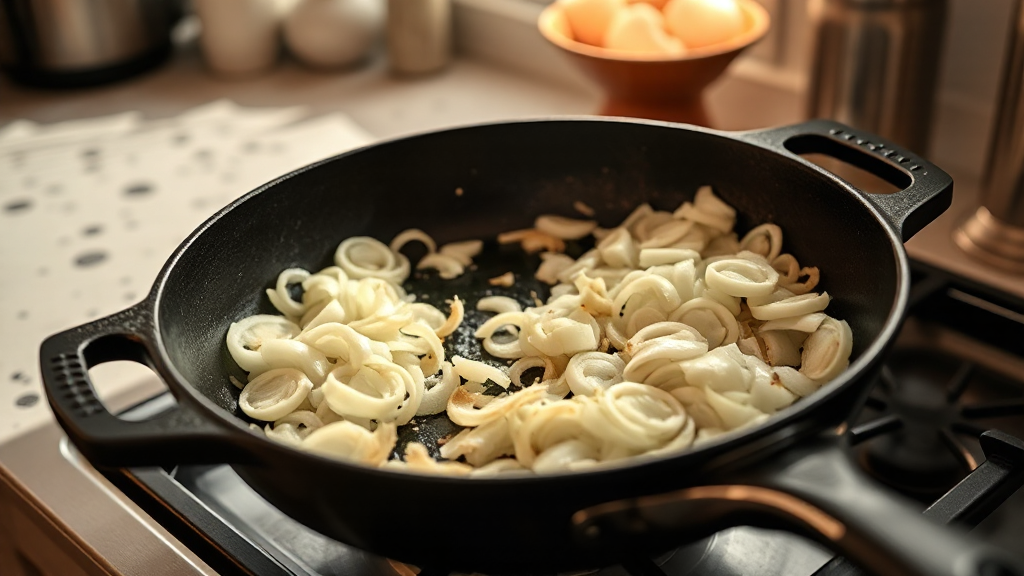
Choose between a 5-minute high-heat sauté for quick, crisp onions or a 30-minute low-heat caramelization for deep, sweet flavor, matching your pan and fat to the specific heat level and texture goal.
The Heat Level Showdown: High vs. Low
For the 5-minute sauté, use a wide pan to allow the onions to spread out and brown evenly.
The 5-Minute High-Heat Sauté: Speed and Texture
A 5-minute high-heat sauté is your best option when you need onions for a stir-fry, a quick pasta topping, or a base for a fast weeknight soup. The goal here is speed and texture. You want the onions to soften just enough to be palatable but retain a slight crunch and a raw, sharp bite that brightens the dish.
Medium-high heat is ideal for most sautéing because it allows the onions to caramelize without burning while ensuring they soften evenly [1]. If your pan isn't hot enough, the vegetables will steam; if it's too hot, they'll burn. Adjust the heat as needed - some pans heat up faster than others - and listen for the sizzle, which indicates the right temperature [1].
This method is perfect for dishes where you want the onion to remain a distinct ingredient rather than melting into a sweet background note. It’s a practical choice for busy evenings when you need flavor fast without sacrificing texture.
The 30-Minute Low-Heat Caramelize: Depth and Sweetness
If you have time to spare and want a deep, sweet flavor, the 30-minute low-heat caramelization is the way to go. This method breaks down the natural sugars in the onion, creating a complex, jammy texture that serves as a base for French onion soup, a topping for burgers, or a component in a slow-cooked stew. The process requires patience; you are trading time for a level of sweetness and depth that high heat simply cannot achieve.
Use a heavy-bottomed pan to ensure even heat distribution and prevent hot spots that can burn the onions [2]. Keep the heat low enough that the onions are moving slowly and browning gradually. This is an excellent choice for dishes where the onion is the star of the flavor profile.
The result is a rich, savory-sweet element that elevates the entire dish.
Choosing Your Cooking Fat
Why Butter Burns and Oil Stays Stable
Butter is delicious, but it has a lower smoke point than most oils, meaning it can burn easily if the heat is too high. When butter burns, it imparts a bitter, acrid flavor that can ruin your onions. Oils like canola, sunflower, or grapeseed have higher smoke points, making them more stable at the temperatures needed for sautéing [2].
For a neutral flavor, use grapeseed or canola oil; for richness, use clarified butter or ghee, which has a higher smoke point than whole butter [2]. If you are using high heat, stick with a high-smoke-point oil to avoid burning. If you are using low heat for caramelization, you have more flexibility and can use whole butter for its rich flavor without the same risk of burning.
The choice of cooking fat can also impact the overall dish, so be mindful of how the fat’s flavor will complement the final recipe [3].
Blended Fats for Speed and Flavor
You can get the best of both worlds by using a combination of fats. Start by using butter for its rich flavor, and then switch to a high smoke point oil to prevent the butter from burning as the onions continue to caramelize [3]. This technique is particularly useful for the 5-minute high-heat sauté.
You get the initial flavor punch of butter, but the oil protects the pan and the onions from scorching. Alternatively, you can use a fat like bacon fat or duck fat to infuse the onions with unique and savory notes [3]. This is a standout option for heartier dishes like chili or bean stews.
By carefully selecting the ideal cooking fat, you can enhance the natural sweetness of the onions and elevate the depth of flavor in any dish [3].
Fixing Common Sauté Mistakes
Overcrowding and Uneven Heat Distribution
One of the most common mistakes in sautéing onions is overcrowding the pan. When you pack too many onions into the pan, the temperature drops, and the moisture released by the onions creates steam. This leads to steaming instead of sautéing, resulting in soggy, gray onions rather than golden, flavorful ones.
To fix this, cook the onions in batches if necessary. Use a pan with a heavy bottom for even heat distribution [2]. A wide skillet or sauté pan is ideal because it provides enough surface area for the onions to spread out and brown evenly.
If you notice your onions are steaming, increase the heat slightly and stir more frequently to evaporate the excess moisture. This ensures that the onions are cooking in the fat rather than in their own water.
Solving the Sticking Problem with the Right Pan
Sticking is another frequent issue, especially if you are using a pan that isn't suited for the method. For high-heat sautéing, a nonstick pan can be a great choice because it allows for easy movement and prevents sticking without requiring excessive oil. However, if you are using stainless steel, you need to ensure the pan is hot enough before adding the onions.
Test the heat by flicking a drop of water into the pan; if it sizzles and evaporates quickly, the pan is ready [2]. If the fat smokes, the pan is too hot - remove it from the heat briefly and lower the burner [2]. For slow caramelization, a heavy-bottomed pan is essential to prevent hot spots that can cause sticking and burning.
If food does stick, a little water helps it loosen up again [4]. Choosing the right pan for your method is the simplest way to avoid sticking and ensure a smooth cooking process.
Pan Selection: Matching Cookware to Method
Nonstick vs. Stainless Steel vs. Cast Iron
Choosing the right pan is crucial for achieving the desired texture and flavor. Nonstick pans are a convenience pick over a longevity one, offering stress-free cooking and easy cleanup [5]. They are ideal for high-heat sautéing because they prevent sticking and allow for easy movement of the onions.
However, they may not develop the same level of browning as metal pans. Stainless steel pans are durable and offer even heat distribution, making them excellent for both high-heat sautéing and slow caramelization [4]. They are impervious to warping when exposed to high heats, which is why many chefs choose steel pans [4].
Cast iron pans are heavy and retain heat well, making them a great option for slow caramelization where consistent, low heat is needed. They can also handle high heat for sautéing, but they require more oil to prevent sticking. Each pan type has its strengths, so choose based on your specific cooking goal and the texture you want to achieve.
A Practical Checklist for Your Onion Method
Use this checklist to match your pan to your method:
- For High-Heat Sautéing:
- Pan: Nonstick or stainless steel.
- Fat: High-smoke-point oil (canola, grapeseed) or a blend of butter and oil.
- Goal: Quick, crisp onions with a sharp bite.
- Tip: Ensure the pan is hot enough to sizzle immediately upon contact with the onions.
- For Low-Heat Caramelization:
- Pan: Heavy-bottomed stainless steel or cast iron.
- Fat: Butter, ghee, or a neutral oil.
- Goal: Sweet, jammy onions with deep flavor.
- Tip: Use a pan that distributes heat evenly to prevent burning.
- General Tips:
- Heat Test: Flick a drop of water into the pan; if it sizzles and evaporates quickly, the pan is ready [2].
- Avoid Overcrowding: Cook in batches if necessary to ensure even browning.
- Stir Frequently: Especially during high-heat sautéing to prevent burning.
This 3 QT Stainless Steel Sauté Pan is a versatile stainless steel option for high-heat searing and sautéing onions. It’s wide like a skillet but deep enough for saucy-er stuff, making it a solid choice for both methods.
Conclusion
Next Steps
Choosing between high-heat and low-heat onion sautéing comes down to your time and your flavor goal. For a quick, crisp onion that adds texture and brightness to a dish, use medium-high heat and a high-smoke-point oil. For a sweet, deep flavor that serves as a base for a dish, use low heat and take the time to caramelize the onions.
Match your pan to your method: nonstick for easy high-heat sautéing, stainless steel or cast iron for even heat distribution during slow caramelization. By selecting the right fat, pan, and heat level, you can achieve the perfect onion sauté for any dish. Start with a simple recipe and experiment with different fats and heat levels to find what works best for you.
With a little practice, you’ll master the art of onion sautéing and elevate your cooking to the next level.
Frequently Asked Questions
-
How long does it take to sauté onions on high heat?
A high-heat sauté typically takes about 5 minutes, softening the onions just enough to be palatable while retaining a slight crunch and raw, sharp bite [1].
- What is the best pan for slow caramelizing onions?
-
Why do onions stick to stainless steel pans?
Onions stick if the stainless steel pan is not hot enough before adding the ingredients; test the heat by flicking a drop of water into the pan to ensure it sizzles and evaporates quickly [2].
- Can I use butter for high-heat sautéing?
- High-heat sautéing on medium-high heat softens onions quickly while retaining a slight crunch and sharp bite for fast dishes [1].
- Low-heat caramelization requires a heavy-bottomed pan to prevent hot spots, developing a complex, jammy texture over 30 minutes [2].
- Use high-smoke-point oils like grapeseed or canola for high-heat methods to avoid burning, or blend butter with oil for flavor and stability [2][3].
- Nonstick pans prevent sticking for high-heat sautéing, while stainless steel or cast iron provide even heat distribution for slow caramelization [4][5].
- Avoid overcrowding the pan, which causes steaming and soggy onions, by cooking in batches and ensuring the pan is hot enough before adding ingredients [2].
- https://advanceyourcareer.domainacademy.edu.mt/cooking-techniques-a8a139
- https://recipe.net/articles/how-to-saute-onions
- https://ftp.hotsyequipment.com/news/how-to-caramelize-onions-finding-the-perfect-heat-level.html
- https://www.telegraph.co.uk/recommended/home/kitchen/best-frying-pans/
- https://www.epicurious.com/shopping/best-saute-pans