

Why Your Nonstick Pan Dies Early: Fix It
If your pan is still in good shape, start with the seven-rule care checklist today. Cook on medium heat, skip the empty preheat, switch to a silicone spatula, handwash with a soft sponge, dry immediately, store with a barrier between pans, and use a thin layer of oil instead of spray. These small changes are the difference between a pan that lasts five years and one that fails in eighteen months. If your pan is already peeling, flaking, or exposing the base metal, it is time to replace it. The 10" Carbon Nonstick™ Frying Pan is a solid mid-size option with the 3-ply construction of nitrided carbon steel and aluminum core, giving you even heat distribution and a durable base. If you want more working space for family meals, the 10" + 12" Deeper Carbon Nonstick™ Frying Pan adds higher side walls and a larger surface area in a two-pan set. For a complete setup that covers breakfast through dinner, the Carbon Nonstick™ Complete Set + Glass Lids includes four pans and tempered glass lids, all with the same 3-ply construction and no coatings, ready to cook on day one. Whatever you choose, check the oven-safe rating, confirm the lid fits, and read the warranty terms before you buy. A pan that is built well and cared for properly will serve you for years, not just a season.
The Two-Strike Combo: Why Your Pan Fails Fast
Handwashing with a soft sponge is the single most effective way to protect the coating after every meal.
The High Heat and Metal Utensil Problem
Most nonstick pan failures trace back to two daily habits: cranking the burner too high and reaching for a metal spatula. The non-stick coating is easily damaged at high temperatures, so controlling the cooking temperature is crucial; the optimal range is medium to medium-low heat to avoid prolonged high-temperature heating that degrades the surface [1]. When you push the heat past that point, the oil begins to smoke, which signals the temperature is already too high and may cause damage to the nonstick coating [1]. Preheating an empty pan makes things worse because it can produce unhealthy fumes and cause the cooking surface to turn sticky [2].
Metal utensils compound the damage. The surface of non-stick pans consists of delicate layers designed to make cooking and cleaning easier, and metal utensils can easily scratch or scrape these surfaces, leading to flaking and degradation over time [3]. Some non-stick coatings may break down under constant friction from metal tools, raising concerns about ingestion of harmful substances [3]. The fix is simple: use wooden, plastic, or silicone tools, as other utensils can scratch and damage the non-stick surface [2]. If you only change one habit, stop preheating empty and switch to a silicone spatula.
The Hidden Cost of Dishwashers and Abrasives
Even if you cook at the right temperature, the way you clean the pan can quietly strip the coating. Many nonstick pans are labeled dishwasher-safe, but you will have the best results if you handwash them because the hot temperatures and detergents used in the dishwasher can break down the nonstick surface [4]. The alkaline detergents and sustained heat in a dishwasher cycle attack the coating layer by layer, accelerating the wear that would otherwise take years to appear.
Abrasives make the problem worse. When cleaning nonstick pans, you should never use abrasive tools such as steel wool, scouring pads, or stiff scrubbing brushes, which can damage the surface [4]. Use a soft sponge and a small amount of dishwashing liquid in warm water to remove residue and avoid abrasive cleaning materials that could damage the nonstick coating further [2]. For stubborn residue, soak the pan for a few hours in warm, soapy water before gently scrubbing it clean [4]. After washing, dry the pan immediately so moisture does not linger and cause the coating to fall off [1]. Handwashing with a soft sponge is the single most effective way to protect the coating after every meal.
What Actually Makes a Pan Last: Materials and Coatings
PTFE vs. Ceramic vs. Hybrid: The Longevity Breakdown
The coating type is the biggest variable in how long your pan will perform. Most nonstick pans last between one to five years, and if your pan has a PTFE or PTFE Teflon coating, it might have a longer life span than ceramic coated cookware [5]. Ceramic-coated cookware, by contrast, only lasts about two years [5]. According to side-by-side testing conducted by Whitford, a leading supplier of nonstick coatings, ceramic coatings tend to last approximately one sixth as long as PTFE coatings [6]. Chemours, the parent company of Teflon, conducted a comprehensive life cycle assessment and determined that it takes seven ceramic pans to achieve the same nonstick performance as a single Teflon pan [6].
Hybrid and reinforced coatings sit in the middle. By adding a multi-layer PTFE coating, you might be able to increase longevity; the more layers a pan has, the more resistant it becomes to scratches or general wear and tear [5]. Advanced hybrid pans protect against coating failure by utilizing raised stainless steel hex peaks that shield the recessed non-stick matrix from utensil abrasion [7]. If you want the longest nonstick performance from a coated pan, a multi-layer PTFE or hybrid design is the practical choice over a single-layer ceramic coating.
Aluminum Core vs. Stainless Steel: The Base Material Difference The base material under the coating determines how evenly the pan heats and how well it resists warping over time. Look for pans with a thick base or those that feature a copper or aluminum core, because these materials enhance heat retention and distribution, allowing for even cooking [8]. You do not want hot spots that can lead to unevenly cooked meals, so selecting a pan that efficiently retains heat will make a noticeable difference in your cooking [8]. Aluminum cores distribute heat quickly and evenly, which reduces the risk of localized overheating that can degrade the coating faster.
Stainless steel bases offer a different trade-off. Due to the absence of an additional coating that could peel, stainless steel pans are characterized by a longer durability, and the stainless steel pan is also suitable for heating and allows the browning effect of the fried food to be achieved [9]. However, due to its thinness, it may not heat evenly, and a very important aspect is the type of metal used in the core and whether the pan is 3-layer or 5-layer [9]. If you want even heating in a stainless steel pan, choose a model that combines an outer layer of stainless steel around aluminum or copper [9]. For a nonstick pan, the aluminum core is the more common and practical base because it pairs well with the coating and delivers consistent heat.
The 7-Rule Care Checklist to Add Years to Your Cookware
Temperature, Utensils, and Storage: The Daily Routine
Follow these seven rules after every cooking session to keep the coating intact:
- Cook on medium or medium-low heat. The optimal cooking temperature for non-stick cookware should be controlled between medium and medium-low heat to avoid prolonged high-temperature heating [1]. Do not let the oil smoke.
- Never preheat an empty pan. Preheating an empty pan can potentially produce unhealthy fumes and cause the cooking surface to turn sticky [2]. Add a small amount of oil before turning on the heat.
- Use only wooden, plastic, or silicone utensils. Other utensils can scratch and damage the non-stick surface [2].
- Handwash with a soft sponge and mild dish soap. Use a soft sponge and a small amount of dishwashing liquid in warm water to remove residue and avoid abrasive cleaning materials [2].
- Dry the pan immediately after washing. Make sure the pots and pans are thoroughly dry to prevent moisture residue from causing the coating to fall off [1].
- Store pans with a barrier between them. Store them in a cool, dry place, and avoid stacking them directly on top of each other to minimize surface contact and potential scratching; place a soft cloth, paper towel, or pan protector between them [2]. Store pans with trivets or wrapped to prevent bumps and scratches in the cupboard [10].
- Skip oil sprays and use a thin layer of oil or butter instead. No sprays on the cooking surface; a thin layer of oil or butter only for a slick surface [2].
When to Replace vs. When to Restore: Spotting the Limits
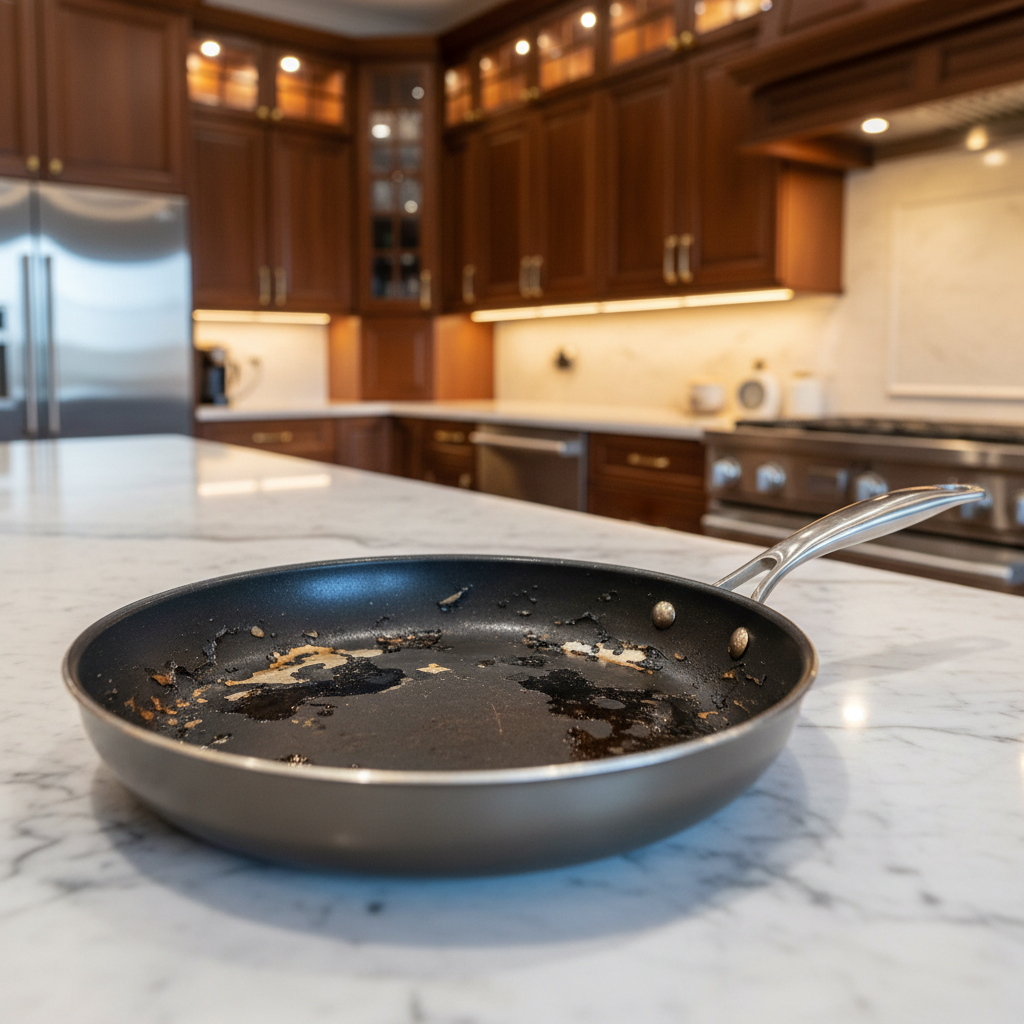
Not every scratch means the pan is done. Light surface scuffs that do not expose the base metal can often be managed by switching to gentler utensils and avoiding abrasives. However, the most unmistakable sign that you need a replacement is the coating disintegration on your skillet's interior [7]. Whether you cook with traditional PTFE or ceramic nonstick pans, the nonstick surface is a specialized layer bonded to an aluminum or steel base, and when this bond fails, microscopic coating flecks can lift off directly into your food [7]. Once surface peeling begins, the degradation is irreversible [7]. In a traditional pan, peeling signals complete coating failure, meaning the pan should be retired immediately [7].
Other signs that the pan is past its useful life include a surface that no longer releases food, visible flaking or chipping around the rivets, and a coating that has turned dark or discolored in patches. If you see any of these, the pan is no longer safe or practical to keep using. If the damage is limited to minor scuffs with no exposed base metal, you can extend the pan's life by tightening up your care routine and switching to gentler tools.
Choosing a Nonstick Pan Built to Last
Oven-Safe Ratings, Lids, and Handles: The Non-Negotiables
Before you buy a replacement pan, check three specifications that directly affect how long it will serve you. Safety in cookware comes down to four simple factors: material stability, coating integrity, heat tolerance, and long-term durability [11].
Oven-safe temperature. Some pans handle 500°F and beyond, while others degrade above 400°F [11]. High-heat cooking like searing steak or stir-frying demands materials that will not break down under stress [11]. Check the manufacturer's maximum oven-safe temperature and confirm the pan is not broiler safe, as nonstick cookware is not broiler safe [2].
Lid compatibility. A well-fitting glass lid lets you monitor cooking without lifting the lid and losing heat. The 12" Carbon Nonstick™ Frying Pan + Glass Lid pairs a 3-ply construction of nitrided carbon steel and aluminum core with a tempered glass lid, giving you a sealed cooking surface that holds temperature evenly. If you cook a lot of soups, stews, or braised dishes, a lid that fits snugly reduces the time you need on the burner, which in turn reduces thermal stress on the coating.
Handle design. Handles should stay cool enough to grip safely and be sturdy enough to lift a full pan without wobbling. The 10" + 12" Deeper Carbon Nonstick™ Frying Pan features higher side walls and the same 3-ply construction, which gives you more working space and a stable handle for two-hand lifting when the pan is full. A handle that is securely riveted or welded to the body prevents the stress points that can crack or loosen over time.
Why Warranty and Support Matter as Much as the Pan
A warranty is not just a formality; it changes the economics of owning a nonstick pan. Traditional manufacturer warranties only provide one year of coverage and limit what can be repaired and replaced [12]. With an extended warranty, you have complete control of what you are covered for, among many other benefits [12]. Being a homeowner comes with a lot of responsibility, and with an extended warranty, you can rest assured that your appliance will last, regardless of whether or not you can afford to repair and/or replace them [12]. At face value, extended warranties might seem like an added expense, but they will save you hundreds, or even thousands of dollars in the long run [12].
Customer support matters just as much. Whenever you have a problem, all you need to do is file a claim to get the problem resolved; you are not expected to worry about any logistics [12]. A pan with a clear warranty path and responsive support means that if the coating fails early due to a manufacturing defect, you are not out of pocket. Before you buy, read the warranty terms to confirm what is covered, how long the coverage lasts, and what the claim process looks like. This is especially important for nonstick pans, where the coating is the functional component and its failure is the primary reason for replacement.
Conclusion
Next steps
If your pan is still in good shape, start with the seven-rule care checklist today. Cook on medium heat, skip the empty preheat, switch to a silicone spatula, handwash with a soft sponge, dry immediately, store with a barrier between pans, and use a thin layer of oil instead of spray. These small changes are the difference between a pan that lasts five years and one that fails in eighteen months.
If your pan is already peeling, flaking, or exposing the base metal, it is time to replace it. The 10" Carbon Nonstick™ Frying Pan is a solid mid-size option with the 3-ply construction of nitrided carbon steel and aluminum core, giving you even heat distribution and a durable base. If you want more working space for family meals, the 10" + 12" Deeper Carbon Nonstick™ Frying Pan adds higher side walls and a larger surface area in a two-pan set. For a complete setup that covers breakfast through dinner, the Carbon Nonstick™ Complete Set + Glass Lids includes four pans and tempered glass lids, all with the same 3-ply construction and no coatings, ready to cook on day one.
Whatever you choose, check the oven-safe rating, confirm the lid fits, and read the warranty terms before you buy. A pan that is built well and cared for properly will serve you for years, not just a season.
Frequently Asked Questions
-
What are the two habits that destroy nonstick pans fastest?
The two habits are cooking at high heat (above medium-low) and using metal utensils. High heat degrades the coating, and metal utensils scratch the surface. Switch to medium heat and use wooden, plastic, or silicone tools to prevent damage.
-
How do dishwashers and abrasives damage nonstick pans?
Dishwasher cycles use hot water and alkaline detergents that break down the nonstick surface layer by layer. Abrasive scrubbing tools like steel wool scratch the delicate coating, causing immediate damage that accelerates wear.
-
How long do different nonstick coatings last?
PTFE coatings last 3-5 years, ceramic coatings last about 2 years, and hybrid coatings last 2-4 years. Ceramic coatings last approximately one sixth as long as PTFE coatings, and it takes seven ceramic pans to achieve the same nonstick performance as a single Teflon pan.
-
How does the base material affect nonstick pan durability?
Aluminum cores distribute heat evenly and prevent hot spots that degrade the coating faster. Stainless steel bases offer better durability but may not heat evenly without a copper or aluminum core. For nonstick pans, aluminum cores are more practical as they pair well with the coating and deliver consistent heat.
- Cook at medium or medium-low heat and never preheat empty pans to prevent coating degradation.
- Use only wooden, plastic, or silicone utensils to avoid scratching the nonstick surface.
- Handwash with a soft sponge and dry immediately to prevent moisture damage.
- https://glaryintl.com/blog/non-stick-pan-maintenance-tips-tips-to-extend-the-life-of-the-pan/
- https://ovenspot.com/when-to-replace-non-stick-pans/
- https://savorlifes.com/articles/durable-non-stick-pans-metal-utensils/
- https://www.imesh-kitchenware.com/resources/when-to-throw-away-nonstick-pans-and-how-to-keep-them-like-new.html
- https://www.imesh-kitchenware.com/resources/how-often-should-you-replace-non-stick-pans.html
- https://thecookware.reviews/blog/ceramic-vs-teflon-cookware-the-most-helpful-guide-infographic-inside
- https://ideluxecookware.com/blogs/home-kitchen/signs-replace-frying-pan
- https://infiniteflavors.blog/stainless-steel-pans/
- https://mondexhome.com/blog/which-is-better-a-non-stick-pan-or-stainless-steel
- https://www.leafscore.com/eco-friendly-kitchen-products/cookware/most-non-stick-pans-dont-last-very-long-heres-what-to-do-about-it/
- https://lecristalchinois.com/what-cooking-pans-are-safest-to-use/
- https://www.getmulberry.com/articles/why-appliance-warranties-are-essential-for-protecting-your-investments