

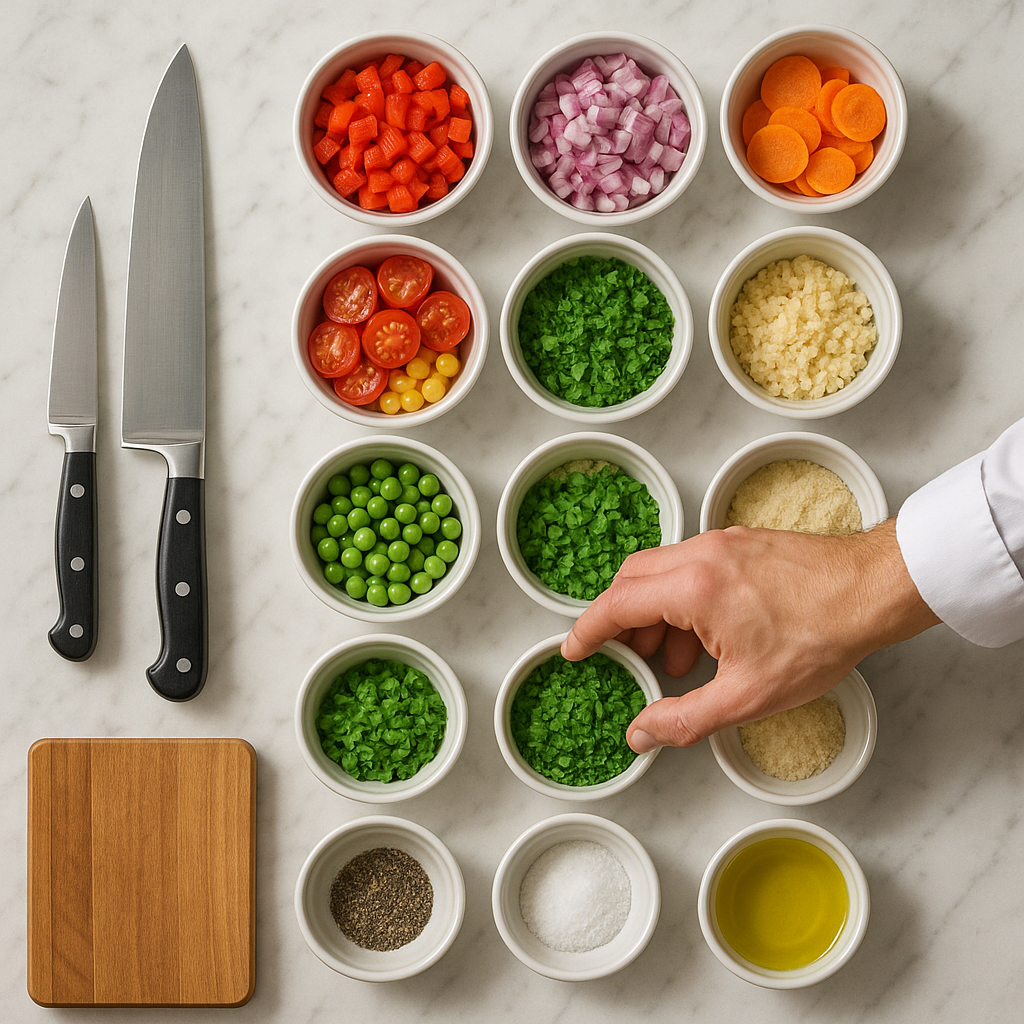
Mise en place, the century-old culinary discipline of "putting everything in its place," is revealed as both a kitchen system and a life philosophy that turns chaos into controlled flow: readers learn how to anchor their stations, minds, and time so every tool, ingredient, and thought is pre-positioned for flawless execution. The article distills the practice into five actionable principles--Organization, Preparation, Efficiency, Focus, and Precision--showing step-by-step how to map workflows, batch tasks, eliminate distractions, and hit exact temperatures so meals (and projects) finish on cue with zero waste and peak quality. Drawing on Escoffier's brigade legacy, modern sustainability data, and real-world restaurant hacks, it demonstrates why a 125% prep rule, color-coded boards, and mental "commutes" protect restaurants and home cooks from costly mid-service scrambles while slashing stress and ingredient loss. Beyond the pass, the same mindset scales to cramped apartments, dinner parties, and office projects by externalizing memory, automating routines, and treating time, space, and attention as finite resources to be budgeted, not squandered. Mastering mise en place therefore delivers a compound return: calmer cooking, consistently better plates, faster turnaround, and a transferable blueprint for organizing any complex endeavor with confidence and calm.
The Origins and Evolution of Mise en Place
From Escoffier's 1890 Savoy military-style revolution to today's waste-slashing tech, mise en place has proven that disciplined prep--having every ingredient measured and tool positioned before the first pan heats--is the single practice that turns kitchen chaos into hundreds of flawless, on-time plates.
From Escoffier's Kitchen Revolution to Modern Culinary Standards
The modern concept of mise en place emerged from Auguste Escoffier's revolutionary kitchen system in the late 1800s. Known as the 'king of chefs and chef of kings,' Escoffier transformed chaotic, unsanitary kitchens by introducing military-inspired organization and strict preparation protocols [1].
His vision centered on 'faultless preparation,' emphasizing that meticulous care in prep work was 'half the battle' in cooking excellence [1]. When Escoffier took over London's Savoy kitchen in 1890, he implemented rigid organizational habits that, while initially unpopular, enabled his team to produce hundreds of consistently plated entrées while still accommodating individual customer preferences [2].
This systematic approach marked a dramatic shift from the haphazard kitchen operations of the era, establishing a framework that would define professional cooking for over a century [2]. Today, mise en place remains fundamental to kitchen efficiency and food quality, with a 2023 study in Sustainability highlighting its role in promoting sustainable operations and minimizing waste even amid modern challenges like supply chain disruptions [1].
How Mise en Place Transformed Professional Cooking
Mise en place transformed professional kitchens by introducing systematic organization that maximized efficiency and quality. This methodical approach ensures every ingredient and tool is prepared and positioned before cooking begins, allowing chefs to focus entirely on execution rather than scrambling for components mid-service [5].
In professional settings, proper mise en place prevents costly delays and errors that could result in poor dining experiences - when ingredients are pre-measured and tools pre-positioned, kitchens can maintain consistent quality while serving hundreds of perfectly timed dishes [4]. The impact extends beyond just organization - mise en place instills a mindset of discipline and precision that elevates cooking from chaos to craft [5].
Modern kitchens have expanded these principles through technology, incorporating equipment like vegetable preparation machines, thermal mixers, and programmable cooking systems that enhance the traditional mise en place workflow while reducing labor and waste [5].
Beyond the Kitchen: Mise en Place as a Life Philosophy
The principles of mise en place extend far beyond kitchen organization into a comprehensive life philosophy. Chefs have discovered that this systematic approach transforms not just their cooking, but their entire way of living and working [6]. The system functions as an 'external brain,' allowing practitioners to offload their thinking into their environment and automate repetitive tasks so they can focus entirely on creative work [7].
This mindset manifests through consistent processes that maintain organization rather than one-time cleanup efforts. Professional kitchens rely heavily on standardized procedures and checklists, recognizing that excellence emerges from constantly refining these processes and asking 'How can I do this better, easier, or with less waste?' [7]. The philosophy emphasizes working clean - both literally and metaphorically.
Just as chefs maintain spotless workstations for food safety and efficiency, the principles encourage maintaining clear physical and mental spaces in all areas of life [8]. At its core, mise en place represents a deeper truth about time management and self-respect - that time, resources, space, and respect (both self-respect and respect from others) are precious commodities that should be utilized thoughtfully and deliberately [8].
Why the 5 Principles Matter More Than Ever in Today's Fast-Paced Culinary World
Modern kitchens face unprecedented challenges that make mise en place more critical than ever. The rise of dark kitchens, satellite operations, and complex multi-course menus demands systematic organization to maintain quality and efficiency [5]. Technology has transformed traditional mise en place through innovations like sous vide cooking, programmable equipment, and automated prep systems.
Vegetable preparation machines now handle slicing and dicing tasks, while thermal mixers streamline sauce production - allowing kitchens to maintain precision while increasing output [5]. The fast-paced nature of contemporary food service means there's no time during rush periods to stop and prepare missing ingredients. Running out of a key component like a signature sauce can lead to disappointed guests and lost revenue [9].
Professional kitchens must now think proactively rather than reactively, anticipating needs and calculating precise quantities to avoid shortfalls during service [9]. This systematic approach has become essential for managing the complexities of modern menus while maintaining consistent quality across hundreds of perfectly timed dishes [3].
Principle 1: Organization - Everything in Its Place
Design every inch of your kitchen so every knife, board, and spoon has a color-coded, labeled home within arm's reach, letting cooks glide through prep and service without a single wasted step or search.
The Foundation of Kitchen Efficiency: Spatial Organization
Effective spatial organization starts with establishing clear zones where every tool, ingredient, and piece of equipment has a designated home. Professional kitchens arrange workstations so all items remain within arm's reach, following a logical left-to-right or right-to-left workflow that minimizes unnecessary movement [10]. This systematic setup extends beyond just arranging tools - it requires analyzing menu items to determine which need the most space for execution and modifying layouts accordingly [10].
The physical organization must support both prep and service phases, with stations set up to handle the specific demands of each period. Color-coded cutting boards, labeled storage areas, and dedicated spaces for sanitizing equipment help maintain order even during intense service periods [10]. In cramped professional kitchens where space is at a premium, efficient organization becomes even more critical.
Chefs must work in close quarters while respecting others' workspace boundaries, returning shared items like herbs and spices to designated spots, and maintaining clear pathways [10]. This careful spatial planning creates an external system that allows cooks to focus entirely on execution rather than searching for tools or ingredients [6].
Tools and Equipment for Perfect Organization
Professional kitchens require specific tools and equipment strategically positioned for optimal organization. Essential items include multiple prep bowls for measured ingredients, various types of knives with sharpening steels kept within reach, and color-coded cutting boards to prevent cross-contamination [10]. A proper station setup requires all tools and equipment to remain within arm's length, arranged in a logical left-to-right or right-to-left workflow that minimizes movement [10].
Storage solutions should include labeled containers, sani-buckets positioned on lower shelves away from food, and dedicated spaces for both clean and used tasting spoons [10]. Equipment maintenance plays a crucial role - missing or broken parts can severely impact workflow efficiency. Proper cleaning, storage of attachments, and prompt reporting of needed repairs help ensure tools remain functional [10].
For ingredient organization, professional kitchens utilize multiple small containers for pre-measured components, communal equipment storage areas for shared items like herbs and spices, and designated spots for sanitizing equipment that keep work areas uncluttered [10].
Ingredient Preparation and Arrangement Techniques
Proper ingredient preparation starts with analyzing recipes to determine which components need the most attention and space for execution [1]. Begin by gathering ingredients in batches based on preparation requirements, placing items that need significant processing like dicing or portioning together [1]. Set up multiple prep bowls for pre-measured ingredients and position them within arm's reach in a logical left-to-right workflow [10].
When handling bulk ingredients, grab handfuls and place them next to the cutting board, then move finished products off the board immediately to maintain efficiency [10]. Follow the 125% rule when prepping ingredients - have enough to cover unexpected rushes on particular items while avoiding overprep that leads to waste [10]. For shared ingredients used across multiple stations, coordinate with prep cooks who often handle bulk preparation and distribute items as needed [10].
During slow periods, tackle simple tasks like peeling onions or chopping garlic to stay ahead, and periodically stop to wipe down and reorganize your prep area [10].
Common Organization Mistakes and How to Avoid Them
Even experienced chefs make critical organization mistakes that can disrupt kitchen flow. Rushing through mise en place preparation leads to measurement errors and forgotten ingredients that compromise dish quality [1]. Many cooks fail to properly analyze recipes beforehand, leading to missed components and inefficient workflows.
A common error is not having backup ingredients ready for high-demand items, forcing cooks to pause mid-service to restock [1]. Poor spatial planning creates unnecessary movement and wasted time - ingredients and tools should be arranged in a logical left-to-right workflow within arm's reach [1]. Some kitchens struggle with inadequate labeling and unclear storage systems, making it difficult to maintain order during busy service periods.
The solution is implementing standardized protocols for ingredient organization, measurement, and station setup [1]. Taking time to properly review recipes, measure ingredients, and arrange workspaces methodically prevents these common pitfalls [1]. Regular evaluation of workflows helps identify areas where organization can be improved.
Principle 2: Preparation - The Methodical Approach
Before you light the stove, analyze the recipe, gather 125 % of every ingredient, line up color-coded boards and backup tools, and stage everything within arm's reach so the cooking flows without a single pause or dirty spoon.
Recipe Analysis and Ingredient Gathering
starts with a thorough review of the prep list or recipe before any cooking begins. Professional kitchens use prep lists compiled by sous chefs who track inventory needs, while home cooks should carefully read recipes to identify required components and develop an execution plan [11]. Once the recipe is analyzed, gather all ingredients, tools, and equipment needed for both prep work and final assembly - this includes having multiple knives, spoons, and other basic utensils ready to avoid washing items mid-cooking [11].
When measuring ingredients, follow the 125% rule - prepare enough to cover unexpected rushes while avoiding excess waste that leads to spoilage [11]. Place measured ingredients in separate bowls or containers arranged in a logical workflow sequence within arm's reach [11]. This systematic approach to recipe analysis and gathering prevents mid-cooking disruptions that can compromise dish quality and timing [11].
Professional kitchens typically use metal or plastic steam table pans as standard containers, while home cooks can utilize any combination of bowls and dishes [11].
Proper Cleaning, Cutting, and Measuring Techniques
Proper cleaning and cutting techniques start with having a well-organized station and the right tools within arm's reach. Use color-coded cutting boards to prevent cross-contamination and keep a sharpening steel nearby for periodic knife honing during prep work [10]. When cutting ingredients, grab manageable handfuls of bulk product and place them next to the cutting board, then immediately move finished products off the board to maintain efficiency [10].
Keep a sanitizing bucket stored on a lower shelf away from food preparation areas, and maintain separate containers for clean and used tasting spoons [10]. During ingredient preparation, focus on completing basic prep work like trimming meat, washing produce, grinding spices, and toasting nuts before beginning final assembly [3]. Measure ingredients precisely using the 125% rule - prepare enough to cover unexpected rushes while avoiding excess waste that leads to spoilage [10].
Periodically stop to wipe down and reorganize your prep area, never working in a cluttered environment as it leads to poor procedures and unsanitary conditions [10].
Batch Preparation for Complex Recipes
Batch preparation streamlines complex recipes by breaking them into manageable components that can be executed systematically. Professional kitchens analyze recipes to identify ingredients that require significant processing, then group items with similar preparation requirements together to maximize efficiency [1]. For time-sensitive dishes like stir-fries or caramel, all components must be prepped and arranged in sequence before cooking begins to prevent timing issues during execution [6].
The 125% rule guides batch sizing - prepare enough to cover unexpected rushes while avoiding excess waste that leads to spoilage [1]. When handling bulk ingredients, grab manageable portions and place them next to the cutting board, then immediately move finished products to their designated containers to maintain workflow efficiency [1]. During slower periods, tackle basic prep tasks like peeling onions or chopping garlic to stay ahead of demand, while periodically stopping to wipe down and reorganize the prep area [1].
This systematic approach to batch preparation transforms complex recipes from chaotic scrambles into smooth, controlled executions where each component flows naturally into the next [12].
The Mental Preparation Aspect of Mise en Place
Mental preparation is a critical yet often overlooked component of mise en place that extends beyond physical organization. Just as chefs gather ingredients and tools, they must also prepare their minds for peak performance. The timing of mental preparation matters significantly - attempting complex creative work when mentally fatigued can compromise results, which is why many professionals reserve their most demanding tasks for periods of peak mental clarity [13].
This systematic approach requires creating dedicated time blocks for mental transitions between tasks, similar to allowing time for physical commutes. Taking even 5 minutes between activities to reset and establish the right mindset can dramatically improve performance [13]. Professional kitchens demonstrate this through their emphasis on proactive thinking rather than reactive responses - having backup plans ready for equipment failures, staff shortages, or supply disruptions ensures the kitchen remains adaptable even amid challenges [1].
The mental aspect of mise en place also manifests through mindfulness and deep focus. By being fully present during preparation and execution, practitioners can achieve a meditative state that enhances concentration and reduces feelings of being scattered or overwhelmed [14].
Principle 3: Efficiency - Streamlining Your Workflow
Arrange every tool, ingredient, and task in a tight left-to-right sequence so you can cook through even the busiest service without a single wasted step.
Time-Saving Movement Patterns in the Kitchen
Efficient kitchen movement starts with organizing workstations so every tool and ingredient remains within arm's reach, following a logical left-to-right or right-to-left workflow that minimizes unnecessary steps [10]. Professional kitchens arrange prep and cooking areas to handle specific demands during different phases, using color-coded cutting boards and labeled storage zones to maintain order even during intense service periods [10].
When handling ingredients, grab manageable handfuls and place them next to the cutting board, then immediately move finished products to their designated spots to maintain workflow efficiency [10]. Equipment and tools should be positioned strategically - keeping sharpening steels, sanitizing buckets, and tasting spoons in designated spots that don't interfere with the primary work zone [10].
This systematic setup creates an external system that allows cooks to focus entirely on execution rather than searching for tools or ingredients [10]. The physical layout must support both prep and service phases, with stations configured to handle the specific demands of each period while maintaining clear pathways in cramped professional environments where space efficiency is critical [10].
Sequential Task Arrangement for Maximum Efficiency
Sequential task arrangement requires analyzing recipes and processes to determine optimal order before beginning work. Professional kitchens break down complex preparations into distinct stages, with prep cooks handling bulk tasks while station cooks focus on final execution [10]. The sequence starts with analyzing every menu item to identify what can be prepared ahead without compromising quality - for example, soups and sauces can usually be made in advance while proteins must be cooked to order [10].
Chefs use prep lists and checklists to ensure nothing gets forgotten, tracking how much was prepped and used each shift to optimize quantities [10]. This systematic approach transforms chaotic scrambles into smooth, controlled executions where each component flows naturally into the next. Like pilots who plan not just for takeoff but also landing, chefs map out both how tasks will begin and end [7].
The sequence of actions matters significantly because the first tasks have the greatest impact on overall timing - starting processes early allows their effects to propagate throughout the day [7]. Professional kitchens demonstrate this through proactive rather than reactive thinking, having backup plans ready for equipment failures, staff shortages, or supply disruptions to maintain adaptability amid challenges [7].
Multi-Tasking vs. Single-Tasking: Finding the Right Balance
The kitchen demands both focused attention and the ability to handle multiple tasks simultaneously. Professional kitchens demonstrate this through proactive rather than reactive thinking, having backup plans ready for equipment failures, staff shortages, or supply disruptions to maintain adaptability amid challenges [1]. While mise en place emphasizes systematic organization, certain tasks require parallel processing - like monitoring multiple pots while preparing the next course.
The key is identifying which tasks truly benefit from multi-tasking versus those requiring singular focus. Tasks involving precise measurements, knife work, or final plating demand complete concentration to maintain quality and safety [15]. For high-volume operations, batch preparation helps streamline complex recipes by breaking them into manageable components that can be executed systematically.
Chefs analyze recipes to identify ingredients requiring significant processing, then group items with similar preparation requirements together to maximize efficiency [1]. This balanced approach transforms chaotic scrambles into smooth, controlled executions where each component flows naturally into the next.
Energy Conservation Techniques During Prolonged Cooking Sessions
Long cooking sessions demand strategic energy management to maintain quality and efficiency. Professional kitchens use systematic approaches to conserve physical and mental energy during extended service periods. The key is establishing clear workflows that minimize unnecessary movement and task-switching.
Gathering ingredients and equipment before cooking begins prevents exhausting mid-service scrambles that waste energy [1]. Setting up dedicated zones for different tasks allows cooks to work in a focused flow state rather than constantly moving between stations [1]. The mise en place mindset emphasizes working clean and organized throughout service - cleaning as you go and returning items to designated spots prevents the draining chaos of accumulated clutter [1].
For complex meals and large gatherings, having a clear battle plan with front-line assistance transforms demanding menus from exhausting races against the clock into smooth, controlled executions [16]. This systematic approach allows cooks to maintain precision even during long shifts by conserving mental and physical energy through proper preparation and organization.
Principle 4: Focus - The Mindfulness of Cooking
By engaging all five senses and eliminating distractions, you can turn cooking into a meditative practice that melts stress, sparks creativity, and lets the aroma of sizzling bacon unlock powerful emotional memories.
Developing Culinary Awareness and Presence
Culinary awareness starts with bringing full attention to each moment in the kitchen, transforming cooking from a routine task into a meditative experience. This mindful approach recruits all five senses - from hearing bacon sizzle to feeling the texture of ingredients - allowing you to enter a focused flow state while preparing meals [17]. The practice extends beyond just mindful eating to include intentional choices about ingredients, preparation methods, and consideration of seasonal factors that affect cooking [17].
By treating cooking as an informal mindfulness practice, you can experience stress relief through distraction from unproductive thoughts while gaining feelings of control and mastery in the kitchen [17]. The sensory experience of cooking connects deeply with emotional memory through what's known as the 'Proustian effect,' where familiar aromas and tastes can help access positive emotional states [17]. This heightened awareness also enhances creativity through experimentation with flavors and techniques while building confidence through skill development [17].
Professional kitchens demonstrate this through systematic approaches that emphasize being fully present during preparation and execution, achieving a meditative state that enhances concentration and reduces feelings of being scattered or overwhelmed [18].
Creating a Distraction-Free Cooking Environment
requires systematic organization of both physical and mental space. Professional kitchens demonstrate this through clear workstation boundaries and dedicated zones that minimize chaos during intense service periods [6]. The physical layout should support both prep and service phases, with stations configured to handle specific demands while maintaining clear pathways [6].
Beyond physical organization, eliminating digital distractions is crucial - put phones on 'Do Not Disturb' mode and use apps that block distracting websites and notifications during cooking sessions [6]. The goal is to achieve a state of relaxed alertness where you can respond thoughtfully to challenges rather than react frantically [6]. Professional kitchens maintain focus through constant environmental scanning and clear communication systems, with chefs using call-and-callback protocols to ensure everyone stays coordinated [6].
This systematic approach transforms cooking from a chaotic scramble into a smooth, controlled execution where each component flows naturally into the next [6].
The Connection Between Focus and Food Quality
Focus and food quality share an intimate connection in professional kitchens. When chefs maintain complete concentration during preparation and cooking, they can better monitor subtle details like proper searing, sauce consistency, and precise timing that directly impact the final dish [19].
This heightened awareness allows cooks to respond thoughtfully to challenges rather than react frantically, leading to more consistent execution and fewer errors [1]. The sensory experience of mindful cooking engages all five senses - from hearing bacon sizzle to feeling ingredient textures - allowing chefs to enter a focused flow state that enhances concentration and precision [19].
By eliminating distractions like phones and maintaining clear mental space, kitchen staff can achieve a state of relaxed alertness that improves their ability to make split-second adjustments and maintain quality standards [19]. Professional kitchens demonstrate this through systematic approaches that emphasize being fully present during preparation and execution, achieving a meditative state that enhances concentration while reducing scattered thinking that can compromise food quality [1].
Mindfulness Techniques for Better Cooking Results
Mindful cooking transforms meal preparation into a meditative practice by engaging all five senses. Focus on hearing bacon sizzle, feeling ingredient textures, and observing vibrant colors to enter a concentrated flow state that enhances precision [18]. Remove digital distractions by putting phones on 'Do Not Disturb' and blocking notifications during cooking sessions - this helps achieve relaxed alertness for thoughtful responses rather than frantic reactions [20].
Practice 'one-mindfully' by giving complete attention to individual tasks, whether chopping vegetables or monitoring multiple pots. This focused approach improves attention span while reducing scattered thinking that can compromise food quality [21]. When thoughts wander, gently return focus to the physical sensations of cooking - the rhythm of knife work, the aroma of caramelizing onions, the cool weight of dough against fingers.
This sensory engagement helps shift attention away from anxious thoughts while developing deeper connections with ingredients [20]. The mindful kitchen becomes a sanctuary for practicing presence, where even routine tasks like cleaning transform into opportunities for meditation and skill refinement [18].
Principle 5: Precision - Executing with Excellence
By wielding immersion circulators and data loggers to hold temperatures within a fraction of a degree, chefs turn temperamental proteins into edge-to-edge perfect, nutrient-rich dishes every single time.
Timing and Temperature Control Mastery
Mastering timing and temperature control requires understanding precision cooking fundamentals. Professional kitchens achieve consistent results by maintaining exact temperatures throughout the cooking process, rather than the fluctuating heat common in traditional methods [22].
This systematic approach transforms previously challenging dishes into predictable outcomes - proteins cook evenly from edge to center without variations in doneness that plague conventional techniques [23]. Modern precision tools like immersion circulators maintain water temperatures within fractions of a degree, allowing chefs to break down proteins and connective tissues at optimal temperatures for tenderness while preserving nutrients that high-heat cooking typically destroys [24].
The science behind temperature control directly impacts food texture and safety - specific heat levels determine which proteins denature and what textures result, making exact temperature maintenance critical for achieving desired outcomes [22]. Data loggers have become essential tools for professional kitchens, enabling real-time monitoring and adjustment of cooking temperatures while providing documentation for consistency and food safety compliance [24].
Technique Refinement for Consistent Results
Technique refinement requires systematic attention to detail and consistent practice. Professional kitchens achieve reliable results by maintaining exact temperatures throughout the cooking process, rather than allowing fluctuating heat common in traditional methods [1]. This precision transforms challenging dishes into predictable outcomes, with proteins cooking evenly from edge to center without variations in doneness [1].
Modern tools like immersion circulators maintain water temperatures within fractions of a degree, enabling chefs to break down proteins and connective tissues at optimal temperatures for tenderness while preserving nutrients that high-heat cooking typically destroys [1]. The science behind temperature control directly impacts food texture and safety - specific heat levels determine which proteins denature and what textures result, making exact temperature maintenance critical for achieving desired outcomes [1]. Professional kitchens demonstrate this refinement through systematic approaches that emphasize being fully present during preparation and execution, achieving a meditative state that enhances concentration while reducing scattered thinking that can compromise food quality [25].
By eliminating distractions and maintaining clear mental space, kitchen staff can achieve a state of relaxed alertness that improves their ability to make split-second adjustments and maintain quality standards [25].
Quality Control Throughout the Cooking Process
requires systematic monitoring and adjustment at every stage. Professional kitchens maintain precise standards by having backup plans ready for equipment failures, staff shortages, and supply disruptions to ensure adaptability amid challenges [26]. The process starts with careful recipe analysis and gathering of all necessary components before cooking begins - this prevents mid-cooking disruptions that could compromise dish quality and timing [26].
During execution, chefs must maintain complete concentration to monitor subtle details like proper searing, sauce consistency, and precise timing that directly impact the final dish [26]. This heightened awareness allows cooks to respond thoughtfully to challenges rather than react frantically, leading to more consistent execution and fewer errors. The systematic approach transforms chaotic scrambles into smooth, controlled executions where each component flows naturally into the next [26].
By eliminating distractions and maintaining clear mental space, kitchen staff can achieve a state of relaxed alertness that improves their ability to make split-second adjustments while maintaining quality standards throughout the entire cooking process [26].
The Professional Standard: Attention to Detail
Professional kitchens maintain exacting standards through systematic attention to detail at every stage. Chefs analyze recipes thoroughly before gathering ingredients, ensuring precise measurements and proper quantities to prevent mid-cooking disruptions that could compromise quality [3].
The kitchen environment demands complete concentration to monitor subtle details like proper searing, sauce consistency, and precise timing that directly impact final dishes [1]. This heightened awareness allows cooks to respond thoughtfully rather than frantically, leading to more consistent execution and fewer errors.
Modern kitchens demonstrate this precision through proactive planning - having backup systems ready for equipment failures, staff shortages, or supply disruptions ensures adaptability amid challenges [1]. The systematic approach transforms chaotic scrambles into smooth, controlled executions where each component flows naturally into the next, with staff maintaining a state of relaxed alertness that enables split-second adjustments while upholding rigorous quality standards [1].
Implementing Mise en Place in Different Contexts
Whether you're running a Michelin-starred brigade or scrambling to get dinner on a Tuesday night, the same principle applies: prepare only the highest-impact elements in advance, label and store them so you can grab, combine, and serve with zero friction.
The Professional Kitchen: Systems and Standards
Professional kitchens rely on systematic organization that transforms chaotic operations into smooth, controlled executions. The modern kitchen structure typically includes an executive chef, sous chef, and line cooks who work together to maintain precise standards and workflows [1]. This streamlined hierarchy enables consistent execution across hundreds of perfectly timed dishes while adapting to challenges like equipment failures and staff shortages [6].
Kitchens implement standardized protocols and checklists, recognizing that excellence emerges from constantly refining processes and asking "How can I do this better, easier, or with less waste?" [6]. The systematic approach requires clear delegation of responsibilities, with the sous chef developing comprehensive work plans that guide inventory management, station setup, and order-taking procedures [1]. Staff members must understand their roles within the broader workflow, using proper labeling systems and FIFO (First In, First Out) arrangements to maintain organization even during intense service periods [1].
This structured environment allows kitchens to operate efficiently while maintaining the flexibility to handle unexpected challenges like supply chain disruptions or equipment malfunctions [1].
Home Cooking: Practical Mise en Place for Everyday Meals
Adapting mise en place for home cooking requires a practical approach focused on efficiency rather than perfection. Rather than preparing every ingredient in advance like a restaurant kitchen, home cooks can focus on key prep tasks that save the most time during weeknight cooking. Breaking recipes into manageable components allows for quick assembly when needed - for example, chopping vegetables, measuring spices, and preparing marinades ahead of time [27].
The right storage containers make a significant difference - investing in varying sizes of glass bowls and food storage containers helps keep prepped ingredients fresh and organized [28]. For busy home cooks, focusing mise en place efforts on time-consuming tasks like grain cooking and vegetable prep provides the biggest payoff. Cooking a batch of grains at the start of the week while simultaneously prepping vegetables creates building blocks for multiple meals [27].
This systematic approach transforms chaotic weeknight cooking into smooth, controlled executions where each component flows naturally into the next [27]. Home cooks who adopt mise en place often report increased confidence, better organization, and improved efficiency in the kitchen, making the extra upfront prep time worthwhile [29]. The practice proves especially valuable for complex recipes or entertaining, where having components ready allows hosts to focus on guests rather than frantically chopping mid-cooking [29].
Special Occasions: Scaling Mise en Place for Entertaining
Scaling mise en place for entertaining requires systematic planning and organization to handle larger volumes while maintaining quality. Professional kitchens demonstrate this through proactive rather than reactive thinking, having backup plans ready for equipment failures, staff shortages, or supply disruptions to maintain adaptability amid challenges [30]. For special occasions, start by analyzing every menu item to identify what can be prepared ahead without compromising quality - soups and sauces can usually be made in advance while proteins must be cooked to order [30].
When entertaining guests, work backward through recipes to create a timeline, noting when each component needs to begin to have everything ready at the right time [30]. The 125% rule becomes especially important when scaling up - prepare enough to cover unexpected rushes on particular items while avoiding excess waste that leads to spoilage [30]. For complex meals and large gatherings, having a clear battle plan with front-line assistance transforms demanding menus from exhausting races against the clock into smooth, controlled executions [30].
This systematic approach allows hosts to maintain precision while conserving mental and physical energy through proper preparation and organization.
Limited Space Solutions: Mise en Place in Small Kitchens
Small kitchens demand creative mise en place solutions to maintain efficiency despite space constraints. Professional kitchens demonstrate this through clear workstation boundaries and dedicated zones that minimize chaos during intense service periods [10]. When space is limited, organize ingredients and tools within arm's reach in a logical left-to-right workflow, using vertical storage and under-counter spaces effectively [10].
Color-coded cutting boards and labeled storage areas help maintain order even in cramped quarters, while keeping sanitizing buckets on lower shelves maximizes counter space [10]. For home cooks with minimal counter area, investing in varying sizes of glass bowls and food storage containers helps keep prepped ingredients fresh and organized while maximizing available space [6]. The systematic approach requires having a designated spot for everything - if there isn't one, you must create it through creative solutions like magnetic knife strips, wall-mounted spice racks, or over-the-sink cutting boards [10].
Professional kitchens often lack adequate space, requiring cooks to work efficiently in close quarters without taking over others' workspace or leaving trails of equipment behind [10].
The Transformative Benefits of Mise en Place
Mise en place turns cooking into a mindful, anxiety-calming ritual by organizing every ingredient and tool beforehand so you can cook with all five senses engaged and complete confidence instead of chaos.
Stress Reduction and Increased Cooking Confidence
Mise en place transforms chaotic kitchen experiences into calm, controlled cooking sessions that build confidence and reduce anxiety. Professional chefs and therapists recognize that having ingredients prepped and organized creates a meditative state that shifts attention away from mental chaos to tangible objects and actions [31]. The systematic approach allows cooks to engage all five senses - feeling water flow while washing produce, hearing knife work, smelling fresh herbs, tasting ingredients, and seeing the organized array of components [31].
This sensory engagement serves as an informal mindfulness practice that grounds cooks in the present moment rather than worrying about potential kitchen disasters [31]. Licensed clinical social worker Grace Dickman explains that mise en place acts as an antidote to anxiety by giving cooks clear understanding of each step while confirming all necessary resources are ready [31]. Even in small home kitchens, having ingredients prepped and tools organized creates a sense of control that makes cooking feel less daunting [32].
The practice proves especially valuable for complex recipes or entertaining, where having components ready allows hosts to focus on guests rather than frantically chopping mid-cooking [33]. By breaking recipes into manageable components and establishing clear workflows, mise en place helps cooks of all skill levels approach kitchen tasks with greater confidence and less stress [33].
Improved Food Quality and Consistency
Proper mise en place directly impacts food quality by enabling consistent execution across hundreds of perfectly timed dishes [1]. When ingredients are prepped and organized before cooking begins, chefs can focus entirely on proper searing, sauce consistency, and precise timing rather than scrambling for components mid-service [4].
This systematic approach transforms chaotic operations into smooth, controlled executions that maintain rigorous quality standards [1]. Professional kitchens demonstrate this through proactive planning - having backup systems ready for equipment failures, staff shortages, or supply disruptions ensures adaptability while upholding consistency [1].
A 2023 study in Sustainability highlighted that mise en place fundamentally promotes efficiency and minimizes waste, helping kitchens maintain quality even amid modern challenges like supply chain disruptions [1]. The practice proves especially valuable for complex recipes, where having components ready allows complete focus on execution rather than frantic mid-cooking preparation [4].
Time Management and Efficiency Gains
Proper mise en place dramatically improves kitchen time management by transforming chaotic scrambles into smooth, controlled executions. When ingredients are prepped and organized before cooking begins, chefs can focus entirely on execution rather than wasting precious minutes searching for components mid-service [1].
The systematic approach saves time by eliminating unnecessary steps and duplicate work, allowing complete focus on time-sensitive actions like stirring sauces or achieving perfect sears [10]. Professional kitchens demonstrate these efficiency gains through proactive planning - having backup systems ready for equipment failures, staff shortages, or supply disruptions ensures adaptability while maintaining productivity [1].
Studies show that mise en place fundamentally promotes efficiency by enabling kitchens to maintain consistent quality and timing even amid modern challenges like supply chain disruptions [1]. The practice proves especially valuable during complex recipes or high-volume service, where having components ready allows complete focus on execution rather than frantic mid-cooking preparation [1].
How Mise en Place Skills Transfer to Other Life Areas
The principles of mise en place extend far beyond kitchen organization into powerful life skills. Just as chefs use their environment as an 'external brain' to offload thinking and automate repetitive tasks, knowledge workers can apply these methods to enhance productivity and creativity [6].
The system transforms chaotic operations into smooth, controlled executions through practices like the 'Daily Meeze' - a 30-minute evening routine of cleaning your physical and virtual spaces, planning the next day, and gathering needed resources [34]. In professional settings, mise en place instills a mindset where time, space, and mental clarity are treated as precious commodities that should be utilized thoughtfully [6].
The practice proves especially valuable for complex projects and high-stakes situations, where having components ready allows complete focus on execution rather than frantic preparation [7]. Beyond just organization, mise en place becomes a philosophy of mindful work - creating dedicated time blocks for mental transitions between tasks, maintaining clear boundaries, and achieving a state of relaxed alertness that enhances concentration while reducing scattered thinking [7].
- Mise en place began with Escoffier's 1890s military-style kitchen system to ensure consistent, efficient service.
- Prep 125% of needed ingredients to cover rushes without creating waste.
- Organize tools and ingredients within arm's reach in a left-to-right workflow to eliminate wasted motion.
- Use color-coded boards and labeled zones to prevent cross-contamination and speed up service.
- Batch similar prep tasks together and finish one before starting the next to maintain flow.
- Reserve peak mental energy periods for complex creative work; take 5-minute resets between tasks.
- Apply mise en place beyond cooking: nightly 30-minute 'Daily Meeze' clears physical and digital space for next-day focus.
- https://online.jwu.edu/blog/what-is-mise-en-place-the-key-to-culinary-organization/
- https://virginialiving.com/food/mise-en-place-rules/
- https://www.escoffier.edu/blog/culinary-arts/what-is-mise-en-place-and-why-is-it-so-important-to-chefs/
- https://www.culinaryartsswitzerland.com/en/news/understanding-mise-en-place-what-mise-en-place/
- https://www.fcsiapd.org/news-item/15175/the-essential-role-of-mise-en-place-in-kitchen-operations
- https://www.artofmanliness.com/character/advice/mis-en-place/
- https://fortelabs.com/blog/mise-en-place-for-knowledge-workers/
- https://www.npr.org/sections/thesalt/2014/08/11/338850091/for-a-more-ordered-life-organize-like-a-chef
- https://www.dinecompany.com/blog/the-importance-of-mise-en-place/
- https://www.theculinarypro.com/mise-en-place-savory
- https://www.larksuite.com/en_us/topics/food-and-beverage-glossary/mise-en-place
- https://thehomecookbible.com/how-to-perfect-the-art-of-mise-en-place
- https://www.thrivestreetadvisors.com/blog/mental-mise-en-place
- https://medium.com/swlh/how-i-master-productivity-with-the-mise-en-place-method-8e3a7c036799
- https://everyday-uniforms.com/blogs/chefs-magazine/mise-en-place?srsltid=AfmBOopbVF_k7xT2Mun3q9nQRdrx-Cz07K99Mc8KE-WUjhkqeJtmYyeK
- https://www.dvo.com/newsletter/monthly/2017/january/remedy1.html
- https://marmaladeandkindness.com/mindful-cooking-3-quick-ways-to-bring-mindfulness-to-the-kitchen/
- https://www.calm.com/blog/mindful-cooking
- https://www.headspace.com/mindfulness/mindful-cooking
- https://www.escoffier.edu/blog/value-of-culinary-education/benefits-of-mindfulness-for-students-in-culinary-school/
- https://www.headspace.com/articles/being-better-cook
- https://www.escoffier.edu/blog/culinary-arts/what-is-sous-vide/
- https://www.cindergrill.com/blogs/blogs/the-science-of-precision-temperature-cooking
- https://www.madgetech.com/posts/blogs/mastering-sous-vide-cooking-with-data-loggers-the-art-of-precision/
- https://everyday-uniforms.com/blogs/chefs-magazine/mise-en-place
- https://everyday-uniforms.com/blogs/chefs-magazine/mise-en-place?srsltid=AfmBOor5v0NhwMzR_bb1D-Ra0j77xypGLZMs-_C4rpTFFxHtdqOakDKI
- https://playswellwithbutter.com/mise-en-place-meal-prep/
- https://www.epicurious.com/expert-advice/i-tried-mise-en-place-every-time-i-cooked-for-a-week-article
- https://everyday-uniforms.com/blogs/chefs-magazine/mise-en-place?srsltid=AfmBOoow1gthSlsUqc-bBdnc06e9egnP3eV88aTSBFjehx9d7msUVR2c
- https://www.doyouroux.com/what-is-mise-en-place/
- https://www.huffpost.com/entry/mise-en-place-stress-cooking_l_5feddeaec5b6fd33110d1cf5
- https://everyday-uniforms.com/blogs/chefs-magazine/mise-en-place?srsltid=AfmBOor_n-HVlq3wRJZ8SWC3sijz8bqhnu97ELw_7g1kAt0Ub0hKMVfc
- https://thedinnerdaily.com/mise-en-place-2/
- https://www.yammagazine.com/mise-en-place-practices-for-the-home/
- Summary
- The Origins and Evolution of Mise en Place
- Principle 1: Organization - Everything in Its Place
- Principle 2: Preparation - The Methodical Approach
- Principle 3: Efficiency - Streamlining Your Workflow
- Principle 4: Focus - The Mindfulness of Cooking
- Principle 5: Precision - Executing with Excellence
- Implementing Mise en Place in Different Contexts
- The Transformative Benefits of Mise en Place
- Key Takeaways
- References