

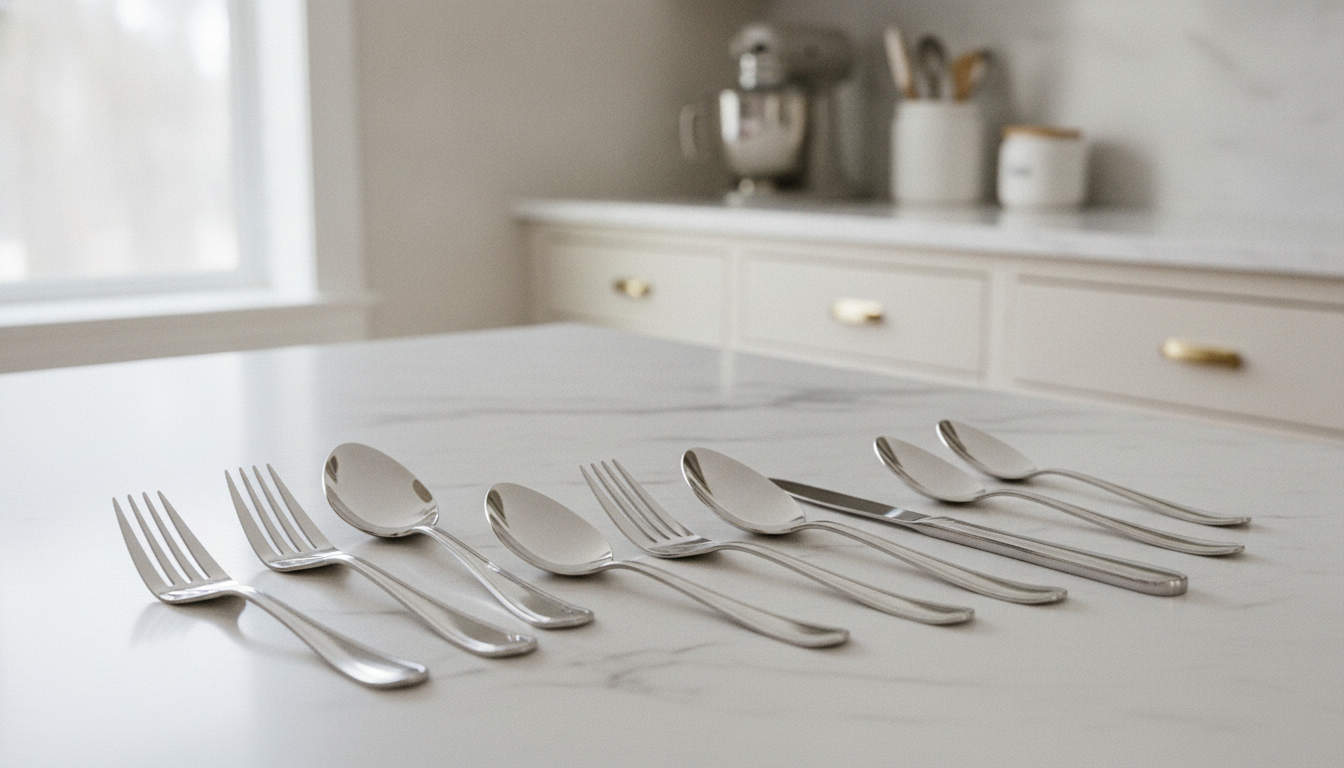
Learn what the 18/10 and 18/8 grade numbers mean and how that extra 2% nickel affects corrosion resistance, shine, and durability over years of use. Choose 18/10 for flatware that stays looking new through frequent dishwasher cycles and acidic foods, or 18/8 as a solid everyday option at a lower price point.
What Do the Numbers 18/10 and 18/8 Actually Mean?
The 2% nickel difference between 18/10 and 18/8 stainless steel affects durability, shine, and how easily flatware can be shaped during manufacturing.
Decoding the Metallurgical Formula: Chromium and Nickel Percentages
18/10 stainless steel flatware gets its name from a simple formula: 18% chromium and 10% nickel added to the base iron, the same composition base used in Grade 304 stainless steel [1]. The first number in the ratio always refers to chromium content, and the second refers to nickel, so 18/8 flatware shares that same 18% chromium base but carries only 8% nickel [2]. When the smaller trace amounts of carbon, silicon, and manganese aren't called out separately, 304 and 18/8 are effectively describing the same alloy family [2].
Both grades belong to the 300-series of austenitic stainless steels, meaning they stay non-magnetic and can only be hardened through cold working rather than heat treatment [1]. That 2-percentage-point nickel difference looks small on paper, but it's the exact figure manufacturers stamp on the back of forks, spoons, and knives to signal which formula went into the metal [3]. Chromium does the primary corrosion-resistance work in both grades, forming a protective layer that keeps the base metal from rusting [3].
Nickel plays a secondary role, stabilizing that structure while adding extra shine and a bit more corrosion protection on top of what chromium already provides [3].
Why These Two Elements Matter for Flatware Performance and Durability
Chromium's role in flatware is straightforward: it forms a passive oxide layer that blocks oxygen from reaching the base metal and self-repairs when scratched, which is why any alloy above roughly 10.5% chromium can legally call itself stainless steel [5]. Nickel works alongside that layer rather than replacing it, adding ductility and toughness so a fork or spoon can absorb daily scraping, dishwasher detergent, and acidic sauces without becoming brittle [6]. That toughness also makes 18/10 easier to mold into thinner, more detailed handle shapes without cracking during manufacturing, which is part of why higher-nickel flatware often looks more refined [4].
The two extra percentage points of nickel in 18/10 compared to 18/8 translate into measurable differences in daily use: better resistance to pitting from salt and citrus, less surface staining from prolonged contact with tomato-based sauces, and a brighter, smoother finish that holds up through repeated dishwasher cycles [6]. Nickel also improves how the alloy performs under mechanical stress, meaning flatware bends less and resists warping over years of use [4]. For a set of everyday forks and spoons that see near-constant exposure to salt, acid, and heat cycling in the dishwasher, that nickel gap is the practical reason 18/10 tends to outlast 18/8 in appearance even when both start out looking identical in the store [6].
Chromium alone would still protect against most rust, but nickel is what keeps the surface looking new instead of dull and spotted after a few years of regular cleaning [5].
Is 18/10 Stainless Steel the Best for Flatware? Direct Comparison
18/10 stainless steel resists corrosion and retains shine longer than 18/8, making it the premium choice for flatware that lasts.
| Factor | 18/10 | 18/8 |
|---|---|---|
| Nickel content | 10% | 8% [7] |
| Corrosion resistance | Slightly higher, better against pitting [8] | Good, suitable for regular use [9] |
| Shine over time | Brighter, holds polish longer [8] | Attractive but can dull faster [9] |
| Typical use case | High-end dining, restaurant flatware [9] | Household and mid-level commercial use [9] |
| Maintenance demands | Low, resists staining from acidic foods [8] | Low, standard cleaning care needed [7] |
When 18/8 Makes Sense and When 18/10 Justifies the Investment
For everyday household flatware or high-turnover foodservice settings where budget discipline matters more than showroom polish, 18/8 remains a sound choice. It holds up well under normal washing and handling, and many buyers treat it as a balanced middle ground between price and performance rather than a downgrade [10].
Institutional kitchens, staff dining, and banquet backup are common places where 18/8 gets chosen over 18/10, since replacement there tends to be driven by loss and breakage rather than finish degradation [11]. Some hotels and restaurant groups even split their purchasing, keeping 18/10 in fine dining rooms while stocking 18/8 for back-of-house or lower-visibility service, spreading cost without sacrificing guest-facing presentation [11]. 18/10 earns its price premium where appearance and longevity carry real weight: fine dining, gift-worthy sets, and households that want flatware to still look new after years of regular dishwasher cycles [12].
The extra nickel is also worth paying for if you cook often with acidic or salty foods, since that's where 18/8's thinner corrosion margin shows first [10]. For a set meant to last rather than get replaced every year or two, the brighter finish and better pitting resistance built into 18/10 tend to pay for themselves over the life of the set [12].
How to Spot Quality Flatware Beyond the Grade Number
Construction method, weight, and finish matter more than grade alone when choosing flatware that feels right in your hand.
Weight, Forging Method, and Finish: The Hidden Quality Indicators
Grade numbers only describe the alloy, not how the piece was made or finished, which is why two 18/10 forks can feel completely different in hand. Forged flatware starts as a single block of steel formed under pressure, producing thicker, sturdier pieces with a substantial feel and strong construction [13]. Stamped flatware is cut and shaped from flat sheets, which keeps manufacturing costs down and produces lighter pieces, but stamped construction isn't automatically lower quality, it's simply a different trade-off between weight, price, and design range [13].
Weight itself is worth handling in person before buying, since consumer testing of flatware typically evaluates weight, balance, size, and shape together because these factors shape everyday comfort more than grade alone [13]. Finish adds another layer of decision-making apart from the steel composition: mirror finishes give a bright, reflective look suited to formal dining and restaurants, brushed and satin finishes offer a softer, more contemporary appearance, and matte finishes skip shine almost entirely for minimalist table settings [13]. None of these finishes change the underlying corrosion resistance built into the grade, they just change how the surface reflects light and shows fingerprints over time [14].
Checking construction and finish alongside the stamped grade number gives a fuller picture of what you're actually buying than the chromium-nickel ratio can provide on its own [13].
Why Grade Alone Doesn't Tell the Full Story of Flatware Worth
Grade only confirms the alloy, not whether a manufacturer executed the piece well, so an 18/10 fork with misaligned tines or a rough handle seam can feel worse in hand than a carefully made 18/8 alternative [17]. Price doesn't reliably fix this gap either, since a set's cost often reflects design, brand recognition, and packaging as much as material or craftsmanship, meaning a cheaper option can still perform well and an expensive one can still disappoint [17]. Before treating the chromium-nickel ratio as the deciding factor, a few quick checks reveal more about actual build quality:
- Run a finger along spoon bowl and handle edges for smoothness.
- Confirm fork tines are evenly spaced and aligned.
- Check that a knife balances between blade and handle.
A reputable manufacturer should also list the stainless steel composition plainly alongside care instructions, since vague or missing material details are worth questioning no matter what number gets advertised on the package [15]. We believe that kind of plain-spoken transparency should be the norm, and it's the same standard we hold ourselves to across our kitchen knives and cookware. None of this replaces grade as a useful starting point, it just means the ratio alone can't predict how a piece will hold up or feel once it's actually on your table [16]. Treat 18/10 or 18/8 as a baseline for corrosion resistance, then verify construction, finishing, and manufacturer transparency before deciding a set is worth its price [17].
Caring for Your Stainless Flatware to Maximize Its Grade Advantage
Simple habits like rinsing before the dishwasher and keeping flatware separated from other metals prevent most pitting and spotting.
Common Pitting and Spotting Issues: Prevention Specific to 18/10 and 18/8
Pitting and spotting look similar at a glance, but they are different problems with different fixes. Spotting is a surface film of mineral deposits or detergent residue that wipes away, while pitting is localized corrosion where chloride ions have broken through the chromium oxide layer and eaten into the metal itself, leaving a hole that no amount of polishing removes [18]. A quick way to tell them apart is the fingernail test: film sits on top and comes off, while a pit sits below the surface and catches your nail [19]. Because nickel is what improves chloride resistance, pitting shows up more often on 18/8 flatware than on 18/10, since the extra 2% nickel in 18/10 gives the passive layer more resistance to the salt and acid that trigger it [19]. Orange or rust-colored spots in the dishwasher are usually mineral deposits or detergent residue rather than the steel itself corroding, and knife blades made with carbon steel alloys are more prone to actual rust than the stainless body of a fork or spoon [20]. A few habits prevent most pitting and spotting on either grade:
- Rinse salt and acid off before loading the dishwasher.
- Never soak flatware for extended periods, especially in aluminum containers [20].
- Keep flatware separated from other metals in the basket.
- Unload promptly instead of leaving pieces in a humid machine [19].
Once pitting forms, the piece is still safe to use; it simply won't smooth back out [19].
Maintenance Practices That Preserve Nickel Content and Shine Over Years
Preserving the nickel-driven shine in 18/10 stainless flatware over years of use comes down to a handful of consistent habits rather than special products. The same care habits also keep stainless cookware like a stainless steel pan looking its best. Strong acids, such as those found in drain cleaners or rust removers, will discolor the surface, so flatware should never be used to stir or scrape these solutions, and even fumes from nearby acidic cleaners can dull the finish [21]. Acidic food residue, like tomato sauce or lemon juice, only causes lasting discoloration if it sits against the metal for extended periods, which is why leftover containers and soaking basins are worth avoiding [21]. Hard water with high iron content can also leave faint discoloration on flatware over time, and a home water conditioner is the only real fix for that specific cause [21]. Skipping harsh scrub pads and bleach matters just as much: abrasive cleaning damages the protective surface layer and leaves the metal more prone to trapping residue and showing wear [22]. A few habits protect the shine long term:
- Rinse acidic or salty food off before loading the dishwasher.
- Skip overnight soaking, especially in metal or aluminum containers.
- Dry pieces promptly instead of leaving them in a humid machine.
- Use a soft cloth and mild cleaner, never steel wool [22].
When light discoloration does appear, a stainless steel polish can buff it out and restore the original sheen in most cases, though heavier surface damage may be permanent [21].
Choosing between 18/10 and 18/8 really comes down to how you cook and how long you want a set to look its best. Both hold up well under normal use; 18/10 just keeps its shine and pitting resistance longer when salt, acid, and frequent dishwasher cycles are part of daily life. Check the build, confirm the composition, and match the grade to how you actually cook. For more care & maintenance tips or help picking the right pieces for your kitchen, contact us.
Frequently Asked Questions
-
What's the actual difference between 18/10 and 18/8 stainless steel flatware?
Both grades have the same 18% chromium base, but 18/10 has 10% nickel while 18/8 has 8% nickel. That 2-point nickel gap is what gives 18/10 slightly better resistance to pitting from salt and citrus, a brighter finish that holds up longer, and better resistance to bending over time, according to the article's comparison.
-
Is 18/10 worth paying more for, or is 18/8 good enough?
The article frames 18/8 as a solid middle-ground pick for everyday household use or high-turnover foodservice where budget matters more than showroom polish, since it holds up fine under normal washing and handling. 18/10 is described as worth the premium for fine dining, gift-worthy sets, or households that cook often with acidic or salty foods, since that's where 18/8's thinner corrosion margin shows first. Compare the specific set's price and construction rather than assuming the grade number alone settles the value question.
-
Is it safe to keep using flatware once it has pitting or rust-like spots?
Yes - the article states that once pitting forms, the piece is still safe to use; it just won't smooth back out. It also notes that orange or rust-colored spots seen in the dishwasher are usually mineral deposits or detergent residue rather than the steel itself corroding, so those can often be cleaned off rather than indicating damage.
-
How can I tell real pitting apart from water spots or mineral deposits?
Use the fingernail test described in the article: a surface film of mineral deposits or detergent residue sits on top and wipes away, while an actual pit sits below the surface and catches your fingernail. Pitting happens because chloride ions have broken through the chromium oxide layer, and it's more common on 18/8 than 18/10 due to the lower nickel content.
-
Does a higher grade number always mean better-quality flatware?
No - the article is explicit that grade only confirms the alloy, not how well a piece was made. An 18/10 fork with misaligned tines or a rough handle seam can feel worse in hand than a well-made 18/8 piece, and price doesn't reliably fix this since cost often reflects design and branding as much as material. The article recommends also checking edge smoothness, tine alignment, and knife balance, and looking for manufacturers who list composition and care instructions plainly.
- 18/10 stainless contains 10% nickel versus 8% in 18/8, giving it better pitting resistance from salt and acidic foods.
- Both grades resist rust equally well, but 18/10's extra nickel keeps flatware looking polished longer through repeated dishwasher cycles.
- 18/8 performs well for everyday use at a lower price, making it practical for households and commercial kitchens focused on durability over appearance.
- Grade numbers alone don't predict quality, construction method and finish matter as much as the chromium-nickel ratio.
- Rinsing salt and acid before loading the dishwasher and avoiding extended soaking prevents most pitting and spotting on either grade.
- Pitting is permanent corrosion below the surface, while spotting is removable mineral film, the fingernail test distinguishes them.
- https://marshfasteners.com/difference-18-8-vs-304-vs-316/
- https://www.xometry.com/resources/materials/18-8-vs-316-vs-304-stainless-steels/
- https://www.solamexhome.com/18-8-vs-18-10-stainless-steel-home-cook-needs-to-know.html
- https://www.google.com/goto?url=CAESgQIB6zswFe66BIn2sMYtkrPUrUQ-9MZdYwjtGHwP9BUdo0lC1Ev7cOGfbxZkt0DVlAx2yrMJnBP9rbuJmtU0GTdtz0_rahGpOPsdOK5fnXSP_VJAXQjWshiCS6I8vc6u7TuFB95cP5N9bcDefHMDGLLg7PUbiLKHQjzGHSerzacFWoF1TX1RrO9sNBE1gVvsfFYthLVuU5MlBh3QTPxHysTnxqYi_XoGBXDmos_W4Q3FsOvIjiIplZ49Y1aVjqBFq1UlElfkw08R9x3zc2Z4ZVsTbG2EkuKBefZnqQXTrYIMN9svrMlrxH9tc0YKtDg09b784nRpLHghx1JmonUrbDj_wA
- https://www.google.com/goto?url=CAESaAHrOzAVydFS36JRqgfkYOg2YWzICqEv_DbT4lKdxHmgkhk04hDdgcCMSv47gXyIDiK5jX34w6FqPalkX9aBOEJVRfEVNtukVtfZx2PM2-cdefa2L8Xt7f2DXgvjIVLE5sDF1qz6vhpj
- https://www.google.com/goto?url=CAES1gEB6zswFYGj3CM2MQrvpQvH8Nxw87NTwfkguWeHl9MW_sdlty6j4unVXk37iQ8wvtL8Szggk3SeWYuUFxHwFd1siburDd0X21iJ39XjHmIzwD3y6LSqgrqV3eQgP78FDhNuCvfXI79iMiepupQCQxKUhywuI6hr70HN1HYpxZ7Gk0WDsa7CSFepEUEHpkNPkP42WIq3G2viDpKxqI4u1p5Me6hY_vfKIQen1KmS4EeZnSBp-_ezT6m3cmNtdh3epHO7hUE25Hm8zvxEGVOlhr53uggsAMu9
- https://www.mcallenflatware.com/stainless-steel-flatware-purchasing-guide-and-faqs/
- https://www.superstainlessalloy.com/news/which-is-better-18-8-or-18-10-stainless-steel-74977635.html
- https://shop.machinemfg.com/comparing-18-8-18-10-and-18-0-stainless-steels/
- https://www.huashunware.com/what-affects-the-price-of-stainless-steel-flatware/
- https://www.fortune-kitchenware.com/news/market-insights/price-trends/Stainless_steel_cutlery_prices_stay_firm_as_nickel_costs_rise.html
- https://www.fortune-kitchenware.com/news/industry-news/technology-innovation/Cutlery_Set_Materials_Compared_Stainless_Steel_Grades_Finish_and_Daily_Use.html
- https://www.google.com/goto?url=CAESogEB6zswFY46gIqp7aNOPMgXyYiA_oq6Ode7-8GLxXd681SpHFwmI76c1xe57BdBH7mqLRMhwlNF3GmZoslK-lejrh3thFwsVSTpyFnIBcDaeyEI6elxSWd3sVQXqQTpVKWxJ7TIMBT6TNmswesvKjp1Xhkpx9xVRQZQ9ijaiqv2rOwXA-_A1h0TKlvrQWtvhLhthzUEDhPW8h7YoQwar86hpkU
- https://www.google.com/goto?url=CAESlgEB6zswFf0crZdPTj6i5KlYur1foR_kmN3BY-_3xKE-PKtZeob-0-nFnMkzNoRLwTCEUj1J2496WcwrHJP7ovPc5uUR9DXJgqTHXi2FxZ3SXXly2Qe9NjxSkLpvgcXwjTsZda8ZoAs7YGF5C1BWNSbCH3vW30Om7mqISf04wDZL4-xVId7BRdhgGxWVnU0rTM-6l94rpFg
- https://www.google.com/goto?url=CAESfAHrOzAVDAZyB8tx2TDe-WEHeI1IsSzfAdPZpxW39cZNw1K4aHUsIcWe4m-d7M5tdW-W2Nsr3HjJfQT8KiBS7zpuqAXo3bNxD6MgYoHljNR3J-eo_FESypzr6QuIK-a0mYbXThhUCij8rZQSeHA2YBOnX-RS6dvNenr7fIk
- https://www.google.com/goto?url=CAESyAEB6zswFcpfqDXTERvw1LsWJOp3_zq11yLSyGLWdBK1WlxRUzrn07H5ZihBx9Ahh8UJP-AVFSqSdEwDTqjYn3eG09kr3ps2DK9g5dj9J40oEivgD_ZH2jN2QQyHuvv0rF_bHWmhZznfqKvLmgRNZXay7vdMCkg5H9vkW5ySLZ_RZLntRThHu7CWIzoGXVAN-0dY6ywmPJXNhvLmmNLSa511qOEyoGKu1YAxptRsW9wvnK1iwxokBUiA7zxIIWcIVC8udrAkjS4fPg
- https://www.google.com/goto?url=CAESogEB6zswFfca8RGjN3oG3H26RL9ugIInY3g-ptX8e8M4MW8-b9ircTUgW6oXBhUPnsKCyeTpoTOq0qit49oOsQ_vdPFMxWMIdyM8D-_THaIqswVR3DYy4wLh-z8WwW26rqFiU9hRk1hpG27SKQX5XfXasSYP5QriVXbJtv3JhZRQ_KK92sYKNn25ePdQfcPPlM6-f8f2JYqxDb6oHndw15-ENpE
- https://casting-china.org/corrosion-of-stainless-steel-tableware/
- https://oneida-us.com/journal/flatware-care-and-tarnish/
- https://www.silversuperstore.com/faq/stainless-flatware-care.asp
- https://www.ehow.com/info_10053776_1810-stainless-flatware-getting-discolored.html
- https://amp.hf-tableware.com/blog-news/Stainless-Steel-Tableware-How-to-Choose-Safer-Long-Lasting-Pieces-12043161.html