

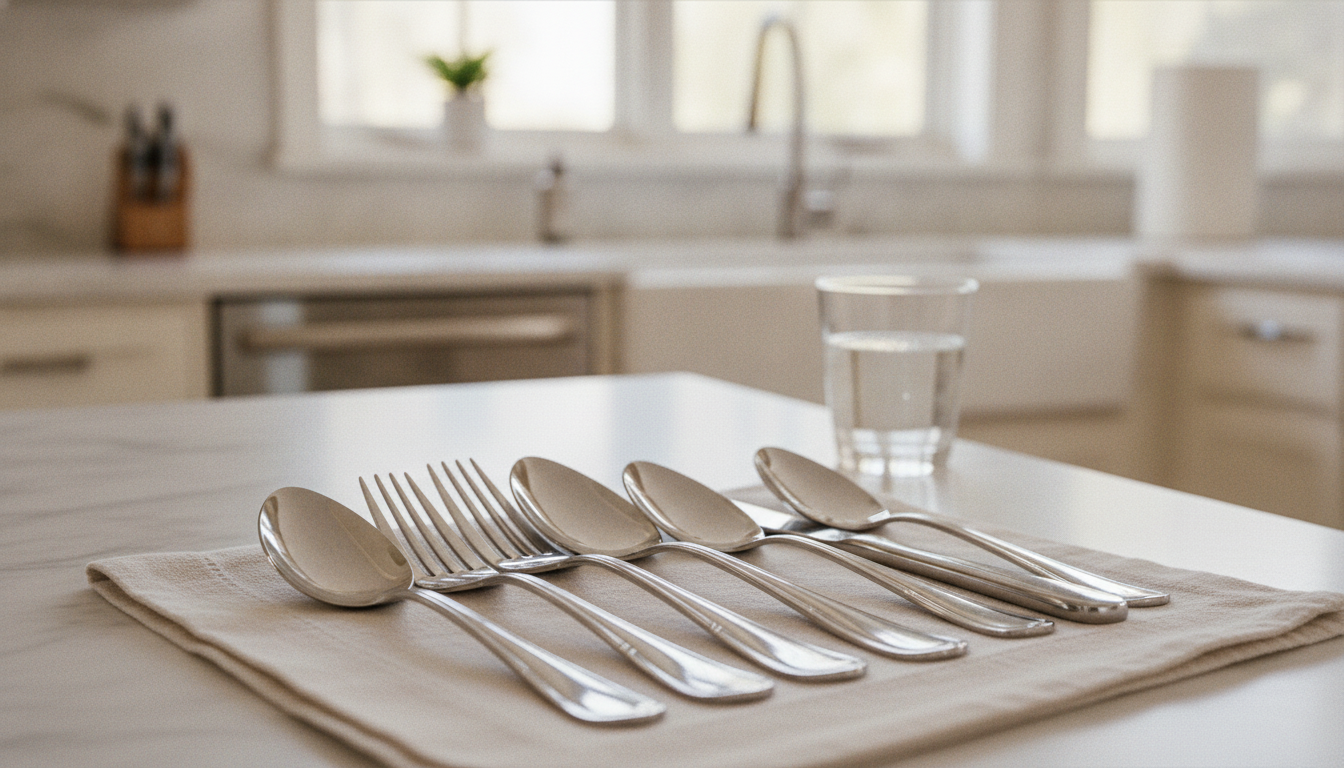
Chloride ions from salt, tap water, and detergent attack stainless steel's protective layer, causing pitting, spotting, and staining--each requiring different fixes. Rinsing promptly, drying completely, and using proper storage keeps your flatware bright and damage-free for years.
Why Stainless Steel Flatware Develops Pitting, Spotting, and Staining
Chloride ions from salt, tap water, and dish soap attack stainless steel's protective oxide layer, causing pitting, spotting, and staining that rinsing and drying can prevent.
How chlorides in water and salt damage the protective oxide layer
Stainless steel flatware resists rust because a thin, self-forming chromium oxide layer coats the surface and blocks contact with moisture and oxygen [3]. Chloride ions, found in table salt, tap water, and some dish soaps, attack this layer at its weakest points, breaking it down locally rather than across the whole piece [2]. This matters for everyday flatware care maintenance, since salty foods, brines, or hard water left to dry concentrate chlorides exactly where the oxide film is thinnest [1]. Common chloride sources in a home kitchen include:
- Table salt and salty foods left on utensils
- Tap water carrying dissolved minerals and chlorides
- Dishwasher detergent residue that doesn't fully rinse away
- Salad dressings, pickles, and other acidic, salty condiments
Once chlorides get through the film, that exposed spot becomes anodic while the surrounding protected steel acts as a cathode, so damage concentrates in one tiny area instead of spreading evenly [1]. Rinsing flatware soon after use and drying it completely removes chlorides before they settle into these weak points, which is the simplest way to keep the oxide layer intact [2]. The same passive layer protects any stainless steel piece in your kitchen, from flatware to a stainless steel pan, so these care basics carry over to the rest of your cookware.
The difference between surface staining, pitting corrosion, and spotting--and what causes each
Staining, spotting, and pitting look similar at a glance but come from different causes and call for different responses. Surface staining usually shows up as a dull film or faint discoloration sitting on top of the metal, caused by mineral deposits from hard water or dishwasher detergent residue rather than any reaction with the steel itself [4]. Spotting looks like small orange or rust-colored dots, and it's typically traced to the same culprits: mineral deposits and detergent buildup left behind after a wash cycle, not the stainless steel actually corroding [4]. Pitting corrosion is the one that matters most, since it starts as a tiny pinpoint hole where chlorides have broken down the passive layer, then widens beneath the surface into a trough shape that stays hidden from view [5]. Because pitting reflects real material loss rather than a wipeable residue, it's the only one of the three that permanently damages the piece [5]. Knife blades run into true corrosion more often than forks or spoons, since they're typically made from a harder, more rust-prone steel alloy [6].
- Staining: dull film from hard water minerals or detergent residue [4]
- Spotting: orange or rust-colored dots from mineral buildup, not steel corrosion [4]
- Pitting: pinpoint holes from chloride damage that widen into hidden troughs [5]

Daily Dishwashing Practices That Prevent Damage
Stainless steel flatware handles the dishwasher well when rinsed first and dried immediately, while plated and coated pieces need gentle hand washing to stay protected.
Load, wash, and dry your flatware correctly to avoid pitting and water spots
Hand-washing vs. dishwasher: when each method protects your investment best Daily stainless steel flatware holds up fine in the dishwasher when you rinse off acidic or salty food first and remove pieces the moment the cycle ends for a full hand-dry [9]. Low-temperature residential cycles rely on chemical sanitizers that often contain chloride, which raises the risk of pitting compared to a properly loaded, well-rinsed cycle [10]. Hand washing is the safer default for silver-plated, gold-plated, or PVD-coated flatware, since these finishes react badly to detergent chemicals and can't tolerate soaking the way solid stainless can [9].
Silver and gold plate should never go through a dishwasher at all, because the plating corrodes under the same chemical sanitizing agents that stainless tolerates [10]. Never combine silver-plated and stainless pieces in the same wash, whether by hand or machine, since contact between dissimilar metals triggers a reaction that damages the softer plated finish [9]. For everyday stainless flatware care maintenance, the dishwasher works well as a routine method.
Reserve hand washing with a mild, non-abrasive detergent for plated or coated pieces, or anytime flatware will sit unwashed longer than a quick rinse allows [10].
Removing Existing Stains and Spots: Methods That Work Without Scratching
Mild soap and water work for light spots, while baking soda soaks and stainless steel polish handle tougher tarnish without scratching.
Safe cleaning agents and techniques for light spotting and tarnish removal
For light spotting or dull tarnish, start with the mildest option: warm water, a few drops of dish soap, and a soft cloth, buffing in the direction of the grain rather than scrubbing in circles. A short baking soda and vinegar soak, lined with aluminum foil, helps lift stubborn spots from stainless utensils without abrasive scrubbing, though heavily soiled pieces may need a second short soak rather than one long one [12].
Avoid letting flatware sit in any cleaning solution for hours or overnight, and never soak it in aluminum or copper containers, since prolonged contact with these metals promotes corrosion rather than preventing it [13]. For deeper tarnish, a dedicated polish made for stainless steel, copper, or silverware works better than a general-purpose cleaner; apply it with a soft cloth, then rinse thoroughly with clean water and dry completely before storing [11].
Quick reference for safe tarnish removal:
- Warm water and mild dish soap for light film or dullness [11]
- Short baking soda and vinegar soak for spotting, not overnight [12]
- Stainless-specific polish for deeper tarnish, applied with a soft cloth [11]
- Rinse and dry fully after any treatment before storing [11]
Periodic polishing, done every few months rather than only when spots appear, keeps flatware looking bright and catches dullness before it sets in [13].
Flatware stain-removal essentials: identify the problem, choose the fix
Matching the right fix to the right problem starts with a quick visual check of what you're actually seeing. White, rough spots that show up soon after a meal usually trace back to salt contact, since salt causes tiny pitting on stainless steel surfaces, so rinse the piece immediately rather than reaching for a cleaner.
Hazy film or water spots respond well to a soft cloth and a dab of white vinegar, since the acetic acid breaks down the mineral deposits causing the dullness. A dull, discolored cast across a piece often points to acid exposure from food, and higher-grade stainless steel resists this kind of pitting and discoloration far better than lower-grade alloys.
For tarnish that doesn't lift with a basic wipe-down, skip hard scrubbing, since aggressive abrasion wears away the chromium oxide layer that protects the metal underneath. Quick reference for matching problem to fix:
- White, rough pitted spots: rinse salt off right away
- Hazy film or water spots: vinegar and a soft cloth
- Dull, discolored surface: check your flatware's steel grade
- Stubborn tarnish: avoid abrasive scrubbing entirely

Long-Term Storage and Maintenance to Keep Flatware Like New
Drying flatware completely and storing pieces separately prevents moisture damage and scratches that expose bare metal.
Proper storage conditions that prevent oxidation and discoloration between uses
Proper storage starts with drying every piece completely, since moisture trapped in a closed drawer has no way to evaporate and instead creates the exact humid conditions that trigger oxidation and discoloration [16]. A drawer organizer with individual compartments keeps forks, knives, and spoons from touching, which cuts down on the scratches that expose bare metal to moisture in the first place [17].
For sets used only occasionally, wrapping pieces in cloth or tissue paper adds a barrier against dust and humidity between uses [16]. Silicone drawer liners or a flatware roll with individual fabric slots offer similar protection for larger or higher-value sets by keeping pieces from rubbing against each other or the storage surface [17][18].
Stainless steel handles open drawer storage fine, but plated flatware needs more deliberate protection since its thinner finish fades faster with exposure [17]. Quick reference for storage:
- Dry every piece fully before putting it away [16]
- Use dividers or organizers to stop pieces clanking [17]
- Wrap special-occasion sets in cloth or tissue [16]
- Line drawers with silicone to cushion pieces [17]
- Store plated flatware separately from stainless [17]
When to reach out for professional care or warranty support
Most spotting and light tarnish respond to a home cleaning routine, but a few signs call for outside help instead of more scrubbing. Deep pitting that shows visible pockmarks or a rough, cratered texture reflects actual material loss beneath the surface, and no polish or soak reverses that damage once it's set in [20]. Leaving flatware unwashed for more than about four hours lets food acids and salt sit against the metal long enough to damage the finish, and this kind of neglect can void a manufacturer's warranty claim entirely, so check your flatware's care documentation before assuming a defect [20]. If pitting shows up on a large portion of a set despite consistent rinsing, prompt drying, and correct dishwasher loading, that pattern points to a manufacturing or alloy issue rather than user error, and it's worth reaching out to our support team with photos and purchase details so we can help. For flatware protecting a real investment, such as matched sets or plated pieces, a professional passivation or re-plating service can restore the protective layer in ways home remedies can't [19]. Reasons to contact support or a professional service:
- Pitting covers multiple pieces despite proper care [20]
- Damage appeared after unwashed exposure over 4 hours [20]
- Plated or coated finish is flaking or discolored [19]
- You're unsure whether damage is covered under warranty
Keeping flatware free of pitting, spotting, and staining comes down to a few consistent habits: rinse off salt and acids, dry every piece completely, load the dishwasher with airflow in mind, and store pieces where they won't rub together. Stick with these care and maintenance tips to help your flatware stay bright for years. Have a question about a stubborn stain or a piece that isn't responding to a home fix? Contact us and we'll help you sort it out.
Frequently Asked Questions
-
How long can flatware sit unwashed before it actually gets damaged?
The article notes that leaving flatware unwashed for more than about four hours lets food acids and salt sit against the metal long enough to damage the finish. This kind of neglect can also void a manufacturer's warranty claim, so rinse pieces well before that window closes.
-
Can I put silver-plated or gold-plated flatware in the dishwasher along with my regular stainless pieces?
No - the article states silver and gold plate should never go through a dishwasher at all, since the plating corrodes under the same chemical sanitizing agents that stainless tolerates. It also warns against combining silver-plated and stainless pieces in the same wash, by hand or machine, because contact between dissimilar metals damages the softer plated finish.
-
What's the difference between staining, spotting, and pitting on stainless flatware?
Staining is a dull film from hard water minerals or detergent residue, and spotting is orange or rust-colored dots from mineral buildup - neither involves the steel itself corroding. Pitting is different: it's a pinpoint hole where chlorides broke down the protective oxide layer, and it's the only one of the three that causes permanent material loss.
-
How should I store flatware long-term to prevent oxidation between uses?
The article recommends drying every piece fully before putting it away, since trapped moisture creates the humid conditions that trigger oxidation. For added protection, use dividers or a drawer organizer so pieces don't clank together, wrap special-occasion sets in cloth or tissue, and store plated flatware separately from stainless since its thinner finish fades faster.
-
My flatware has pitting even though I rinse and dry it properly - is that normal, or should I contact someone?
According to the article, if pitting shows up on a large portion of a set despite consistent rinsing, prompt drying, and correct dishwasher loading, that pattern points to a manufacturing or alloy issue rather than user error. In that case it's worth contacting the support team with photos and purchase details, or looking into a professional passivation or re-plating service for higher-value sets.
- Chloride ions from salt, tap water, and detergent attack the chromium oxide layer that protects stainless steel flatware.
- Rinsing flatware soon after use and drying it completely removes chlorides before they cause pitting or spotting.
- Pitting is permanent material loss, while staining and spotting are surface residue that can be cleaned.
- Hand washing is safer for silver-plated, gold-plated, or coated flatware; dishwashers can damage these finishes.
- Store flatware completely dry in dividers or compartments to prevent moisture from triggering oxidation and discoloration.
- Light stains respond to warm water and mild soap, while stubborn tarnish requires stainless-specific polish applied with a soft cloth.
- Deep pitting that shows visible pockmarks reflects actual material loss and cannot be reversed by home cleaning.
- https://www.google.com/goto?url=CAESgAEB6zswFRIWZ9gCzeu86O5F9a9wXFhk0HY4ydXJ-IqP_6Kc4Sp85BKuZXvia4fdhKj62dJJL9Ji4vtVLgYMx7IZWHOZGdhf2kpjnjECAJaRhgy6lAIwfAE6xmj_CcRGvLfKhpmVEcE9lvVBGQmqw3x_jp7msy1ZU3WGDGLM11XTIQ
- https://www.google.com/goto?url=CAESjwEB6zswFbk58nTsrBES2FNHtjpzxDkoT8uv7WtiDMusPVgaUG2BFOnMoYe8h6gsFLOnHybPVRAQ2yXEKfe3VpacUNrg3UJ8hzi-oU4BIdf2CAT5y3mq_9hbyJ0sMi5dvHeKHQ5Kgk0-L8vs6qtBA83YvG8GJvmj0KJtZsuB07EEaGXG7A30C_i21aat307o4g
- https://www.google.com/goto?url=CAEShwEB6zswFSZcfAY5CUc57-sT03Jmg6koj4vylCzrKMq3OrCkVki9yRMwdsMbbwajTc5UClEinRQoX3tyJXjgwOri8iCV0gmPVIvBWOTukg7LDyOhjIiXTRmbeRYsJZuKQHm8EOPi3od2UqTCI7FqxYoczFhy-tUXrhF3YgNByXw-48S94Xyn_4k
- https://www.google.com/goto?url=CAESvQEB6zswFaZi0hoKGf3q1BdObV75lJzWaXw0DAyB1F16plFuXXJGfkr37Ui-vH82inkHP6pxIpMmxCU1u9gIaN_DUN-kQ9fUc0tuhTMivPFm2O6I53VLlTmFDC0Afgj_veu5HmyejKcvJXjhtkyBsLWtkS4W8XwpCeOCmcB-2u8Sm4Me9VrO5y1WXsr3-0IkTNClY54mBVRsEp_vq0FuAxilFZeP2JZshGfOHm945aAAmouN1gn6Z0x3H5j30mA
- https://www.google.com/goto?url=CAEStwEB6zswFQ6k55hxuPH2LvDZjEtpFAfQVY2DSnJxnQc0hkMUBXI9xFFkib4Okx3NbVCebroJRquFLSgWaZsGl6aakspJuKTOaIyZmsyf1cDH6x5-gP83kNwIWqH7GGMm1bpqzrAwjkC9MWGVLVvA6-uyb_RwGpb2hVCRakWeAJMPtsOppnUdyYC5z9HK5F9agEVOr-ty0fa3XWUYi0e6yyW_SsYG7Zdizk2xLi77EOj4bRMDXPiJOYc
- https://www.google.com/goto?url=CAESmQEB6zswFYXN-MHU9QqnS-zrNSODLq7SMdVf13jdWrviv3zclnC1bp9u0fnVsjlZCB_8Q5y7Bu2BbFSp_jGIQmNrvEOZAV-XCrbSfCdcSkGMRNOZ4emOQmBCUNWm-IQ90qXlmO2Oi_c2ExKMJzLwn6_NLK8QCEdksF0oIdeKd649scbHsKAWv8mZGERm832pOhgdsiUYyS_Qieo
- https://www.google.com/goto?url=CAESpQEB6zswFV9xpI--3UWO2W2IS7vX4QVJGkGfDCpzkkNhZ-Z8rP_4y4SNaYb8i4MqSpBzVpARpwdbRWpxoTrIPaqtadmvTL7xU7XroiHEJnXgdWavxGsugCIsqfbjQ4p78lT8XQmVZe6_hGdzB3ObEub9TM_x_NstuCLA3tUUiCCuCYdY_H7wsXOS3fQm5naF3e5OEDhfewTVcE9X2SgHnZVPim1XRp4
- https://www.google.com/goto?url=CAESpQEB6zswFa03LNG-PwtyEnTt7OckEFC4AcgguVF61nXUQsZcjhk2RGAqwuhYY61x6fki0VPLNwlQWnanIuFTFfcSuhC2Ef9LEo2OLihn6LNadq-Awtxot41tyUhuIWWLgHwo_Rx6Z0s4Qdw6kMNcOm_BcbNXeS353EZhi_8BsEKxdo6oNg18vdT6jFkon3EoTCqYp_Aln0fBDqwK7EQ8_Vb9aXC-C3E
- https://www.solaswiss.com/guidance/detail/advice-on-cutlery-care
- https://www.rssd.com/view/flatware-care.aspx
- https://www.google.com/goto?url=CAESqQEB6zswFeoj0nsl5WnLmnDYoYwqTy6VFbYQ4UywtK1Rtwlg6esfZ3-PbEzYkc0eRonI-q2EfBl1aJs_Jz0iPV_Nfxcn8qD3K0cpchfeZhi97z1pS2MwxLBaH2sjJnBXe8EdsCGPppesWSiZ6IZ9DEfvIBiiyNQBoEzjSxjAJqTrDCK_dSDPpjoq81bJ6QrKh_grvA1qACs14uS8JTahLES99byGz-i2dEC7
- https://www.google.com/goto?url=CAESmQEB6zswFWVSVpjoJP49LJWeiHLW7kdIXkdwDAz_KJq4Zoty2zeTwyR7pxhqN9OcwgjmyF8U8S06lSowShErXXyj1GVM1QSnXpn3cP_Yow0i4dw5-uHlUcXGv2lpIJwPm47uY7Mh4ye3Ny9mZcMgy74ixUPLuulxABwTyzrSo6psdYIQW8hPSdDZ1M2tQKETNw73UdlTRagvv6c
- https://www.google.com/goto?url=CAESvQEB6zswFUFxVgwEDz6kHl5rmtaE1pgThHm0tC1Hx7gq2VClR--SQWfB_zJ9f6tdTfp7Ng3ABmLk0kyzWmbo05lvFvYTfN-Otu4yvU0YabjkHqbBHFzM1Uz_gKixIC4ExUkjny7LAKY16gDsjJK2zLRoenBTBgV5OtyZqKgRqrqy4AyG5ihYex6ReWvzQK1tDcX6ap62RZGQ0tPtyrOSF0Aa9sChVUF1mmuxEIoOjvbf1EcYt8jm9Z8M-zoVgAU
- https://www.google.com/goto?url=CAESvQEB6zswFSesR1CkiTRv7l09vBHbFEBnbLpa6FrPJsV7Ug8N4currZxfCT5yGuXOZi6DpMvPyK9h_h9kghip7ex0FGJ9ysWiT9dkcQMWSVwQiLHhr4liEL53yj7yHHdNystnbNPxX_yt0pLswihAwwZrLisFgxDY-qgSe6lWnWZyPHOevwtgJNYvWYUNXdYeRbKKm28rDHkjKWytKHQuhikCth4catZ-WpVn5C4QXNAkEie3qOxXhNITRmTPoTg
- https://www.google.com/goto?url=CAESdwHrOzAViJ9yXld8rYiHT1T5KXVF3TGM_f1E3ci5ES5yR4weddS66FrJlmEEytZbWXvbS2zxPpPSIc2Brw0XeDNc2PlXEiddSLSAjQZ3twrnjbNbTVjRv4ygCPKl_15pxwLShijZLHTwRcXFwZVHIP9urIeHPfAi
- https://www.google.com/goto?url=CAESswEB6zswFQR4gFtIL1dpU5TUxqm2DHVzKPv8TwM886bN8xuFo8LbRU7Ld3guwmP4DZkMc26lTGMMBJcWEWA3aD8Scuc10DyqXVQqKzAzwjnpdyU9mrbs6kOeUKZ28gb_QIv3xZsg4nwZS-a5wRim96yPJsM5b-NhBd8FjfZCcitMzXiY9D798SrCgHYjOtNY7nvQHrD3gaUUv4mYCNitvjQpJAB0Y4bjpmFkuIlXH4byAEagtg
- https://www.google.com/goto?url=CAESrwEB6zswFUBPGil1R0ofOn6tLGwZprFi76YnmOwxAoIqHdLzwiNfPuuvxVfhwXO7ka4k-asRpQzoB31shgm6QUXWPYxUSZJGzWx8_f2YtyKDvgYRHbjbIcfQm6txlnh9Jvz0khxqC4eNA5O4RxRrw9YJbR76dHI3jhYHtHHxNoxU7e1Ij5iA9xWxWqEoeQ1zRPjN_6AK1BwtH4pyVRIRqv0AV8GwPCVTVkggdeWQ_Oi4
- https://www.google.com/goto?url=CAESqAEB6zswFclHQ3_ZthO8orJc05D4PghMyU86aTVU4y3SZDMNOhN1l9cLra-HR2_FecIowHyTKkb2YRvzsml4vU9p3cWhpvjR2nJfMK85ebkiGdnXIe1Et3zhvq8pR-XFXrtSAq-wSHWXa4YZfvWbDBxUku5_PodRJnhiMaBT1Rbtx23uD9wGeEn0843jqHsMfiITp1oUKmoK5gW_V2QFPn9uFO33f5UV7e4