

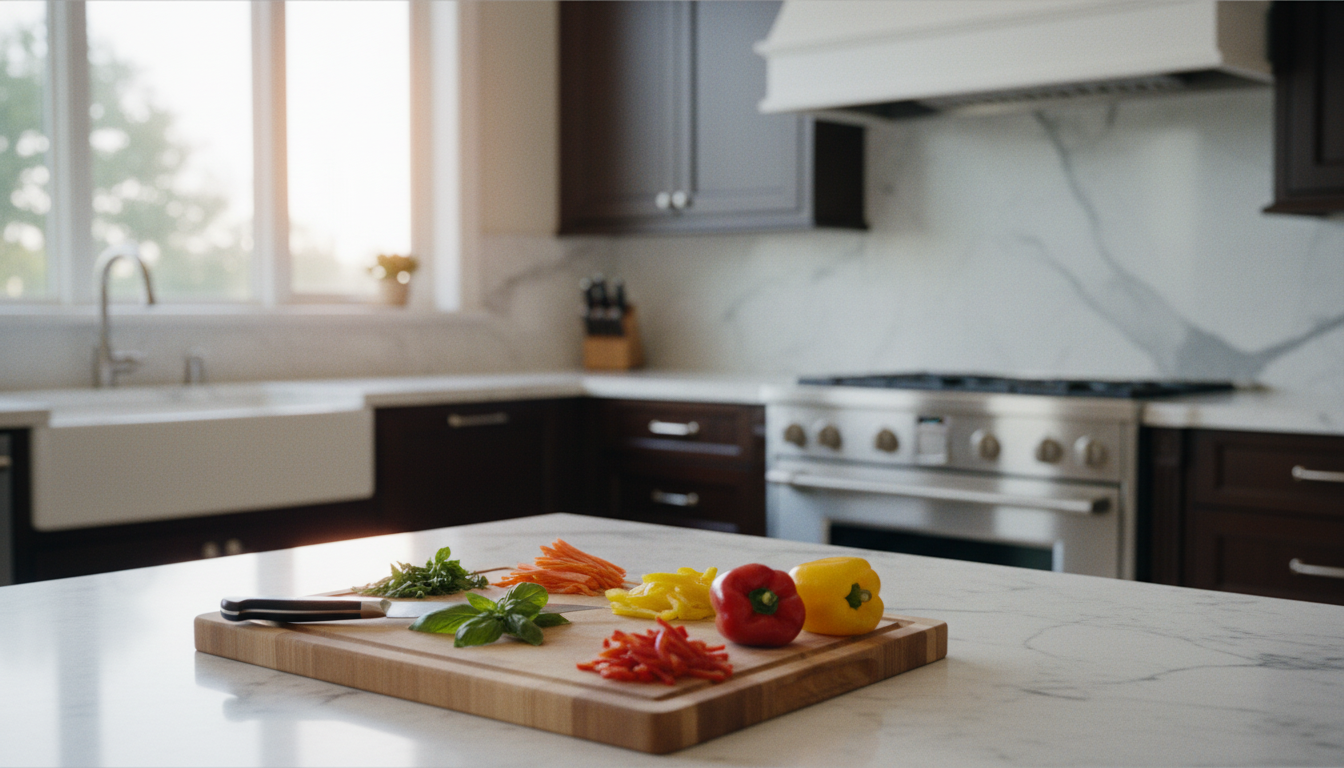
Mastering chiffonade and julienne cuts elevates everyday cooking into professional-level cuisine by transforming how ingredients cook, taste, and present on the plate. This comprehensive guide demystifies these fundamental French knife techniques, revealing how chiffonade's delicate ribbons unlock maximum flavor from herbs and leafy greens through increased surface area, while julienne's precise matchstick dimensions ensure rapid, even cooking for firm vegetables in stir-fries and salads. Readers will discover the critical differences between these cuts--from chiffonade's free-form elegance ideal for basil garnishes to julienne's exacting 1/8-inch measurements that create geometric uniformity--and learn why ingredient selection matters, with chiffonade suiting pliable leaves like spinach and mint while julienne excels with carrots and bell peppers. Beyond technique, the article explores how cut size directly impacts cooking times, flavor intensity, and visual presentation, offering practical solutions for common cutting challenges and time-saving professional tricks that home cooks can master. Whether creating restaurant-quality presentations, maximizing nutritional value through precise cuts, or simply elevating weeknight meals, understanding these two essential techniques provides the foundation for confident, creative cooking that transforms ordinary ingredients into extraordinary dishes.
The Foundations of Knife Skills
Master the pinch grip--thumb and index finger on the blade's bolster, remaining fingers wrapped around the handle--to gain the control and consistency you need for both techniques.
Essential Equipment for Precise Cutting
A sharp chef's knife is the most essential tool for both chiffonade and julienne cuts. [1] An 8-inch chef's knife is the most widely used size -- long enough for smooth, uninterrupted slicing strokes through stacked herb leaves, and controlled enough for fine matchstick cuts on firm vegetables like carrots. [2] A stable cutting board matters just as much; a surface that shifts mid-cut directly hurts consistency, and our guide on end-grain vs. edge-grain cutting boards covers which material holds up best under regular knife work.
A dull blade crushes cell walls instead of slicing cleanly, causing herbs to bruise and darken -- so sharpness is non-negotiable for either technique. [1]
Safety First: Proper Grip and Technique
The pinch grip is the industry standard for both precision and control: your thumb and index finger pinch the blade just in front of the bolster, while the remaining three fingers wrap around the handle. [3] This positioning gives you better balance, reduces hand cramping during extended prep, and translates directly into more consistent chiffonade ribbons and julienne matchsticks. [3] Understanding knife anatomy -- specifically the bolster's location between blade and handle -- helps you find the right pinch position instinctively.
Your non-cutting hand should form a claw grip, with fingertips curled inward and knuckles acting as a guide rail for the blade, which keeps fingers clear of the edge on every stroke. [4]
How Different Cuts Affect Cooking Results
Cut size directly controls both cooking time and flavor release -- two variables that shape every dish.
Smaller, thinner cuts expose more surface area to heat, so julienned vegetables cook in a fraction of the time needed for larger pieces. [6] Finer cuts also rupture more cell walls, releasing more of an ingredient's natural oils and aromatic compounds -- which is why chiffonade basil delivers more flavor into a dish than torn or roughly chopped leaves. [5] Uniformity matters as much as the cut itself: inconsistently sized pieces cook at different rates, leaving some overdone while others stay underdone. [6] Thinking through your cuts before cooking is a core part of mise en place and directly affects what ends up on the plate.
The Language of Knife Cuts: French Terminology in Modern Kitchens
Most knife cut names used in professional and home kitchens today are French in origin -- terms like julienne, chiffonade, brunoise, and batonnet all trace back to French culinary tradition, which began standardizing food preparation techniques in the 17th century. [9] Knowing what these terms mean helps you follow recipes accurately, since each word describes a specific size and shape rather than a general style of cutting. [9] "Chiffonade," for example, literally translates to "rags" in French, while "allumette" means "matchstick" -- both names give you a direct visual reference for the finished cut. [7][8] In a professional kitchen, this shared vocabulary speeds up communication considerably; a single word replaces a full description, which matters when multiple cooks are working under pressure. [9]
Understanding the Chiffonade Technique
Stack five to eight dry leaves, roll them tightly into a cylinder, and slice across at even intervals to create delicate ribbons that enhance both texture and flavor.
What Exactly Is a Chiffonade? Definition and Origin
Chiffonade is a knife cut that produces long, thin ribbons from leafy herbs and greens. To execute it, you stack leaves flat, roll them into a tight cylinder, then slice across the roll in quick, even strokes -- the resulting strips unfurl into delicate shreds.
The technique comes from French classical cuisine and was traditionally applied to soft herbs like basil, sorrel, and mint, as well as broader greens like spinach and lettuce. Its value lies in how it preserves leaf structure while maximizing surface area, which directly affects both the texture and the flavor release of whatever you're preparing.
Step-by-Step Guide to Creating Perfect Ribbon-like Cuts
Start by washing and completely drying your leaves -- any surface moisture causes them to stick together and tear rather than slice cleanly. Stack five to eight leaves on top of each other, aligning the stems, then roll them tightly from one side to the other into a compact cylinder.
Hold the roll firmly under a claw grip and slice across it at even intervals -- aim for 1/16- to 1/8-inch widths for most herbs, or slightly wider for heartier greens like spinach or chard. Once cut, gently separate the ribbons with your fingertips rather than shaking the pile apart, which keeps them loose and even for plating or finishing.
Ideal Ingredients: Leafy Herbs and Vegetables Best Suited for Chiffonade
Leaf size and structure determine whether an ingredient suits the chiffonade technique. Broad, flat leaves -- basil, mint, sage, radicchio, and butter lettuce -- stack and roll into tight cylinders cleanly, producing even ribbons.
Herbs with small, clustered leaves like thyme or cilantro can't be stacked and rolled effectively, so they're better minced or left whole. For tougher greens like kale or Swiss chard, strip the central rib before rolling; leaving it in creates uneven ribbon widths and a fibrous texture that works against the cut's purpose.
Handling Thick Stems and Avoiding Stringy Textures
Thick stems on herbs like basil and mint don't roll into a clean cylinder -- they create gaps that produce uneven ribbons and a fibrous chew in the finished dish. Remove stems entirely before stacking leaves; for herbs with noticeable midribs, like mature basil, score lightly along the central vein with your knife tip before rolling to prevent the leaf from bunching unevenly.
Slicing through the roll with a single continuous forward stroke -- rather than a sawing back-and-forth motion -- reduces tearing, which is the most common cause of stringy rather than clean ribbon cuts. Keeping your blade sharp and your roll tight are the two variables that matter most here.
Mastering the Julienne Cut
Square off your vegetable's rounded edges first, then slice and stack thin planks to create uniform matchsticks that cook evenly and hold their shape.
Defining Julienne: The Classic Matchstick Cut
Julienne is a knife cut that produces uniform matchstick-shaped pieces from firm vegetables and fruits. The standard dimensions are 1/8 inch by 1/8 inch in cross-section and roughly 2 to 3 inches in length -- precise enough to cook evenly but substantial enough to hold their shape in both raw and cooked preparations.
The cut originated in French classical cuisine, where consistent sizing was used to standardize cooking times across a dish. Unlike chiffonade, which works exclusively with pliable leaves, julienne requires ingredients with enough structural density to hold a clean edge after repeated cuts -- carrots, bell peppers, zucchini, cucumber, and celery root are among the most common candidates.
Proper Julienne Technique and Dimensions
To julienne a carrot or similar vegetable, start by squaring off the sides to create a flat, stable surface -- this removes the rounded edges that cause slipping and produce uneven cuts. Slice the squared vegetable lengthwise into planks roughly 1/8 inch thick, then stack two or three planks and cut lengthwise again at the same width to produce the matchstick shape.
Keep your knuckles as a guide rail and move the knife in one smooth forward stroke rather than pressing straight down, which compresses rather than slices the fibers. Working in small batches maintains consistency; stacking too many planks at once causes the pile to shift, and the bottom pieces end up wider than the top.
Best Vegetables and Applications for Julienne Cuts
Firm, dense vegetables are the best fit for julienne -- carrots, daikon, jicama, and celery root hold a clean edge and stay crisp long enough for raw preparations like slaws and noodle-style salads. Bell peppers and zucchini suit stir-fries well; a carbon steel wok reaches the temperatures needed to cook julienned strips in under two minutes without losing their structure.
Leeks and fennel julienned thin work in soups and braises, where the cut allows even softening without the pieces disintegrating. High-moisture vegetables like cucumber are best served immediately after cutting -- they release water quickly once sliced, which softens the texture if the dish sits for more than a few minutes.
Variations: Fine Julienne and Allumette
Julienne has two close relatives that use the same technique but at different scales. Fine julienne, cut to 1/16 inch by 1/16 inch in cross-section, produces strips thin enough to use raw as delicate garnishes -- ginger, daikon, and scallions cut this fine dissolve into a dish's texture rather than standing out as a distinct component.
Allumette, from the French word for matchstick, runs thicker at 1/4 inch by 1/4 inch, making it the right choice when you want the cut to hold presence in a finished dish, as with potato allumette -- a thicker, crispier cousin of the shoestring fry. Choosing between the three sizes comes down to how much the cut should register texturally on the final plate.
Chiffonade vs Julienne: Direct Comparison
Choose chiffonade for pliable leaves that wilt instantly, and julienne for dense vegetables that hold their shape through sustained cooking.
Dimensional Differences: Size, Shape, and Thickness
The most fundamental difference between chiffonade and julienne is shape, not just size. Chiffonade produces flat, ribbon-like strips -- thin in one dimension but wide in the other, with the strip's length determined entirely by the leaf it comes from rather than a standardized measurement.
Julienne produces square-cross-section rods: 1/8 inch by 1/8 inch with a defined 2- to 3-inch length, consistent across all three dimensions. Chiffonade width typically falls between 1/16 and 1/8 inch but carries no set length, while julienne is fully defined in every direction.
That geometric distinction -- flat ribbon versus square rod -- is what routes each cut toward different ingredients, cooking methods, and plating roles.
Ingredient Suitability: When to Use Each Cut
The simplest way to choose between the two cuts is to assess the ingredient's structure before you pick up a knife. Pliable leaves that can stack and roll without cracking belong to chiffonade -- that includes soft herbs, leafy greens, and edible flower petals wide enough to form a cylinder.
Firm ingredients with enough density to hold a clean edge through repeated lengthwise cuts belong to julienne -- think root vegetables, dense fruits like mango or apple, and firm aromatics like ginger. When an ingredient falls somewhere in between, like a very tender young leek, the intended dish usually settles it: raw garnishes pull toward chiffonade, and anything going into heat pulls toward julienne.
How Each Cut Affects Cooking Times and Methods
The flat, wide geometry of chiffonade ribbons means they respond to heat almost instantly -- a few seconds in a hot pan or a ladle of hot broth is enough to wilt basil or spinach into a soft, limp texture, so chiffonade is almost always added off heat or in the final seconds of cooking.
Julienne's square cross-section holds structural integrity through sustained cooking methods like blanching, braising, and sautéing, giving you a predictable window of several minutes before the pieces soften past the point of being useful as a textural element.
This difference also shapes which cooking vessel makes sense: chiffonade rarely requires a pan at all, while julienned vegetables benefit from direct, even contact with a flat cooking surface that transfers heat consistently across each piece.
Visual Impact: Presentation Considerations for Both Techniques
The visual role each cut plays on a plate is distinct enough to inform which technique you reach for based on presentation alone. Chiffonade ribbons create a loose, layered softness -- their slight curl and translucency finish a dish without competing with other components, which is why they're almost always added last, directly on the plate.
Julienne's uniform matchsticks read as structured and deliberate, signaling a level of precision that suits composed salads and plated entrées where visual order is part of the dish. Color plays into this too: thinly sliced herbs retain a more vivid green than roughly chopped leaves, and julienned vegetables hold their hue better through heat than larger cuts that can dull or spot unevenly.
Culinary Applications and Purposes
Cut chiffonade just before serving to prevent basil from browning and keep its color sharp while releasing aromatic oils on contact with your dish.
Chiffonade in Action: Garnishes, Salads, and Flavor Infusion
Chiffonade is one of the most versatile finishing cuts in a home cook's repertoire -- the same technique that tops a Caprese salad with basil ribbons also works scattered over pasta, stirred into a warm grain bowl, or layered into a Vietnamese-style herb salad where texture variety matters as much as flavor.
Because the cut ruptures cell walls along a long, thin edge, herbs like basil and mint release their aromatic oils on contact with the dish rather than gradually, which makes chiffonade more effective than whole leaves when you want immediate flavor impact.
For raw salad applications, adding chiffonade just before serving prevents the ribbons from wilting and keeps their color sharp -- this is especially important with basil, which browns within minutes of being cut and exposed to air.
Julienne Applications: Stir-fries, Soups, and Raw Preparations
Julienned vegetables suit three distinct cooking contexts for different structural reasons. In stir-fries, the square cross-section distributes heat evenly across all four sides, producing consistent browning without constant tossing -- this matters especially when cooking in a stainless steel pan, where even surface contact drives heat transfer more than in a seasoned wok.
In clear broths and hot pot applications, julienned strips add texture without cloudiness, and their uniformity means every piece softens at the same rate, so you're not fishing out overcooked pieces alongside firm ones. For raw preparations -- Vietnamese-style salads, spring roll fillings, or bibimbap toppings -- the matchstick shape holds up under dressings without going limp the way thicker or irregular cuts do.
Restaurant Techniques vs Home Cooking Adaptations
Professional kitchens produce chiffonade and julienne at volume using mandolines and dedicated prep cooks who batch-cut before service -- a workflow that doesn't translate to home cooking, nor does it need to. At home, the smarter adaptation is cutting smaller quantities right before cooking, which keeps herbs from oxidizing and julienned vegetables from releasing moisture in storage.
A sharp chef's knife handles both cuts without specialized tools, though a mandoline with a julienne attachment earns its place if you're regularly prepping larger quantities of root vegetables. The standard dimensions still apply -- consistency matters for even cooking regardless of scale -- but batch size is the one variable you can adjust freely.
Creative Uses Beyond Traditional Applications
Both techniques extend well beyond their standard applications once you understand what each cut does structurally. Chiffonade works on ingredients most cooks wouldn't think to roll and slice -- prosciutto cut into fine ribbons makes a pasta topping that crisps under a broiler in seconds, and tortilla strips treated the same way fry into even chips in under two minutes.
Julienne opens up dessert applications too: firm pears, mangoes, and apples hold their shape in tarts and composed fruit plates while absorbing citrus dressings without going limp. Fine-julienned ginger steeped in syrups or spirits also extracts flavor faster than whole slices, since the increased surface area speeds infusion considerably.
Troubleshooting Common Cutting Challenges
Reset your hand position every five or six cuts and anchor your eyes at the blade-knuckle contact point to prevent inconsistent strip widths.
Maintaining Uniformity in Your Cuts
Inconsistent cuts almost always trace back to one of two issues: guide hand drift or variable stroke pressure. As you work through a batch, your claw grip tends to shift slightly with each slice, widening the gap between knuckle and blade -- pausing every five or six cuts to reset your hand position prevents this from compounding.
Keeping a reference piece beside your board gives you a physical standard to check against mid-batch, which catches width drift before it spreads across the whole pile. Anchoring your eyes at the point of contact between knuckle and blade -- rather than watching the full length of the knife -- keeps your spatial reference fixed at the one place that actually controls strip width.
Working with Different Textures and Densities
Ingredient density changes how you apply pressure and how fast you move the blade -- two variables that don't stay constant across a prep session involving both herbs and root vegetables. Soft, high-moisture ingredients like zucchini and cucumber compress under too much downward force, producing crushed edges rather than clean cuts; the fix is a lighter touch with more emphasis on the forward draw of the stroke.
Dense roots like carrot and celery root need the opposite approach -- a deliberate, sustained forward stroke with moderate pressure to push through the fibers without the blade stalling mid-cut. When you're switching between ingredient types in a single session, reset your pressure instinctively by making one test cut before running through the full batch.
Time-Saving Techniques for Both Methods
The fastest way to work through both cuts efficiently is to sequence prep by ingredient type -- complete all julienne cuts first, then move to herbs, since switching between dense and soft ingredients repeatedly resets your pressure and rhythm. For chiffonade, keep herbs refrigerated and dry until the moment you cut; cold leaves roll tighter and produce cleaner ribbons with fewer mid-batch adjustments.
When julienning, square all vegetables before making any plank cuts -- running that single squaring step across every piece at once keeps your hand position and stroke consistent throughout the batch. A sharp blade matters more than speed: a knife that drags through herbs or stalls on carrots adds more time than any workflow adjustment will recover.
When to Choose Alternative Cutting Styles
Neither chiffonade nor julienne fits every situation -- rough chop suits braised dishes and stocks where shape dissolves into the final texture, while brunoise (a 1/8-inch uniform dice) works when you need fine texture distribution without visible strips. Tearing instead of cutting is better for delicate herbs like basil when you're adding them to a rustic dish where presentation precision isn't a priority.
Diagonal or bias cuts increase surface area on longer vegetables like scallions or asparagus without the squaring and planking steps required for julienne. Matching the cut to the dish's cooking method and final texture -- rather than defaulting to habit -- is what keeps prep purposeful.
- Chiffonade = stack leafy herbs, roll tight, slice ⅛-inch ribbons; best for basil, mint, spinach.
- Julienne = firm veg cut to 2½x⅛x⅛-inch matchsticks for even stir-fry cooking and crisp salads.
- Uniform cut size controls cooking speed: smaller = faster, larger = slower; prevents uneven doneness.
- Leafy herbs use chiffonade; carrots, peppers use julienne; ingredient texture dictates cut choice.
- Fine julienne halves width to 1⁄16 inch for delicate garnish; allumette thickens to ¼ inch for tempura.
- Chiffonade boosts flavor release via thin ribbons; add at end to avoid browning from extra surface area.
- Stack 3-4 leaves, roll cigar-tight, slice at 45 degrees with sharp knife; let blade weight cut, don't press.
- https://trymise.app/blog/chefs-knives-uses
- https://www.webstaurantstore.com/guide/538/types-of-knives.html?srsltid=AfmBOooFLExSxMiuVEeVDD3BwX-4hZDF1mOYHt_z3q1xwB3ygTKZfv7k
- https://www.seriouseats.com/knife-grip-tips-11826536
- https://faneemacutlery.com/blogs/blog-faneema-cutlery/professional-knife-handling-techniques-for-chefs?srsltid=AfmBOopmmrlt-SaF76ZS58Lp92Hh_Iay1JPXaiE6Db3ZFJKcEmC6C4Mt
- https://www.foxel.me/blogs/blog/how-different-cuts-affect-the-taste-and-texture-of-your-food?srsltid=AfmBOorRwU1W1Ow_nHiE71B0z4VAjfz_AMEUniBJlgnKwcooVyv6wQRA
- https://www.bodi.com/blog/knife-cuts-guide
- https://www.escoffier.edu/blog/culinary-arts/8-knife-cuts-every-professional-cook-should-know/
- https://snippetsofparis.com/french-knife-cuts/
- https://whysofrance.com/glossary-of-french-cooking-terms/