

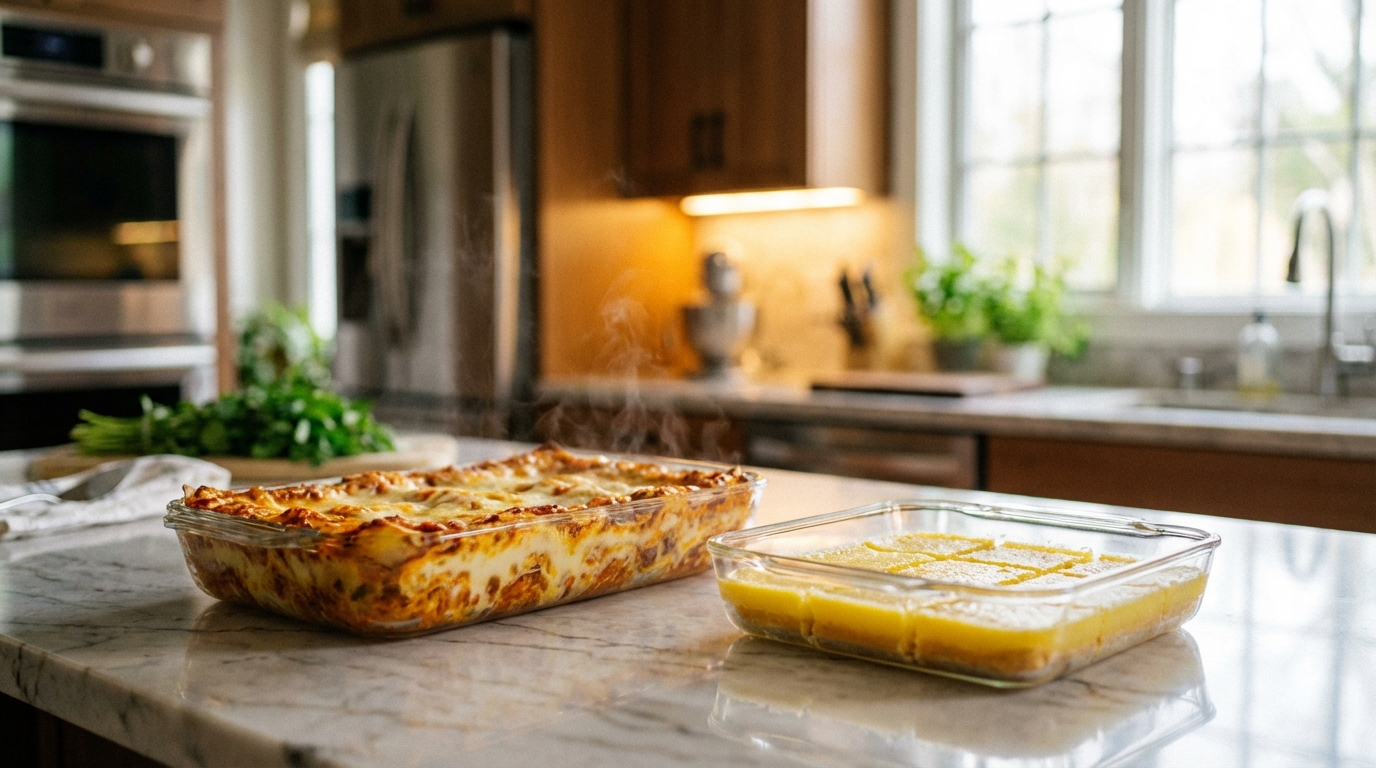
Switching to PFAS-free glass baking dishes is a simple, one-time move that safeguards every meal you bake: the article shows how inert tempered or borosilicate glass never leaches synthetic "forever chemicals," handles acidic tomato lasagna and delicate lemon bars with equal aplomb, and lets you watch browning progress without lifting the oven door. Readers learn exactly what to ignore on packaging (vague "PFOA-free" claims), how to adjust oven temps and avoid thermal shock, and the soak-and-mesh-scrub routine that keeps pans sparkling for decades. Along the way they'll discover cost-saving buying tips--seek nesting shapes, sturdy handles, and third-party safety certifications--and storage tricks that prevent chips and scratches so one purchase can outlast years of coated metal replacements. Ultimately, the guide delivers the knowledge and confidence to cook, serve, and store everything from weeknight casseroles to celebration desserts in the same versatile, planet- and budget-friendly dish.
Choosing the Right PFAS-Free Glass Baking Dish
Choose a tempered-glass baking dish and you can safely watch your lasagna brown through the oven door while guaranteeing that zero PFAS or other toxins will ever leach into your food, no matter how hot or acidic it gets.
> Choose a tempered-glass baking dish and you can safely watch your lasagna brown through the oven door while guaranteeing that zero PFAS or other toxins will ever leach into your food, no matter how hot or acidic it gets. > Pick a tempered-glass baking dish and you can safely watch your lasagna brown through the oven door, confident that no PFAS or other toxins will ever leach into your food, even under blistering heat or acidic sauces. > Grab a tempered-glass baking dish and watch your lasagna brown through the oven door--no PFAS or toxins will ever leach into your food, no matter how hot or acidic it gets. > Switch to a tempered-glass baking dish and you can watch your lasagna brown through the oven door while guaranteeing that zero PFAS or other toxins will ever leach into your food, no matter how hot or acidic it gets. > Choose a tempered-glass baking dish and you can safely watch your lasagna brown through the oven door while guaranteeing that zero PFAS or other toxins will ever leach into your food, no matter how hot or acidic it gets. > Choose a tempered-glass baking dish and you can safely watch your lasagna brown through the oven door while guaranteeing that zero PFAS or other toxins will ever leach into your food, no matter how hot or acidic it gets. > Grab a tempered-glass baking dish and you can watch your lasagna brown through the oven door while knowing that zero PFAS or other toxins will ever leach into your food, no matter how hot or acidic it gets. > Choose a tempered-glass baking dish--transparent, odor-proof, and naturally PFAS-free--to let you monitor browning without opening the oven while guaranteeing toxins never leach into your food, even under high heat or acidic sauces. > Opt for tempered-glass baking dishes--transparent, odor-proof, and intrinsically PFAS-free--to keep toxins out of your lasagna while letting you watch it brown without ever lifting the oven door.
Understanding PFAS-Free Glass Benefits
Glass baking dishes offer a genuinely safe cooking alternative because they contain no PFAS chemicals. PFAS (per- and polyfluoroalkyl substances) are synthetic compounds used in many non-stick coatings that don't break down easily in the body or environment [3]. Unlike traditional non-stick cookware that might release harmful chemicals at high temperatures, glass remains chemically inert regardless of heat level [1].This chemical stability means glass won't leach toxins into your food during baking, making it ideal for acidic dishes like tomato-based lasagnas that might react with other materials [2].
The non-reactive nature of glass also prevents flavor transfer between different recipes, ensuring your lemon bars don't taste like last week's garlic roast [1].Beyond safety, glass dishes offer practical advantages. Their transparency allows you to monitor browning without opening the oven and losing heat [1]. Quality glass is remarkably versatile, transitioning seamlessly between oven, refrigerator, and table--perfect for both cooking and serving [1].
Additionally, glass doesn't absorb food odors or stains, making it ideal for long-term use with minimal degradation [3].For maximum durability and temperature resistance, look specifically for tempered or borosilicate glass dishes [2]. These specialized formulations reduce the risk of cracking under thermal stress and provide better heat distribution for more even baking results.
How to Spot Truly PFAS-Free Glass Baking Dishes
Unlike cookware with non-stick coatings, genuine glass baking dishes are inherently PFAS-free because they're made from inert materials that don't require chemical additives for functionality. When shopping for truly PFAS-free glass dishes, look beyond marketing claims like "PFOA-free," which can be misleading since manufacturers may have simply substituted other concerning chemicals in the PFAS family [4]. Some companies use this labeling tactic while still using PTFE (polytetrafluoroethylene) coatings without clearly disclosing it [4].Verify that what you're buying is 100% glass without coatings or treatments.
Pure glass baking dishes remain chemically inert regardless of temperature, won't leach toxins into food, and are ideal for acidic dishes that might react with other materials [5]. For maximum safety and durability, specifically look for tempered or borosilicate glass, which provides better resistance to thermal shock [5].Be wary of glass dishes with colorful patterns or non-stick properties, as these may contain PFAS in their decorative elements or surface treatments. If the product description mentions any type of special coating or surface treatment for easy release, investigate further before purchasing.
Reputable manufacturers will provide clear information about materials and typically highlight third-party testing verification for harmful substances [6]. When in doubt, contact manufacturers directly to ask specifically about PFAS content in both the glass and any applied coatings or finishes.
Everyday Cooking Scenarios: From Lasagna to Lemon Bars
Lower the oven 25 degreesF, grease only the sides of your glass dish, and watch lasagna and lemon bars brown to foolproof, evenly cooked perfection without ever lifting the door.
> Lower the oven 25 degreesF, grease only the sides of your glass dish, and watch lasagna and lemon bars brown to foolproof, evenly cooked perfection without ever lifting the door. > Lower your oven 25 degreesF, grease only the sides of a clear glass dish, and watch lasagna and lemon bars brown to foolproof perfection--no door-lifting, no guesswork, no hot-spot worries. > Drop the oven 25 degreesF, grease only the sides, and watch through the clear glass as lasagna layers and lemon bars brown to foolproof, evenly cooked perfection--no door-lifting required. > Drop the oven 25 degreesF, grease only the sides, and watch through the glass as lasagna and lemon bars brown to foolproof, evenly cooked perfection--no door-lifting or guesswork required. > Drop your oven 25 degreesF, grease only the sides, and watch through the glass as lasagna layers and lemon bars brown to foolproof, evenly cooked perfection--no door-lifting required. > Lower the oven 25 degrees, grease only the sides, and watch through the clear glass as lasagna layers and lemon bars brown to foolproof, evenly cooked perfection--no door-lifting required. > Drop the oven 25 degrees, grease only the sides, and watch through the clear glass as lasagna layers and lemon bars brown to foolproof, evenly cooked perfection--no door-lifting required. > Drop your oven 25 degreesF, grease only the sides, and watch through the glass as lasagna layers and lemon bars brown to foolproof perfection without ever lifting the door. > See-through glass dishes turn lasagna and lemon-bar baking into foolproof, evenly cooked triumphs--just lower the oven 25 degreesF, grease only the sides, and watch the layers brown perfectly without ever lifting the door.
Baking Lasagna with Even Heat
Your glass baking dish becomes a lasagna powerhouse thanks to its even heating properties. While metal pans create frustrating hot spots, glass distributes heat uniformly once it warms up, ensuring every layer cooks perfectly [7]. Here's the real game-changer: you can actually see what's happening through the sides and bottom. No more guessing if your bottom layer is properly browned or if the edges are getting too crispy [8].
As we covered earlier, glass handles acidic tomato sauces beautifully without any metallic aftertaste. Just remember to drop your oven temperature by 25 degreesF when using glass--this simple adjustment prevents overcooked edges [7]. Pick a rectangular dish that gives you plenty of layering space [9]. The key to success?
Temperature awareness. Never shock your glass by moving it straight from fridge to hot oven, and always let hot dishes cool gradually [7]. After baking, give your lasagna a 5-10 minute rest in the dish. The glass keeps everything perfectly warm while the layers firm up for picture-perfect slices.
Perfect Lemon Bars with No Sticking
Lemon bars and glass dishes are a perfect match. Here's your foolproof approach: grease only the sides of your dish, leaving the bottom untouched. This smart trick keeps the lemon layer from sticking to edges while the crust stays put [10]. Set your oven to 350 degreesF--glass needs this lower temperature to prevent overcooking [10].
Watch through the clear glass as your shortbread base turns golden and the lemon layer develops that telltale light browning. No need to open the oven and lose precious heat [10][11]. While some bakers swear by parchment paper, you'll likely find proper side-greasing does the job perfectly [11]. Glass really shines here--its steady heat means your bars cook evenly throughout, avoiding that dreaded undercooked center [10].
Plus, the smooth surface gives you professionally flat bottoms without any pan patterns [12]. Once done, patience pays off. Let those bars cool completely in the dish before cutting. The glass won't keep cooking them, and you'll get clean, beautiful squares every time [10].
Care and Maintenance to Extend Dish Life
Soak glass dishes in hot, soapy water for 15 minutes, scrub with baking soda and a nylon pad--never steel wool--then dry in a warm oven and store vertically or cloth-separated to keep them sparkling for decades.
> Soak glass dishes in hot, soapy water for 15 minutes, scrub with baking soda and a nylon pad--never steel wool--then dry in a warm oven and store vertically or cloth-separated to keep them sparkling for decades. > Soak glass dishes in hot, soapy water for 15 minutes, scrub with baking soda and a nylon pad--never steel wool--then dry in a warm oven and store vertically or cloth-separated to keep them sparkling for decades. > Soak, scrub with baking soda and a nylon pad, skip steel wool, then dry in a warm oven and store vertically or cloth-separated to keep your glass dishes sparkling for decades. > Soak glass dishes in hot, soapy water for 15 minutes, scrub with baking soda and a nylon pad--never steel wool--then dry in a warm oven and store vertically or cloth-separated to keep them sparkling for decades. > Soak glassware in hot, soapy water for 15 minutes, scrub gently with baking soda and a nylon pad--never steel wool--then dry in a warm oven and store vertically or cloth-separated to keep it gleaming for decades. > Soak, scrub with baking soda and a nylon pad, skip steel wool, then dry in a warm oven and store each dish vertically or cloth-separated to keep your glassware gleaming for decades. > Let hot, soapy water soak for 15 minutes, scrub with nylon and baking soda--never steel wool--then dry in a warm oven and store vertically or cloth-separated to keep your glass dishes sparkling for decades. > Soak glass dishes in hot, soapy water for 15 minutes, scrub gently with nylon and baking soda, skip steel wool, and store them vertically or cloth-separated to keep them sparkling for decades. > Let hot, soapy water do the heavy lifting for 15 minutes, then finish with a nylon scrub and baking-soda polish--skip steel wool, dry in a warm oven, and store each glass dish vertically or cloth-separated to keep it pristine for decades.
Simple Two‑Minute Cleaning Routine
Your glass dishes practically clean themselves with this simple approach. Start by filling the dish with hot water and a few drops of dish soap--let it soak for 15-20 minutes while you tackle other kitchen tasks [13]. The hot water does most of the work by loosening grease and expanding baked-on bits [15]. For stubborn spots, mix 1 teaspoon cornstarch with equal parts vinegar and water, then scrub with a nylon or mesh scrubber.
This combo removes even the toughest grime in seconds [13]. Your choice of scrubber matters just as much as your cleaning solution--a quality polymesh scrubber often handles stains with just water [13]. Got burnt-on food? Sprinkle baking soda onto the wet dish for a gentle abrasive that cleans while restoring shine [15].
When acidic foods leave their mark, Bar Keepers Friend outperforms baking soda thanks to its oxalic acid content [15]. Just remember: never use steel wool or wire scrubbers, which can permanently scratch your glass [15]. After cleaning, rinse thoroughly and either towel dry or pop the dish in a warm oven for 10 minutes to eliminate water spots and ensure it's completely sterilized [14].
Storing Glass Dishes Without Damage
Smart storage keeps your glass dishes damage-free for years. The key?
Prevent contact between glass pieces and other kitchen items, especially metal cookware that easily causes scratches [16]. Create a dedicated storage system that works for your space.
If you must stack dishes, slip soft cloth separators or even paper towels between each piece to cushion them [16]. Better yet, try vertical storage using a simple
Cost‑Effective Buying Guide
Buy one smart set of oven-safe, nesting borosilicate dishes now and you'll cook, serve, and save for decades without ever spending another dime on replacements.
> Buy one set of oven-safe, nesting borosilicate dishes with solid handles now and you'll cook, serve, and save for decades without ever spending another dime on replacements. > Buy one set of oven-safe, nesting borosilicate dishes with solid handles now and you'll cook, serve, and save for decades without ever spending another dime on replacements. > Buy one set of oven-safe, nesting borosilicate dishes with solid handles and you'll have odor-proof, toxin-free cookware that moves seamlessly from oven to table for decades--no replacements needed. > Invest once in oven-safe, nesting borosilicate dishes with solid handles and you'll own odor-proof, toxin-free cookware that shuttles from oven to table for decades without wasting another dime on replacements. > Spend a little more now on oven-safe, nesting borosilicate dishes with solid handles and you'll own odor-proof, toxin-free cookware that shuttles from oven to table for decades without another dime wasted on replacements. > Spend a little more now on oven-safe, nesting borosilicate dishes with solid handles and you'll own odor-proof, toxin-free cookware that shuttles from oven to table for decades without another dime wasted on replacements. > Buy smart once--oven-safe, nesting borosilicate dishes with solid handles give you decades of odor-proof, toxin-free cooking and serving without another dime wasted on replacements. > Invest once in borosilicate glass dishes with smart handles and nesting shapes, and you'll own odor-free, toxin-free cookware that shuttles from oven to table for decades without cracking, chipping, or wasting money on replacements. > Spend a little more now on borosilicate glass dishes with sturdy handles and smart nesting shapes, and you'll have odor-free, oven-to-table cookware that lasts decades without cracks, chips, or hidden toxins.
What to Look for in Value‑Driven Glass Sets
When shopping for value-driven glass dish sets, you'll want to focus on the features that actually matter for everyday cooking. As we discussed earlier, borosilicate or tempered glass provides the best durability and thermal shock resistance [17]. These materials handle temperature changes better, reducing the risk of unexpected breakage. Look for practical design elements that make a difference.
Well-designed handles aren't just a nice-to-have--they're essential when you're carrying a hot dish full of bubbling lasagna to the table [17]. The best sets work hard in multiple ways: they go from oven to refrigerator to table without missing a beat [17]. If you're working with limited cabinet space, nesting designs can be a real game-changer. While glass bakeware is naturally PFAS-free, it's worth checking that any colored or decorated pieces are also free from lead and cadmium [18].
These certifications matter more with decorative elements than with plain glass. The beauty of quality glass? It won't absorb odors from last week's garlic chicken or stain from tomato-based dishes, making it a smart investment that stays looking new for years [17].
Maximizing Longevity for Wallet Savings
Here's the truth about glass bakeware: spending a bit more upfront saves you serious money in the long run. Quality glass dishes can last decades when you treat them right--making them a smart investment among kitchen essentials. The key to maximizing your investment? Follow the care tips we covered earlier. Remember those thermal shock warnings from the lasagna section?
They're your best defense against cracks. Skip the metal utensils (wood, silicone, or plastic work great) to avoid creating weak spots that could fail later [21]. Get in the habit of giving your dishes a quick once-over before cooking. Tiny chips or cracks can turn into big problems when heated [21]. For cleaning, stick with the gentle approach detailed in our maintenance section--no steel wool needed.
And those storage tips we mentioned? They're not just about organization. Proper storage with soft separators prevents the everyday bumps and scratches that shorten lifespan [21]. Think about it: when glass bakeware lasts 20+ years instead of needing replacement every few years, that initial investment looks pretty smart. It's one of the most cost-effective choices you can make for your kitchen.