

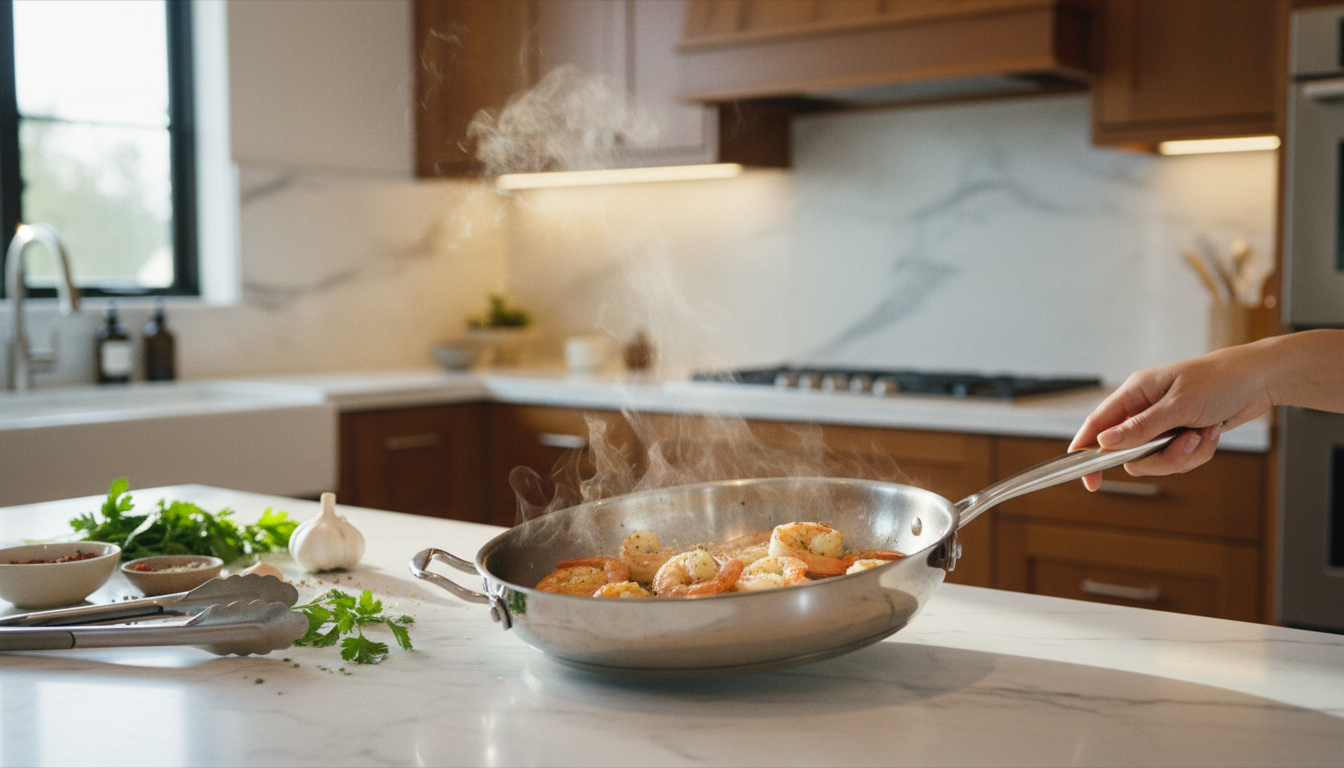
This article equips home cooks with everything they need to turn out restaurant-quality sautéed shrimp in minutes, starting with smart shopping--choose medium-large IQF frozen shrimp for peak freshness, thaw them safely in cold water, and pat them bone-dry for a lightning-fast, even sear. It walks through the critical setup: a heavy pan pre-heated until the oil shimmers, a single uncrowded layer of shrimp, and the two-stage fat trick--oil first for browning, butter at the end for flavor--so the seafood caramelizes without burning or steaming. Readers learn precise timing (about 2-3 minutes total), the visual cue of a loose C-shape, and pro moves like cutting the heat early to finish on retained warmth, guaranteeing plump, juicy results instead of rubbery mistakes. Flavor blueprints follow, from classic garlic-lemon and bronzed Cajun to Mediterranean herb-tomato medleys, each built in stages so aromatics bloom and delicate herbs stay bright. Finally, the piece shows how to plate like a chef and pair with wines or sides--zesty whites for garlicky shrimp, oaked Chard for spicy versions, or couscous and grilled vegetables for a complete meal--turning the quickest weeknight protein into a dish worthy of company.
Preparing Shrimp for Sautéing
Choose medium-sized U26/30 IQF frozen shrimp, thaw them safely in cold water, dry thoroughly, and peel/devein for foolproof sautéing that beats "fresh" counter shrimp every time.
Selecting the right shrimp
Here's what to look for when buying shrimp for sautéing. The 'U' number on packaging tells you the count per pound - U31/40 means 31-40 shrimp per pound [1]. Medium to large shrimp (U31/40 to U26/30) are your best bet for sautéing.
They cook quickly and evenly without overcooking [1]. Save those impressive colossal shrimp (U8/12) for the grill - their size makes even pan-cooking tricky [2]. Shell-on shrimp deliver better flavor and quality than pre-peeled, so grab them when you can [2].
Here's a secret: frozen shrimp are often fresher than "fresh" ones at the seafood counter, which have usually been frozen and thawed already [2]. Look for IQF (individually quick frozen) shrimp - they're frozen separately rather than in blocks, so they maintain better texture [2].
Thawing frozen shrimp properly
Need shrimp for dinner tonight? Here are three ways to thaw them safely. The quickest method: place frozen shrimp in a colander and run cold water over them for 15-20 minutes, stirring now and then until they're flexible and translucent [3]. Got 45 minutes?
Keep the shrimp in their sealed bag, submerge in cold water, and weigh down the bag so it stays under [4]. Whatever you do, skip the warm water - it'll start cooking your shrimp and can encourage bacteria growth. Planning ahead? Just move frozen shrimp to your fridge 5-8 hours before cooking [3].
Once thawed, pat them completely dry with paper towels. This step is crucial for getting that perfect sear later [4].
Cleaning and deveining techniques
First, pull off the legs if you want - totally optional. For the shells, you've got two approaches.
Use your thumbs to crack along the softer belly side and peel away, or grab kitchen shears to cut along the firmer back and remove [5]. To devein, take a sharp
Essential Equipment and Ingredients
Use a heavy-bottomed pan, sear with high-smoke-point oil, finish with butter, and time your seasonings--garlic early, herbs and citrus at the end--to turn sautéed shrimp from ordinary to unforgettable.
Choosing the ideal pan for sautéing
Your choice of pan can make or break your sautéed shrimp.
Heavy-bottomed pans hold heat best - they won't cool down when you add cold shrimp, which means better searing and less risk of overcooking [8].
Cast iron excels here, but a quality
Oils and fats for optimal flavor
Your cooking fat shapes both texture and flavor in sautéed shrimp. High-smoke-point oils like canola, vegetable, or grapeseed give you the heat you need for proper searing, while butter brings those rich, creamy notes that make shrimp irresistible [9].
Want the best of both worlds? Start with oil to achieve that initial sear, then finish with butter in the final moments - you'll get beautiful browning without any burnt butter taste [9].
Extra virgin olive oil adds subtle Mediterranean notes, while neutral oils let the shrimp's sweetness take center stage [9]. Remember, your cooking fat carries flavors too - butter especially helps garlic and herbs infuse into every bite [9].
Seasonings and aromatics to enhance taste
Great seasonings take your shrimp from good to unforgettable. Start with the classics: garlic butter made from softened butter, minced garlic, garlic salt, and black pepper creates a rich base that highlights shrimp's natural sweetness [10]. Craving something bolder?
Blackening seasoning brings Cajun flair with its blend of paprika, garlic powder, onion powder, thyme, and cayenne [11]. Timing is everything here. Save delicate ingredients like fresh herbs and citrus for after cooking - their bright flavors disappear under high heat [10].
Heartier spices can go right in the pan during cooking. If you're using butter-based seasonings, add them near the end to avoid burning while still giving flavors time to meld into the shrimp [10].
How to Sauté Shrimp: Quick and Easy Techniques for Flavorful Results
Start with a cold pan, wait until the oil shimmers, then sear the shrimp undisturbed for a minute before flipping--cut the heat early and let residual warmth finish them to tender, spotty-gold perfection.
Preheating the pan and adding oil
Start with a cold pan to prevent oil from smoking before reaching proper temperature. Heat your pan over medium-high heat until you can feel warmth radiating when holding your hand 6 inches above the surface - this usually takes about 2-3 minutes. Add enough oil to coat the bottom of the pan in a thin, even layer (about 2-3 tablespoons for a 12-inch skillet).
A quality stainless steel pan distributes heat evenly, helping you achieve that perfect golden sear. Let the oil heat until it shimmers and moves freely around the pan, but doesn't smoke. As mentioned in our ingredients section, the butter-oil combination works beautifully here - start with oil for the initial sear, then add butter later for flavor.
Remember, patience is key - waiting for proper heat ensures your shrimp will sear rather than steam.
Proper shrimp placement and cooking time
Arrange shrimp in a single layer without overcrowding - as we discussed in the equipment section, you need plenty of space between each piece to achieve proper searing. Once the oil is shimmering, add seasoned shrimp to the hot pan - they should sizzle on contact [14].
Let shrimp cook undisturbed for about 1 minute until the bottom turns bright pink and browns [15]. Flip once and continue cooking until shrimp curl into a loose C-shape and turn completely pink and opaque with bright red tails, about 2-3 minutes total cooking time [14].
Watch carefully as shrimp can quickly become overcooked and rubbery - they're done when there are no more grey bits visible [14]. For shell-on shrimp, allow slightly longer cooking time but monitor closely as the shells help trap moisture and flavor while preventing overcooking [15].
Flipping and finishing techniques
Master the flipping technique by using two spoons to gently turn each shrimp, ensuring even cooking on both sides [16]. Here's a pro tip that makes all the difference: once the first side develops those beautiful spotty brown patches and pink edges, cut the heat before flipping.
The pan's residual warmth will gently finish cooking the shrimp without turning them rubbery [17]. This gentle approach is your secret weapon against overcooked shrimp - you'll still get that gorgeous golden color while keeping the texture tender and juicy.
After flipping, let the shrimp coast to completion, turning completely pink and opaque using just the pan's retained heat. Some cooks prefer starting with a cold pan for even more control - the shrimp heat gradually with the skillet, preventing them from curling too tightly and ensuring perfect contact with the pan surface [17].
Flavor Variations and Seasoning Tips
Master three flavor-packed shrimp variations--garlic-lemon, Cajun-bronzed, and Mediterranean herb--by controlling heat levels, building layered aromatics, and using fresh ingredients over powders for restaurant-quality results at home.
Classic garlic and lemon combination
The classic garlic and lemon combination delivers maximum flavor with minimal ingredients. Start by melting equal parts butter and oil in your skillet over medium-low heat - as covered in our oils section above, this combination prevents burning while building flavor. Sauté minced garlic and shallots until fragrant, about 2-3 minutes.
This low-heat approach infuses the fats with garlic flavor without the bitter notes that come from burning. Once your shrimp are nearly cooked through, add fresh lemon juice and let it bubble for 30 seconds. The sauce will reduce and thicken, creating a coating that clings to each shrimp.
Always use fresh garlic over powder - you'll get better flavor penetration and avoid the artificial taste. The butter provides richness while lemon cuts through with bright acidity, perfectly balancing the shrimp's natural sweetness.
Spicy Cajun-style sautéed shrimp
Cajun-style sautéed shrimp brings Louisiana heat to your kitchen through a balanced spice blend. Mix your own Cajun seasoning using paprika, garlic powder, cayenne, dried thyme, and oregano - this gives you control over the heat level.
For best results, create a compound butter by mixing 4 tablespoons softened butter with 2 tablespoons Cajun seasoning and 2 cloves minced garlic. Use moderate heat rather than the high heat of traditional blackening - this 'bronzing' technique develops a golden crust while keeping the shrimp tender.
A
Mediterranean herbs and spices
add bright, layered flavors to sautéed shrimp. Use extra virgin olive oil as your cooking fat - its fruity notes complement seafood without masking natural flavors. Build your aromatic base with fresh garlic and a blend of dried oregano, basil, and thyme.
For Greek-style shrimp, season with oregano, paprika, and a pinch of cumin. Start by sautéing aromatics: cook sliced onions, minced garlic, and chopped leeks until soft, about 3-4 minutes. Add diced yellow peppers and tomatoes, cooking until the tomatoes break down slightly.
Season your shrimp and add them to this flavorful base. Finish with a tablespoon of capers and fresh lemon juice - the brine and acid brighten the entire dish. The key is building flavors in stages rather than dumping everything in at once.
Serving and Pairing Sautéed Shrimp
Pair your sautéed shrimp with pearl-couscous-mint salad, Muscadet for garlic versions, or oaked Chardonnay for Cajun heat to turn the seafood into a complete, wine-matched meal.
Complementary side dishes
Pasta and rice dishes provide excellent foundations for sautéed shrimp. Pearl couscous with toasted pecans and fresh mint creates a light yet satisfying accompaniment that works well at any temperature [25]. For a heartier option, cheddar-infused rice develops a rich, smoky crust when cooked slowly [25].
Fresh vegetable sides help balance richer shrimp preparations - try a Mediterranean-inspired salad with roasted chickpeas for added crunch and protein [25]. Roasted asparagus with burnished lemon slices offers both visual appeal and bright flavors that complement shrimp's natural sweetness [25]. For a low-carb alternative, zucchini noodles (zoodles) topped with pesto and chickpeas provide a nutritious base that pairs especially well with lemon-garlic shrimp preparations [26].
Traditional Southern accompaniments like cheese grits and hush puppies create a classic coastal meal, while lighter options such as a Roquefort pear salad with caramelized pecans offer an elegant contrast to simply prepared shrimp [26].
Wine and beverage pairings
The right wine pairing enhances sautéed shrimp's delicate flavors while complementing specific preparation methods. For classic garlic shrimp preparations, crisp whites like Muscadet, Picpoul de Pinet, or Pinot Grigio provide refreshing acidity that acts like a squeeze of lemon [27].
Buttery shrimp scampi pairs well with oaked Chardonnay or an adventurous rosé, whose mineral content and acidic notes help cleanse the palate between bites of rich, garlicky sauce [28]. For spicier Cajun-style shrimp, consider a hearty Chardonnay with noticeable oak character or even a well-balanced Cabernet Sauvignon to match the dish's intensity [28].
When serving Asian-inspired shrimp dumplings, reach for Sauvignon Blanc or Gewurztraminer - the latter's fruity profile balances earthy ginger and Asian spices [28]. For the simplest preparations like chilled shrimp cocktail, a dry Riesling complements the horseradish bite in cocktail sauce while maintaining the shrimp's natural sweetness [28].
Presentation tips for impressive plating
Transform sautéed shrimp into visually striking dishes by applying key plating principles. Start with a solid base layer, then build height by carefully stacking proteins and vegetables to create depth and structure [29]. Position the main shrimp portion slightly off-center as an anchor point, arranging accompaniments around it to guide the diner's eye naturally across the plate [29].
Leave adequate white space between components to let each element stand out - overcrowding diminishes visual impact [29]. Add visual texture through contrasting elements like microgreens, which provide delicate pops of color and freshness while balancing the dish's composition [29]. For sophisticated finishing touches, create sauce presentations using smooth swooshes made by dragging the back of a spoon through the sauce, or precise dots from squeeze bottles [29].
Before serving, ensure plate rims remain clean and free of smudges or stray ingredients by wiping with a damp cloth - this frames the dish like artwork and elevates even simple preparations [29].
- Medium to large shrimp (U31/40-U26/30) sauté fastest and most evenly.
- IQF frozen shrimp often fresher than thawed "fresh" counter shrimp.
- Pat shrimp totally dry before cooking to guarantee a good sear.
- Heat oil until shimmering but not smoking; add shrimp in one uncrowded layer.
- Cook 1 min undisturbed, flip once, cut heat early, finish with residual warmth.
- Combine high-smoke-point oil for sear and butter at end for flavor without burning.
- Pair garlic-lemon shrimp with crisp whites like Muscadet or Pinot Grigio.
- https://lobsteranywhere.com/seafood-savvy/shrimp-size/?srsltid=AfmBOopDeOXbSsEOyVDjp1wl_KfZgpeJhQLetvR38E1syGc-8WDSg1Hb
- https://nerdswithknives.com/our-guide-for-how-to-shop-for-the-best-shrimp/
- https://www.thekitchn.com/how-to-defrost-shrimp-23697777
- https://www.bonappetit.com/story/how-to-thaw-frozen-shrimp?srsltid=AfmBOooD8RjAAewct9T7BHDXEGmNChrnXMoZOorWRI9gOP93AKshsenG
- https://www.thekitchn.com/how-to-peel-amp-devein-shrimp-cooking-lessons-from-the-kitchn-217120
- https://www.culinaryhill.com/how-to-clean-shrimp/
- https://www.simplyrecipes.com/recipes/how_to_peel_and_devein_shrimp/
- https://cooking.stackexchange.com/questions/116691/how-do-you-properly-and-consistently-pan-sear-shrimp
- https://texasgoldshrimp.com/blog/cooking-shrimp-should-you-use-butter-or-oil/?srsltid=AfmBOorfJCRxTWKd1zR9r8HaN3kFXWg4-OfQh65kX7gq7s2WtsxMo4en
- https://www.willcookforsmiles.com/sauteed-shrimp/
- https://cfishct.com/blog/shrimp-seasoning/
- https://lobsteranywhere.com/seafood-savvy/how-to-cook-shrimp/?srsltid=AfmBOop_jeFhhd4c3wUO5gHFVfdWHWllxyhgruPC5yxiWWZAgY5RrIVq
- https://www.acouplecooks.com/sauteed-shrimp/
- https://www.thekitchn.com/how-to-quickly-cook-shrimp-on-the-stovetop-cooking-lessons-from-the-kitchn-214397
- https://food52.com/story/26896-how-to-cook-shrimp
- https://healthyrecipesblogs.com/sauteed-shrimp/
- https://www.americastestkitchen.com/articles/2611-a-smarter-way-to-pan-sear-shrimp
- https://feelgoodfoodie.net/recipe/lemon-garlic-shrimp/
- https://www.thelifejolie.com/lemon-garlic-shrimp-recipe/
- https://www.bowlofdelicious.com/sauteed-shrimp/
- https://www.seriouseats.com/cajun-shrimp-recipe-7510286
- https://www.inspiredtaste.net/58502/cajun-shrimp/
- https://www.themediterraneandish.com/sauteed-shrimp/
- https://www.unicornsinthekitchen.com/mediterranean-sauteed-shrimp/
- https://www.thekitchn.com/quick-easy-side-dishes-for-roasted-shrimp-205596
- https://www.allrecipes.com/gallery/side-dish-recipes-for-shrimp/
- https://www.matchingfoodandwine.com/news/pairings/wine-and-seafood-the-best-pariings-for-prawnsshrimp/
- https://www.jjbuckley.com/wine-knowledge/blog/6-best-wine-pairings-with-shrimp-/1064?srsltid=AfmBOorVmkIenJA6Tjv1BbKkXbTqmuSk1rjMgJQoD3yvlpQ9tCJpxMAA
- https://www.culinaryartsswitzerland.com/en/news/plating-food/