

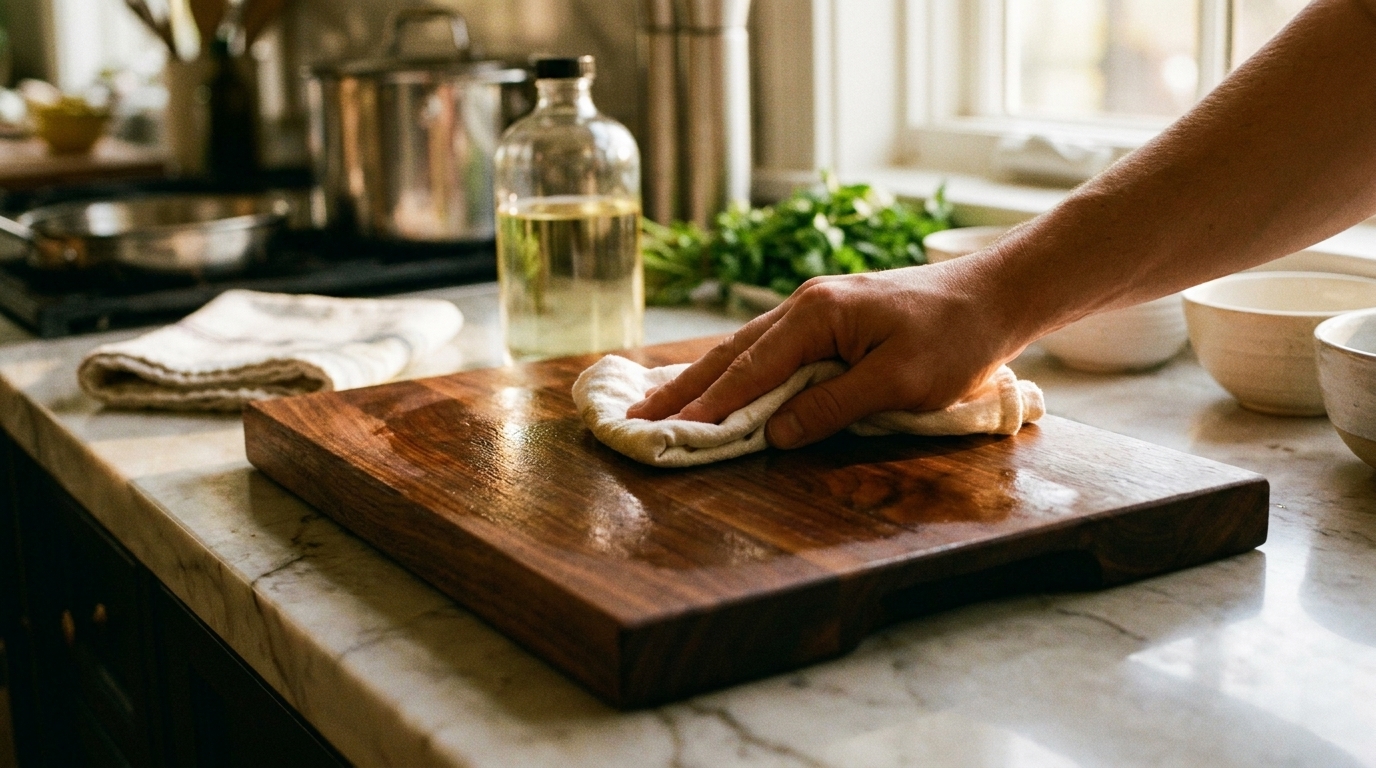
Regular oiling protects wooden cutting boards from cracking, warping, and moisture damage by creating a barrier against seasonal humidity and temperature shifts. Food-grade mineral oil is the best choice, applied monthly or when water no longer beads on the surface, paired with proper storage and cleaning to extend your board's lifespan.
Why Wooden Cutting Boards Need Regular Oiling to Stay Intact
Regular oiling slows moisture exchange, preventing the warping and cracking that damage wood boards over time.
What happens if you don't oil a wooden cutting board: warping, cracking, and reduced lifespan
Wood is porous, and without a moisture barrier, it dries out and becomes structurally unstable -- leading to warping, surface cracking, and a shortened lifespan. [1] Warping occurs when moisture evaporates unevenly from the board's faces and edges, pulling the wood fibers out of flat and creating an unstable cutting surface. [1] Cracks form along the grain as the wood loses flexibility, and those gaps trap food particles and bacteria that cleaning alone can't fully address. [1] If your board is already showing these signs, our guide to restoring a dry cutting board covers repair steps -- but consistent oiling prevents most of this damage before it starts. [1]
How moisture and temperature changes damage untreated wood year-round
Wood absorbs and releases moisture in response to humidity and temperature, repeating this cycle year-round -- not just when you wash the board. [4] In dry winter air or heated indoor spaces, boards shed moisture fast; in humid summer months, they take it back, causing fibers to expand and contract in opposite directions. [4] These seasonal stress cycles are hardest on the board during transitions, when temperatures and humidity shift quickly and the wood can't equalize in time. [4] Oil acts as a buffer, slowing moisture exchange so the wood moves less dramatically with each change -- and understanding how often to oil your cutting board matters as much as applying it correctly. [4]
What Do You Oil a Wooden Cutting Board With: The Complete Oil Comparison
Food-grade mineral oil is your best choice because it penetrates wood fibers deeply and won't go rancid, while common cooking oils oxidize and damage the board permanently.
Food-grade mineral oil vs. natural oils: which actually protects wood bestFood-grade mineral oil is the most reliable choice for wooden cutting boards: it's colorless, odorless, tasteless, and won't go rancid over time. [5] It penetrates deep into wood fibers rather than sitting on the surface, keeping them hydrated and moisture-resistant. [6] Common cooking oils -- olive, corn, and sunflower -- should never be used for board maintenance because they oxidize and transfer rancid flavors to food. [5] Fractionated (MCT) coconut oil is one natural exception: the refining process removes the fatty acids most prone to rancidification, giving it a much longer shelf life than standard coconut oil. [5] Always choose products labeled "food-grade" or "white mineral oil" -- versions sold at hardware or auto stores are not formulated for kitchen use. [5]
Why olive oil, coconut oil, and linseed oil fall short as long-term solutions
Olive oil's failure isn't just rancidity in general -- the oxidation process accelerates inside compressed wood grain, where kitchen heat cycles trap the degrading fat permanently, and no amount of washing removes it. [8] Standard coconut oil carries the same risk: despite its stable reputation, it contains enough organic fat to oxidize over time, creating the same tacky, bacteria-attracting residue inside the wood's cellular structure. [8] Linseed oil presents a different problem -- it's a drying oil that cures and hardens rather than staying fluid, which suits furniture finishes but not food-contact surfaces. [7] Once any of these oils set into the grain, the contamination is structural: rancid residue blocks mineral oil from penetrating properly during later treatments, compounding the damage each time you try to correct it. [9]
How to Oil Your Cutting Board for the First Time and Every Season After
Oil your board monthly by applying food-grade mineral oil to all surfaces, then let it sit upright for at least 8 hours to fully absorb.
Step-by-step process: prep, application, drying, and the 24-hour rule
Start with a completely dry board -- moisture left from washing blocks oil penetration.
Apply food-grade mineral oil generously with a clean cloth or paper towel, covering every surface: front, back, sides, and any feet. [10] Stand the board upright on a wire rack and leave it for at least 8 hours; the 24-hour rule applies because oil moves into wood slowly, and wiping off excess too early leaves the surface underprotected. [11] For a first oiling or a board that's been neglected, repeat two to three more times -- each application builds on the last, and our guide to oiling your cutting board covers the full process in detail. [12]
How often to oil wood cutting boards: seasonal schedule and damage-prevention timeline
Oiling frequency depends on how often you use and wash the board, the wood species, and how dry your environment gets. [12] For most home cooks, once a month is a practical baseline -- tying it to knife sharpening sessions makes it easy to stay consistent. [13] Those who cook less frequently can stretch to two or three times a year without issue. [13] The clearest indicator isn't a fixed schedule but the water bead test: sprinkle a few drops on the board and watch how they behave -- if the water spreads out or sinks in rather than beading on the surface, it's time to oil again. [11]
Cutting Board Maintenance Beyond Oil: Cleaning, Storage, and Daily Care
Wax and proper storage protect your board better than oil alone--apply a thin coat after oiling and store upright away from heat and sunlight.
Can I use Dawn on my wood cutting board: gentle cleaning methods that preserve the finish
Mild dish soap -- including Dawn -- is safe for daily wood board cleaning; warm soapy water removes food residue without harming a well-oiled surface. [14] Scrub both sides with a sponge and warm water, rinse thoroughly, then dry immediately with a clean towel -- water pooling on wood is more damaging than soap. [11] Never submerge the board or put it in the dishwasher, since sustained heat and moisture will warp or crack the wood. [14] For odors, scrub with kosher salt and the cut side of a lemon, let the paste sit for about an hour, scrape it off, then wash and dry as usual. [11]
How to moisturize a wooden cutting board between oil treatments and extend its working life
A food-safe board cream or beeswax blend provides surface protection that oil alone doesn't -- wax fills knife scars and seals the grain against moisture and staining without penetrating deep into the wood. [15] Apply a thin coat with a soft cloth after the board is fully dry, buffing it in using circular motions across all surfaces and sides. [16] Store the board upright to allow airflow on all sides, and keep it away from heat sources and direct sunlight, which draw moisture from the wood between treatments. [16] Following these care and maintenance tips -- applying wax after each oiling session and storing the board properly -- is what keeps wood stable through years of daily use. [15]
- Wood is porous and loses moisture unevenly, causing warping, cracking, and bacterial growth without regular oiling.
- Food-grade mineral oil is the only reliable choice; cooking oils oxidize and create rancid residue trapped in wood grain.
- Apply mineral oil generously to a dry board, let it sit 24 hours, and repeat 2-3 times for first treatment or neglected boards.
- Monthly oiling works for most home cooks; use the water bead test to know when your board needs oil again.
- Seasonal humidity and temperature swings stress wood most--oil acts as a moisture buffer to prevent damage during transitions.
- Combine oiling with wax application and upright storage to seal grain, prevent staining, and maintain board stability year-round.
- https://www.ruvati.com/how-to-clean-and-care-for-your-wood-cutting-board/
- https://thoughtful-apple-hnwfc8.mystrikingly.com/blog/how-cutting-board-oil-prevents-cracks-and-drying
- https://koppenhouse.com/blog/wood-cutting-board-splitting/
- https://www.bumblechutes.com/post/the-best-cutting-board-oil-options-why-fractionated-coconut-oil-reigns-supreme
- https://www.cuttingboard.com/blog/what-type-of-oils-are-safe-to-use-on-your-cutting-board/?srsltid=AfmBOopbOiXxyP-TR9iqRjVsn25iZKGCP6p7uRcm_k8Wj1LrjhmMO9RH
- https://sonderla.com/blogs/sonder-la-blog/cutting-board-oil-vs-conditioner-which-is-best-for-board-care?srsltid=AfmBOopitjw1-MwIKuAN2Abi019u97uJtavlOSkRHjbjyV0RvJAP1srT
- https://portuguesetreasures.com/blogs/news/what-oil-to-use-on-wooden-cutting-board?srsltid=AfmBOoqLSO_CqE6jsQdoIsyG1Krqt1kvjgmL2Zi4x58j-qPv_pBIasu7
- https://makingdubai.com/blogs/the-makers-guide/why-you-should-never-use-olive-oil-on-your-cutting-board
- https://www.woodcuttingboardstore.com/can-i-use-olive-oil-on-my-cutting-board/?srsltid=AfmBOool4nBX2YSj-Tsvh22KegoJgckDqTj7EC4reAlgzrkSHfTR33uk
- https://www.cuttingboard.com/how-to-oil-and-maintain-a-cutting-board/?srsltid=AfmBOooZWT1BZoZl3emvzAayO_H8RD9SuFasrVSzdgy8sePoaKr2Fvi3
- https://www.nytimes.com/wirecutter/guides/how-to-clean-wood-cutting-boards/
- https://www.americastestkitchen.com/articles/1575-how-to-care-for-your-wood-or-bamboo-cutting-board
- https://www.seriouseats.com/how-to-season-and-maintain-a-wood-cutting-board
- https://walterbusch.com/how-to-care-for-a-wood-cutting-board/?srsltid=AfmBOopNj1BqDyT2df7UoonzhiPCzNtL6PHebZDQ1ZCTbaKZI37-6YVe
- https://www.cuttingboard.com/how-to-oil-and-maintain-a-cutting-board/?srsltid=AfmBOor1rrtbCdrZ3-drts82Crk2cRfcq_pgR53IIgpPJQP7tioJ2d10
- https://millionmarker.com/learn/blog/how-to-clean-your-wooden-cutting-board-using-non-toxic-ingredients