

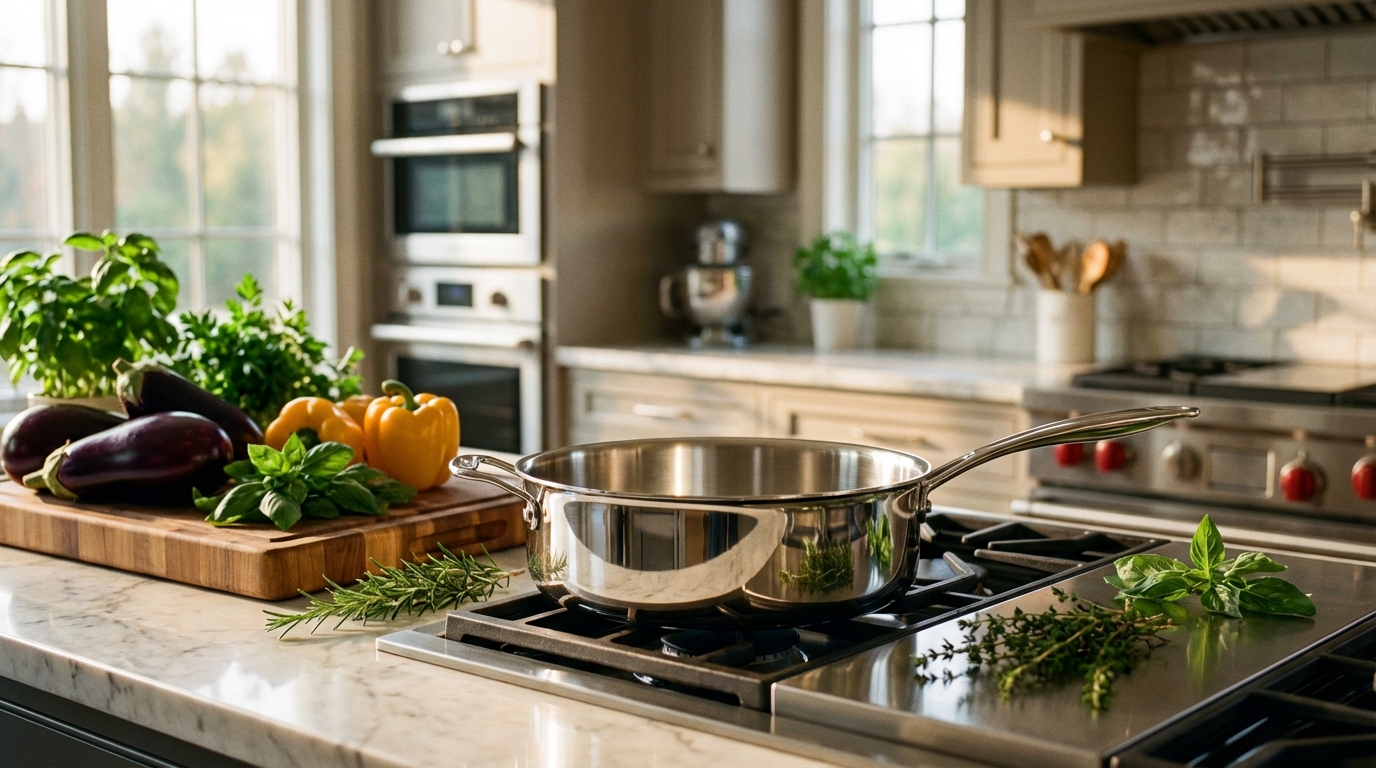
A truly reliable rondeau pan should feed your family for decades without secretly feeding them toxins, and this article shows you exactly how to choose and care for one that is as safe as it is hardworking. You will learn which materials--fully-clad stainless steel, cast iron, and lead-free ceramic--deliver rock-solid performance while keeping carcinogens like PFOA, PTFE, cadmium, and leached aluminum out of your sauces and stews. The guide walks you through sizing, weight, handle comfort, lid fit, and oven-safe thresholds so you can pick the one versatile pot that moves from searing short ribs to slow-simmering chili without warping or scratching. Once you have the right pan, the article's maintenance playbook--seasoning cast iron, avoiding thermal shock, using gentle utensils, and proper storage--will keep its surface intact and your food tasting pure for life. In short, you will finish reading knowing how to buy once, cook fearlessly every day, and hand down a rondeau that is as non-toxic after thousands of meals as it was on day one.
Why a non toxic rondeau pan is essential for health and kitchen longevity
Switching to a non-toxic rondeau pan shields your food from harmful chemicals while its durable construction keeps it heating evenly for decades, saving both your health and your wallet.
Environmental benefits of durable, non‑toxic cookware
A rondeau built to outlast trends is one of the quietest ways to shrink your kitchen's environmental footprint. Fully-clad stainless steel and enameled cast iron are engineered to survive decades of searing, braising, and deglazing without warping, pitting, or degrading--which means you are not replacing a coated aluminum pot every two or three years once its surface scratches and starts shedding into your food. Every skillet or Dutch oven that ends up in a landfill represents mined ore, smelted metal, and manufacturing energy that a single long-lived rondeau can offset simply by refusing to wear out.
There is also a supply-chain story behind the materials themselves. Stainless steel and cast iron are among the most recyclable metals available, and many cookware makers increasingly source recycled stock to forge new pans, closing the loop instead of demanding fresh extraction. Ceramic-coated and enamel finishes, when produced without PFOA or PTFE, skip the fluoropolymer manufacturing process entirely--a process known for releasing persistent "forever chemicals" into waterways and soil during production. Choosing a rondeau free of those coatings is not just about what ends up in your stew; it is about what never enters a river or aquifer in the first place.
Durability also changes your relationship with heat and energy. A heavy-gauge, fully-clad base distributes heat evenly enough that you can cook at lower burner settings and still achieve a confident sear, trimming the energy you use for every braise, risotto, or batch of caramelized onions. Multiply that modest efficiency gain across thousands of meals over a pan's lifetime, and the savings--both in utility bills and in cumulative energy use--become meaningful rather than symbolic.
Finally, non-toxic materials simplify end-of-life disposal. When a rondeau finally does retire after years of service, uncoated stainless steel and cast iron can typically be recycled through standard scrap-metal channels, unlike PFAS-laden nonstick pans, which may require special handling. Buying once, buying safe, and buying to last is not just a health decision--it is a small, repeatable act of environmental stewardship that plays out one dinner at a time.
Health impact of eliminating PFAS and heavy metals
Every time a scratched non-stick rondeau meets high heat, it can release perfluorinated compounds like PFOA and PTFE breakdown particles directly into your food and the air in your kitchen. These "forever chemicals" don't break down in the body or the environment, and research has linked long-term exposure to thyroid disruption, immune system suppression, and increased cancer risk. Because a rondeau is built for exactly the kind of high-heat searing and hours-long braising that stresses coatings the most, it's one of the worst pieces of cookware to trust with a synthetic non-stick surface. Choosing a pan made from inert materials like 18/10 stainless steel, enameled cast iron, or lead-free ceramic sidesteps this risk entirely, since there's no polymer coating to degrade in the first place.
Heavy metals present a quieter but equally serious concern. Cheaply made aluminum cores, poorly regulated ceramic glazes, and low-grade stainless alloys can leach trace amounts of aluminum, cadmium, or lead into acidic foods like tomato sauce or wine-based braises--precisely the dishes a rondeau is designed to cook low and slow for hours. Chronic low-level exposure to these metals has been associated with neurological effects and kidney stress over time, which is a real concern for cookware meant to be used weekly, not occasionally. A properly clad stainless rondeau, where the aluminum or copper core is fully sealed inside layers of steel, or an enameled cast-iron piece with a certified food-safe glaze, keeps these metals locked away from your dinner entirely.
The cumulative effect matters more than any single meal. A rondeau is a workhorse precisely because it earns a permanent spot on your stovetop, which means whatever it's made of ends up in your family's food dozens or hundreds of times a year. Small amounts of leached chemicals or metals that might seem negligible in isolation can add up meaningfully across a decade of daily use, especially for children and pregnant women, who are more vulnerable to their effects. By eliminating PFAS and heavy metals from the equation upfront, you're not just avoiding a single bad batch of soup--you're removing a low-grade, invisible risk from every meal that pan will ever touch.
Beyond the direct health payoff, non-toxic materials tend to age more gracefully, which reinforces the safety case over the long run. Stainless steel and enameled cast iron don't degrade the way non-stick coatings do, so you're never faced with the dilemma of cooking on a scratched, flaking surface just because replacing the pan feels wasteful. In other words, choosing non-toxic from day one protects both your family's health and your kitchen budget, since you'll never need to worry about a compromised coating quietly turning your reliable rondeau into a liability.
Materials that make a safe, non toxic rondeau pan
Choose a rondeau pan forged from 316Ti surgical stainless steel--its titanium-stabilized, non-reactive surface keeps food free of nickel, chromium, and chemical coatings even under searing heat.
Stainless steel cores versus ceramic‑coated interiors
When you're standing between two rondeaus--one gleaming with a mirror-polished stainless interior, the other coated in a matte, egg-slick ceramic--the decision comes down to how each surface behaves under decades of hard use, not just how it looks on day one. Fully-clad stainless steel, ideally 18/10 with a thick aluminum or copper core bonded between the layers, is highly resistant to reaction with acidic tomato sauces or wine reductions, tolerates the aggressive high-heat searing a rondeau is built for, and has no coating to wear away, so there's nothing to ingest even after the pan has browned a thousand batches of short ribs. The tradeoff is that stainless has no natural release properties, so proteins can stick if the pan isn't properly preheated, and you'll need to build a fond and deglaze rather than expect food to slide off effortlessly.
Ceramic-coated interiors solve that stickiness problem out of the box, since the sol-gel coating is typically free of PTFE and PFOA and gives you a satisfying glide for eggs, fish, and delicate sauces without added fat. The catch is durability: even the best ceramic coatings are a surface treatment, not a solid material, and they gradually lose their non-stick performance with metal utensils, high heat, or years of dishwasher cycles. Once that coating micro-cracks or dulls, its benefit is cosmetic at best and compromised at worst, meaning the pan's non-toxic promise is really only as good as the coating's remaining lifespan. For a workhorse piece you intend to sear, braise, and pass down, stainless steel's long-term durability tends to outweigh ceramic's short-term convenience, though pairing a stainless rondeau with a dedicated ceramic skillet for delicate morning cooking gives you the best of both worlds without asking one pan to do a job it wasn't designed for.
Understanding PFAS‑free guarantees in everyday use
"PFAS-free" has become one of the most overused phrases in cookware marketing, so it pays to understand what the label actually guarantees before it lands in your cart. PFAS (per- and polyfluoroalkyl substances) is the umbrella term for the "forever chemicals" once used to make nonstick coatings slick, including PTFE and the now largely phased-out PFOA. A rondeau built from bare stainless steel, enameled cast iron, or fired ceramic never contained these compounds in the first place, which is different from a nonstick pan whose manufacturer reformulated the coating to remove them. Both can honestly claim PFAS-free status, but only the metal-and-enamel options have zero coating to degrade, scratch off, or off-gas at high heat over years of searing and braising.
In everyday use, that distinction matters most at the extremes of temperature and wear. Traditional nonstick coatings, even PFAS-free versions, are engineered for gentle heat and can break down when a rondeau is pushed to the searing temperatures this pan is built for, releasing fumes or losing their nonstick properties over time. Stainless steel and enameled cast iron have no such ceiling; you can achieve a hard sear, deglaze with wine, and slide the whole pot into a 500 degreesF oven without worrying about a coating failing or leaching anything into the food. The "guarantee" isn't a chemical promise stamped on packaging so much as a structural one--there's simply nothing in the metal itself that migrates into your short ribs or stew.
It's also worth knowing that PFAS-free claims apply specifically to the cooking surface, not necessarily to every component of the pan. Some manufacturers use PFAS-based lubricants or mold-release agents during production, or PTFE-lined gaskets on lids and handles, so a genuinely clean rondeau should be free of these compounds throughout, not just on the interior. Reputable brands will disclose third-party testing results or certifications from independent labs rather than relying on a single line of marketing copy. When a rondeau's entire construction, from rivets to lid seal, avoids PFAS rather than just its main cooking surface, you get a pan whose safety doesn't depend on careful handling or an expiration date on the coating's integrity.
Picking the right non toxic rondeau pan for everyday cooking
Choose a stainless-steel or enameled rondeau that's oven-safe to 500 degreesF, dishwasher-safe, and free of PFAS coatings so you can sear, braise, and simmer every day without toxins or extra maintenance.
Size, weight, and heat distribution for versatile meals
A rondeau earns its keep by splitting the difference between a stockpot and a skillet, so getting the dimensions right matters as much as getting the materials right. Look for a diameter between 11 and 14 inches with sides just 3 to 5 inches tall; that wide, shallow footprint maximizes the amount of food touching direct heat, which is exactly why the pan browns short ribs and reduces braising liquid so much faster than a taller pot. In terms of volume, a 7- to 9-quart capacity hits the sweet spot for most households--big enough to brown a full batch of bolognese or simmer a gallon of stock, yet still narrow enough to fit over a single burner without half the pan sitting off the flame.
Weight is where a lot of home cooks get tripped up, because heavier isn't automatically better. A rondeau needs enough mass in its base to store and distribute heat evenly, which is what prevents scorched fond and sad, patchy sears. But if the fully loaded pan is too heavy to lift safely from stovetop to oven to sink, you won't use it. Aim for a pan in the 6- to 9-pound range empty; that's substantial enough for even heating but still manageable one-handed, especially with a helper handle on the opposite side for tilting and pouring. Cast aluminum or aluminum-core stainless hits this balance far better than pure cast iron, which can push an empty rondeau past 10 pounds before you've added a single ounce of food.
Heat distribution is really the whole point of owning a rondeau, so don't compromise here to save money. Fully-clad construction--where an aluminum or copper core runs edge-to-edge and up the sidewalls, rather than just puddled in the base--is what keeps a wide pan from developing cold spots at the rim where sauces can scorch unevenly. Run your hand along the interior wall of any pan you're considering; if it feels noticeably thinner near the top than at the base, heat will taper off there too, and you'll end up with unevenly cooked risotto or braised greens no matter how careful your technique is. A well-clad, appropriately sized and weighted rondeau rewards you by searing, sautéing, braising, and simmering with equal confidence, which is the entire reason to own one pan instead of three.
Balancing budget and durability without compromising safety
It's tempting to assume that the priciest rondeau on the shelf is automatically the safest, but price and toxin-free construction don't always move in lockstep. What actually correlates with both durability and safety is metal thickness and construction quality. A fully-clad stainless rondeau with a 3mm to 4mm wall and a bonded aluminum or copper core will distribute heat evenly, resist warping, and hold its non-reactive cooking surface for many years. Thin, single-layer stainless pans, by contrast, are prone to hot spots that scorch food and tempt cooks toward scratch-inducing high heat and metal utensils just to compensate. Spend your money on that core construction rather than on cosmetic extras like mirror polishing or designer color coatings, since those add cost without adding any real protection against leaching.
A smart mid-range strategy is to treat the rondeau as a buy-it-for-life purchase rather than a seasonal upgrade. Expect to pay somewhere between $150 and $350 for a genuinely non-toxic option in the 6- to 8-quart range that a family actually needs. Anything dramatically cheaper usually signals a thin gauge, a reactive uncoated aluminum core peeking through at the rim, or rivets and handles prone to loosening within a year or two. Enameled cast iron follows similar logic--the enamel itself is the safety barrier, so look for a smooth, chip-resistant interior finish rather than a rough or porous one. A compromised enamel layer isn't just unsightly; it's a genuine flag for chemical exposure risk down the line.
Warranty length is one of the most underrated signals of both durability and manufacturer confidence in their materials. A lifetime warranty on stainless construction, or a multi-decade warranty on enameled cast iron, suggests the company has tested the coating and metal against repeated heating cycles and stands behind it--something a bargain import rarely offers. Pair that warranty with a return policy that lets you handle the pan in your own kitchen before committing, since weight and balance matter as much as material when you're hauling a full rondeau of braised short ribs from stovetop to oven. In the end, the safest budget move is spending slightly more upfront on one well-built, non-toxic rondeau instead of replacing a cheaper, degrading pan every few years--both your wallet and your family's health come out ahead.
Maintaining your non toxic rondeau pan for a lifetime
Season your rondeau after every wash, skip the dishwasher, and pair it with wood or silicone tools to keep its non-toxic surface flawless for decades.
Cleaning methods that preserve non‑toxic surfaces
Wash your non‑toxic rondeau by hand with warm water, a few drops of mild dish soap, and a soft sponge or nylon brush, then dry it completely before it ever touches a shelf. Skip the dishwasher entirely: the combination of high heat, harsh detergents, and mineral‑laden water can dull stainless steel's protective chromium oxide layer and slowly erode enamel coatings on cast iron, creating micro‑pits where bacteria and rust can take hold. For everyday food residue, a soak in warm water for ten to fifteen minutes loosens most stuck‑on bits without any scrubbing at all.
When a recipe leaves behind a stubborn fond or scorched sugar, resist the urge to reach for steel wool or abrasive scouring pads. Instead, sprinkle on a paste of baking soda and water, let it sit for a few minutes, then work it gently with a soft brush or the non‑scratch side of a sponge. For enameled cast iron, a splash of white vinegar can help dissolve mineral deposits or faint discoloration without breaking down the glass‑like finish. These gentle methods lift grime while leaving the surface's protective layer intact, which matters more than it sounds: any coating you scratch away is a coating that can no longer stand between your food and bare metal.
Temperature shock is the other silent enemy of a long‑lived rondeau. Never plunge a hot pan into cold water or run cold tap water over it straight off the stove--the sudden contraction can warp stainless steel bases or crack enamel, opening tiny fissures that trap moisture and invite rust over time. Let the pan cool naturally for several minutes first, then wash as usual. Finally, always dry your rondeau thoroughly with a towel and, if possible, with a few seconds on low heat before storing it; trapped moisture is the fastest route to rust spots on cast iron and water staining on stainless steel, both of which shorten the life of an otherwise indestructible pan.
Storage and care tips to extend performance and reduce waste
How you store your rondeau matters just as much as how you clean it, especially if your pan has an enameled or ceramic-coated interior that can chip against a rogue lid or a stack of heavier cookware. Always let the pan cool completely before putting it away, since sealing in residual heat can trap moisture and invite rust on carbon steel or bare cast iron. If you're stacking pots inside one another to save cabinet space, slide a folded towel, felt pan protector, or even a paper towel between surfaces so metal never grinds against metal. For stainless steel rondeaus, this small habit prevents the fine scratches that can dull the finish over time, while for enameled cast iron it guards against chipped edges that eventually expose the reactive metal underneath.
Humidity control is the other half of the storage equation. A rondeau left damp in a closed cabinet invites rust spots, particularly on carbon steel or unseasoned cast iron surfaces, so give the pan a final wipe with a dry cloth before it goes on the shelf. If you live somewhere humid, tuck a small silica packet near your cookware storage area, and periodically pull the pan out for a quick inspection. Catching a hint of surface rust early means a light re-seasoning fixes it in minutes; ignoring it for months can mean stripping and starting over.
Reducing waste is really just an extension of good storage habits: a rondeau that's protected from scratches, humidity, and impact simply doesn't need replacing. Skip the dishwasher entirely, since high heat and harsh detergents break down seasoning and can dull stainless finishes faster than any amount of stovetop use. Instead, hand-wash, dry thoroughly, apply a whisper-thin coat of neutral oil to cast iron or carbon steel, and store it somewhere it won't be jostled. Treated this way, a well-made non-toxic rondeau isn't a five-year purchase -- it's a piece of cookware you'll still be cooking Sunday sauce in twenty years from now, which is the whole point of buying something non-toxic and well-made in the first place.
- Non-toxic rondeaus eliminate leaching of metals or chemicals into food.
- 100% ceramic, enameled cast iron, and grade-316 titanium are safest materials.
- Heavy, tight-fitting lids and helper handles improve simmering and transport.
- Low-to-medium heat preserves ceramic coatings and prevents thermal damage.
- Hand-wash with soft sponges; avoid metal utensils to extend pan life.
- Annual seasoning keeps enameled cast iron naturally non-stick and rust-free.