

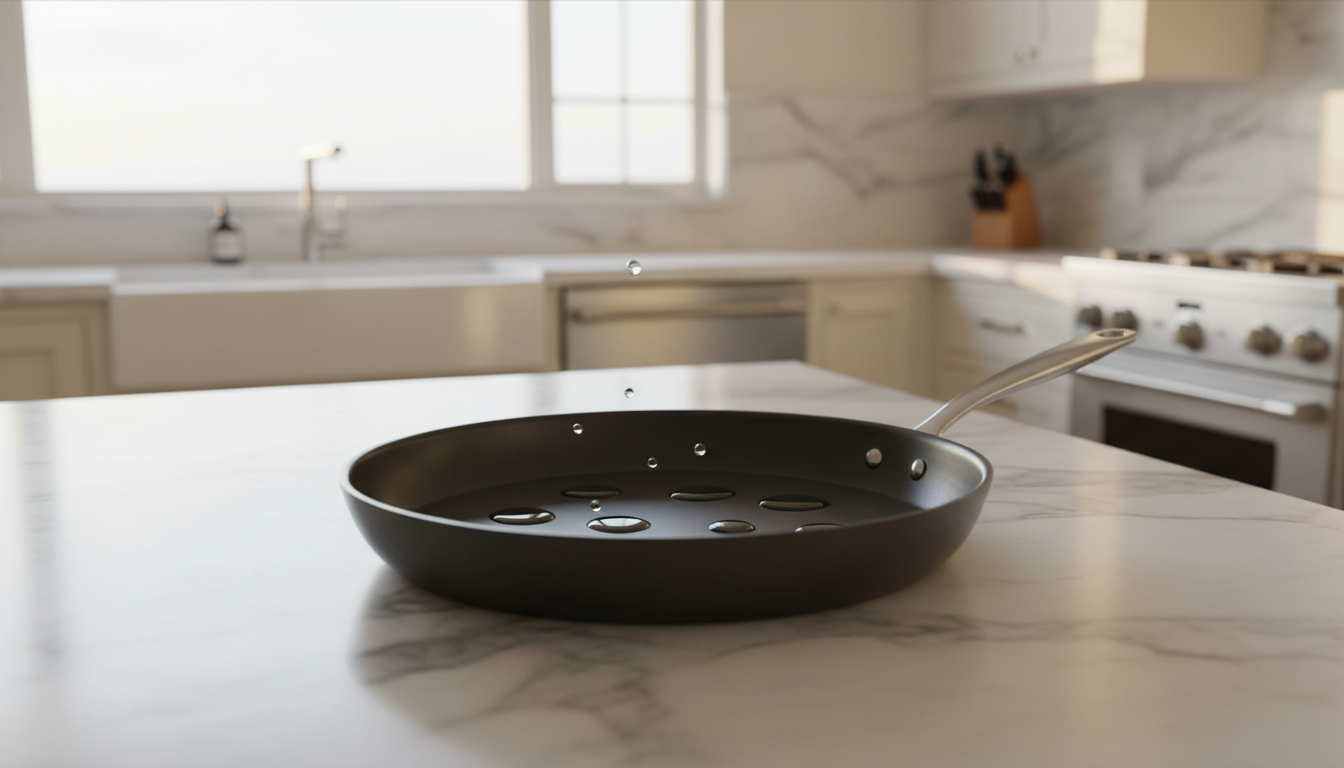
Nitrided carbon steel solves the core problems of traditional carbon steel by hardening the cooking surface at the molecular level, eliminating the need for constant seasoning and recoating. This durable, low-maintenance approach delivers the science-backed performance that careful cooks expect, with a flat surface built to handle daily high-heat cooking without degradation.
Which Nitrided Carbon Steel Pan Does Alton Brown Use?
Nitriding addresses carbon steel's weak points--rust, reactivity to acids, and seasoning loss--at the metal level itself.
Alton Brown's Public Endorsement of Nitrided Carbon Steel
Alton Brown built his reputation on explaining the science behind kitchen gear rather than just recommending brands, and that habit shows up whenever he talks about cookware. When fans pushed back after he posted about switching to an induction cooktop, Brown didn't just defend the choice, he broke down the physics: induction coils create an oscillating magnetic field that moves electrons inside the pan itself, generating heat directly in the metal rather than the burner [1]. He described the result as fast, even, and efficient heating across the cooking surface [1].
That same science-first approach is what Brown is known for applying to pan materials, walking audiences through why a metal behaves the way it does under heat instead of leaning on marketing language. Available reporting on Brown's public comments focuses specifically on his cooktop choice and the electron-level mechanics of induction heating, rather than a documented statement naming a specific nitrided carbon steel pan [1]. What's clear from his public track record is a consistent pattern: Brown explains the underlying metallurgy or physics first, then lets that explanation justify the equipment he uses, which is exactly the lens worth applying to nitrided carbon steel's surface chemistry in the sections ahead.
So the "pick" in question isn't a specific SKU Brown has endorsed by name, it's the category-level choice his own reasoning points toward, and that's precisely why nitrided carbon steel matters enough to walk through in detail below: the science holds up whether or not a specific product name is attached to it.
Why Alton Brown Chose Nitrided Over Traditional Carbon Steel
Traditional carbon steel brings real tradeoffs a science-minded cook has to weigh: it rusts quickly if left wet, reacts to acidic ingredients like tomato sauce or wine reductions, and loses its seasoning fast enough that commercial kitchens sometimes re-season a pan several times in one shift [4]. Nitriding addresses several of those weak points at the metal level rather than through a coating that sits on top and can flake or wear away.
A former heat treater explained that nitriding produces a harder, more wear-resistant surface than conventional case-hardening methods, and because the process runs at a lower temperature, the pan is far less likely to warp or distort during manufacturing [2]. That lower-distortion result matters for a pan that needs to sit flat on an induction coil or gas burner for even heating, a detail squarely in Brown's science-first wheelhouse.
Marketing copy for at least one nitrided pan describes the surface as forming inside a nitrogen-rich oven to create a layer that's naturally nonstick and gets more slick with use rather than less, the opposite trajectory of a seasoning layer that can strip off with one aggressive scrub [3]. Whether or not Brown has named a specific model, the underlying tradeoff, trading a seasoning routine that needs constant upkeep for a surface hardened once at the molecular level, is exactly the kind of mechanism-over-marketing case his audience has come to expect him to make before he recommends anything.
What Makes Nitrided Carbon Steel Different From Regular Carbon Steel?
Nitrided carbon steel costs more upfront but spreads that investment across years of cooking, while ceramic and nonstick coatings need replacement every two to three years.
The Nitriding Process: How It Creates a Natural Nonstick Surface
Initial Investment vs. Lifespan: Why Nitrided Pans Outlast Ceramic and Nonstick Coatings Ceramic and traditional nonstick coatings sit on top of the metal, and that layer carries a measurable shelf life. A survey of nonstick lifespans found ceramic-coated pans average about two years before food starts sticking in the center, while PTFE coatings typically hold up three years or more [8]. That wear comes mostly from thermal stress and chemical breakdown rather than scratches, according to the sol-gel coating formulator cited in that reporting [8].
Nitrided carbon steel sidesteps this failure mode because the hardened layer is part of the metal itself, not a film applied afterward, so there's no coating racing toward a replacement date. The cost math shifts accordingly: a $40 ceramic pan replaced every two years works out to roughly $20 a year, while a pan with nothing to recoat only accumulates cost from the original purchase spread across however long it stays flat and functional [8]. One real-world comparison found the break-even point between a cheap coated pan and a pricier uncoated one lands around six years of ownership, meaning the higher upfront cost of a durable pan only pays off if it actually gets used that long [8].
Applied to nitrided carbon steel, that same arithmetic favors the pan that isn't counting down a coating's lifespan, since its failure mode is physical damage like warping rather than a surface wearing through [8]. The sticker price on a nitrided pan can look steeper than a basic ceramic skillet, but that comparison only holds up over a single purchase cycle, not the years a cook actually spends cooking on either one.
Maintenance Savings: Simpler Care Means Lower Total Cost of Ownership
Daily care is where the cost difference between pan types actually shows up, not just on the price tag. Cast iron and carbon steel both demand regular seasoning to keep their protective layer intact, while stainless steel needs specific cleaning techniques to avoid stains and discoloration, and ceramic coatings wear down faster than either of those options even with careful handling [9].
That maintenance burden adds hidden time and product costs: re-seasoning oil, specialty cleaners, and the extra minutes spent babying a pan after every acidic dish all factor into what a pan actually costs to keep in rotation. Nitrided carbon steel sidesteps most of that routine since the hardened surface isn't waiting to be re-seasoned or recoated, which means the ongoing labor and material costs that stack up with traditional carbon steel care mostly disappear.
A cook who skips the seasoning ritual, the specialty scrubbing, and the periodic recoating isn't just saving time at the sink, they're cutting the recurring costs that make cheaper, higher-maintenance pans less of a bargain than they look on a price tag. Measured against materials that require regular seasoning or that wear down with normal use [9], a pan that only asks for a wash and reasonable heat control comes out ahead on total cost of ownership, even before factoring in how long the surface itself lasts.
Is Nitrided Carbon Steel Safe for Everyday Cooking?
Nitriding hardens steel itself rather than adding a coating, so there's no fluoropolymer breakdown or flaking risk like traditional nonstick pans face.
Safety Standards: What Nitriding Does and Doesn't Add to Carbon Steel
Nitriding hardens the surface of the metal itself rather than adding a coating, and that distinction is central to the safety story worth understanding. Because the nitrogen and carbon atoms diffuse into the existing steel rather than forming a separate polymer layer, there's no fluoropolymer or coating-degradation byproduct to worry about the way there is with PTFE pans pushed past their heat threshold [11].
That also separates nitrided carbon steel from the lead-leaching concerns the FDA has flagged in certain imported aluminum and brass cookware, since those problems trace back to the base alloy itself, not a surface treatment applied afterward [10]. What nitriding doesn't change is carbon steel's basic identity: the pan is still an iron-based metal underneath the hardened layer, so nitriding is a manufacturing process, not a food-safety certification or a guarantee stamped onto the box.
The practical takeaway is that nitriding's safety case rests on what it skips, there's no fluoropolymer manufacturing footprint, no coating that can flake into food, and no polymer threshold to accidentally exceed on a hot burner, rather than on any additive health claim. It solves a specific set of problems tied to coatings and alloys, and it's worth being clear-eyed that it isn't solving every cookware safety question at once.
Best Practices for Using Nitrided Pans With Acidic Foods and High Heat
Acid reacts with bare metal the same way whether that metal sits inside a cast iron skillet or a nitrided carbon steel pan, so the caution cast iron cooks have learned the hard way is worth carrying over. Tomato sauce, wine, citrus juice, and vinegar can pull a metallic taste out of untreated cast iron in as little as 30 minutes of simmering [12]. A separate test on cast iron found a similar window, keeping total cooking time under 45 minutes, before acidic ingredients start degrading flavor and surface [13]. Nitrided carbon steel has no seasoning layer for acid to strip away, but the iron underneath the hardened surface is still iron, so the same acid-exposure math still applies [13]. A few habits carry over directly for anyone deciding which pan handles acidic foods better, carbon steel or cast iron:
- Keep tomato sauces, wine reductions, and citrus-based dishes under 30 to 45 minutes [12][13]
- Dilute strong acids like vinegar with water or stock before deglazing [12]
- Wash the pan promptly after cooking anything acidic rather than letting it sit [12]
- Save long-simmered acidic braises for a stainless steel pan or enameled cookware instead of bare metal [13]
These limits matter most on high heat, since a hot pan speeds up any reaction between acid and exposed metal, so pulling the pan off heat before it sits with acidic liquid too long protects the surface either way.
The Pick That Matters: Why Nitrided Carbon Steel Wins
Nitrided carbon steel earns its spot as the pick a science-minded cook lands on by solving real problems: no seasoning ritual to keep up, no coating ticking down toward a replacement date, and a flat, hard surface that holds up to daily high-heat cooking. That mix of durability and low upkeep is why nitrided matters even without a brand name attached to it, and it fits the science-first logic Alton Brown applies when he evaluates cookware, even though he hasn't publicly named a specific nitrided carbon steel pan.
The case for nitrided carbon steel isn't built on Brown's endorsement, it's built on what the metallurgy itself does: harden the cooking surface at the molecular level, cut out the recurring costs of seasoning and recoating, and hold its shape through the high-heat cycles that matter most to anyone searing, braising, or deglazing on a regular basis. That's the pick worth making, and that's why it matters.
If you're weighing your next pan or sorting out how to care for the one you have, explore our collection of carbon steel and stainless steel cookware--and for care & maintenance tips tailored to your pan, contact us anytime.
Frequently Asked Questions
-
Does Alton Brown actually name a specific nitrided carbon steel pan he uses?
No. The article is clear that available reporting on Brown's public comments covers his induction cooktop switch and the physics behind it, not a documented statement naming a specific nitrided carbon steel pan. The 'pick' discussed is a category-level choice his science-first reasoning points toward, not a confirmed product endorsement.
-
Is nitrided carbon steel actually safer than ceramic or nonstick pans?
The safety case is about what nitriding avoids, not an added health claim: because nitrogen and carbon diffuse into the existing steel rather than forming a separate coating, there's no fluoropolymer or coating-breakdown byproduct like with PTFE pushed past its heat threshold, and no base-alloy lead-leaching risk like the FDA has flagged in some imported aluminum or brass cookware. The article notes this is a manufacturing process, not a food-safety certification, and it doesn't address every cookware safety question.
-
Can I cook tomato sauce, wine, or citrus dishes in a nitrided carbon steel pan?
Yes, but with time limits carried over from cast iron testing: keep tomato sauces, wine reductions, and citrus-based dishes under 30 to 45 minutes, dilute strong acids like vinegar before deglazing, and wash the pan promptly after cooking anything acidic. The article notes nitrided steel has no seasoning layer to strip, but the iron underneath is still iron, so the same acid-exposure math applies, and long-simmered acidic braises are better suited to a stainless steel or enameled pan.
-
Is a nitrided carbon steel pan actually cheaper in the long run than a ceramic pan?
The article's cost math uses a $40 ceramic pan replaced every two years, which works out to roughly $20 a year, versus a durable uncoated pan whose cost spreads across however long it stays flat and functional. It cites a break-even point around six years of ownership between a cheap coated pan and a pricier uncoated one - so a nitrided pan's higher upfront price only pays off with that much use; compare actual prices and expected lifespan before assuming it's the cheaper option.
-
Does nitrided carbon steel need seasoning like regular carbon steel or cast iron?
No - the article states nitriding hardens the metal itself rather than relying on a seasoning layer, so there's no re-seasoning ritual, specialty scrubbing, or periodic recoating to maintain. This is contrasted with traditional carbon steel and cast iron, which need regular seasoning, and ceramic coatings, which wear down faster even with careful handling.
- Nitrided carbon steel hardens the surface at the molecular level, eliminating the need for regular seasoning maintenance.
- Ceramic and nonstick coatings wear out in 2-3 years, while nitrided pans last longer since the hardened layer is part of the metal itself.
- Total cost of ownership favors nitrided pans over coated alternatives when ownership extends beyond six years.
- Nitrided carbon steel avoids fluoropolymer concerns and coating-degradation byproducts that come with PTFE nonstick pans.
- Acidic foods still require caution on nitrided carbon steel, limiting tomato sauces and wine reductions to 30-45 minutes of cooking.
- Nitrided pans need only washing and reasonable heat control, cutting recurring costs of re-seasoning oil and specialty cleaners.
- https://www.thecooldown.com/green-home/induction-cooktop-benefits-alton-brown-celebrity-chef/
- https://www.audiosciencereview.com/forum/index.php?threads%2Ffor-the-cooks-misen-non-stick-carbon-steel-pan.66476%2Fpage-3=
- https://www.audiosciencereview.com/forum/index.php?threads%2Ffor-the-cooks-misen-non-stick-carbon-steel-pan.66476%2Fpage-4=
- https://www.imesh-kitchenware.com/resources/pros-and-cons-of-carbon-steel-cookware-662de7a252bc0.html
- https://www.vietworldkitchen.com/blog/2025/12/nitrided-carbon-steel-nonstick-pans-review.html
- https://www.sarchicookware.com/news/is-nitriding-cookware-safe-to-use.html
- https://www.imesh-kitchenware.com/resources/the-best-carbon-steel-pans-for-pro-level-cooking-without-the-weight-of-cast-iron.html
- https://thehouseland.com/blogs/kitchen/ceramic-coated-pan-vs-uncoated-lifespan
- https://chopchopusa.com/blogs/news/best-pan-material
- https://www.yahoo.com/news/articles/heres-know-fdas-recent-safety-194500727.html
- https://esoworld.co.uk/learn/non-stick-cookware
- https://www.chowhound.com/1846768/should-you-avoid-cleaning-cast-iron-with-acidic-ingredients/
- https://www.thedailymeal.com/1558468/careful-cooking-acidic-food-cast-iron/