

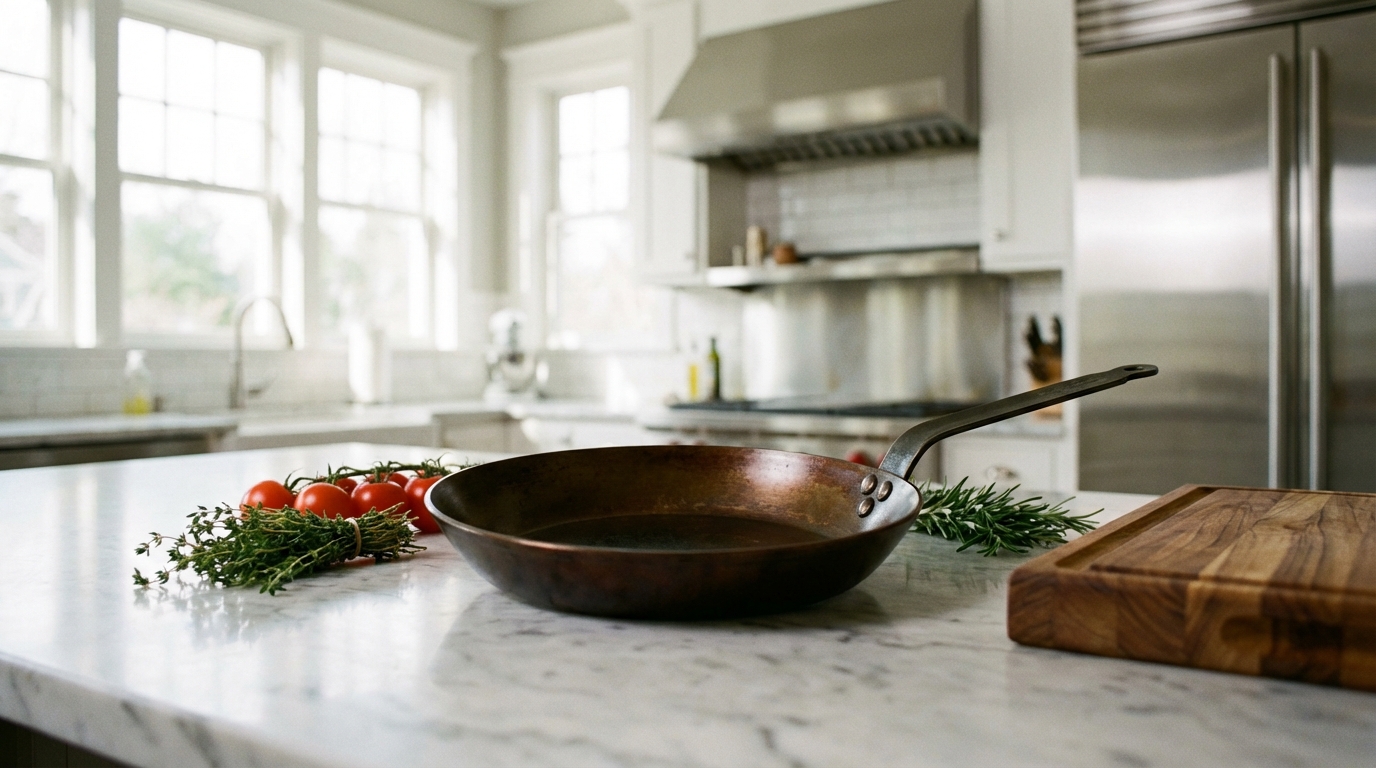
Carbon steel pans deliver the searing power of cast iron at half the weight, and because they're seasoned--not coated--they stay forever free of PFAS, PTFE, and other lab-made chemicals that can flake into dinner or linger in landfill, making them the non-toxic workhorse every health-minded cook should own. The article walks you through a simple, oven-and-stovetop seasoning ritual that bakes oil into a naturally slick, jet-black patina, then shows how daily care--hot-water scrub, quick dry, light oil--keeps that surface improving for decades while most non-stick pans head for the trash. You'll learn flame-taming techniques like "listen for the hiss" to know when to flip a steak, why a cold-oil, hot-pan approach stops stir-fries from sticking, and how a quick oven finish can turn the same skillet into a tarte-Tatin pan so the flavors you taste come from caramelized food, not synthetic coatings. By the end you'll understand how this affordable, endlessly re-seasonable metal outlasts Teflon, reduces waste, and turns every burner into a restaurant-grade stage for real, clean flavor.
Why Choose a Non‑Toxic Carbon Steel Pan?
Swap your chemical-coated skillet for a non-toxic carbon steel pan that seasons naturally, sears like cast iron, and lasts decades without flaking or leaching.
How carbon steel outperforms coated alternatives
Non-stick coatings work by chemistry; carbon steel works by physics. A PTFE-coated pan gets its slip from a synthetic polymer sprayed onto aluminum--a layer that's factory-perfect on day one and only degrades from there, whether it's scratched by a stray metal spatula, broken down by an overheated burner, or simply worn thin after a year or two of weeknight dinners. Carbon steel flips that script entirely. Its slickness comes from polymerized oil baked directly into a raw iron-carbon alloy, meaning the "coating" isn't a separate material at all--it's a permanent chemical bond with the pan itself. Scratch it, scour it, even strip it back to bare metal, and you haven't ruined it; you've just given yourself a reason to season it again.
That difference matters most at the extremes. Coated pans are engineered for gentle, low-to-medium heat, and manufacturers will tell you as much in the fine print--crank a non-stick skillet past 500 degreesF and you risk releasing fumes that are known to be dangerous to household birds and, over time, of unproven but concerning risk to people. Carbon steel, by contrast, is happiest when it's screaming hot. It can go straight from a blazing stovetop sear into a 500 degreesF-plus oven without a second thought, giving you the kind of crust on a steak or char on blistered peppers that a non-stick surface simply cannot deliver. You're not babying the pan to protect a coating; you're pushing it harder to build flavor.
There's also the matter of what happens when things go wrong. Every non-stick pan has a shelf life measured in months to a few years, after which it's headed to a landfill, coating and all, with no practical way to repair it. A carbon steel pan that's lost its seasoning isn't trash--it's a fifteen-minute project. Scrub it back to gray metal, dry it, rub in a whisper of oil, and bake it once or twice, and you've got a like-new cooking surface again. That repairability is really the heart of the non-toxic argument: it's not just that carbon steel starts out free of PFAS and PFOA, it's that it never needs a synthetic replacement to keep performing, cycle after cycle, for decades.
Finally, consider what actually touches your food. With a coated pan, you're cooking on top of a manufactured chemical layer no matter how careful you are with it. With carbon steel, the seasoning is just polymerized fat--the same transformation that happens when oil hits a hot pan and darkens into fond. There's nothing exotic in that patina, nothing you couldn't identify in a home kitchen, and nothing that flakes off as a foreign substance. It's simply cooking, layered onto itself meal after meal, which is exactly why many professional kitchens have long favored carbon steel over non-stick.
Health benefits of a non toxic carbon steel pan
Swap a nonstick skillet for carbon steel, and the biggest win happens before you even taste dinner: there's no synthetic coating to worry about in the first place. Traditional nonstick pans rely on PTFE or older PFAS chemistries that can begin breaking down when a pan is overheated, scratched, or simply aged past its prime, releasing microscopic particles and fumes into your food and kitchen air. Carbon steel skips that chemistry entirely. Its "nonstick" surface is really just polymerized oil--fat that's been baked onto raw metal until it bonds at a molecular level--so what touches your eggs is the same cooking oil you'd drizzle on a salad, not a lab-engineered polymer.
That matters most at high heat, which is exactly where carbon steel shines and nonstick coatings struggle. Nonstick coatings typically start to degrade above 500 degreesF, a temperature you'll blow past every time you sear a steak or blister a pepper. Carbon steel, by contrast, is happiest when it's screaming hot, so you get restaurant-style searing without pushing a coating past its safety threshold. Fewer temperature restrictions mean fewer accidental exposures, and one less thing to think about when the burner's cranked up and dinner's on the line.
There's also a quieter, cumulative health benefit: durability. Because the seasoning layer heals itself with use rather than wearing away, you're not periodically replacing a scratched or flaking pan the way you would with nonstick--which means you're not periodically reintroducing fresh, degrading coating into your cooking rotation, either. Add in the fact that carbon steel is essentially just iron and carbon, and you get a small, incidental boost of dietary iron with acidic or long-simmered dishes, something cast-iron cooks have leaned on for generations. None of this makes carbon steel a health supplement, but it does mean your pan is one less variable to worry about, letting the ingredients--not the cookware--determine what ends up on your plate.

Getting Started: Seasoning and Care Basics
Season your cast iron right the first time--wash, dry, oil, bake--and it'll reward you with a naturally non-stick surface that only gets better with every use.
Daily maintenance to keep performance high
Once your pan has that first coat of seasoning baked on, the daily habits you build around it matter more than any single seasoning session. Think of it less as "cleaning" in the dish-soap sense and more as a quick reset that protects the polymerized oil layer you worked so hard to create. Right after cooking, while the pan is still warm, rinse it under hot water and use a stiff brush or non-metal scrubber to knock loose any stuck-on bits. Hot water alone is usually enough to lift fond and debris without stripping the seasoning underneath--no suds required, though a drop of mild soap won't ruin a well-established patina despite what old cast-iron myths claim.
Drying is the step people skip, and it's the one that causes the most heartbreak. Carbon steel is essentially iron with a touch of carbon, which means any lingering moisture is an open invitation to rust. Towel off the surface, then set the pan over low heat on the stovetop for about sixty seconds to drive off whatever water remains in the pores of the metal. This isn't optional theater--it's the difference between a pan that lasts decades and one that grows orange freckles in the sink rack overnight.
With the pan bone-dry and still faintly warm, rub in a few drops of a high-smoke-point oil--grapeseed, avocado, or plain vegetable oil all work--using a paper towel or soft cloth. You want a whisper-thin film, not a glistening puddle; excess oil left to sit will turn tacky or gummy rather than hardening into slick seasoning. This thirty-second ritual, repeated after every cook, is what gradually deepens that jet-black patina, filling in dull or rough patches until the surface turns genuinely non-stick.
A few habits will keep performance climbing rather than backsliding: store the pan somewhere dry, avoid stacking wet cookware on top of it, and skip the dishwasher entirely--its harsh detergents and prolonged soak cycles are seasoning's worst enemy. If you spot a dull patch or notice food clinging where it never used to, don't panic; it simply means that section needs a small top-up of oil and heat, not a full strip-and-restart. Treat daily maintenance as an ongoing conversation with your pan rather than a chore, and it will keep repaying you with better sears every time you cook.
Step‑by‑step seasoning for a lasting non toxic surface
**
Before your carbon steel pan can earn its non-toxic, nonstick reputation, it needs a proper send-off from the factory floor. New pans arrive coated in a thin layer of protective wax or oil to prevent rust in transit, so the first step is simple: wash it in hot water with a few drops of dish soap and a stiff sponge, then dry it completely over low heat on the stovetop. This isn't the moment to be gentle--soap is fine here, since there's no seasoning yet to strip away. Once the surface is bone-dry and slightly warm to the touch, you're ready to build the patina that will define how your pan cooks for years to come.
With the pan still warm, add a teaspoon of a high-smoke-point oil--grapeseed or avocado both work well--and use a paper towel to wipe it across every inch of the cooking surface, including the sides and handle junction. The goal is a coat so thin it looks almost dry; pooled oil will turn sticky and gummy rather than polymerizing into a hard, glassy layer. Place the pan upside down in a 450-500 degreesF oven with a sheet pan or foil beneath to catch drips, and let it bake for about 30 to 45 minutes. You'll notice the metal shift from raw steel-gray to a light straw color, then amber, and eventually a deep bronze or black as the oil breaks down and bonds to the metal at a molecular level. Let the pan cool in the oven, then repeat the thin-oil, high-heat cycle three to five times. Each pass thickens the seasoning and closes the microscopic pores in the steel that would otherwise let food stick or moisture creep in.
Once you've built that initial base in the oven, finish the job on the stovetop, where real cooking happens. Heat the pan over medium heat until a drop of water skitters and evaporates instantly, then swirl in a little oil and let it heat until it just begins to shimmer. Some cooks like to fry a batch of inexpensive foods--potato peels, onion scraps--during this stage, since the natural starches and light frying action help burnish the surface further while giving you something tasty to snack on. This step isn't strictly necessary, but it bridges the gap between the oven's dry heat and the kind of moist, fat-based cooking your pan will see every day going forward.
Don't expect a flawless, jet-black mirror finish right out of the gate--that even, dark patina develops gradually with real use, not through a single seasoning marathon. What you're aiming for after this initial process is a matte, faintly golden-brown surface that repels water and releases a fried egg with minimal sticking. From here, every proper meal you cook--especially anything involving a bit of fat--adds another invisible layer to that seasoning, deepening its color and improving its release properties. Treat these first few sessions as laying the foundation, not finishing the house; the real seasoning happens one dinner at a time.
Cooking Techniques that Unlock Real Flavor
Master searing, deglazing, and seasoning-layering to turn everyday ingredients into deeply flavored dishes.
Versatile dishes from breakfast to stir‑fry
Carbon steel's genius lies in its refusal to be a one-trick pan. Come morning, that same skillet you seared a ribeye in last night can turn out a diner-worthy batch of eggs, provided the seasoning is doing its job and the heat stays gentle. Warm the pan on low, let a pat of butter foam without browning, and slide in your eggs for curds that glide rather than cling. Pancakes and crepes behave the same way, spreading into thin, golden rounds that release with a flick of the wrist instead of a fight with a spatula. The key across all these breakfast applications is patience with temperature--carbon steel conducts heat quickly, so a medium-low setting is usually plenty, and rushing it with high heat is the fastest way to reintroduce sticking.
Flip to the other end of the flavor spectrum, and the same pan becomes a stir-fry powerhouse, thanks to its light weight and razor-sharp heat response. Preheat it until a bead of water skates and evaporates within a second, then add cold oil right before your ingredients hit the surface--this cold-oil-into-hot-pan sequence is what keeps vegetables and proteins from welding themselves to the metal. Because carbon steel holds and releases heat so efficiently, you can toss aromatics like garlic and ginger in for a few seconds of bloom, then push everything to the sides while the center reheats for the next addition, mimicking the rhythm of a professional wok station without needing one.
Between those bookends sit dozens of everyday dinners that showcase the pan's range: a seared pork chop finished with a pan sauce, a batch of blistered shishito peppers, a smash burger crisped on both sides, or a skillet of fried rice that picks up genuine wok hei from the pan's dark, well-seasoned surface. Roasted vegetables caramelize beautifully in carbon steel too, since the pan can go from stovetop sear to oven finish without missing a beat, concentrating sugars in a way that thin non-stick coatings simply can't survive. This is the real payoff of owning one versatile pan instead of a drawer full of specialized, coated ones: breakfast, lunch, and dinner all pull flavor from the same honest surface, and every use only deepens the seasoning that makes the next meal easier to cook.
High‑heat searing and sautéing without chemicals
This is the moment carbon steel was built for. Crank your burner to medium-high and let the pan sit empty for a minute or two until a drop of water skitters and vanishes on contact. Then add a thin film of high-smoke-point oil--avocado, grapeseed, or refined sunflower all work well. No aerosol sprays, no synthetic release agents--just fat and hot metal doing what they've done for centuries. Because carbon steel conducts and holds heat so efficiently, you get a sear as aggressive as cast iron delivers, but the lighter gauge means faster temperature response, so you can actually control a flare-up instead of just riding it out.
The trick to sticking-free searing isn't a chemical coating--it's technique. Pat your protein bone-dry, resist the urge to move it the second it hits the pan, and listen for the hiss: a steady, aggressive sizzle means the surface is doing its job, forming a crust that will release on its own once it's properly browned. Fight the pan and you'll tear the fond; wait it out and the food practically lifts itself. This is the Maillard reaction at full throttle, and each pass of hot oil can also help reinforce your seasoning over time.
Sautéing rewards a slightly different rhythm: cold oil in a hot pan, not the reverse. Adding fat right before your vegetables or aromatics hit the surface keeps it from breaking down and turning bitter, and it gives you a narrow window--usually 15 to 20 seconds--where the oil is shimmering but not smoking, the ideal moment to toss in garlic, onions, or diced vegetables for a quick, even cook. Keep things moving with a wooden spoon or fish spatula (metal utensils are fine on carbon steel, but wood is gentler on a seasoning still building strength), and you'll notice food glides rather than grabs, especially once your pan has a few dozen cooks under its belt.
What you won't find in this process is a single non-stick additive, chemical release agent, or synthetic polymer standing between your food and the pan. The slickness is earned, not sprayed on, and it tends to improve with use. Carbon steel asks for a bit more attention up front, but in exchange it delivers restaurant-grade crusts, cleaner flavor, and no worry about what might be leaching into dinner.


Longevity & Sustainability: Making Your Pan Last a Lifetime
Season, heat gradually, and wash by hand to keep your carbon steel pan slick, rust-free, and daily-ready for decades of meals.
Signs of wear and how to restore your pan
Even the most devoted carbon steel owner will eventually spot trouble brewing on the cooking surface, and learning to read these signs early can save you from a full-blown rescue mission later. The most common tell is stickiness in spots where food used to glide effortlessly--usually a sign that the polymerized oil layer has thinned or been scrubbed away by an overzealous scouring pad. Dull, gray patches breaking up the glossy black surface indicate the seasoning has worn through to bare metal, while orange-brown freckling is rust, plain and simple, often the result of air-drying instead of towel-drying, or storing the pan in a damp cabinet. Flaking is another red flag, often caused by applying too thick a layer of oil at once, which cracks and peels rather than bonding smoothly to the steel.
The good news is that none of these issues are fatal, and this resilience is a big part of why carbon steel outshines many coated pans when it comes to long-term durability. If you're only dealing with a few sticky or dull patches, a quick spot-fix usually works: scrub the area back to bare metal with a fine steel wool pad or a mixture of coarse salt and oil, wash and dry thoroughly, then rub in a whisper-thin coat of high smoke-point oil and heat it on the stovetop or in a hot oven until it stops smoking and turns matte, then glossy. Repeat that thin-layer process a couple of times and you'll have blended new seasoning seamlessly into the old.
For rust or more extensive damage, it's best to start over from bare metal. Scrub the entire cooking surface with steel wool until every trace of orange is gone and the pan feels smooth and silver again, then treat it exactly as you would a brand-new pan: wash, dry completely, and build up several thin layers of seasoning through the oven method. Don't be discouraged if this feels like undoing months of progress--stripping and reseasoning typically takes less than an hour of active work, and a pan restored this way often performs better than it did originally, since you now have a clearer sense of exactly how much oil and heat it takes to build that ideal, ever-improving patina. This is one quiet advantage carbon steel holds over many non-stick alternatives: instead of reaching a point of no return, every scratch, sticky spot, or rust bloom is simply an invitation to make the pan better than before.
Think of restoration not as a chore but as routine maintenance, the same way you'd rotate your tires or sharpen your knives. A pan that's reseasoned periodically, with quick touch-ups in between, can realistically be passed down for generations, still searing steaks and building flavor long after other cookware has come and gone.
Eco‑friendly disposal or repurposing when the time comes
Here's the truth most cookware marketing won't tell you: a carbon steel pan is designed to never really reach the end of its life. Unlike a nonstick skillet whose coating degrades on a fixed timeline, carbon steel is just iron and carbon--the same humble alloy that's been forged into plowshares, swords, and skillets for centuries. If yours ever looks "ruined"--rusted after a summer in a damp cabinet, warped from an accidental empty-pan overheat, or scarred with pitting--the fix is almost never the trash can. A rusted pan can typically be stripped back to bare metal with steel wool or a vinegar soak, then reseasoned from scratch as if it just came out of the box. Even noticeable pitting can simply give your seasoning more texture to grip onto. Before you write off a pan as garbage, it's worth assuming it's salvageable; carbon steel tends to be far more forgiving of neglect than nonstick coatings are.
That said, every pan eventually meets its true end--usually when the cooking surface warps so much it no longer sits flat, or when a handle rusts through at the rivets. When that day comes, carbon steel's disposal footprint is refreshingly simple compared to coated cookware. Because it contains no PFAS, no ceramic coating, and no synthetic nonstick layer, it's genuinely scrap metal rather than landfill-bound composite waste. Many municipal metal recyclers and scrap yards will accept a carbon steel pan, and some may even offer a small payment based on weight--something that's generally not an option for nonstick pans, which recyclers often decline due to their chemical coatings. A quick call to your local scrap metal facility or a search for "ferrous metal recycling near me" will usually turn up a drop-off point within a few miles.
Before you recycle, though, consider whether your "dead" pan still has life left as something other than a cooking vessel. A warped skillet with a compromised handle can become a rugged fire-pit griddle for camping, a garden tool for tamping soil, a heavy-duty paint-mixing tray, or even a rustic wall-mounted planter for herbs--carbon steel's raw, unfussy look tends to hold up well with age and imperfection. Some home cooks repurpose retired pans as trivets or rework them into custom grill grates. The metal's durability means it can keep serving a purpose long after its searing days are done, so there's no need to send it to the scrap heap the moment it's no longer kitchen-worthy.
The bigger sustainability story, though, is what carbon steel helps you avoid in the first place: buying, using, and discarding pan after pan as nonstick coatings inevitably flake and fail. A single well-seasoned carbon steel skillet can realistically outlast several nonstick pans over the years, meaning less packaging, less manufacturing energy, and less chemical waste ending up in soil and water systems. Choosing carbon steel isn't just about what you do with it at the end--it's about dramatically shrinking how often there's an "end" to deal with at all.
- Carbon steel delivers non-toxic, PFAS-free cooking performance rivaling cast iron.
- Initial seasoning involves thin oil layers baked until a durable polymerized coating forms.
- High-heat searing, oven roasting, and acidic simmering all refine the pan's seasoning.
- Hand-wash with hot water, dry immediately, and lightly oil to prevent rust.
- Re-season whenever food sticks or the surface turns patchy or dull.
- A well-maintained carbon steel pan can last decades, reducing cookware waste.