

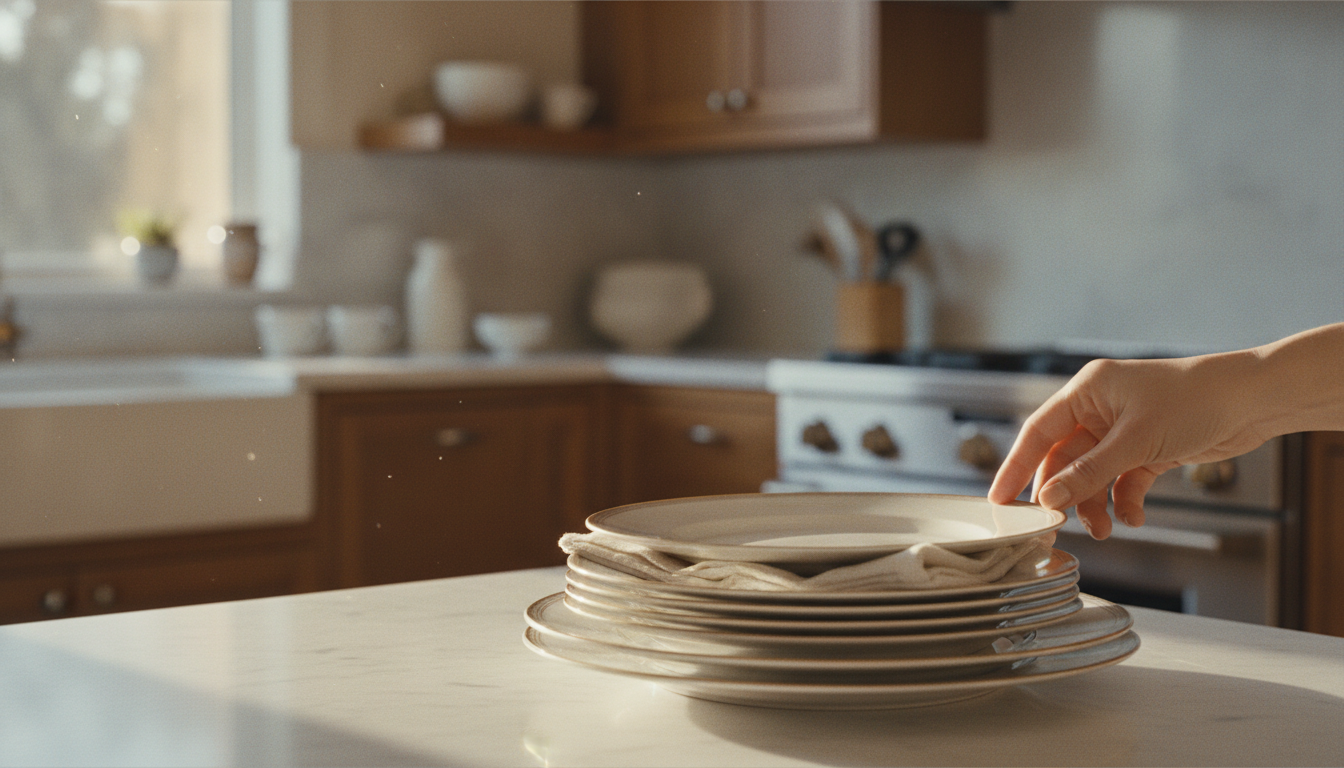
Learn how to protect your dinnerware through proper handling, dishwasher placement, and microwave safety to keep plates looking sharp for years. Simple daily habits like avoiding thermal shock, using soft sponges, and storing with care prevent chips and cracks that would otherwise shorten a set's lifespan.
Why Dinnerware Care Matters: Protecting Your Investment
High-fired dinnerware can last 10 to 20 years with regular use if you follow simple daily care habits like gentle washing and avoiding sudden temperature changes.
How Proper Maintenance Extends Dinnerware Lifespan
Good dinnerware care determines whether your everyday plates last a couple of years or become pieces you pass down. Stoneware fired at high temperatures and properly maintained can hold up for 10 to 20 years of regular use, with some pieces staying in daily rotation for decades [1]. The dense, vitrified structure created during firing resists the wear that shortens the life of lower-fired ceramics, but that durability only pays off if you handle the dishes with care day to day [1].
Simple habits make the biggest difference: using mild detergents instead of abrasive scrubbers, drying pieces fully before stacking them, and avoiding sudden temperature swings between the fridge and the microwave or oven [3]. Skipping these steps is often what causes stains, mold, or hairline cracks to show up well before a piece's material would otherwise allow [3]. Since porcelain and bone china are fired even hotter and are naturally less porous, they can tolerate slightly more stress before staining or absorbing odors, but they still benefit from the same gentle routine [2].
Treat consistent dinnerware care as part of the investment you made when you bought the set, not an afterthought. A few extra seconds of handling, drying, and mindful stacking each week can be the difference between dishes that show their age in five years and ones that still look sharp after a decade or two of daily meals [1].
Common Damage Patterns and How to Avoid Them
Three damage patterns show up again and again in everyday dinnerware, and each has a distinct cause that's easy to sidestep once you know what to look for. Thermal shock tops the list: moving a plate straight from the fridge into a hot oven or microwave, or setting a just-heated dish on a cold counter, stresses the material faster than it can expand or contract, which is how hairline cracks form [5]. Glaze crazing is a second pattern, a web of fine surface cracks that develops when the glaze and the ceramic body beneath it shrink at different rates, often after repeated microwave use or years of dishwasher cycles [6]. Metal utensils and rough scrubbing pads cause a third type of wear, scratching the glaze in ways that weaken the surface and make it more likely to chip later [4]. A few adjustments cut down on all three:
- Let cold dishes sit a few minutes before microwaving or baking [5].
- Skip metal utensils and abrasive scouring pads on glazed pieces [4].
- Use felt pads or a plate rack instead of stacking dishes directly [4].
- Hand-wash anything hand-painted, antique, or uncertain about its rating [6].
None of these habits take much extra time, but they address the exact stress points that turn a durable piece into a cracked or crazed one well before its material would otherwise wear out.
Dishwasher Safety: When Machine Washing Works and When It Doesn't
Load delicate dinnerware on the top rack and use a gentle cycle to protect glazes and metallic trim from heat damage.
Material-Specific Dishwasher Guidelines: Porcelain, Stoneware, and Bone China
Porcelain generally holds up in the dishwasher, but the safest approach is a low-temperature program without exceeding the recommended detergent amount, and loading pieces securely so they can't shift and chip against each other [7]. Gold or platinum-rimmed porcelain is the exception: hand-wash it with the soft side of a sponge and regular dishwashing liquid, since abrasive scrubbing or repeated dishwasher cycles can wear down metallic decoration [7]. Bone china is thinner and more delicate than standard porcelain, and dishwasher water pressure, heat, and detergent chemicals pose a higher risk to it, so check for a dishwasher-safe label before running it through a cycle [8]. When that label is missing or the piece is valuable, warm soapy water and a soft sponge protect the finish better than a machine cycle [8]. Stoneware tends to be the most forgiving of the three, with many everyday sets rated safely for both dishwasher and microwave use, though individual patterns within a collection can carry different ratings [9].
- Porcelain: dishwasher-safe on low heat; hand-wash metallic rims [7].
- Bone china: check the label; hand-wash if uncertain [8].
- Stoneware: usually dishwasher-safe, but confirm by pattern [9].
Temperature, Cycle, and Placement Strategies for Maximum Protection
Placement inside the machine matters as much as material choice. Items near the bottom sit closest to the heating element and face more intense heat, so glazed dinnerware with metallic trim or delicate patterns fares better on the top rack, where temperatures run lower and the wash action is gentler [10]. Sticking to a normal or everyday cycle protects finishes better than a heavy-duty or pots-and-pans setting, which uses hotter water and a more aggressive spray meant for stuck-on grease rather than glaze [11]. Letting very hot plates cool before handling them prevents the rapid temperature swing that causes cracking, and spacing pieces so they don't touch keeps them from chipping against each other mid-cycle [11]. A few habits round out a safer load:
- Load plates upright in designated slots, not stacked or leaning [11].
- Skip overcrowding so water and detergent circulate fully [11].
- Use a rinse aid to cut down on cloudy water spots [11].
- Reserve the top rack for anything trimmed or hand-decorated [10].
None of this adds real time to a wash cycle, but it does add years to dinnerware that would otherwise dull or crack well before its material limits are reached [11].
Microwave and Oven Use: Safe Temperature Ranges and Material Limits
Metallic glazes and decorative rims spark in microwaves, while vintage pieces may leach harmful metals into heated food.
Microwave-Safe Dinnerware: Testing Methods and Glazed Rim Risks
Checking whether a plate is truly microwave-safe starts with the material itself, not just a label. Low-fired earthenware stays porous enough to trap moisture, and that moisture turns to steam under microwave heat, building internal pressure that can crack or shatter the piece [12]. High-fired stoneware and porcelain go through vitrification, a process that fuses clay particles into a dense, glass-like body, and one quick test is tapping the piece: a clear ringing sound signals that density, while a dull thud suggests a softer, more porous body better suited to serving than reheating [12].
Glazed rims carry a separate risk. Gold, platinum, or silver accents reflect microwave energy instead of absorbing it, which causes arcing, the sparking that can scar the plate and damage the appliance in the same reheating session [12]. This holds even when the rest of the plate is rated safe, since a thin decorative strip is enough to trigger arcing [14].
Undecorated stoneware and porcelain are typically safe for the microwave, but anything with a metallic border should be set aside for serving rather than heating [14]. Older or handmade glazes add another layer of caution: some contain lead or cadmium that isn't a microwave safety issue on its own but can leach into food once heated, so unlabeled vintage or artisanal pieces are safer reserved for cold dishes until tested [12][13]. When a piece lacks a printed microwave-safe designation, treating it as decorative rather than functional protects both the dinnerware and whatever you're reheating.
Oven Temperature Thresholds and Thermal Shock Prevention
Oven temperature thresholds vary by material and glaze, so checking a piece's manufacturer rating before roasting is the safest first step rather than assuming every ceramic dish handles the same range [15]. Some manufacturers rate stoneware and reinforced porcelain for oven use up to a specific upper limit, and pushing beyond that limit, especially under broiler settings, can stress the glaze and clay body in ways that surface as cracks only later [16]. The bigger risk isn't peak heat but the rate of temperature change: pulling a hot dish straight from the oven and setting it on a cold, damp counter creates a sharp contrast between the dish's hot and cool surfaces, and that contrast is what starts hairline fractures [16].
Stoneware's density gives it strong thermal mass, letting it hold heat and keep food warm well after it leaves the oven, which is part of why it works so well for oven-to-table meals [17]. For the harder work of actual roasting, though, reach for cookware built to take high, direct heat, like a roasting pan, rather than asking dinnerware to do a job it wasn't made for. That same density means the dish needs time to cool gradually rather than facing a sudden drop in temperature, so resting it on a trivet or dry towel instead of a cold or wet surface protects it best [15].
Because oven-safe ratings differ by collection, glaze, and manufacturer, treat any printed threshold as specific to that piece rather than a general rule for all stoneware or porcelain [15].
Chip Prevention and Repair: Handling, Storage, and When to Replace
Chips on the foot or underside are safe to keep using, but chips exposing bare clay on the rim or interior mean it's time to retire the piece.
Stacking, Storing, and Handling Techniques That Reduce Chips
Assessing Damage: When a Chip Is Safe to Use vs. When to Retire a Piece Not every chip means retiring a piece, but the type and location determine whether it's still safe to use. If a chip wears through the glaze down to the raw body underneath, food and liquid reach material that was never meant for direct contact, and that's the same pathway that lets heavy-metal glazes leach into food over time [21]. A chip confined to the foot ring or underside, where it never touches food or your mouth, stays mostly cosmetic and doesn't carry that same risk [21]. Cracked or visibly damaged dinnerware should come out of microwave rotation regardless of chip size, since damaged pieces are specifically flagged as unsafe for microwave heating [22]. A quick way to sort a chip:
- Hairline chip on the foot or underside: keep using, cosmetic only [21].
- Chip exposing bare body on the rim or interior: retire from food use [21].
- Any crack alongside a chip: stop microwaving the piece [22].
- Chip near metallic trim: stop microwaving, sparking risk remains [22].
When judgment feels uncertain, treating the piece as serving-only rather than functional protects both the food and the rest of the set.
Dinnerware lasts when you make care part of everyday use, not something you save for special occasions. Dry pieces fully, skip the metal scrubbers, watch for sudden temperature swings, and store plates with a little breathing room. Those small habits keep a set looking sharp for years. And when your dishes move from the table back to the stove, use cookware made for real heat, like our stainless steel pan or carbon steel pan. Want more care & maintenance tips or have a question about a specific piece? Contact us anytime.
Frequently Asked Questions
-
Is stoneware safe for both the dishwasher and the microwave?
Yes, stoneware tends to be the most forgiving of common dinnerware materials, with many everyday sets rated safe for both dishwasher and microwave use. That said, individual patterns within the same collection can carry different ratings, so it's worth confirming the specific piece rather than assuming the whole set matches.
-
How can I tell if a plate is microwave-safe if it doesn't have a label?
One quick test is tapping the piece: a clear ringing sound signals a dense, high-fired body suited to reheating, while a dull thud suggests a softer, more porous piece better used for serving. Undecorated stoneware and porcelain are typically fine, but anything with a gold, platinum, or silver rim should be set aside since metallic accents can cause arcing even if the rest of the plate is rated safe.
-
Is it safe to keep using a plate with a chip?
It depends on where the chip is. A hairline chip on the foot ring or underside that never touches food is mostly cosmetic and fine to keep using, but a chip that exposes the raw body on the rim or interior should be retired from food use since it can let liquid reach unglazed material. Any crack alongside a chip, or a chip near metallic trim, means the piece should come out of microwave rotation.
-
Why did my dish crack after coming out of the oven or microwave?
The most common cause is thermal shock - moving a dish straight from the fridge into a hot oven or microwave, or setting a just-heated dish on a cold, damp counter, stresses the material faster than it can expand or contract. Letting cold dishes sit a few minutes before heating, and resting hot dishes on a trivet or dry towel to cool gradually, helps prevent this.
-
How long should well-cared-for dinnerware actually last?
Stoneware fired at high temperatures and properly maintained can hold up for 10 to 20 years of regular use, with some pieces staying in daily rotation for decades. Reaching that range depends on everyday habits like using mild detergents, drying pieces fully before stacking, and avoiding sudden temperature swings between fridge, microwave, and oven.
- High-fired stoneware and porcelain can last 10 to 20 years with proper daily care and handling.
- Thermal shock from sudden temperature changes between fridge and microwave causes hairline cracks in dinnerware.
- Metal utensils and abrasive scrubbers scratch glazes, weakening surfaces and increasing chip risk.
- Porcelain is dishwasher-safe on low heat, but bone china requires hand-washing unless labeled safe.
- Metallic rims on dinnerware reflect microwave energy and cause arcing, even when the rest of the plate is safe.
- Chips exposing bare ceramic body beneath the glaze create pathways for food contact with unsafe material.
- Load plates upright in dishwasher slots and reserve the top rack for decorated or trimmed pieces.
- https://www.google.com/goto?url=CAESywEB6zswFcraDH_eXXL4e6Wo-BlqNEcLQc_D0bkNzrMeDD9wEDofmh1JfkrQ2rmjOM_EmnQ6Q_-JqMBdetnU-qwDZT-iye2YLMXXHWvqYRqvZPQjlFe75jy9m9YKl3R05fOZunC9CimTwzs8mh5X0bCb9Mkgq7ejtNxXKD10uOZdBJnC-IGdt8DELBtS-EapDmM9hwZxOLaN3UXdiOWqAfJ6ZjhTFC9RU_YS1o8Cou7kTXQnPF2ibIgSkvnDButkItpb640yM6DjBfD1jQ
- https://www.google.com/goto?url=CAES2QEB6zswFUKwTyrftVnAQFt2hOg9FRMsDzdEagwX8RUiCSwM9g25IneaYKpwcD2zlenlMDw2sW6Xqa_Du8q9QKjOsGqAmPS2TerRrQd3Y_LgTU6SrVTczSoWVSOIbU3iEhnRQRettcONHyC6bEpnklUXUAIxk-fOac1HOWX33yxYyU7kRsm3iol7BVZvDLQ1Hwa4ITsM7gRwlSzbQnH7w5BQ4Itc49yGMO3WHtNvaiUVD4WD7PwFMIyfKQMWVUFuuLGb9nld9mRhttWbQYtueNVU_Y1iTf5I5_YN
- https://www.google.com/goto?url=CAES7gEB6zswFaSIbNsWFPVmmScEcmmEwzk6dWpdDafCFac9AkG9ci5UBk7QPC2DANpEV6dxFWkCc9njco3prkwwJ2D45jRuHLHC9Tn7yDlUQb5-KcGgVYyYRFVeOuRxqYjt1Xm83bBw4ZN2nUH4pS2Oy1YZZDTKOxon96GYypHcae8ZVV66Ch4SpiOPLtgGz-vZ0khSG3ywZB5FwAaaPdgVnRoqelho79dU6p3Hs3iF-fMWJQlr-Ttd7hvkC3rBC7jezMWicKskyNZsgjJUX0YAwkObdg76fGh3b5Sb7-mh-GEdMk0nEjdpfOsLfi_oEJX8
- https://hfcoors.com/blogs/news/how-do-i-care-for-ceramic-dinnerware-to-prevent-chips-and-cracks
- https://malacasa.com/blogs/care-use-safety/why-microwave-safe-dishes-crack
- https://www.vancassotableware.com/blogs/care-use-safety/guide-to-fixing-preventing-glaze-crazing
- https://corallamaiuri.com/pages/care-instructions
- https://www.almaalyceramic.com/blog/can-i-use-a-bone-china-dinnerware-set-in-the-dishwasher-33718.html
- https://b2b.stonelain.com/pages/care
- https://www.choice.com.au/home-and-living/kitchen/dishwashers/articles/can-you-put-it-in-the-dishwasher
- https://www.mrappliance.com/blog/dishwasher-maintenance/
- https://world.taobao.com/lang/en-us/shopping-guide/2041129106866700288.htm
- https://world.taobao.com/lang/en-us/shopping-guide/2034476031540199424.htm
- https://www.decorlane.com/blogs/read/the-best-dinnerware-sets-complete-buying-guide
- https://www.stonelain.com/blogs/news/corelle-versus-stoneware
- https://world.taobao.com/lang/en-us/shopping-guide/2013943959411228672.htm
- https://www.vancassotableware.com/en-eu/blogs/news/stoneware-vs-opalware-dinnerware-guide
- https://www.vancassotableware.com/blogs/care-use-safety/how-to-store-dinnerware-safely
- https://feltectors.com/dish-protectors-for-stacking/
- https://malacasa.com/blogs/news/smart-dinnerware-storage-tips
- https://jctableware.com/is-opal-glass-food-safe/
- https://www.qingfaceramic.com/can-you-microwave-ceramic-dinnerware/