

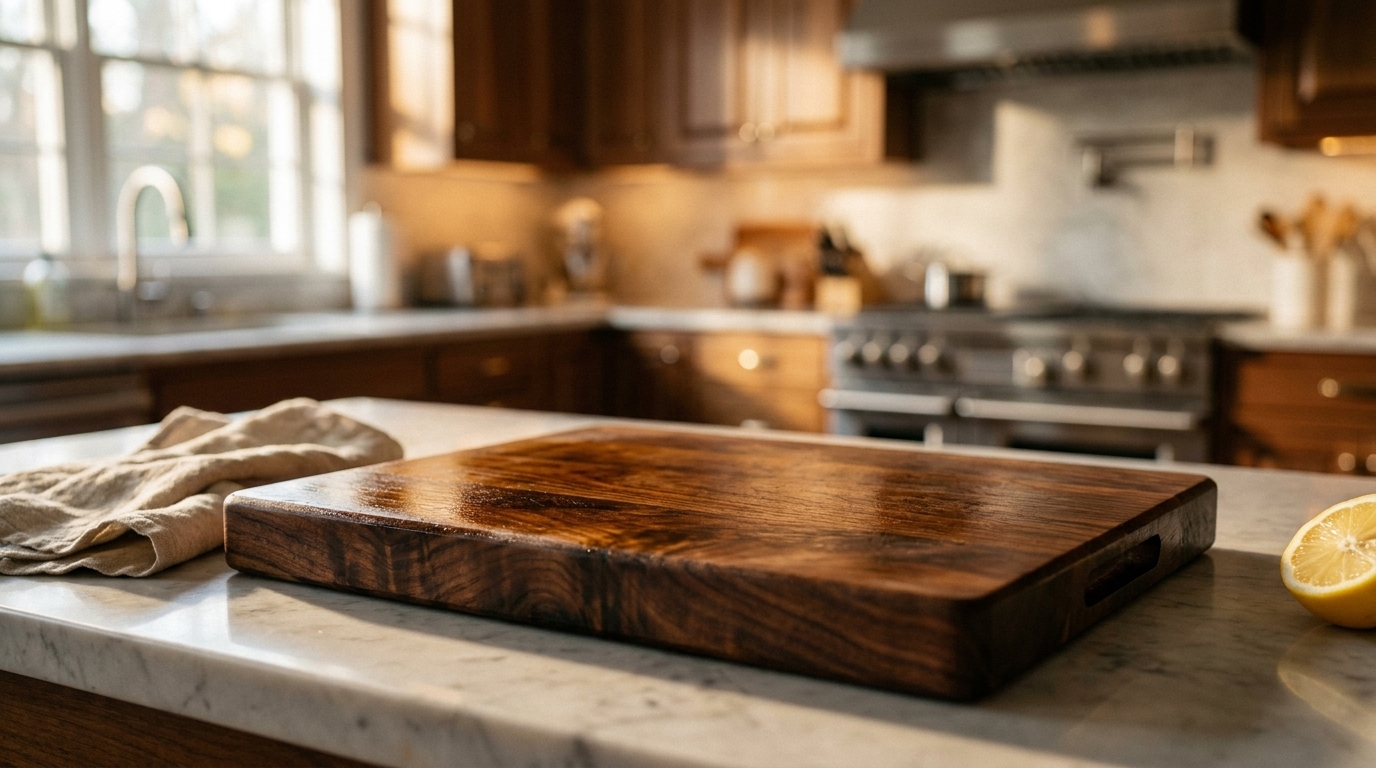
Food-grade mineral oil protects wooden cutting boards from warping, cracking, and absorbing stubborn garlic odors by creating a moisture barrier in the wood grain. Regular oiling every 3-8 weeks prevents damage and keeps your board performing well for years.
Why Oiling Your Wooden Cutting Board Matters--Especially After Intensive Use
Consistent oiling prevents warping, cracking, and odor absorption that intensive cutting creates in unprotected wood.
What happens to wood when you skip the oil: warping, cracking, and odor absorption
Wood is hygroscopic -- it continuously exchanges moisture with the environment, which means an unprotected board will dry out, warp, and crack as fibres contract unevenly.[1] A board that dries out after frequent washing becomes brittle, and without oil to maintain a moisture barrier, warping often follows as one side dries faster than the other.[2] A dry, porous surface also absorbs food juices and strong odors -- garlic, onion, and similar ingredients embed in open grain and transfer aromas to the next thing you cut.[3] You can restore a dry cutting board after damage sets in, but consistent oiling prevents the problem entirely.
How garlic and strong-smelling foods damage unprotected wood grain
Garlic and onions are particularly hard on unprotected boards because their odor-causing compounds absorb into open wood grain and don't fully release during normal washing. [2] Unlike milder ingredients, these compounds bond to wood fibers at a depth that transfers detectable flavor and smell to whatever you cut next -- fruit, fish, bread -- none of it is immune. [2] An intact oil barrier limits this absorption by filling the grain's surface pores, giving those compounds less wood contact and making them easier to flush away during cleaning. [2] Salt and lemon treatments can neutralize the organic compounds after the fact, but they address the surface; preventing deep absorption through consistent oiling is more efficient than repeated deodorizing sessions. [2] Choosing the Right Oil: Food-Grade Mineral Oil vs. Natural Alternatives
Food-grade mineral oil: why it's the safest, most effective choice for cutting boards
Food-grade mineral oil is odorless, tasteless, and resists oxidation far better than cooking oils -- it stays fluid over time without turning sticky, rancid, or transferring off-flavors to food. [4] Unlike olive or vegetable oil, it won't polymerize on the wood surface, a process that creates gummy buildup and compounds the odor problems garlic and onions already leave behind. [4] It soaks into wood fibers, keeping them moisturized while forming a water-repellent barrier that limits moisture absorption and surface staining. [4] Food-grade versions include antioxidant additives like vitamin E, which extends the oil's stability while keeping it safe for incidental contact with food. [4] You'll find it at pharmacies and hardware stores, and our 5-minute oiling guide walks through exactly how to apply it. [4]
Natural oils to avoid: olive oil, coconut oil, and linseed oil and why they don't work long-term
Olive oil, coconut oil, and linseed oil all share the same flaw: they contain fats that oxidize when absorbed into wood, turning rancid and leaving a sour smell and sticky residue that washing won't remove. [5] Olive oil and similar cooking oils spoil quickly; regular coconut oil follows within one to three months, because air, light, and bacteria inside the wood grain trigger oxidation regardless of how the oil was processed. [6] Raw linseed oil is technically food-safe but undergoes the same rancidification over time, and boiled linseed oil -- the version sold in most hardware stores -- contains added chemicals that make it toxic for food-contact surfaces. [5] On a board that regularly handles garlic or onions, rancid oil compounds the odor problem rather than solving it. [5]
Step-by-Step Oiling Process: From Garlic Cleanup to Protective Finish
Remove garlic residue completely, dry the board thoroughly, apply oil generously with the grain, then seal with beeswax for lasting protection.
Pre-oiling prep: cleaning garlic residue and drying your board completely
Before applying oil, garlic residue needs to be fully removed so compounds don't get sealed into the wood during the oiling step.
Scrape off visible residue first -- a bench scraper works well here -- then scrub the surface with coarse salt and the cut side of a lemon, which acts as an abrasive and neutralizes odor compounds simultaneously. [7] For stubborn smells, spread a baking soda paste (2-3 tablespoons mixed with a little water) across the board, let it sit 10-15 minutes, then rinse briefly. [8] After cleaning, towel-dry immediately and stand the board upright so both sides air-dry evenly -- a board that's even slightly damp will absorb oil unevenly and limit how deep the treatment penetrates. [8]
Application technique: how much oil to use and the best method for even coverage
Apply oil generously -- more than you think the board needs -- and use a folded paper towel to work it into the surface in the direction of the grain, covering both faces and all four sides. [2] A board that just processed garlic will absorb more than a routinely maintained one, so don't hold back on the first pass. [2] Stand the board upright for several hours, or overnight, so the oil penetrates fully rather than pooling on one face. [2] The next day, wipe off any excess with a clean paper towel -- residue left on the surface turns tacky rather than protective -- then follow with a thin coat of food-safe beeswax to lock the oil into the grain. [2]
Maintenance Schedule and Long-Term Care: Oiling Essentials
Oil your board every 3-8 weeks depending on use, or whenever water stops beading on the surface.
How often to oil wooden cutting boards based on frequency of use and food type
How often you oil depends on how hard you use the board and what you cut.
Daily home cooking calls for oiling every 3-4 weeks; lighter use stretches to every 6-8 weeks, and a heavy-duty butcher's block -- with more end grain exposed -- typically needs attention every 2-3 weeks. [9] Boards that regularly process garlic, onion, or raw meat benefit from oiling at the shorter end of that range, since these ingredients drive faster moisture and odor absorption than lighter prep work. [10] New, untreated boards should be oiled once a week for the first month to build a saturated base before moving to a regular schedule. [9] For a full breakdown by wood type and kitchen routine, see our cutting board oiling frequency guide.
Seasonal oiling schedule and signs your board needs immediate attention
The water bead test is the most reliable indicator: sprinkle a few drops on the surface, and if the water spreads or soaks in rather than beads up, it's time to oil. [2] Beyond that, three physical signs call for immediate attention -- visible surface dryness or a chalky gray color, any cracking along the grain, or a persistent garlic smell that survives a normal wash. [11] Dry winter months draw moisture from wood faster than humid summers, so an extra oiling pass in late fall, before indoor heating runs full-time, helps boards get through the season without drying out. [2] Oiling frequency ultimately depends on your storage environment, wood type, and how often the board handles heavy prep. [2]
- Wood absorbs moisture unevenly, causing warping and cracking without protective oil barriers.
- Garlic and onion compounds embed deep in wood grain, transferring odors to foods cut afterward.
- Food-grade mineral oil resists oxidation; cooking oils turn rancid inside wood within weeks.
- Remove garlic residue with salt and lemon before oiling to prevent sealing odors into the board.
- Oil every 3-4 weeks for daily use; use the water bead test to check if your board needs treatment.
- New boards need weekly oiling for the first month to build a protective saturated base.
- https://makingdubai.com/blogs/the-makers-guide/how-to-oil-a-wooden-cutting-board
- https://www.nytimes.com/wirecutter/guides/how-to-clean-wood-cutting-boards/
- https://www.seriouseats.com/how-to-season-and-maintain-a-wood-cutting-board
- https://www.seriouseats.com/mineral-oil-is-good-for-cutting-boards-and-knives
- https://www.cuttingboard.com/blog/what-type-of-oils-are-safe-to-use-on-your-cutting-board/?srsltid=AfmBOorJK0K4Hj7jhLp5vaI-va8K8oDN1VhJKWdUvujuCh6mhO4mzSTG
- https://woodstuffhq.com/mineral-oil-vs-coconut-oil-cutting-board/
- https://www.dadcooksdinner.com/my-cutting-board-smells-like-onions-and-garlic/
- https://boazstore.com/wooden-cutting-board-disinfection-odor-removal/
- https://www.deerandoak.co.uk/blogs/news/how-often-should-you-oil-a-wooden-cutting-board?srsltid=AfmBOoodNkTtUQ_G2ABhVe78lzHT-paCYAJYbx7a8NCR-TJh4N_TbMAQ
- https://becauseyoucook.com/blog/the-ultimate-guide-how-to-oil-your-cutting-board-like-a-pro/?srsltid=AfmBOorAHKq2YNT6KWsbdK0_biYDi2_38dJvYgXXuD-fIPuRbU0__Y8q
- https://www.cuttingboard.com/how-to-oil-and-maintain-a-cutting-board/?srsltid=AfmBOor4ArFJtQnrfFh53K3uuSMf25YcueN5XiLqtRskngtwmsoq3SMk
- Summary
-
Why Oiling Your Wooden Cutting Board Matters--Especially After Intensive Use
- What happens to wood when you skip the oil: warping, cracking, and odor absorption
- How garlic and strong-smelling foods damage unprotected wood grain
- Food-grade mineral oil: why it's the safest, most effective choice for cutting boards
- Natural oils to avoid: olive oil, coconut oil, and linseed oil and why they don't work long-term
- Key Takeaways
- References