

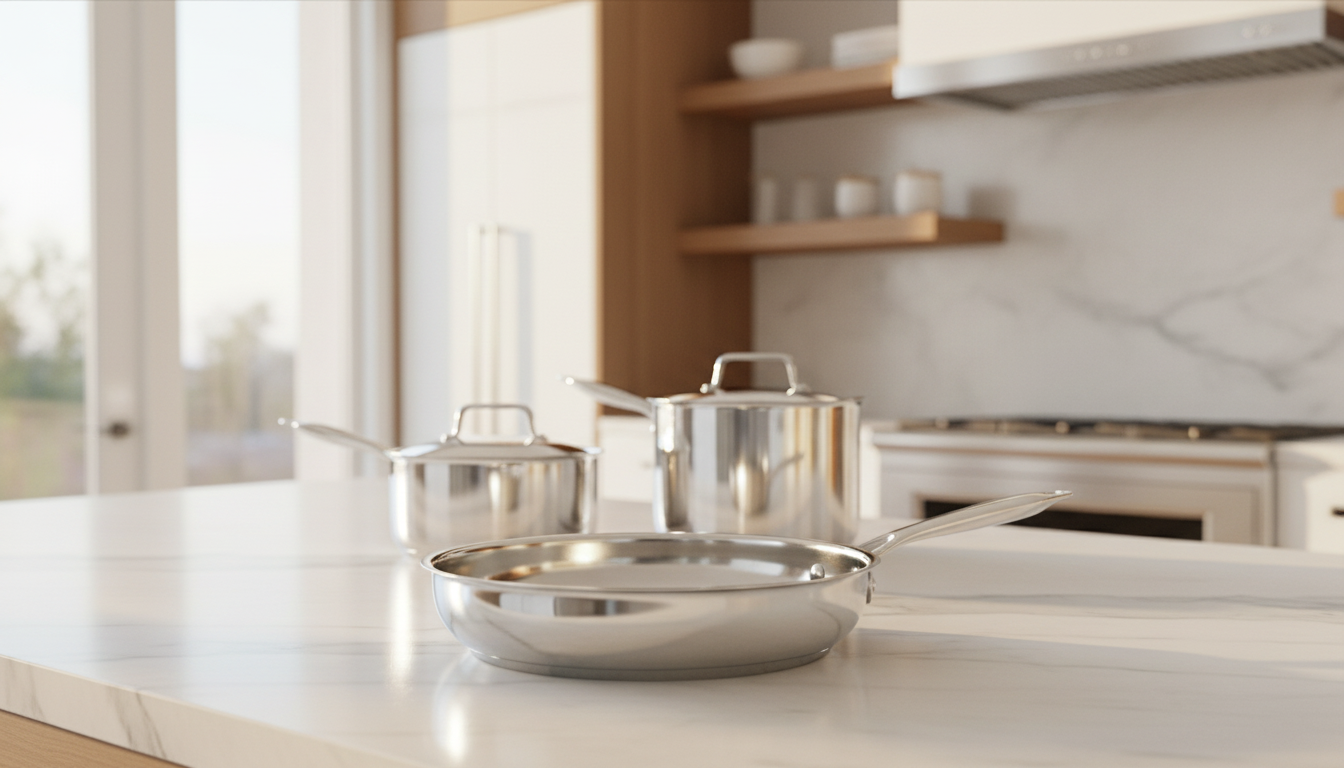
Stainless steel cookware lasts 20-30 years because its nonreactive, durable surface resists rust, corrosion, and coating breakdown that plague other materials. Choosing the right pieces for your cooking style and following simple daily care keeps your investment performing reliably for decades.
Why Stainless Steel Cookware Belongs in Every Kitchen
Stainless steel cookware lasts 20 to 30 years with normal use because the material itself has no coating to chip, scratch, or break down.
The Health and Safety Advantages of Stainless Steel Pans
Stainless steel is an alloy of iron and chromium, and that chromium layer is what keeps the pan from rusting or corroding over time [1]. Most cookware relies on 304 or 316 grade steel, both nonmagnetic and wear-resistant, which is why they're the standard choice for pots and pans you use every day [1]. Unlike nonstick pans coated with PTFE or other fluoropolymer layers, stainless steel doesn't carry a coating that can break down under high heat and release fumes, so you can sear, broil, or finish a dish in the oven without worrying about coating failure [1][2].
That also means you can use metal spatulas, whisks, and tongs without scratching the cooking surface, something nonstick pans can't handle [1]. The surface itself is smooth and nonporous, which keeps food and liquid from settling into the metal and cuts down on the bacteria buildup that more porous materials can harbor [1]. For anyone searing or cooking at high heat regularly, uncoated stainless steel falls into the lower-concern category compared to coatings that lack clear PFAS or PTFE disclosure [2].
One caveat worth knowing: people with nickel allergies may be more sensitive to lower-quality stainless blends, so sticking with well-made 304 or 316 steel is the safer bet [1].
Durability and Longevity: Why Stainless Steel Outlasts Other Materials
Stainless steel cookware typically lasts 20 to 30 years with normal use, while nonstick pans usually need replacing within 2 to 5 years [3][4]. That gap comes down to the material itself: there's no coating to chip, scratch, or break down under heat, so the pan has far less that can actually fail over time [4].
Stainless steel also resists dents, cracking, and rust far better than many nonstick alternatives, which is part of why it holds up to daily use in professional kitchens for decades [5]. The one tradeoff worth knowing is that it can warp if left empty on high heat or hit with sudden temperature swings, so keeping a little oil, water, or food in the pan while it heats protects the shape [4].
Surface discoloration, like heat tinting or chalky spots from hard water, is cosmetic and doesn't affect cooking performance, and it's usually simple to bring the shine back with the right cleaning routine. Put together, a well-made stainless pan tends to outlast the coatings, seasoning routines, and wear points that limit other materials, which is why it remains a long-term kitchen investment rather than a pan you replace every few years [3][4].

What Foods Cook Best in Stainless Steel (and What to Avoid)
Stainless steel excels at searing proteins, frying, and building pan sauces with acid, but delicate foods like eggs and flaky fish cook better in nonstick.
Ideal Dishes for Stainless Steel: Searing, Deglazing, and Acidic Recipes
A stainless steel pan handles high heat well, which makes it a strong choice for searing steaks, chicken, and other proteins, since sustained high heat builds the browned crust that locks in juice and deepens flavor [6]. That same heat response carries over to frying: tri-ply stainless heats oil quickly and evenly, letting you fry chicken or fish in batches without cold spots dragging down the oil temperature [7]. Because the surface is nonporous, it also resists holding onto oil or food residue between batches, so cleanup stays manageable even after a multi-step dinner [7].
Vegetables like asparagus or shallots sauté well too, since even heat distribution browns them without steaming in their own moisture [7]. Searing and frying both leave browned bits stuck to the pan, called fond, and stainless steel's nonreactive surface lets you deglaze with wine, citrus juice, or stock to build a pan sauce without any metallic aftertaste [6]. That same nonreactive quality makes stainless a dependable pick for acidic sauces and braises, including tomato-based dishes, citrus marinades, and wine reductions that would react poorly in other metals.
Dishes built on this combination of high heat and acid, like fish finished with a lemon butter pan sauce or steak deglazed with wine, tend to turn out best in stainless steel [6][7].
Foods and Techniques to Skip in Stainless Steel
Certain foods and habits work against stainless steel's strengths rather than with them. Delicate proteins like eggs, pancakes, and flaky fish can bond to the metal at a molecular level if the pan isn't preheated and oiled properly, which is why a nonstick pan is often the easier choice for these dishes [9][10]. Tomato sauce and other acidic foods cook fine in stainless steel short-term, but prolonged simmering can leave cosmetic discoloration, even though the metal itself holds up [9]. Aerosol cooking sprays are also worth skipping: the propellants and thickeners settle into the surface and leave a sticky residue that's harder to remove than a thin coat of butter or oil [8][9]. Technique causes most sticking problems, not the metal itself. Starting proteins in a cold pan, defaulting to high heat for everyday cooking, or trying to flip food before it releases on its own are the most common mistakes [8][10].
A few adjustments make tricky foods easier to manage:
- Eggs and pancakes: lower heat, more butter, wait before flipping.
- Acidic sauces: shorter simmer times limit staining.
- Delicate fish: let a crust form before attempting to flip.
Misen Stainless Steel Cookware Lineup: Models, Sizes, and Pricing
Buy only the pieces that match your actual cooking habits, since unused pans waste money and cabinet space.
Core Stainless Steel Pan Styles: Fry Pans, Saucepans, and Specialty Pieces
Stainless Steel Cookware Sets vs. Individual Pieces: Which Option Fits Your Budget A full stainless steel set may cost less than purchasing each piece separately, since manufacturers often discount bundles compared to piece-by-piece pricing -- but it's worth comparing the actual set contents and price against the individual pieces you'd use before assuming the set is the better deal [12]. That math only holds if the set's sizes match how you actually cook: a twelve-piece box full of pans you'll never use isn't a deal, it's clutter [12]. Before buying, compare what's included against your actual gaps.
A stockpot, a mid-size skillet, or a middle saucepan are the pieces that see daily use, while steamer inserts or extra lids are often the parts people skip past [12]. If your kitchen already has a dependable stockpot or skillet, filling in the rest piece-by-piece can cost less than replacing pieces you don't need [12]. Higher-grade steel and multi-ply construction carry a higher price than thinner stainless, but that upfront cost is the kind of investment serious home cooks tend to recoup through years of use rather than replacement [13].
Casual cooks who use a pan occasionally may do better with a smaller set or a couple of individual pans, since paying for capacity that goes unused doesn't pay off the same way [13]. The real question isn't set versus individual pieces, it's which sizes and pieces match your cooking habits, since that's what determines whether a set earns back its price or leaves cabinet space full of pans you never touch [12].


Maintenance and Care: Keeping Your Stainless Steel Investment Pristine
Daily wiping and immediate drying prevent most stains, since buildup sits directly on uncoated metal until you physically remove it.
Daily Cleaning Tips to Prevent Staining and Discoloration
Daily upkeep matters more than any deep-clean trick, since most staining starts with grease or food left to sit rather than a flaw in the metal. Wipe out excess oil with a paper towel right after cooking, then wash with warm water, mild dish soap, and a soft sponge to clear remaining particles before they bond to the surface [14]. Rinse thoroughly and dry immediately with a microfiber cloth, since leftover moisture is what causes the chalky water spots many cooks mistake for permanent damage [14]. For a deeper look at day-to-day stainless steel pan care, a few habits keep stains from forming in the first place:
- Clean after every use, even with just a quick rinse [14].
- Skip harsh abrasives for daily washing; save scouring pads for deep cleans [14].
- Don't let pans soak for long stretches, which invites water spots [14].
- Avoid blasting an empty pan with high heat, a common cause of discoloration [14].
These small steps work because stainless steel has no coating to protect, so buildup sits directly on the metal until it's physically removed [15]. Staying ahead of it daily means you rarely need a heavier intervention like Bar Keepers Friend, which relies on oxalic acid to break down scorched residue at a molecular level [15].
Long-Term Care: Seasoning, Storage, and Misen's Warranty Support
Stainless steel doesn't need seasoning the way cast iron or carbon steel does, since it already resists rust and corrosion without a protective oil layer [16]. If you want the optional non-stick boost anyway, wash and dry the pan first, wipe on a thin layer of high smoke point oil, then heat it in the oven at 400 to 450 degreesF for about an hour, or on the stovetop for roughly 15 minutes, until the oil polymerizes into a thin coating [16]. That layer wears down with regular washing, so it's something to redo periodically rather than a one-time fix [16]. For storage, let pans cool fully before washing or stacking, since dropping a hot pan into cold water or a cold stack can cause warping [17]. Keep pieces dry before they go into a cabinet, since trapped moisture is what leads to the water spots and scale marks that build up over time [17][18]. Stacking pans directly against each other invites surface scratches, so a cloth or pan protector between pieces keeps the cooking surface in better shape over years of use [18]. If a maintenance question comes up that daily cleaning doesn't answer, like how a specific piece handles long-term wear, contact us for guidance suited to that pan. Every Misen stainless steel pan is also backed by our warranty, so you're covered if something doesn't hold up the way it should.
Stainless steel earns its place in the kitchen by lasting. Pick the pieces that match how you cook, stay on top of a few simple care & maintenance tips, and a well-made stainless pan stays in your rotation for decades rather than years. Ready to build out your set? Browse our stainless steel collection and find the pieces that fill the gaps in your kitchen.
Frequently Asked Questions
-
Is stainless steel cookware actually safe to cook with, especially around coatings and nickel allergies?
Uncoated stainless steel (304 or 316 grade) has no PTFE or fluoropolymer coating to break down under high heat, so there's no coating failure to worry about when searing, broiling, or finishing dishes in the oven. The one caveat the article flags is that people with nickel allergies may react to lower-quality stainless blends, so sticking with well-made 304 or 316 steel is the safer choice.
-
How long does stainless steel cookware last compared to nonstick pans?
The article states stainless steel cookware typically lasts 20 to 30 years with normal use, versus 2 to 5 years for nonstick pans that need replacing once the coating chips or breaks down. The tradeoff is that stainless can warp if left empty on high heat or hit with sudden temperature swings, so keeping some oil, water, or food in the pan while heating helps protect its shape.
-
Is it cheaper to buy a full stainless steel cookware set or individual pieces?
A full set may cost less than buying each piece separately since bundles are often discounted, but the article advises comparing the actual set contents and price against the individual pieces you'd use before assuming the set is the better deal. A twelve-piece set full of pans you'll never use isn't a deal - it's clutter - so if you already own a dependable stockpot or skillet, filling gaps piece-by-piece can work out cheaper than replacing pieces you don't need.
-
What foods should I avoid cooking in stainless steel, or cook differently?
Delicate proteins like eggs, pancakes, and flaky fish can bond to the metal if the pan isn't preheated and oiled properly, so the article suggests lower heat, more butter, and waiting before flipping, or just using a nonstick pan for those dishes. Acidic foods like tomato sauce cook fine short-term but can leave cosmetic discoloration with prolonged simmering, and aerosol cooking sprays should be skipped since their propellants leave sticky residue that's hard to remove.
-
Do Misen stainless steel pans need seasoning, and what support is available if something goes wrong?
Stainless steel doesn't need seasoning the way cast iron does, since it already resists rust without a protective oil layer - but if you want an optional nonstick boost, the article outlines wiping on a thin layer of high smoke point oil and heating it until it polymerizes, noting this wears down with washing and needs to be redone periodically. Every Misen stainless steel pan is also backed by Misen's warranty, and the article points to contacting Misen directly for guidance on long-term wear questions specific to a piece.
- Stainless steel cookware lasts 20 to 30 years with normal use, outlasting nonstick pans that typically need replacing within 2 to 5 years.
- High heat searing, frying, and acidic deglazing all work well in stainless steel because the nonreactive surface won't impart metallic flavor.
- Delicate proteins like eggs and fish require proper preheating and oiling to prevent sticking, since technique matters more than the metal itself.
- Daily cleaning after use prevents most staining, since buildup sits directly on the metal with no protective coating to help.
- Stainless steel doesn't need seasoning like cast iron, but optional polymerized oil layers wear down with regular washing and require periodic reapplication.
- Buying a full set only makes financial sense if the included sizes match your actual cooking habits and fill real gaps in your kitchen.
- Stacking pans with cloth or protectors between pieces and storing them completely dry prevents surface scratches and water spot buildup over time.
- https://saladmaster.com/fr-ca/cook-more/delicious-perspectives-blog/benefits-of-stainless-steel-cookware-1
- https://nontoxic.com/blog/best-non-toxic-pans
- https://www.provenpantry.com/blog/stainless-steel-vs-nonstick
- https://www.curatsy.com/compare/cast-iron-vs-stainless-steel-pans-which-should-you-buy
- https://kitchencampaign.com/cast-iron-vs-stainless-steel-pan/
- https://www.venicefoodies.com/foods-that-cook-better-in-a-stainless-steel-skillet/
- https://avacraft.com/blogs/cookware-care/best-recipes-to-make-with-a-stainless-steel-frying-pan
- https://www.cristelusa.com/blogs/tips/how-to-stop-food-from-sticking-to-stainless-steel-pan
- https://www.vikingculinaryproducts.com/blogs/articles/how-to-cook-with-stainless-steel-cookware
- https://ideluxecookware.com/blogs/home-kitchen/stop-food-sticking-frying-pan
- https://www.ebay.com/p/2075968517
- https://www.reviewed.com/cooking/best-right-nows/the-best-cookware-sets-under-200
- https://www.fareastcookware.com/blog/are-expensive-cookware-sets-worth-it-2454078.html
- https://girlandthekitchen.com/blog/how-to-clean-stainless-steel-pans-and-make-them-shine-like-new/
- https://www.americastestkitchen.com/articles/3704-how-to-clean-a-stained-or-scorched-stainless-steel-skillet
- https://aviasworld.com/blogs/general/should-i-season-stainless-steel-cookware
- https://www.cristel.com/en/faq/how-to-maintain-my-stainless-steel-articles
- https://www.yahoo.com/lifestyle/how-to-care-for-and-1332175642828854.html