

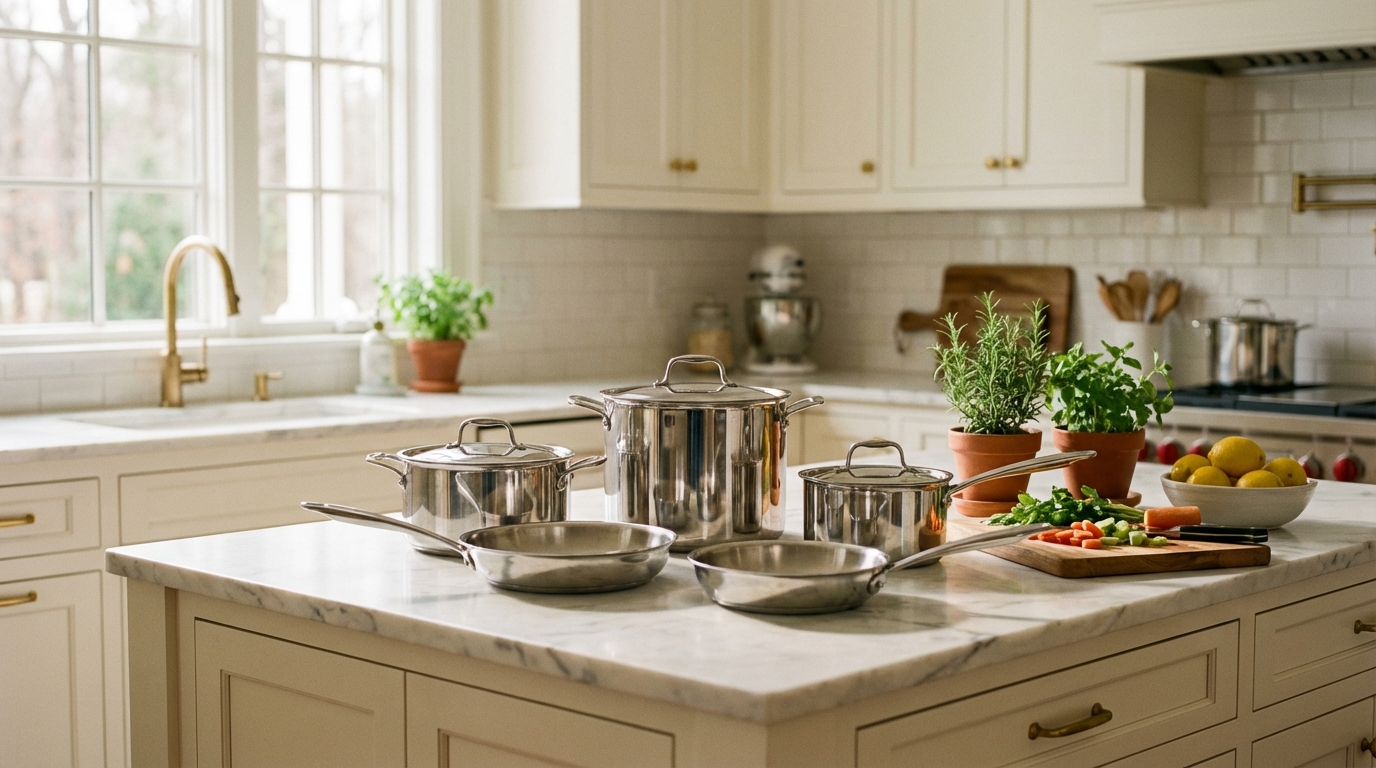
Nickel-free stainless steel cookware offers a safer, hypoallergenic alternative for sensitive cooks who want professional performance without the risk of nickel leaching into their food. By eliminating this common allergen and potential endocrine disruptor, these pans protect anyone prone to contact dermatitis, autoimmune flare-ups, or unexplained reactions while still delivering the rapid, even heating and oven-safe durability that make stainless steel a kitchen staple. The article guides readers through selecting the right grade--typically 21/0 or 18/0 chromium-only alloys--checking for trusted third-party certifications, and matching pan weights and core designs to everyday cooking tasks from searing steak to simmering acidic tomato sauces. It also demystifies daily care: seasoning the cooking surface lightly to enhance natural non-stick properties, avoiding chlorine bleach or steel wool that can pit the surface, and using a baking-soda boil to lift stubborn residues so the pans remain lustrous and nickel-free for decades. Ultimately, readers learn that investing in nickel-free stainless means they can cook with confidence, safeguard long-term health, and pass down heirloom-quality cookware that never compromises flavor or safety.
Why Nickel-Free Matters for Your Health
Nickel allergy affects up to 17% of women and 3% of men, making nickel-free choices essential for avoiding the itchy rashes and chronic skin damage that develop when this common metal leaches from everyday items like jewelry, watches, and even mobile phones.
Understanding Nickel Sensitivities
Understanding Nickel Sensitivities
Nickel is the single most common metal allergen in the world, and for the millions of people who react to it, exposure doesn't have to come from jewelry or belt buckles--it can come from the pan sitting on your stovetop. Standard 18/8 and 18/10 stainless steel cookware contains roughly 8% to 10% nickel by design, added to improve corrosion resistance and give the metal its signature shine. Under normal use, that nickel stays locked in the alloy. But acidic ingredients like tomatoes, vinegar, citrus, and wine--combined with high heat, salt, and prolonged cooking times--can cause trace amounts of nickel to migrate from the cooking surface into food, a process food scientists call metal leaching.
For most people, this is a non-issue. For someone with a nickel allergy, even these small, cumulative doses can be enough to trigger a reaction.
Nickel allergy typically shows up as allergic contact dermatitis--red, itchy, sometimes blistering skin where the metal touches skin directly, such as earlobes, wrists, or fingertips. A lesser-known variant, called systemic nickel allergy syndrome (SNAS), can be triggered by ingesting nickel rather than touching it, producing symptoms far from the point of contact: hives, eczema flares, digestive upset, and general malaise after eating nickel-contaminated food. Because these symptoms are often delayed by hours or even a day, many people never connect their discomfort to what they cooked in, let alone what they ate.
Dermatologists estimate that nickel sensitivity affects up to 17% of women and roughly 3% of men, and prevalence has been steadily climbing for decades, partly due to widespread nickel exposure through everyday items long before anyone picks up a chef's knife.
Diagnosing a nickel allergy usually requires a patch test performed by an allergist or dermatologist, in which a small nickel compound is applied to the skin for 48 hours to check for a reaction. Many people live for years with unexplained rashes, digestive complaints, or chronic eczema flare-ups without ever suspecting their cookware as a contributing factor, simply because stainless steel has such a strong reputation for being inert and "safe." That reputation is well-earned for the general population, but it overlooks the reality that no stainless alloy is entirely non-reactive when it contains nickel. Understanding this distinction--between stainless steel as a category and the specific alloy composition of the pan in your cabinet--is the first step toward making an informed choice about what actually belongs in your kitchen.
Health Benefits of Nickel-Free Stainless
Health Benefits of Nickel-Free Stainless
For people who carry a nickel allergy, cooking with traditional stainless steel can pose a subtle exposure risk. Standard 18/10 stainless alloys contain a meaningful percentage of nickel, and while the metal is bonded tightly into the steel matrix, acidic foods--tomatoes, citrus, vinegar-based marinades, wine reductions--can cause trace amounts to migrate into meals over repeated use. For someone with a diagnosed allergy, that may be enough to trigger contact dermatitis on the hands, lips, or around the mouth, along with less obvious symptoms like digestive upset, fatigue, or flare-ups in sensitive skin conditions such as eczema.
Switching to nickel-free stainless--typically a 400-series chromium alloy--removes that variable, letting sensitive cooks braise, deglaze, and simmer without worrying about reintroducing the allergen they're trying to avoid.
Beyond allergy management, there's growing interest in nickel's broader health implications, including questions around its potential effects at higher exposure levels. While the amounts leached from cookware are generally small compared to occupational or environmental exposure, cumulative daily contact can add up--especially for households that cook nearly every meal at home. Choosing nickel-free stainless is a way of reducing one avenue of unnecessary metal exposure, which may matter most for pregnant women, young children, and anyone managing a chronic inflammatory condition where even minor triggers can compound symptoms over time.
There's also a quality-of-life benefit that's easy to overlook: peace of mind.
Cooks who've dealt with a nickel allergy know the vigilance it demands--reading jewelry labels, checking zipper pulls, scrutinizing eyeglass frames. Extending that same caution to cookware, which comes into direct contact with the food you eat, closes a gap that's often missed. Nickel-free stainless lets sensitive cooks stop wondering whether tonight's dinner might cause tomorrow's rash, and instead focus on what stainless steel does best: searing, browning, and building flavor with even, responsive heat.

Nickel-Free Stainless Steel Cookware: What Sets It Apart
Nickel-free stainless steel cookware eliminates the risk of nickel leaching into food, making it the safer, non-reactive choice for people with sensitivities or anyone who wants cleaner, metal-free meals.
Performance Compared to Traditional Stainless
Performance Compared to Traditional Stainless
The biggest question sensitive cooks ask before switching is whether removing nickel means sacrificing the searing power and durability that made stainless steel a kitchen workhorse in the first place. The short answer: not really. Nickel-free alloys, typically ferritic grades like 430 or specially engineered chromium-only steels, still deliver excellent corrosion resistance and can be bonded to the same multi-ply aluminum or copper cores used in premium nickel-containing cookware.
That means you get the same rapid, even heat distribution and the same ability to go from stovetop to broiler without warping or discoloring.
Where you'll notice a difference is in feel and finish. Ferritic stainless is magnetic, so it works beautifully on induction cooktops--often better than austenitic 18/10 pans, which may require a magnetic steel disc bonded into the base to function on an induction cooktop. Nickel-free pans also tend to develop a slightly different patina over time, sometimes showing more visible tomato or lemon staining until the surface is properly seasoned, simply because the absence of nickel changes how the passive chromium oxide layer interacts with acidic foods.
This is cosmetic, not structural, and a quick baking-soda scrub restores the shine without any loss of performance.
Durability and wear resistance are essentially on par between the two, since the strength of stainless cookware comes primarily from its chromium content and core construction rather than nickel itself. Nickel's main contribution in traditional 18/10 stainless is added shine, corrosion resistance in extreme conditions, and a smoother, more workable metal during manufacturing--benefits that matter more to production efficiency than to the home cook's daily searing, sautéing, and simmering. In practical kitchen use, nickel-free pans heat just as quickly, hold temperature just as steadily, and stand up to years of daily use just as reliably, making the switch a matter of health and comfort rather than a compromise in cooking power.
Material Composition and Production
Material Composition and Production
Most stainless steel cookware relies on a chromium-nickel alloy, commonly labeled 18/10 or 18/8, where the second number represents the percentage of nickel blended in to boost corrosion resistance, shine, and workability. Nickel-free stainless steel takes a different metallurgical path, using a chromium-only alloy (often referred to as 18/0 or 21/0, reflecting the chromium percentage with zero nickel) or, in some premium lines, a titanium-infused stainless blend. Chromium alone is enough to form the thin, invisible oxide layer that gives stainless steel its signature resistance to rust and staining, so manufacturers don't need nickel to achieve a durable, food-safe cooking surface.
Instead, they fine-tune the ratio of chromium, carbon, and trace elements like molybdenum to hit the right balance of hardness and corrosion resistance.
Producing nickel-free stainless steel is more demanding than standard manufacturing, which is part of why it commands a slightly higher price point. Without nickel's natural ductility, chromium-only alloys are harder to roll, stamp, and weld, requiring tighter temperature controls during forging and more precise tempering to prevent brittleness or warping. Reputable cookware makers often pair this alloy with a multi-ply or clad construction, sandwiching an aluminum or copper core between layers of nickel-free steel, to compensate for chromium steel's naturally lower thermal conductivity.
This lamination process helps the pan heat quickly and evenly across the cooking surface, addressing the main performance trade-off that comes with removing nickel from the mix.
Because the production process is more specialized, sourcing and quality control matter more with nickel-free stainless than with conventional cookware. Brands committed to true nickel-free construction typically test finished cookware with independent labs to confirm nickel content falls below detectable leaching thresholds, rather than simply relying on the alloy specification sheet. Shoppers should look for manufacturers who publish these test results or hold certifications from allergy and dermatology associations, since "nickel-free" claims without third-party verification can sometimes refer only to the cooking surface finish rather than the full metal composition of the pan, including handles and rivets where trace nickel can still hide.
Choosing the Right Nickel-Free Cookware for Everyday Use
Swap every stainless-steel pan in your kitchen for nickel-free titanium, ceramic, or seasoned cast-iron cookware and you'll eliminate the risk of nickel leaching into your family's meals while still searing, simmering, and sautéing with professional-grade results.
Key Features to Look For
Key Features to Look For
When you're standing in front of a wall of gleaming pots and pans, the nickel-free label is only the starting point. The real test is the alloy grade stamped on the base or listed in the product specs. Look for 18/0 or 21/0 stainless steel, where the numbers refer to chromium and nickel content--in this case, zero nickel, with chromium alone providing the corrosion resistance and shine you expect from premium stainless steel.
Steer clear of the more common 18/8 or 18/10 grades, which contain 8 to 10 percent nickel and are the default choice for most mass-market cookware lines. A quick call to the manufacturer or a careful read of the product documentation will usually confirm the alloy family before you buy.
Beyond the metal composition, pay attention to how the cookware is constructed. Fully-clad, multi-ply pans--where an aluminum or copper core is sandwiched between layers of stainless steel--heat more evenly and respond faster to temperature changes than single-ply pans, which matters if you're trying to avoid scorching delicate sauces or searing proteins without hot spots.
Because nickel-free chromium steel can be slightly less forgiving of thermal shock than nickel-alloyed versions, a well-bonded core also helps the pan expand and contract uniformly, reducing the chance of warping over years of stovetop-to-oven use.
Finally, weigh the practical details that determine whether a pan earns a permanent spot on your rack: riveted versus welded handle attachments, oven-safe temperature ratings, induction compatibility if your range calls for it, and third-party lab verification of the nickel-free claim. Brands that publish independent test results or offer allergen-specific certifications give you a paper trail rather than a marketing promise, which is especially reassuring if you're buying cookware for a household member managing a diagnosed nickel allergy. A slightly higher price tag for fully-clad, certified nickel-free construction is a small trade-off for cookware that performs like professional-grade stainless steel while keeping reactive metals out of your meals.
Budget‑Friendly Options Without Compromise
Budget-Friendly Options Without Compromise
Going nickel-free doesn't have to mean emptying your wallet. Price and safety aren't always linked--plenty of affordable stainless steel cookware uses the same chromium-only alloys found in premium lines, just without the marketing budget behind them. Instead of chasing a brand name, look at the fine print on the box or product listing: manufacturers proud of a nickel-free formulation will usually state the alloy composition clearly, often alongside a relevant safety certification.
If that information is missing or vague, treat it as a red flag rather than an oversight, since reputable budget brands have every incentive to advertise a feature that sets them apart from cheaper nickel-alloy competitors.
One of the smartest ways to stretch a smaller budget is to buy open stock instead of a full matched set. A single 10-inch fry pan and one mid-size saucepan can handle the overwhelming majority of weeknight cooking, so you can build out your collection piece by piece as funds allow, prioritizing the items you use daily over specialty shapes that might sit in a cabinet. This approach also lets you test a brand's quality and finish before committing to an entire set, which is especially useful if you're new to nickel-free cookware and still dialing in your preferred pan weight and handle style.
Seasonal sales, outlet listings, and factory-second pieces are another overlooked resource for sensitive cooks on a budget.
Cosmetic blemishes, such as minor surface scratching, generally don't affect the alloy composition or its hypoallergenic properties, so discounted seconds can offer similar safety at a fraction of the price. Just be sure any discounted piece still carries the same nickel-free labeling and certification as the standard retail version--a scuffed pan is a bargain, but a mislabeled one is not, and no amount of savings is worth reintroducing the very allergen you're trying to avoid.


Caring for Your Nickel-Free Pans to Last a Lifetime
Hand-wash your nickel-free pans with mild soap, skip the dishwasher and metal utensils, and dry them right after use to keep them cooking flawlessly for life.
Cleaning and Maintenance Best Practices
Cleaning and Maintenance Best Practices
Even though nickel-free stainless steel is remarkably tough, it still benefits from a little care. Always let your pan cool to room temperature before rinsing it--plunging a hot pan into cold water can warp the metal or, over time, cause the layers of a clad base to separate. Once cooled, wash with warm water, a few drops of mild dish soap, and a soft sponge or nylon brush. Skip the steel wool and abrasive scouring pads; while they may seem satisfying to use, they create microscopic scratches that trap food particles, dull the finish, and give bacteria more places to hide.
A soft-bristle brush or a dedicated stainless-steel cleaning pad will lift residue without compromising the surface.
For stuck-on messes--think caramelized onions or a seared steak crust--resist the urge to reach for chlorine bleach or harsh oven cleaners, both of which can pit chromium-based alloys and, ironically, make the pan more prone to corrosion over time. Instead, deglaze the pan while it's still warm with a splash of water or broth, scraping up the fond with a wooden spoon. If residue persists after it cools, fill the pan with water, add a tablespoon or two of baking soda, and bring it to a gentle boil for five to ten minutes. The mild alkalinity loosens baked-on bits without scratching, and a quick wipe afterward restores the pan's shine.
For mineral deposits or cloudy water spots, a splash of white vinegar or a dedicated stainless steel cleaner, buffed in circular motions, works well.
To keep your pans looking their best, dry them thoroughly with a soft towel immediately after washing rather than letting them air dry, since lingering moisture can lead to water spots or, in humid climates, surface staining. Periodically applying a small amount of cooking oil and buffing it in with a paper towel can help maintain a light seasoning that improves food release and adds a layer of protection against everyday wear. If you stack your pans, use soft pan protectors or felt dividers to avoid metal-on-metal contact that can scratch the polished surface. With this simple routine--gentle cleaning, prompt drying, and occasional oil conditioning--your nickel-free stainless cookware can stay both beautiful and functional, offering long-lasting, hypoallergenic cooking without compromising on performance.
Extending Longevity and Reducing Waste
Extending Longevity and Reducing Waste
A nickel-free stainless pan that's properly cared for isn't just a kitchen tool--it's a long-term investment that helps keep cheap, disposable cookware out of landfills. Unlike non-stick pans with coatings that can degrade after a year or two of regular use, chromium-only stainless steel has no synthetic surface to scratch away or flake into your food. The metal itself is the cooking surface, which means that as long as you avoid warping the base with extreme thermal shock (such as plunging a hot pan into cold water) or wearing down the finish with abrasive scouring pads, the pan can last for many years of everyday use. Many home cooks are still using stainless pieces inherited from parents or grandparents--proof that this material rewards patience rather than frequent replacement.
Reducing waste also means rethinking how often you actually need to buy new cookware in the first place.
Because nickel-free stainless resists the pitting and uneven heating that can shorten the life of lower-quality pans, a single well-maintained set can replace the rotating cast of skillets many households cycle through every few years. This isn't just good for your wallet--it's a meaningful reduction in the manufacturing emissions, raw materials, and packaging waste tied to constantly producing new pots and pans. Choosing a durable, easy-to-maintain product is one of the simplest sustainability decisions you can make in the kitchen, and it happens to align well with the health-conscious reasons you chose nickel-free cookware in the first place.
Longevity also has a quieter benefit: consistency. A pan that has been seasoned and cared for over years can develop a more reliable release surface and more predictable heating behavior than a brand-new one straight out of the box.
Instead of relearning your cookware's quirks every time you replace a scratched or warped pan, you build a long-term relationship with a piece of equipment that performs better--not worse--with age. That's the real promise of nickel-free stainless: cookware you don't have to think twice about, whether your priority is health, performance, or sustainability.
- Nickel-free steel swaps 18/10 for 18/0 to cut allergy risk.
- 304-grade contains 8-10% nickel; 430/21/0 has none.
- Magnetic 430 steel works on induction but heats slower.
- Hand-dry instantly to stop rust on nickel-free pans.
- Skip bleach and chlorides; they pit 430 steel fast.